Interview with Rolf Diercks, SS-Sturmbannführer of the SS-Panzer-Grenadier-Regiment 'Deutschland' of the 2. SS-Panzer-Division 'Das Reich', awarded the German Cross in Gold, Munich, 1989.

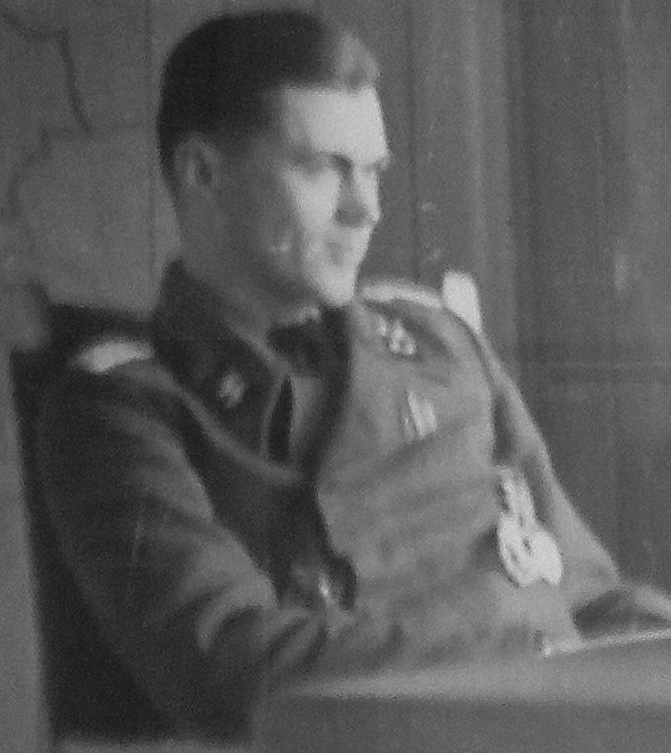

Interview with Rolf Diercks, SS-Sturmbannführer of the SS-Panzer-Grenadier-Regiment 'Deutschland' of the 2. SS-Panzer-Division 'Das Reich', awarded the German Cross in Gold, Munich, 1989.
Rolf: Yes, it is difficult for me to speak on this today, that was in the past and it is better forgotten. I understand why you ask, but I am not sure I agree with you or your motives. Sometimes the past is best left undisturbed, and not to open old wounds. I will indulge you for a bit.
You could say I came to the SS as it was a sign of the times, Hitler came to power in Germany, and many people believed in him. My ideology aligned with several of his points, but I rejected the racial aspect of it all. There is no one race above all the others.
Germans are not any better than any other peoples; his racial nationalism was his downfall [The German armed forces in fact were more diverse than any other army, consisting of more races/nationalities than any army since perhaps Alexander the Great, not to mention their racially diverse alliances. Furthermore, Dr. Walter Gross, the head of the Office of Racial Policy for the NSDAP, wrote several letters and articles regarding the NSDAP's official stance on race, which looked down on no one. Click to read Gross' papers:
HERE -Ed.]. However back then I overlooked such things, and wanted to belong to the SS as it best represented the National Socialist idea and adopted Himmler's zeal for order and faith.
As SS men we were encouraged to turn our backs on the Church, as it was thought to be poisoned by the Jews, which is questionable. Many in the SS found that to be a hard pill to swallow, many secretly still practiced faith, others lost it completely [This is a complete lie, as the majority of the SS identified as Christian. There is much proof of this, one of them being a 1937 memorandum from Heinrich Himmler marked "to all SS leaders from Standartenführer up: In ideological training I forbid every attack against Christ...' Furthermore, he said ''Atheism is the only world-view or religious view that is not tolerated within the SS... I have not tolerated an atheist in the ranks of the SS. Every member has a deep faith in God...' Here are many examples that also prove this is a lie: HERE-Ed.]..
I was admitted to the SS early on, so you could say I was an early supporter. I met them all, Himmler, Hitler, Hess, and Göring. All the big shots loved the SS, it was the party's own police force, and loyal only to Hitler. We bore arms, but were out of reach of the army.
Those were the days; I was promoted to officer school, the 5th peacetime class at Bad Tolz, close by. I did very well in this role and it suited me, I ended up as a Sturmbannführer by war's end. In summary I went to the SS as I believed in what it stood for at the time.
What SS unit did you serve in?
Rolf: 'Deutschland' was my primary unit, most all men from this area were sent to this regiment. 'Deutschland' furnished all the guards for the National Socialist sites here in Munich. Many of the famous wartime faces came through my regiment. Besides the LAH ['Leibstandarte Adolf Hitler'], 'Deutschland' was the next most important.
Can I ask how you felt when the war started in 1939?
Rolf: I was in disbelief I remember, no one really thought Hitler would be foolish enough to strike Poland, especially with Britain and France giving their guarantee. The mood was very fearful I remember, there was no cheering like in the first war. Germany was in a state of shock, and there was fear in what might come.
Of course for the military, including the few SS regiments, there was a sense of revenge and adventure. The war was something new to do, and for the old hares it was a chance to right the wrongs of Versailles [the Versailles Treaty which stole land and resources from Germany after WWI and forced them to pay the victors money indefinitely]. My point is Germans did not want to be dragged into a war just so we could recover lands we gave up voluntarily. [voluntarily? Really? That is an outrageous statement not even Germany's enemies would claim. And just to let you know, Adolf Hitler pleaded for peace almost a dozen times. See photo and information below!].
[Above: Here is a book which details Hitler's many peace offerings: 'Written by Germany’s foremost diplomatic historian of the early twentieth century, this work maps out all the numerous times that Adolf Hitler made unconditional offers of peace to all the nations of Europe—and how the major anti-German belligerents, France and Britain, turned down these offers each and every time.
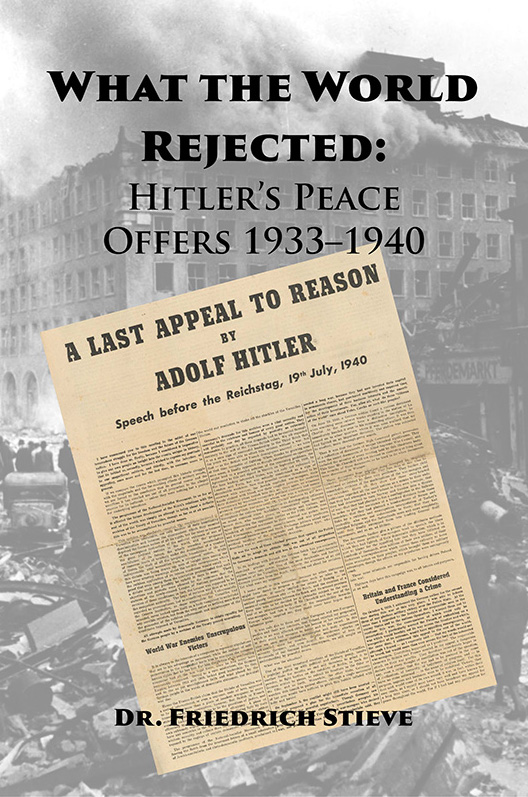
The author lists all of Hitler’s offers in detail, complete with quotes, starting with his first offer of May 17, 1933, his second offer of December 18, 1933, his third offer of May 21, 1935, his fourth offer of March 31, 1936, his fifth offer of September 30, 1938, his sixth offer of December 6, 1938, his seventh offer of late 1939 to Poland to settle the Danzig Corridor issue peacefully, and finally, his offer of world peace on October 6, 1939, just over a month after Britain and France had declared war on Germany.']
Rolf: Yes, I have heard that also, I personally believe the Allies have made a good case that Hitler wanted to seize lands in the east, and I think he used Poland to do it. I know many say that Germans were killed in Poland, but there were other ways to work this out, Heydrich staged Gleiwitz to lie to Hitler it appears that the SS officer who did it wrote about it later on and became wealthy.
They took inmates out, dressed them in Polish uniforms, then killed some Germans as well, and made it look like a Polish attack. Warsaw has denied it, and had no reason to attack Germany. We did this as a way to excuse taking the corridor. [There is no evidence of this Allied propaganda.-Ed.]
Then we subjugated the Polish people and turned them into slaves. That was not good.
I saw the many workers who came to Germany, or who had to work in the fields in Poland. When the Americans came, they found many thousands here and they all said they were forced to come here. It was not correct to do this. [This statement is easily disputed. There is much evidence from the time that tens of thousands of German civilians were murdered, sometimes tortured, men, women and children were buried in mass graves, which the Germans later exhumed and took meticulous photographs and documentation of. To read a brief description from the time, click on the link:
HERE -Ed.].
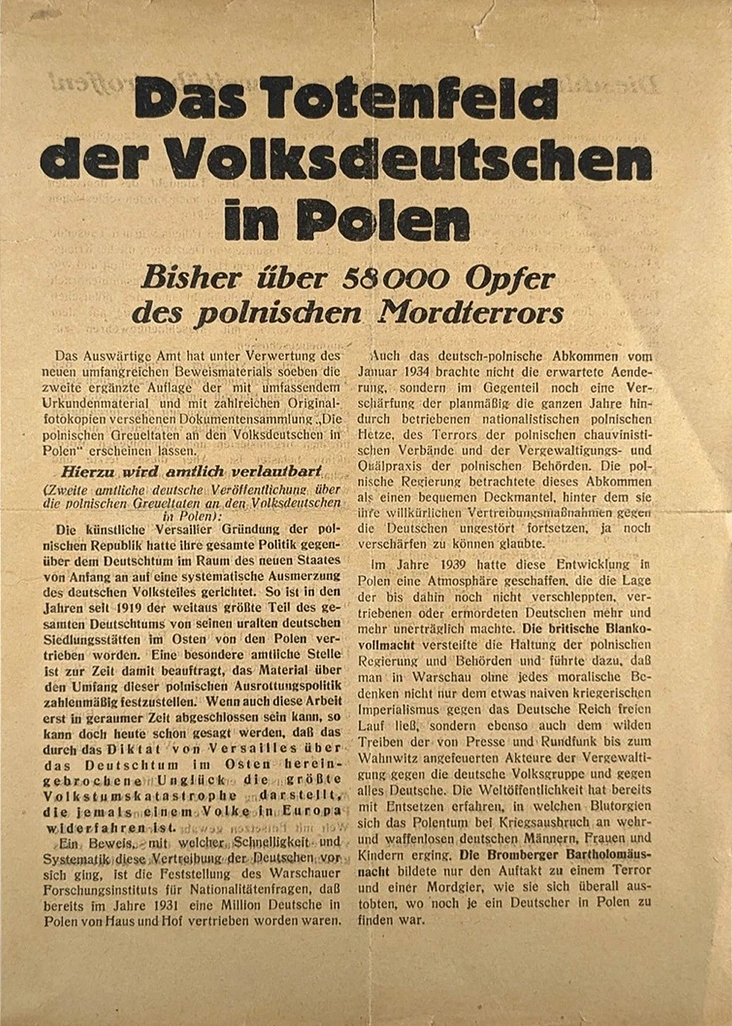
[Above: 'Das Totenfeld der Volksdeutschen in Polen - Bisher über 58000 Opfer des polnischen Mordterrors' (Into the Death Field of the Ethnic Germans in Poland - Over 58,000 Victims of Polish Murder and Terror). Of course, this was not something done by the Polish people, but by the dark powers that were clamoring for war. This genocide eventually forced Adolf Hitler to save the rest of the Germans trapped in Poland. Click to see more and read an English translation.]
Rolf: No I do not know of this, it is stated by eyewitnesses that they were forced to come here, often pulled off the streets of their homes, and forced to work. Some were volunteers I am sure; I too saw the posters in the east recruiting them.
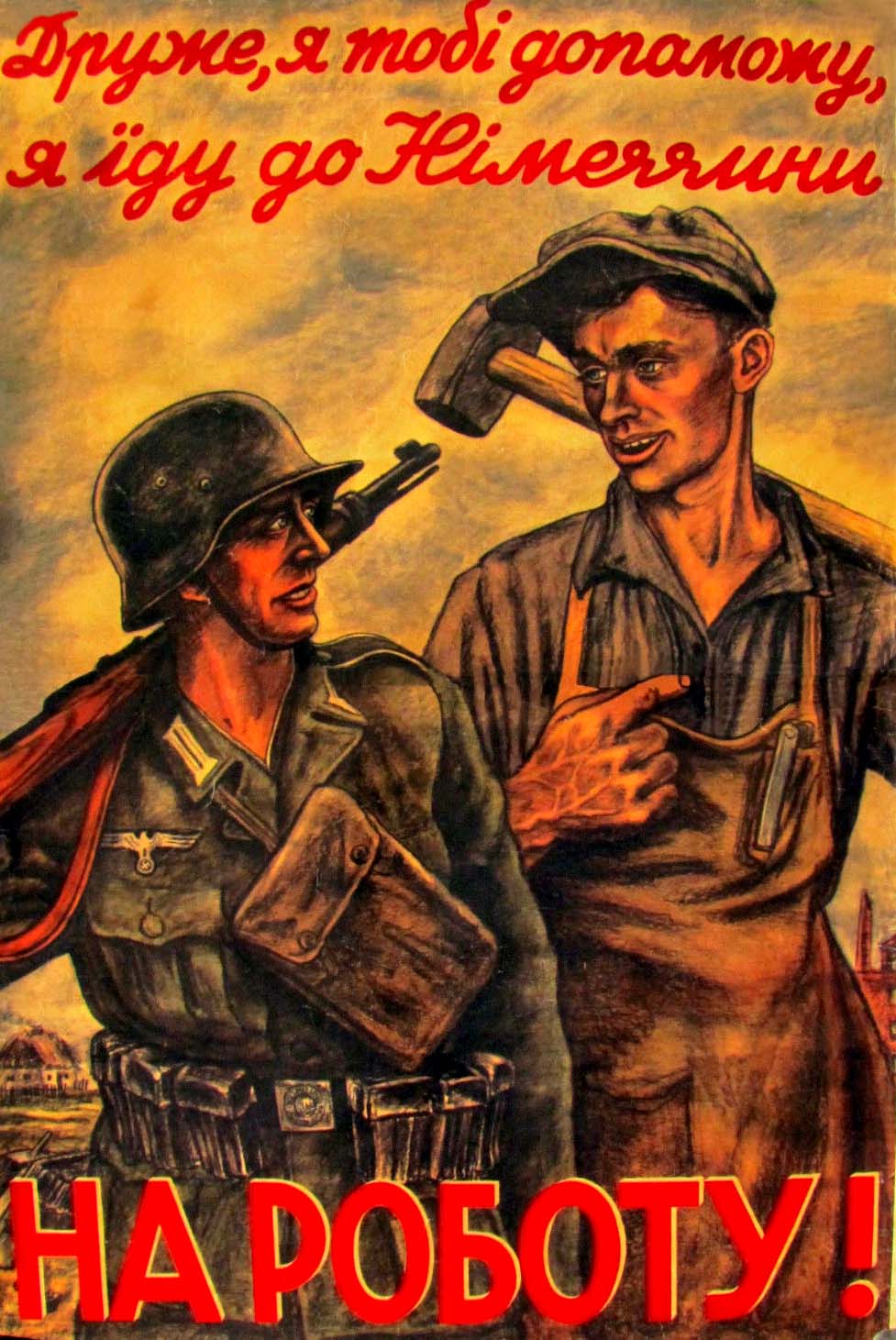
[Above: The Allied propaganda that the Germans snatched people off the street to use as slaves in Germany is another lie. Here is a recruiting poster from the Ukraine, it says: 'My friend, I'll help you, I'll go to Germany for work!' These posters were placed all over, from Poland to Russia. If the Germans were kidnapping people why would they try to recruit people and pay them for their work? It doesn't make sense because it isn't true, like most of what the Allies said of Germany, before the war, during the war, and after the war and to this very day.]
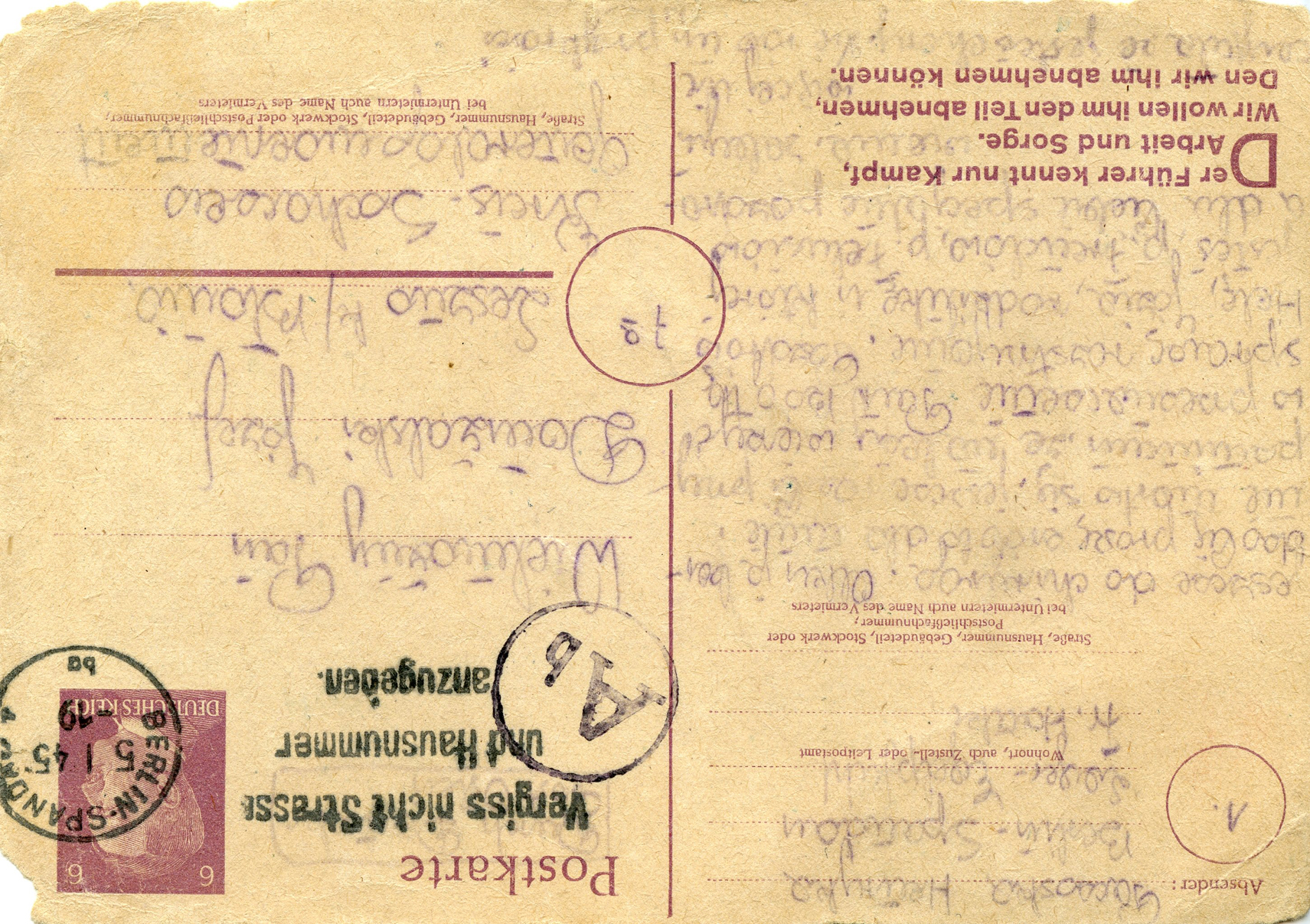
[Above: Here is a postcard sent by a Polish worker in Berlin writing home on January 5, 1945. Do you find it logical that Germans would kidnap people and let them write home? No, you probably don't. These workers were taken care of by the Germans, paid, given free food and housing, provided entertainment and even taught trades. They were an essential workforce that the Germans did not take for granted. It was commonly known that many of the workers, recruited from poor villages throughout Europe, thought Germany was a wonderful country of the future. They wrote home with amazement and wonder.]
Rolf: Yes, that is the essence of why so many are interested in the SS isn't it? I went to schools with many who were later judged to have acted criminally, I can attest that they were all good men, and all had their flaws. If you are asking if they happened, well I can not comment, I was not there. I would have a hard time believing people would make up these stories, and that investigations would be one-sided. It is possible in some cases, but not all. I personally saw very rough treatment of civilians by some SS men, mostly police. You must remember the frontline SS units were fighting the war, not behind the lines, those were the security men. We normally had no contact with the people, most tended to run away from the battlefields.
I had known about [Joachim] Peiper and [Adolf] Dieckman, and others who are accused of killing prisoners and civilians. I can not say if they are guilty or not, but if they were they deserved punishment. The SS should never be above the law, and I believe Himmler stepped in to cover for crimes that were committed.
But enough of this, I do not want to speak to you about real or alleged crimes of the SS, it is not a pleasant topic, and we must remember the victims not the perpetrators.
So it sounds like you believe the Allied version of events regarding the conduct of your comrades?
Rolf: I would not say that, but there is balance in studying everything. Just because a comrade says something does not make it true. In turn you should challenge the Allied events as well. I know there are some things that must not be challenged; we have to be careful in what we say.
I understand you won the German Cross in Gold; did it make an impression on you to win this award?
Rolf: Yes, at the time I was very proud to be awarded this high honor, now we call it Hitler's fried egg. My commander [Heinz] Harmel had to put in the recommendation twice due to the bureaucracy of the SS, and if someone did not like you it could be held up. I was very well-decorated by the time the war ended. 'Deutschland' was always in the thick of the fighting.
What did you think of the Russian soldier?
Rolf: He was very brave, and was nothing like what has been portrayed. They seemed very well-led, and fought with a strong determination of someone defending their home from an invader. I was able to meet some of the prisoners, and they all seemed like good men to me.
I even met some of the ones who came over to our side; they were very unpleasant and seemed very hostile to the population if they were not from the area. Germany was very late in getting the Russians to help us, and by then many knew the war was turning and feared the partisans and retribution.
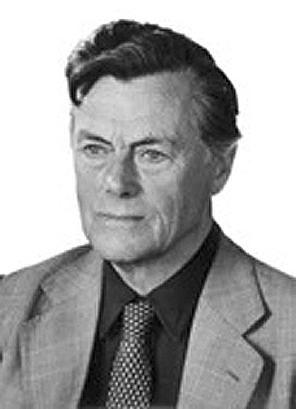
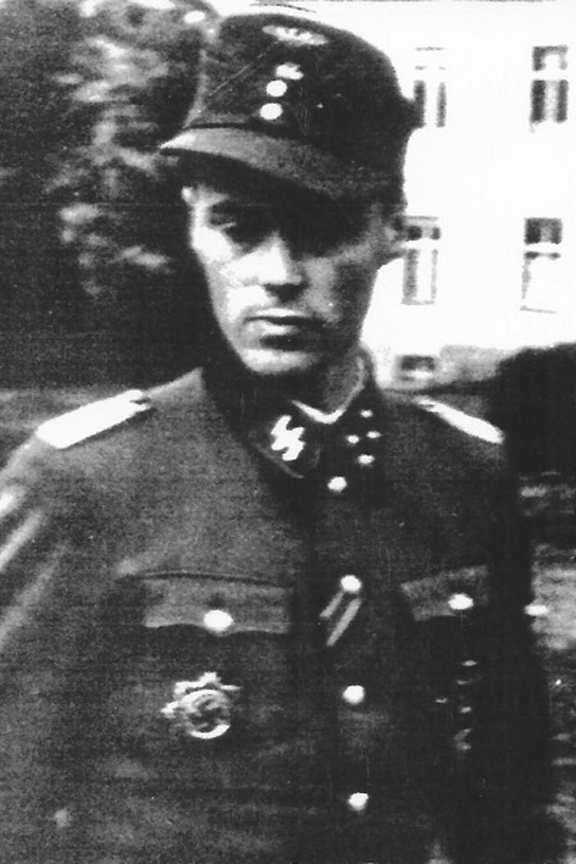
[Above: Rolf Diercks.]
Rolf: Yes, I believe some did, there are many stories that have come out of the east that tell me something happened. Again these are unpleasant topics and best to be left in the past.
I was told you attended a NAPOLA school? What were these schools for?
Rolf: Yes, I attended the school at Plon. They were schools for potential NSDAP leaders, those who had a zest for the idea of National Socialism, and its worldview. I was a young and idealistic person who wanted to find better opportunities and since the Party was the state, it was good to use the Party.
The training was set up to fully indoctrinate one into the defense of National Socialism and Party structure. We had to know and understand the full 25 points of the Party. Graduating the school would give one a head up into the leadership of the Party and a very good career.
With the war it destroyed those dreams and took away everything that was built.
Can I finish by asking why you think many Germans want to forget the past, and turn their back on the National Socialist idea?
Rolf: Quite simply the war. The war took up six years of our lives, killed millions, and ripped families apart. Who in their right mind would want to relive that? Before the war was a decent life, and greatly improved from the Weimar era, but also there was less freedom than there is today, the Allies brought us true democracy. [Wait, didn't you just say 'I know there are some things that must not be challenged; we have to be careful in what we say...'? This is extremely laughable, to this very day Germany is ruled by its stauch enemies, by people that hate the German people, and is the censorship capital of the world. After the war the Allies went on killing and torturing sprees, stealing everything that wasn't nailed down, raping millions of German women and going on a witch hunt for anyone that might stand up to them.-Ed.]
You had to stick to what the state wanted you to do; there was state control of all aspects of life. Before the war, however, the people were happy and everyone had work that was meaningful. Hitler did bring a rebirth to Germany and if the war did not happen then things may have ended up differently.
I will share with you the Allies purged everything National Socialist from our nation and minds. They took all political leaders and SS officials that were left and put them in camps, where they received bad treatment. I feel this was unjustified, but it was a response to the camps that were revealed.
The Allies went to work trying to convince many people that what we went through was a dream, that it was not as we remember it Brian, it was only a bad dream. We listened to a man who was mad, and caused good people to do very bad things to innocent people.
Fear and disgust was placed into all the survivors, and this has had an impact on all Germans today. Hitler may have done some very good things for Germany, but at what price?
The Waffen-SS was created to be an arm of the Party and took it to heart to fight to the very end; loyal to the end was our motto. We lived that motto, and when it was over, it was over. It will never come back so it behooved us to move on.
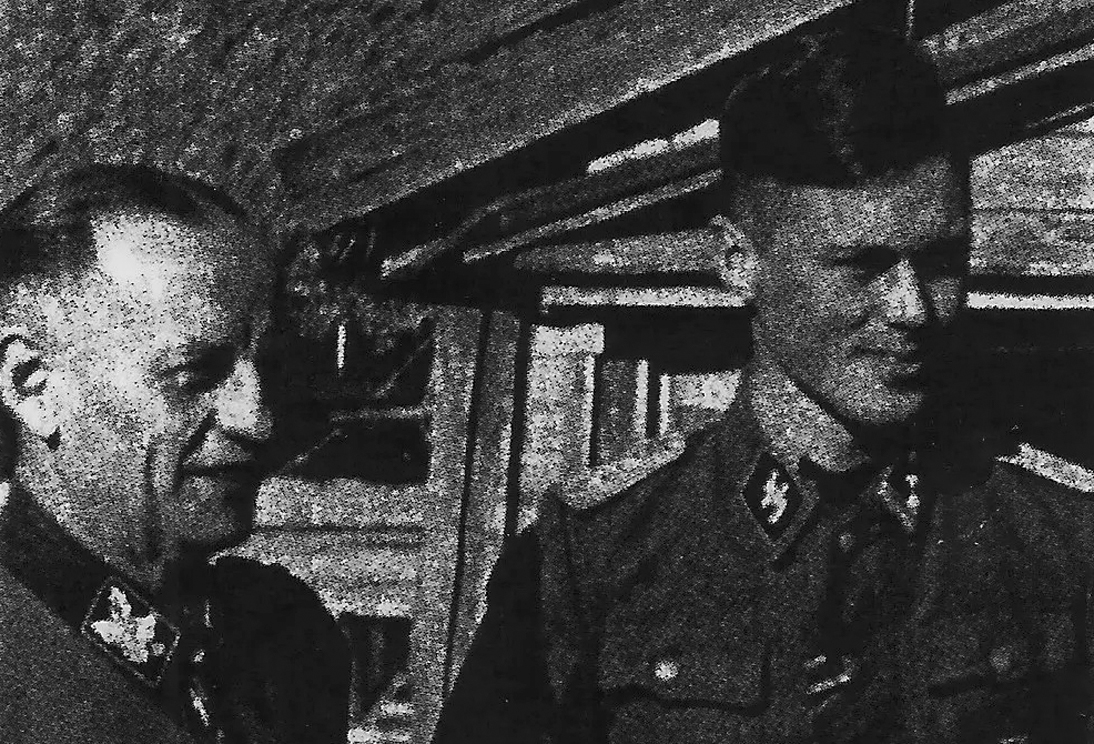
[Above: Rolf Diercks (right).]
[Above: Rolf Diercks, years after the war.]
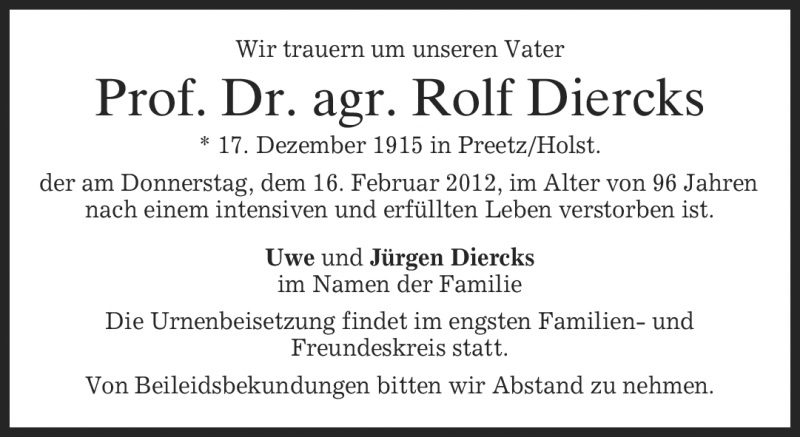
[Above: Rolf Diercks' death announcement.]