[Below: These are children's play postage stamps modeled after authentic German postal stamps bearing Hindenburg's portrait. They are about half the size. These are pretty rare, hundreds of times rarer than the real stamp of its likeness. There are other types of these play stamps, but they are pretty rare. The Germans also made extremely high quality play money (so high quality in fact it rivals real currency).]

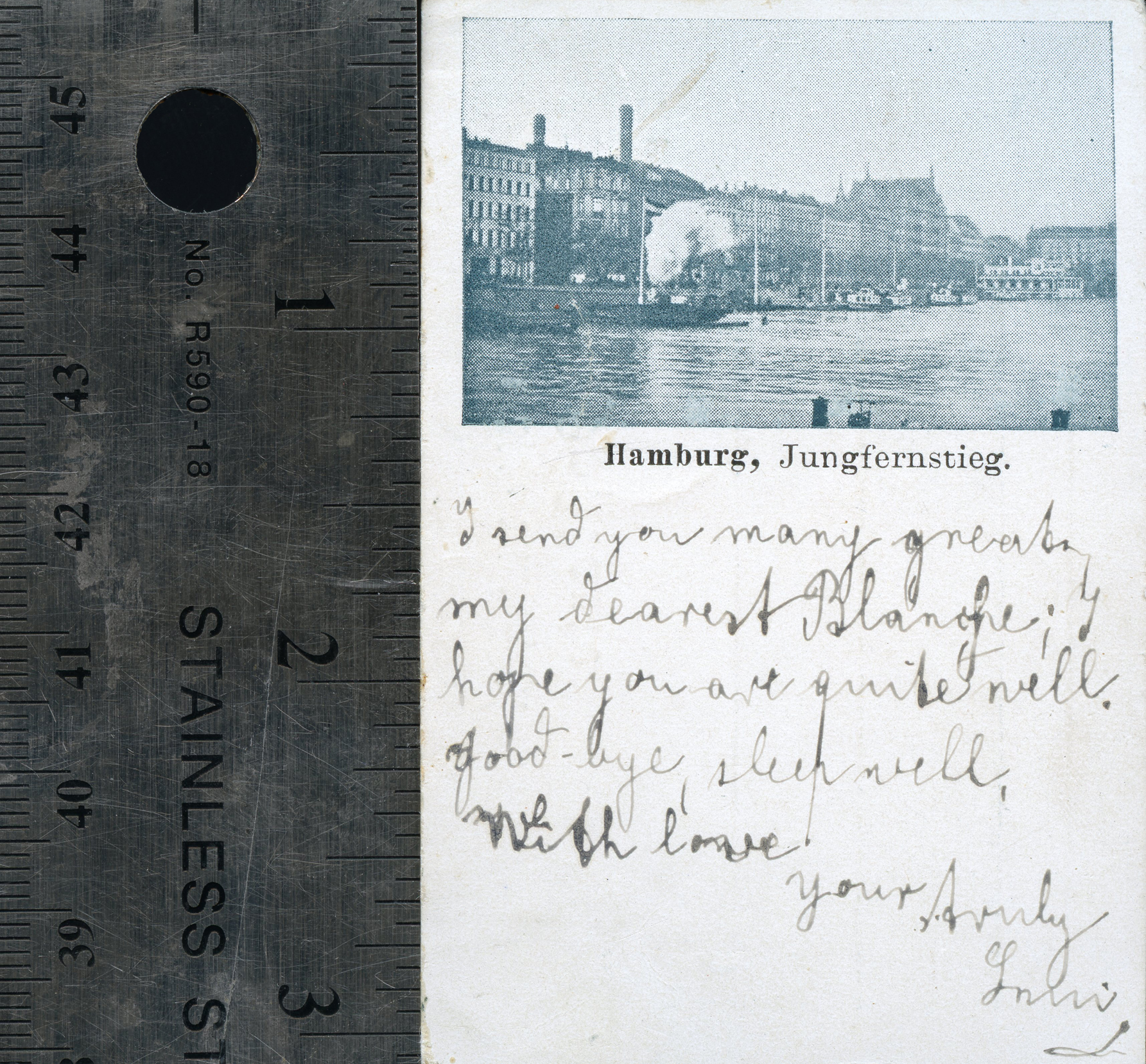
[Below: I stumbled upon this rarity one rainy day, it is tiny! It is the first I've ever seen of one of these. I placed a ruler next to it so you could see just how small it is. It uses an official German postage stamp from 1889 as its inspiration. It is in English, it says:
'I send you many greetings
my dearest Blanche I
hope you art quite well.
Good-bye, sleep well.
With love
Yours truly.']
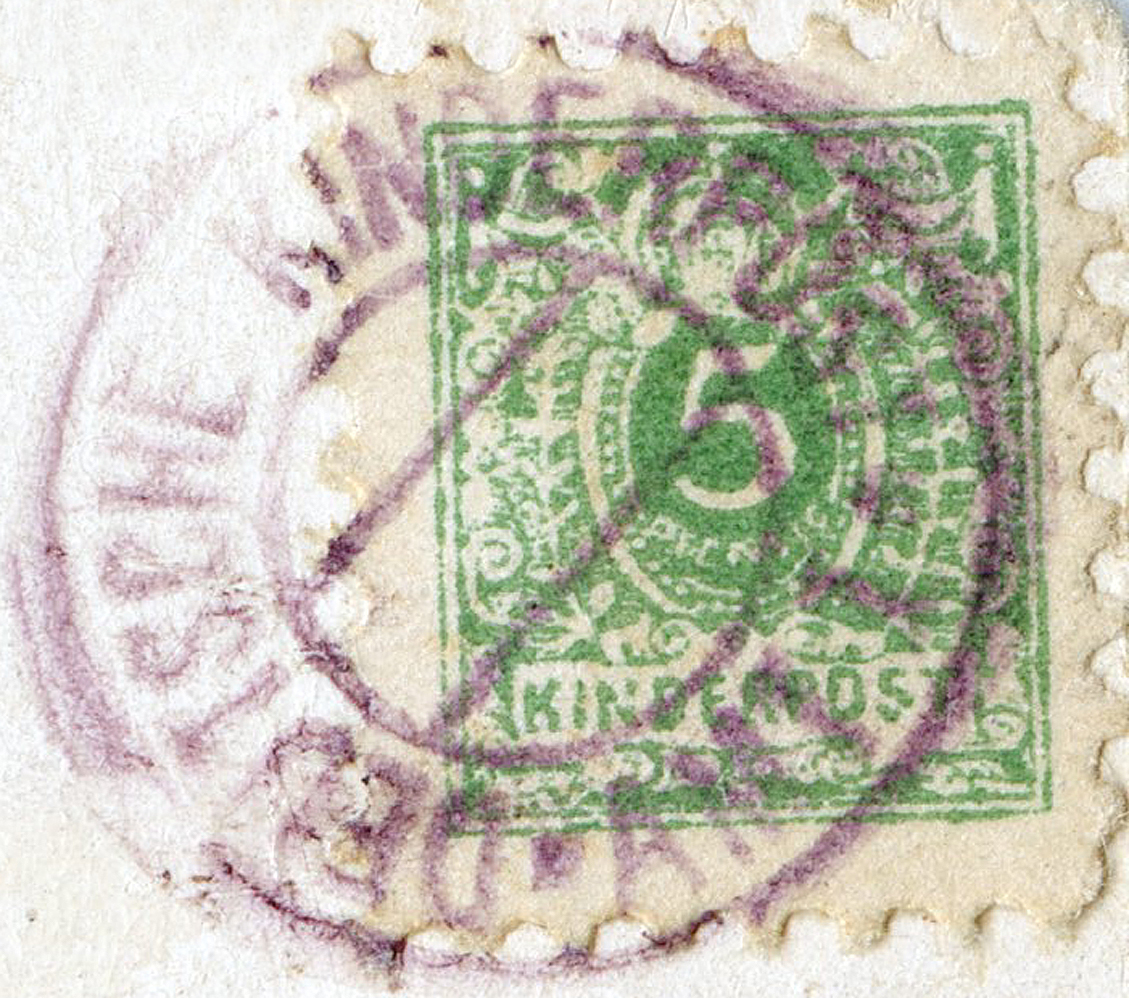
[Below: Close-up. It says 'Deutsche Kinderpost'.]
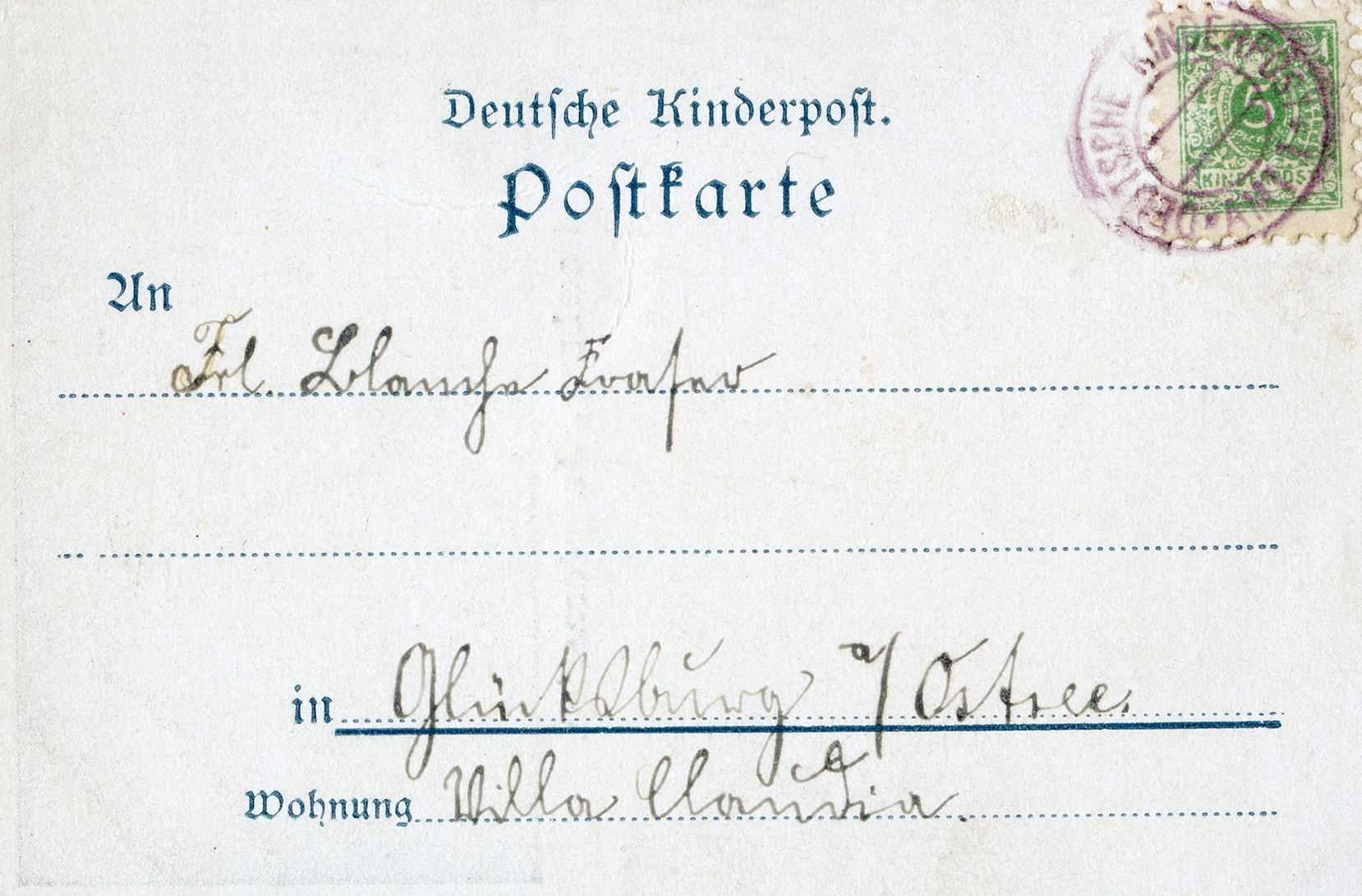
[Below: Reverse.]
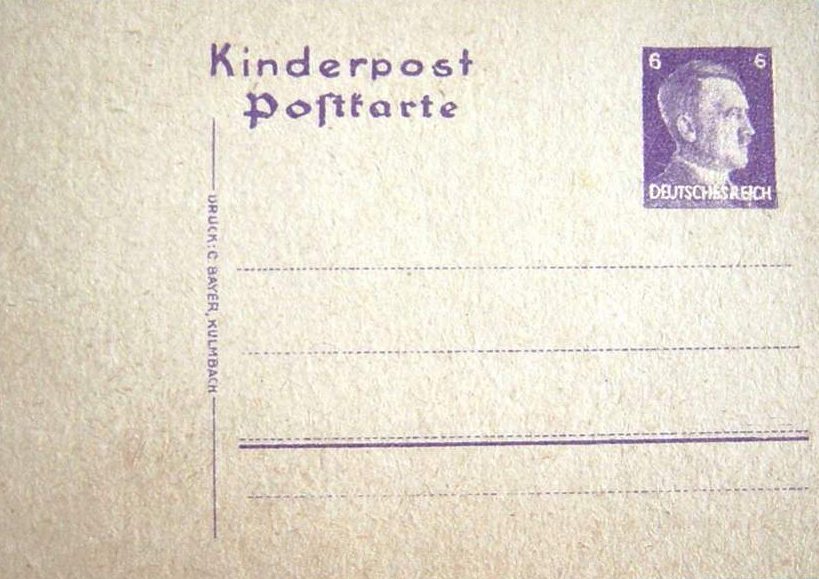
[Below: Wow, this is cool. Imagine being a kid and playing with Hitler stamps!]
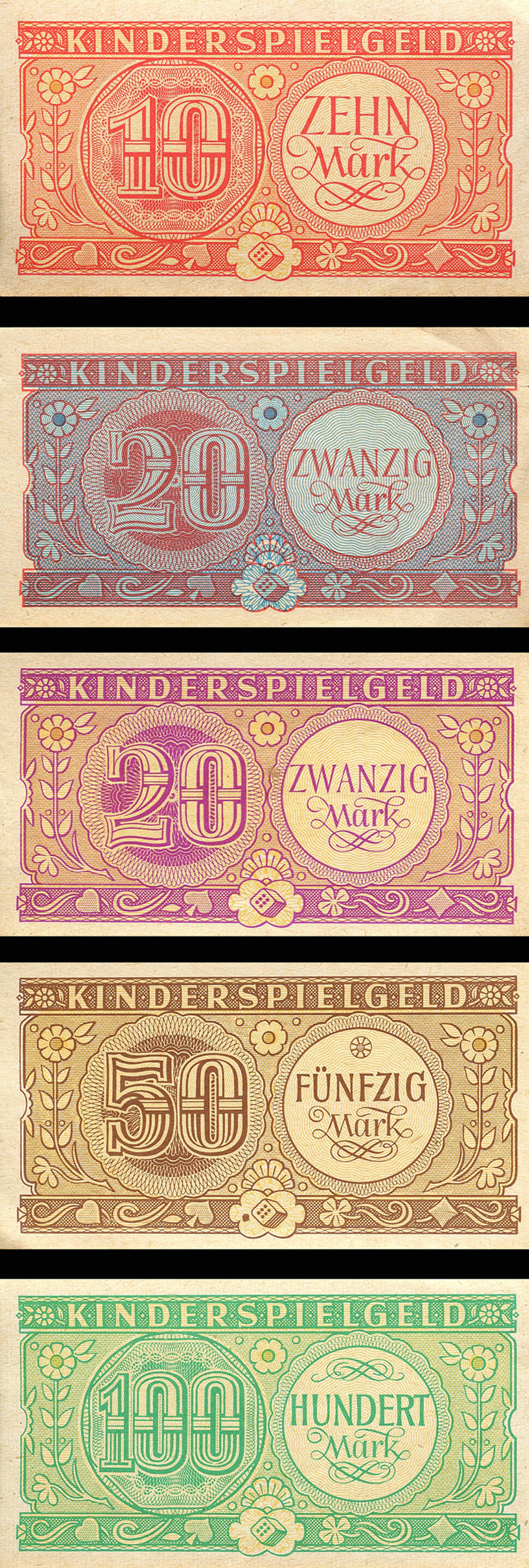
[Below: On a related subject, here are examples of German play money. The detail and care they put into these is impressive.]
[Below: The back of these play notes are blank.]


[Below: This is pretty extraordinary. For a German stamp collector, this is incredibly cool. It is an intricate game to teach children about the postal service and money. It is around 100 years old and is needless to say, very rare.]
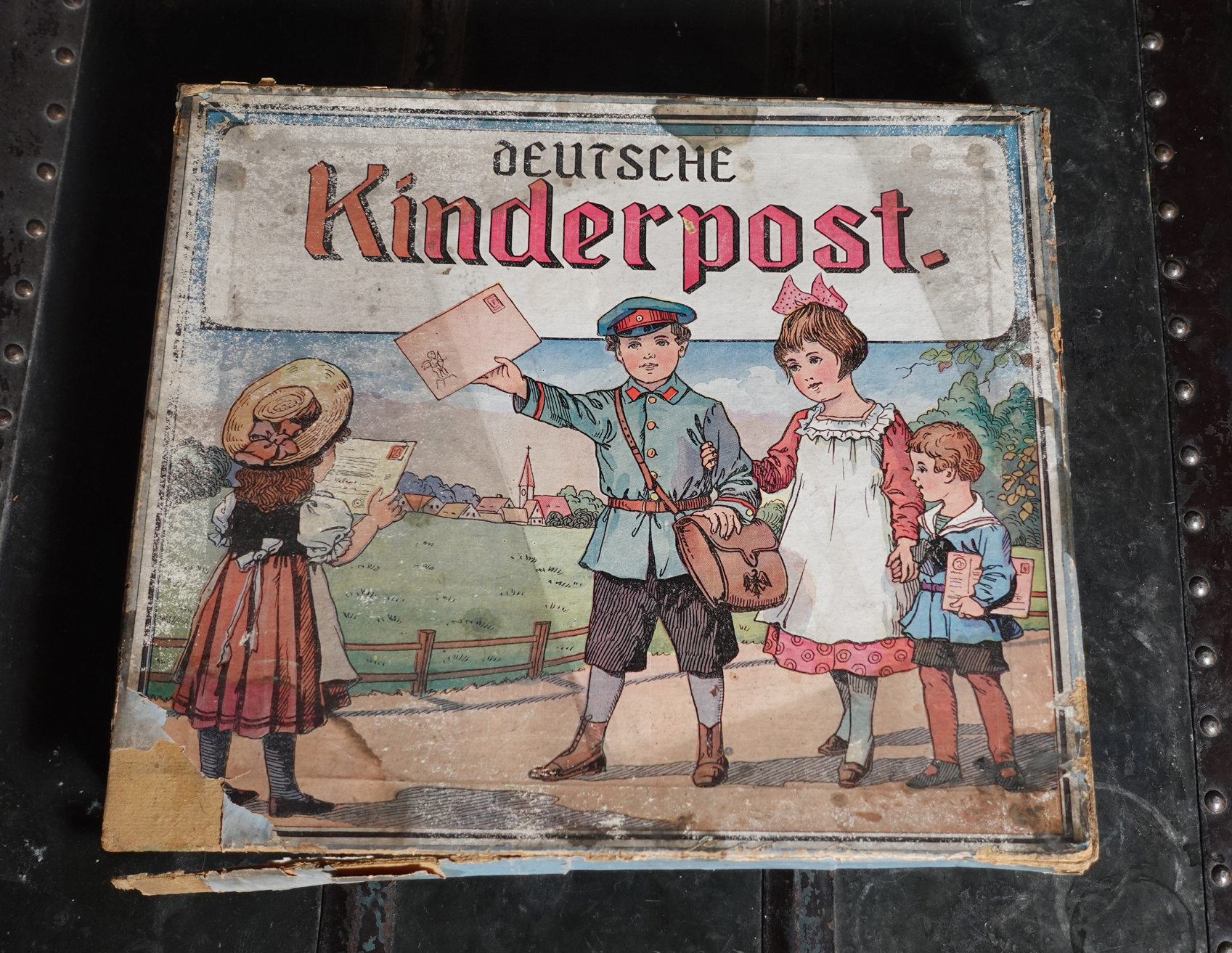
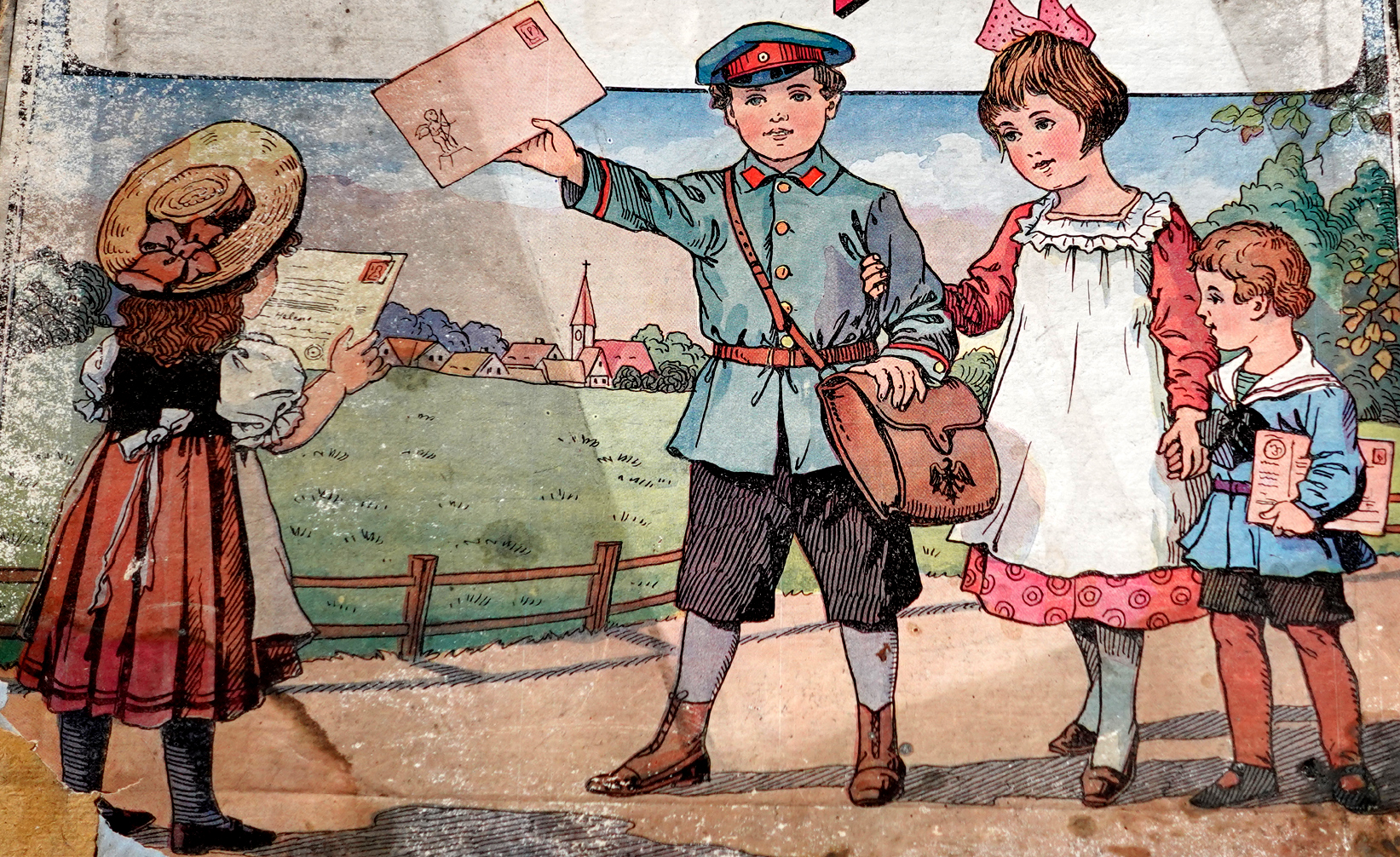
[Below: Close-up with contrast adjustment.]
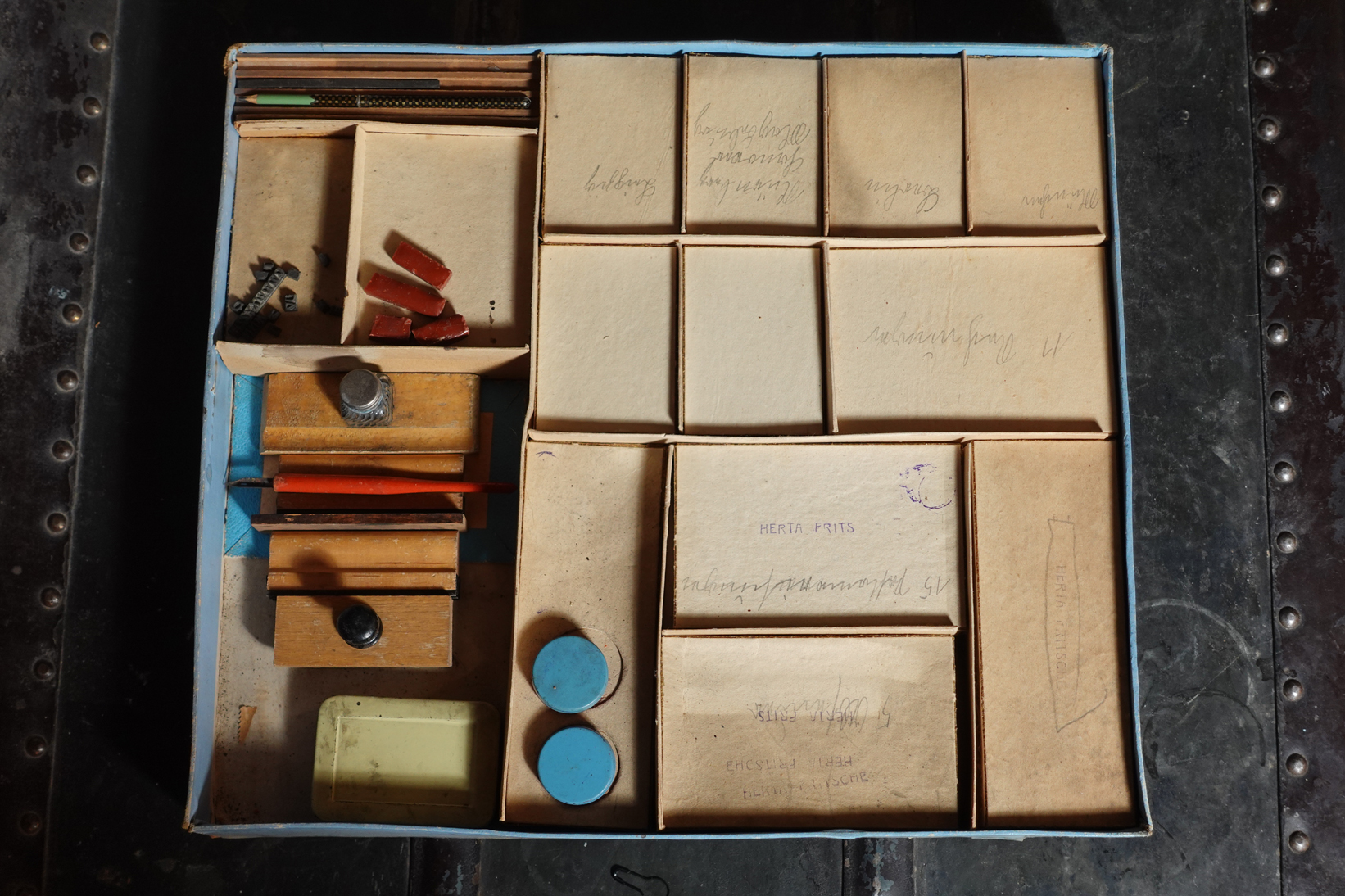
[Below: Here is the inside of the box. You can see the implements (the mini postcards, envelopes and money go in the empty places).]
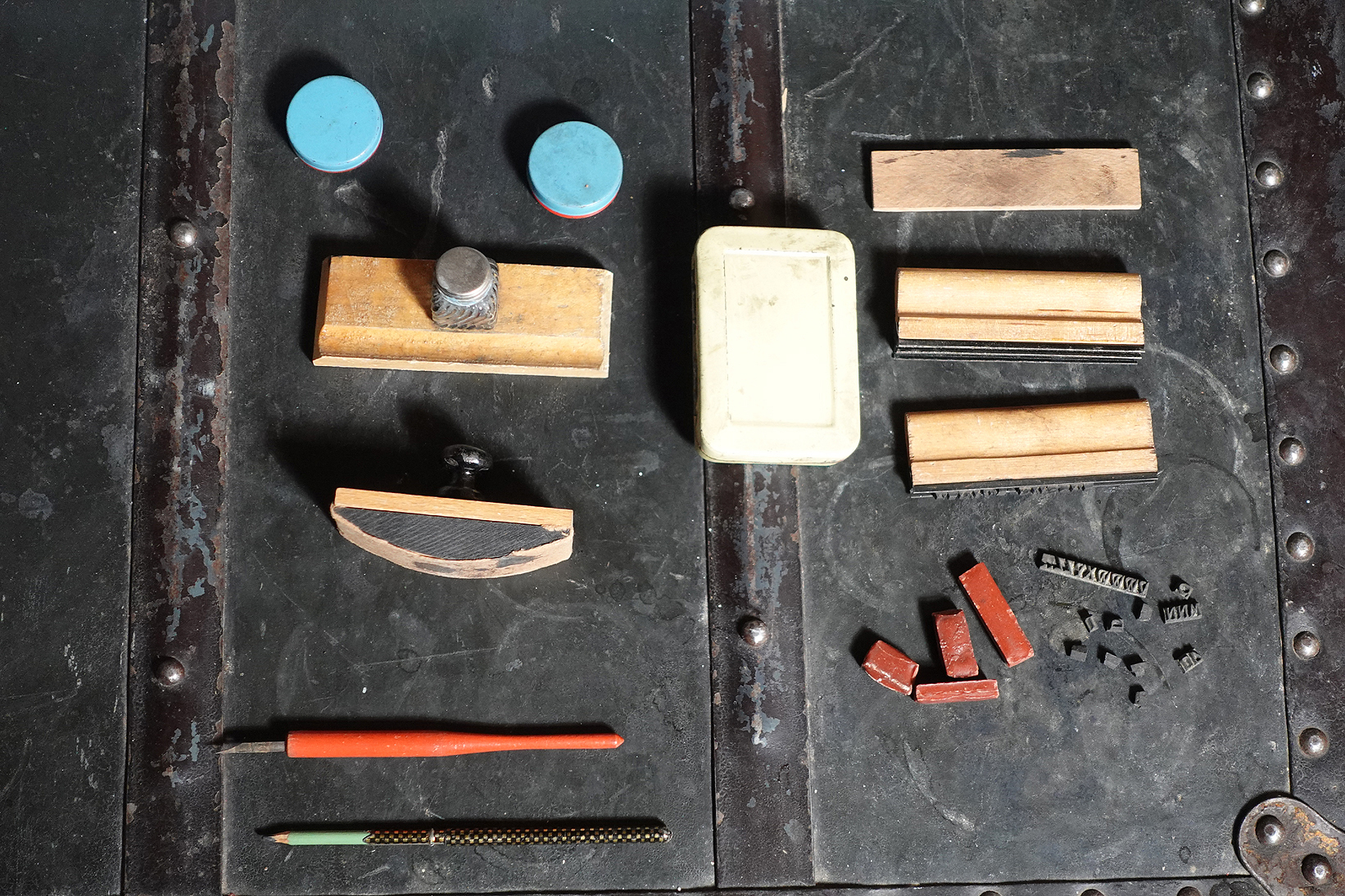
[Below: The various equipment.]
[Below: Here we have a metal case, which many decades ago contained black ink, and the wooden stamper, which one could insert letters to create words in.]
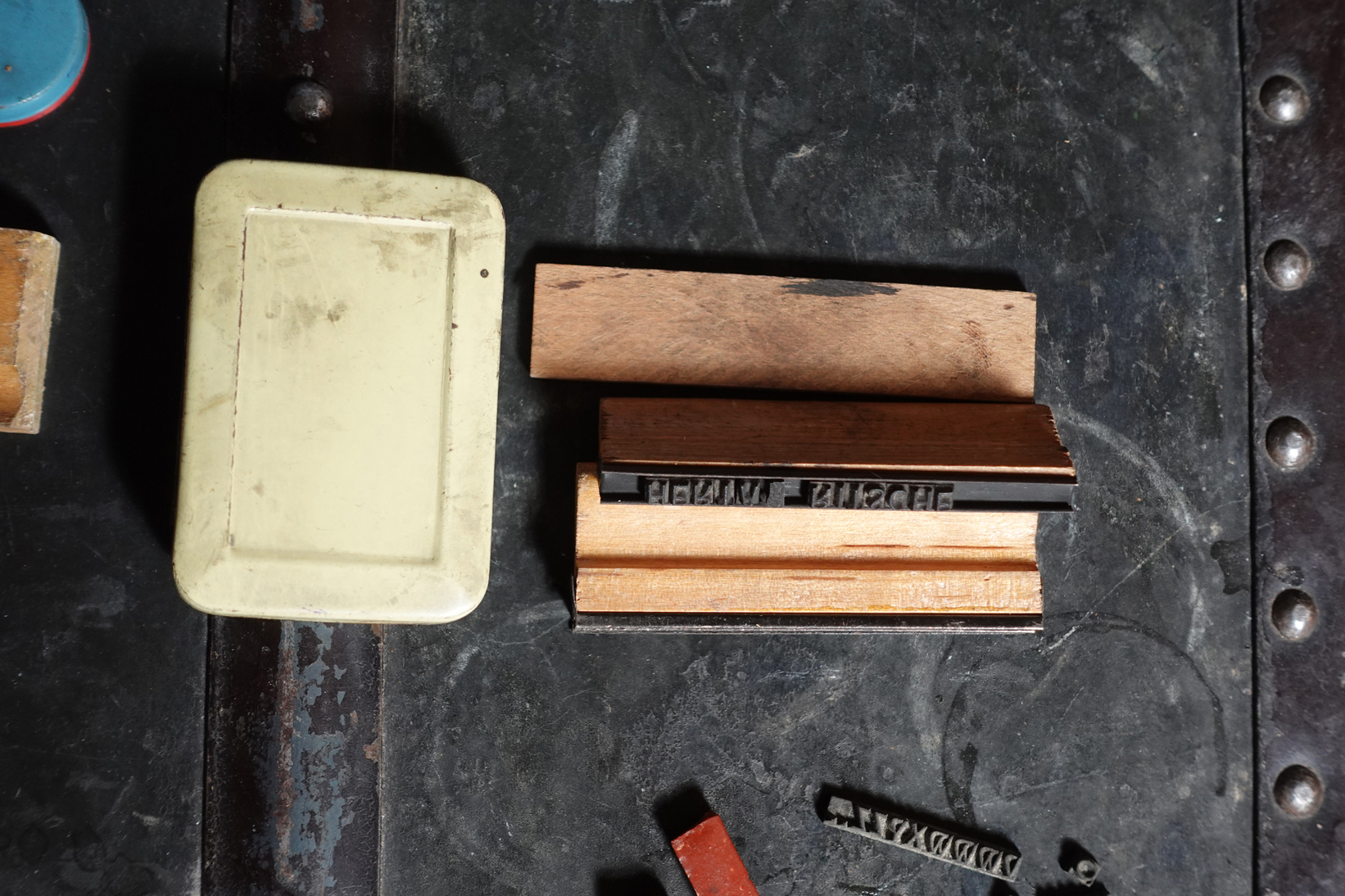
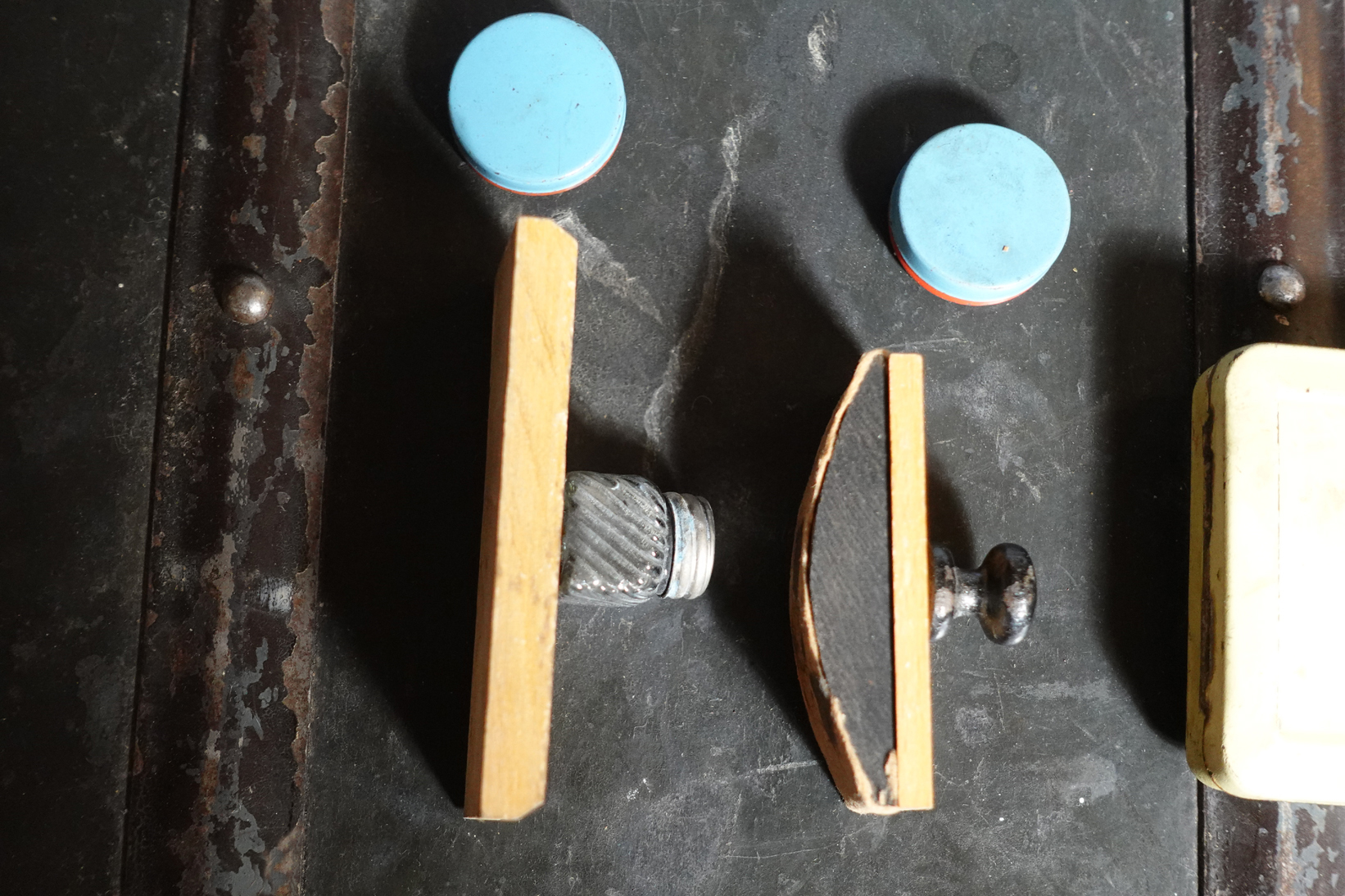
[Below: Small ink metal containers, long ago containing black ink, (left) a small glass ink bottle, empty, and roller-type stamper.]
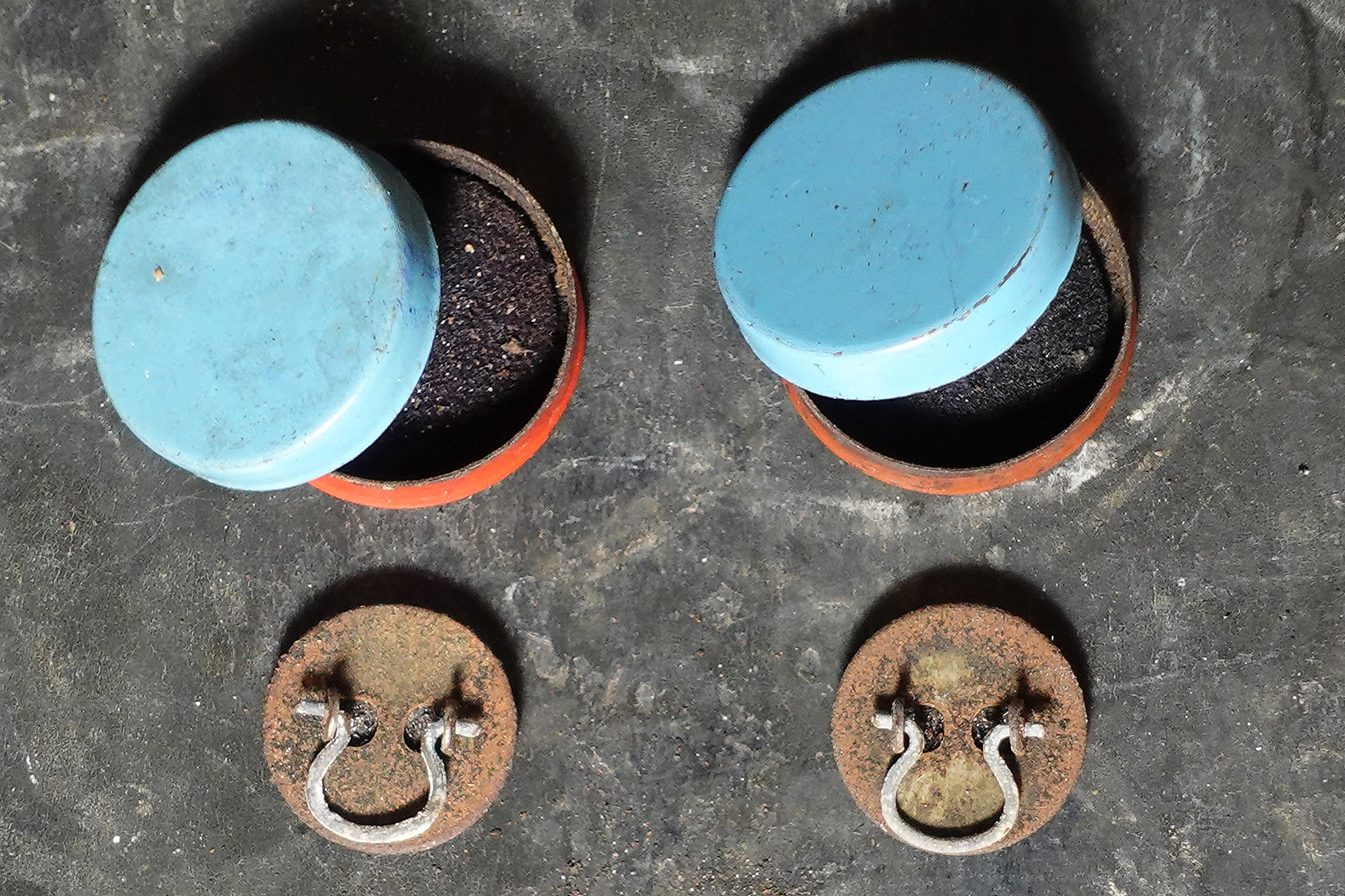
[Below: Empty small ink containers, opened, to reveal long dried ink sponges, and tiny metal stampers within.]
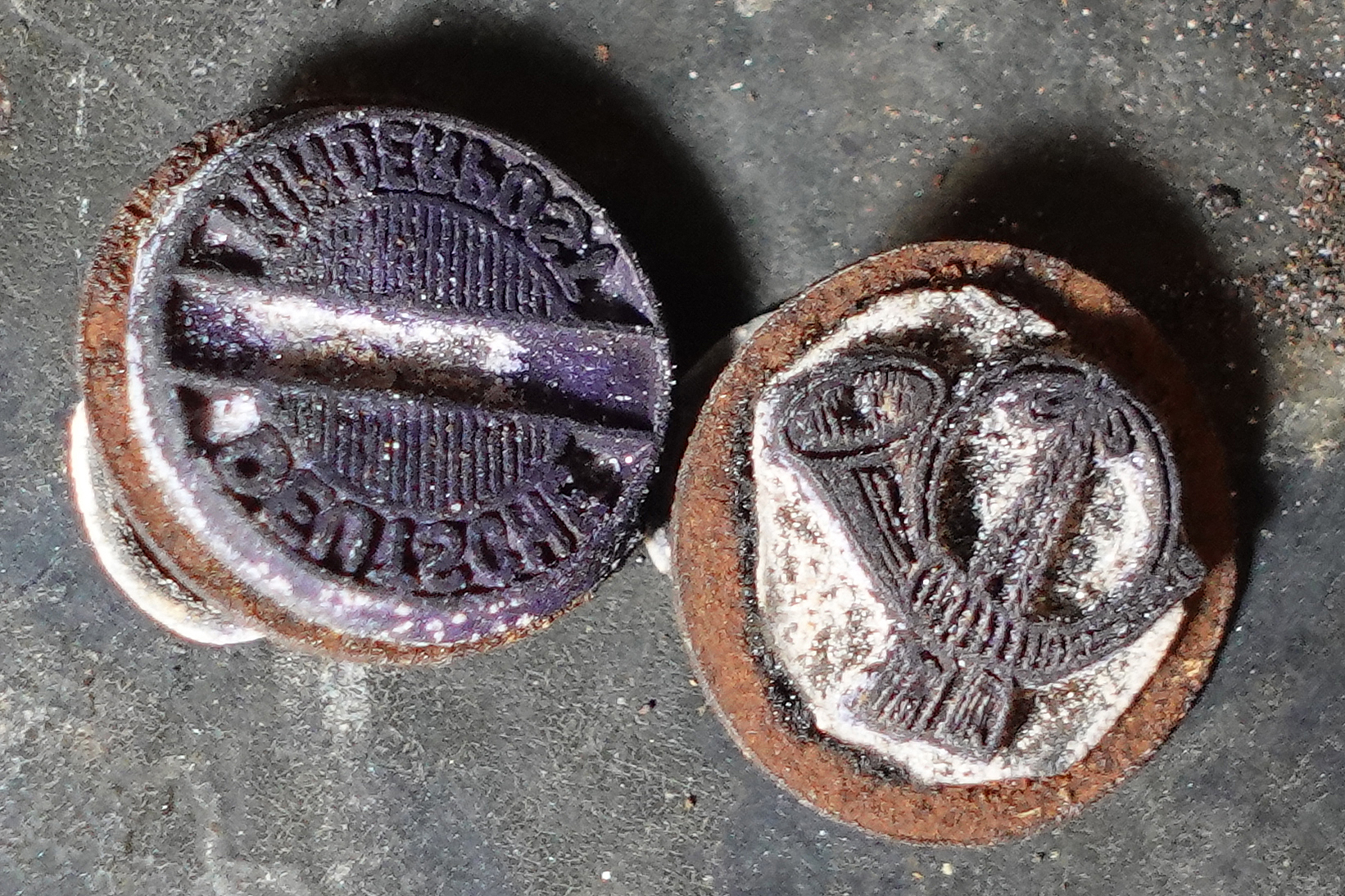
[Below: The heads of the stamps, one showing the postal horn symbol and the other says 'Deutsche Kinderpost' (German Children's Post).]
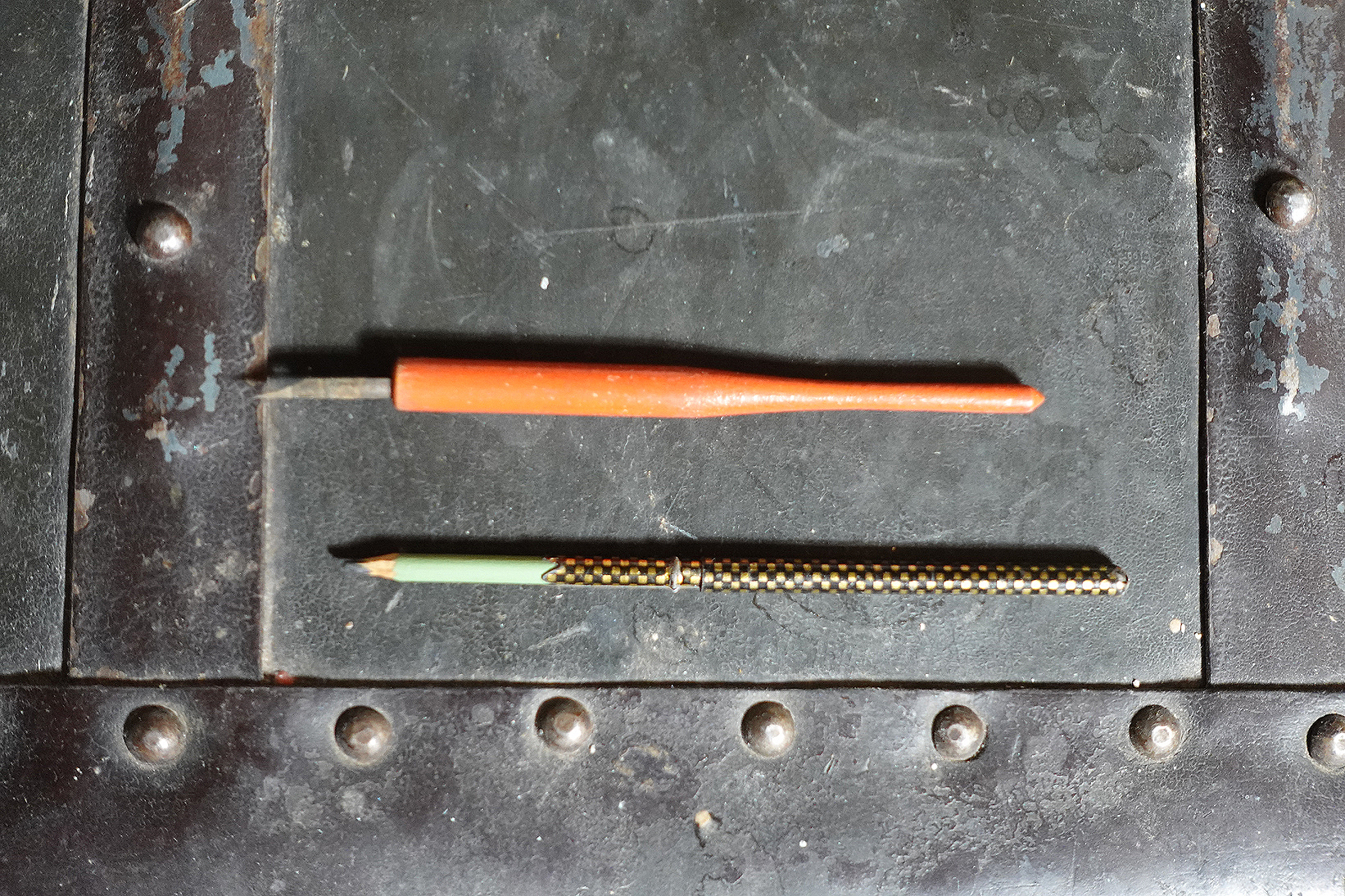
[Below: Small pencil and a dip pen (for the glass ink bottle above).]
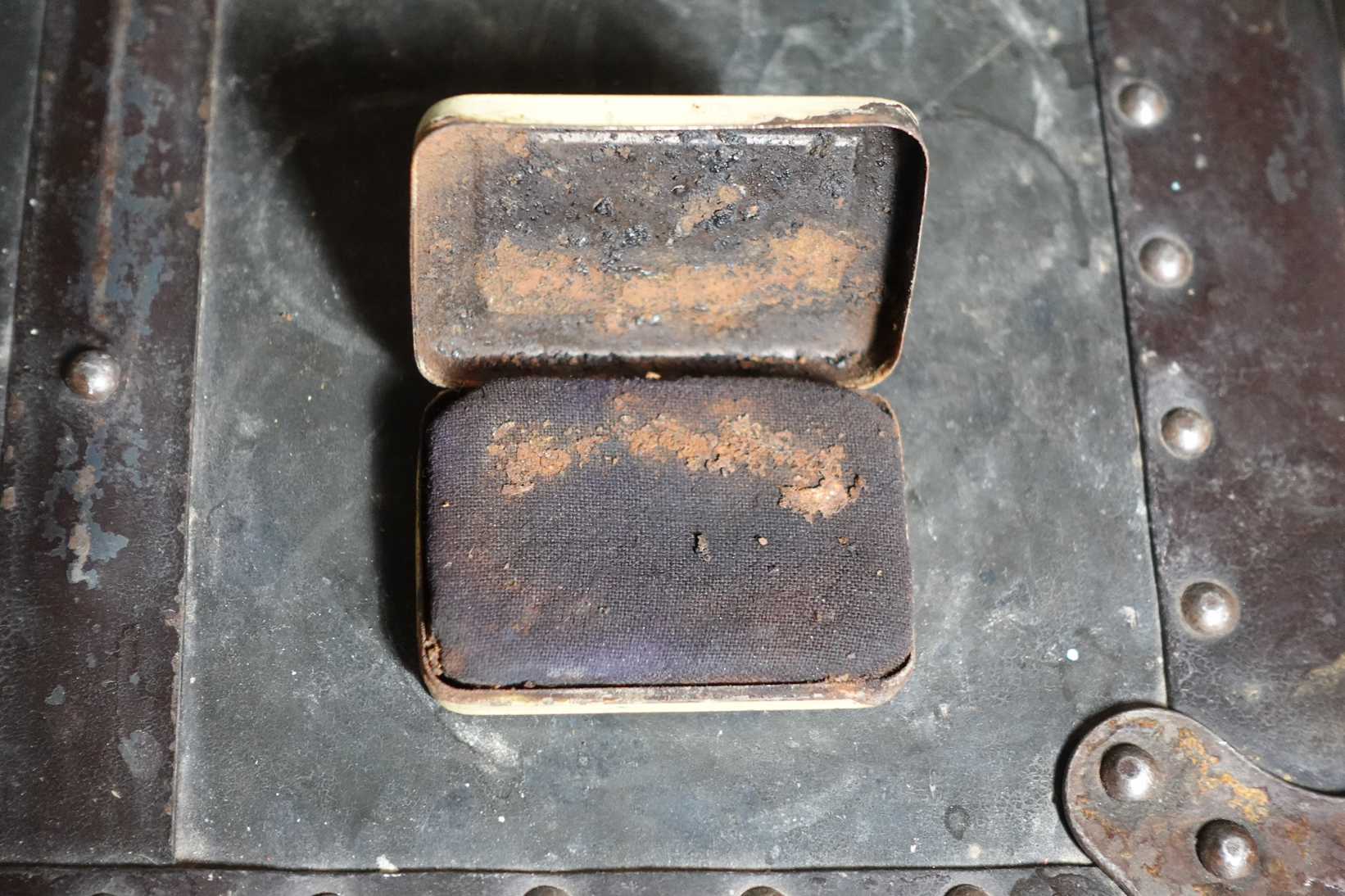
[Below: Metal tin of a dried-up ink pad, for the wooden roller above.]
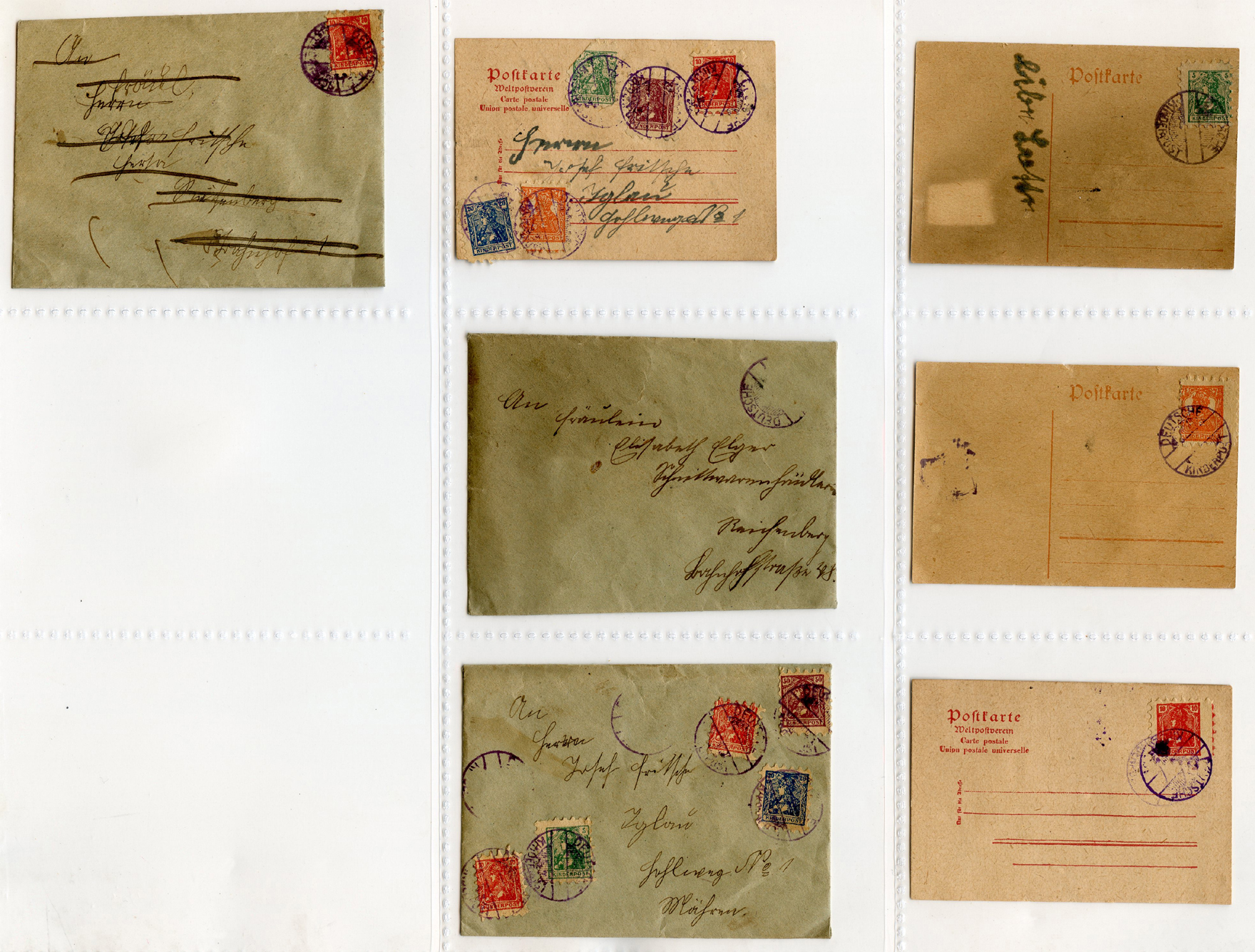
[Below: Here's a variety of envelopes and postcards in the set, which children over one hundred years ago wrote on and canceled. As you can see each one has a miniture stamp.]
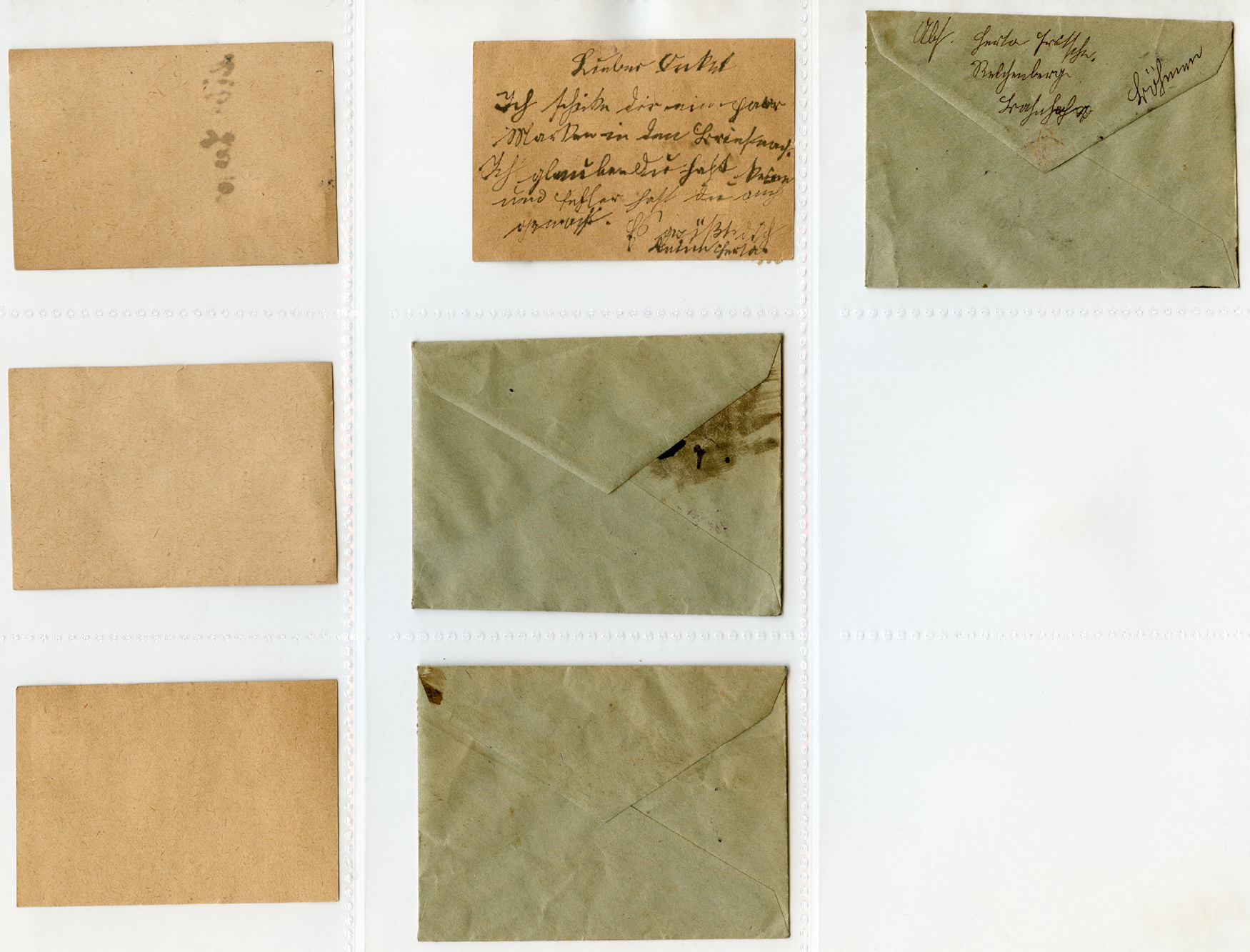
[Below: Reverse of the above.]
[Below: Postcard close-up.]
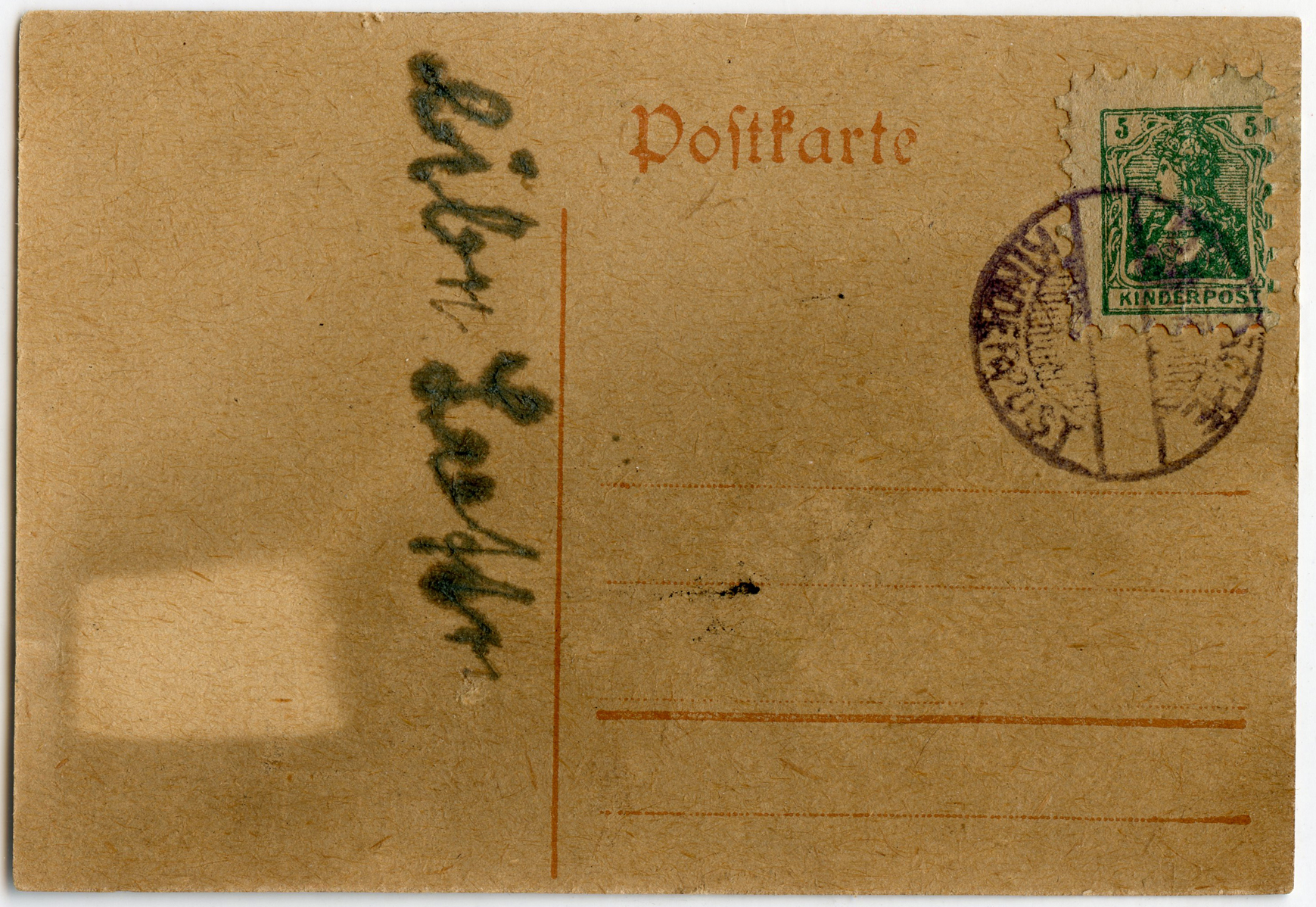
[Below: Postcard close-up.]
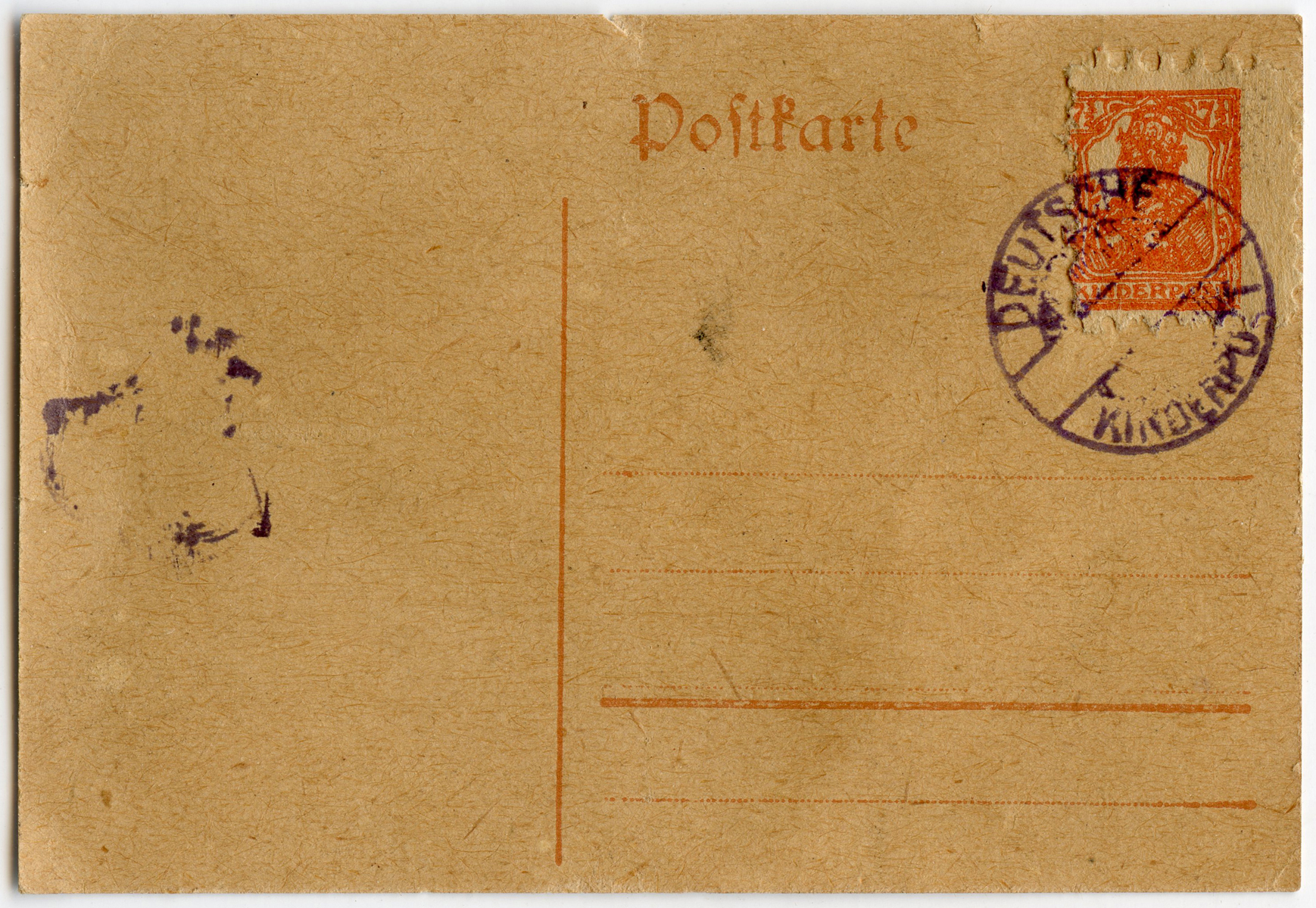
[Below: Postcard close-up.]
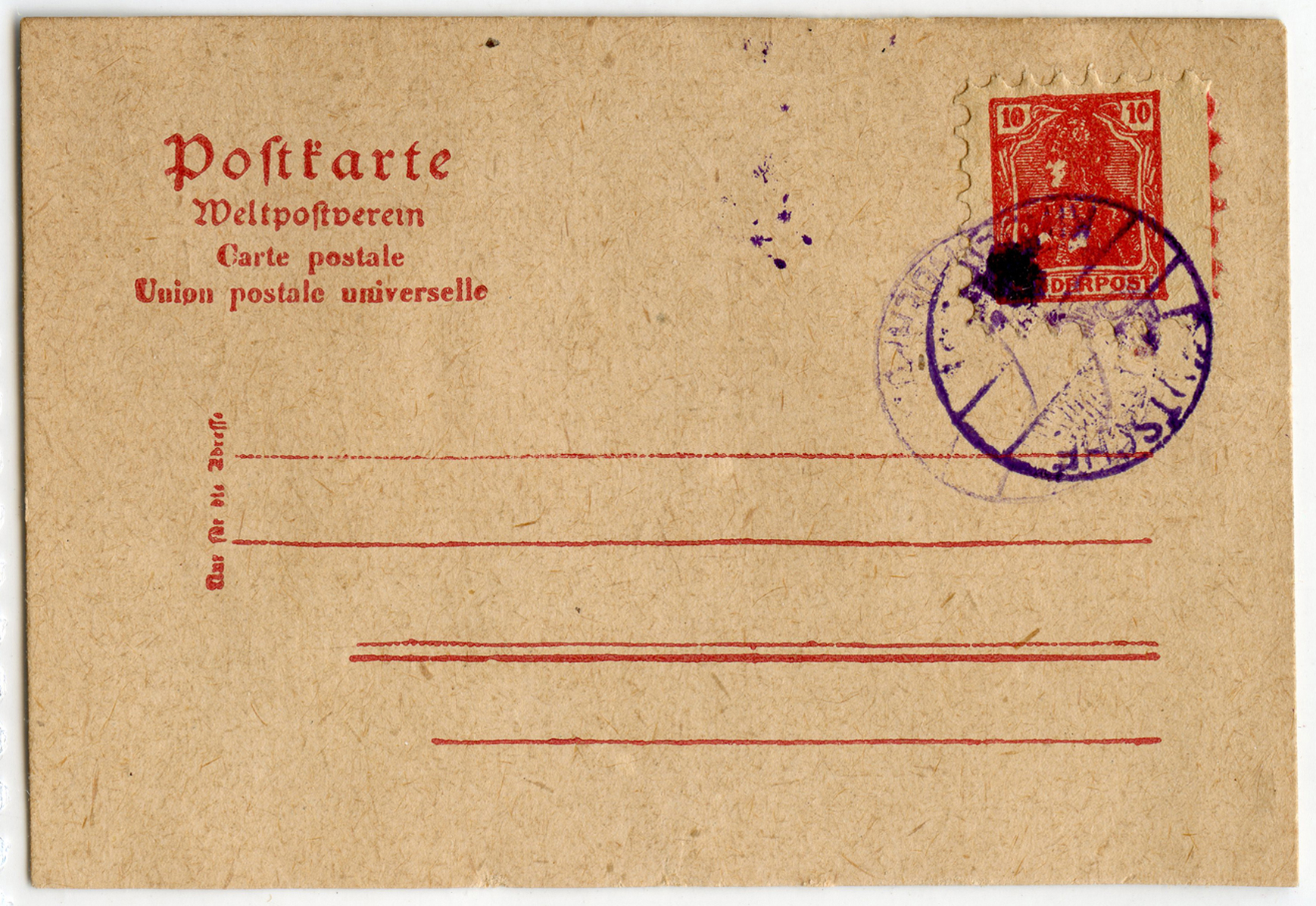
[Below: Postcard close-up. This one must have been sent to Mars, with its abundant postage.]
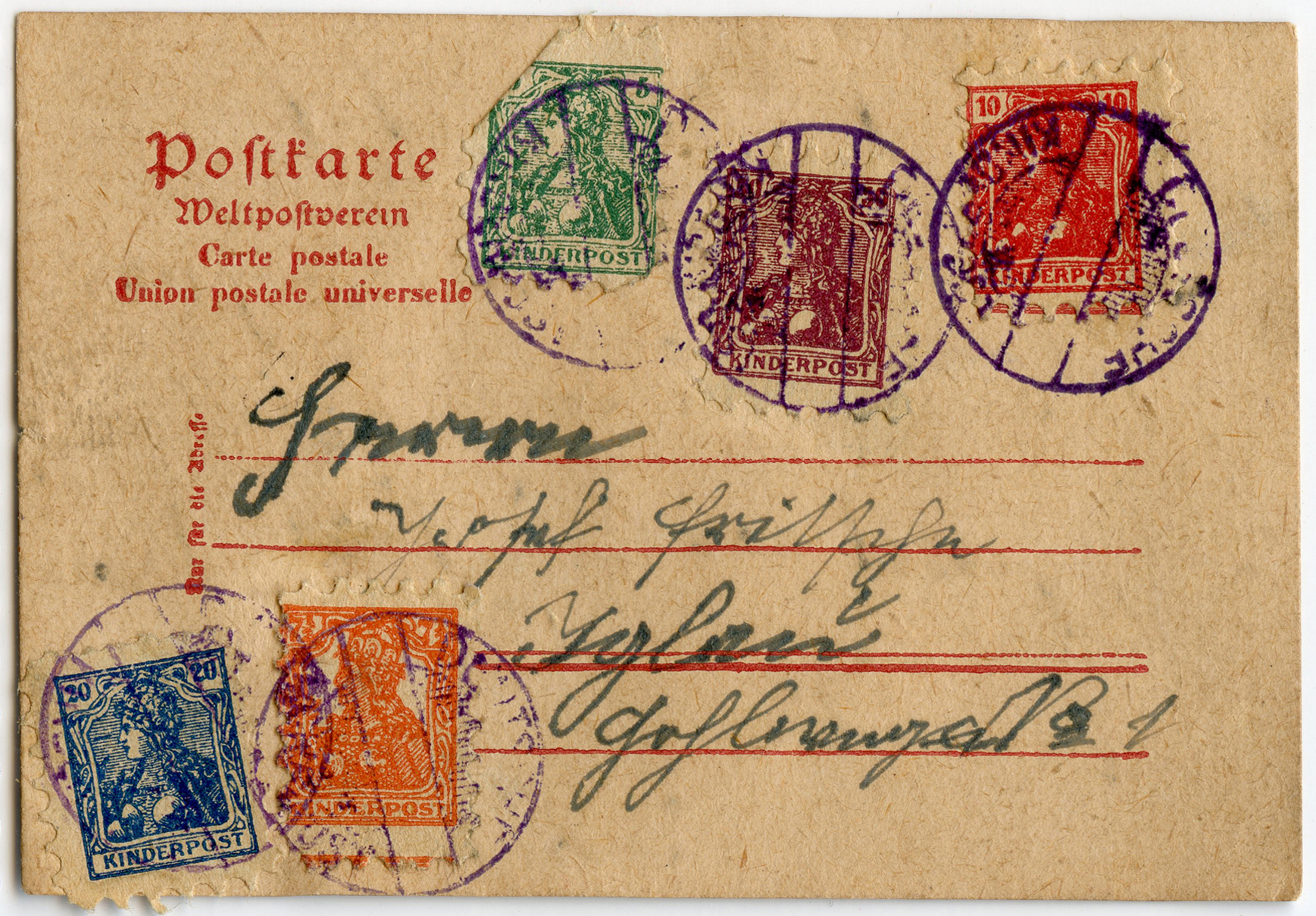
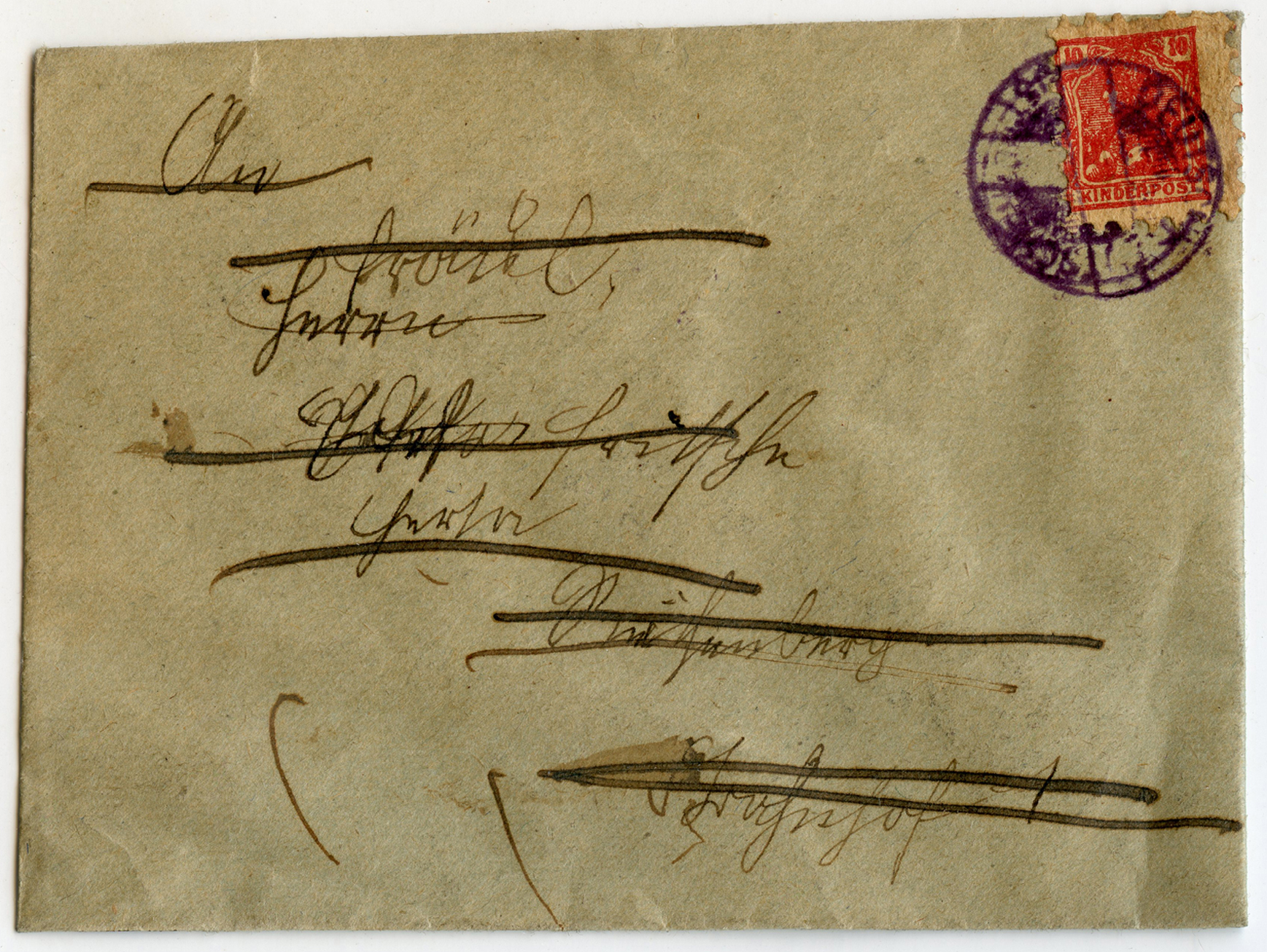
[Below: Envelope close-up. This one also to Mars.]
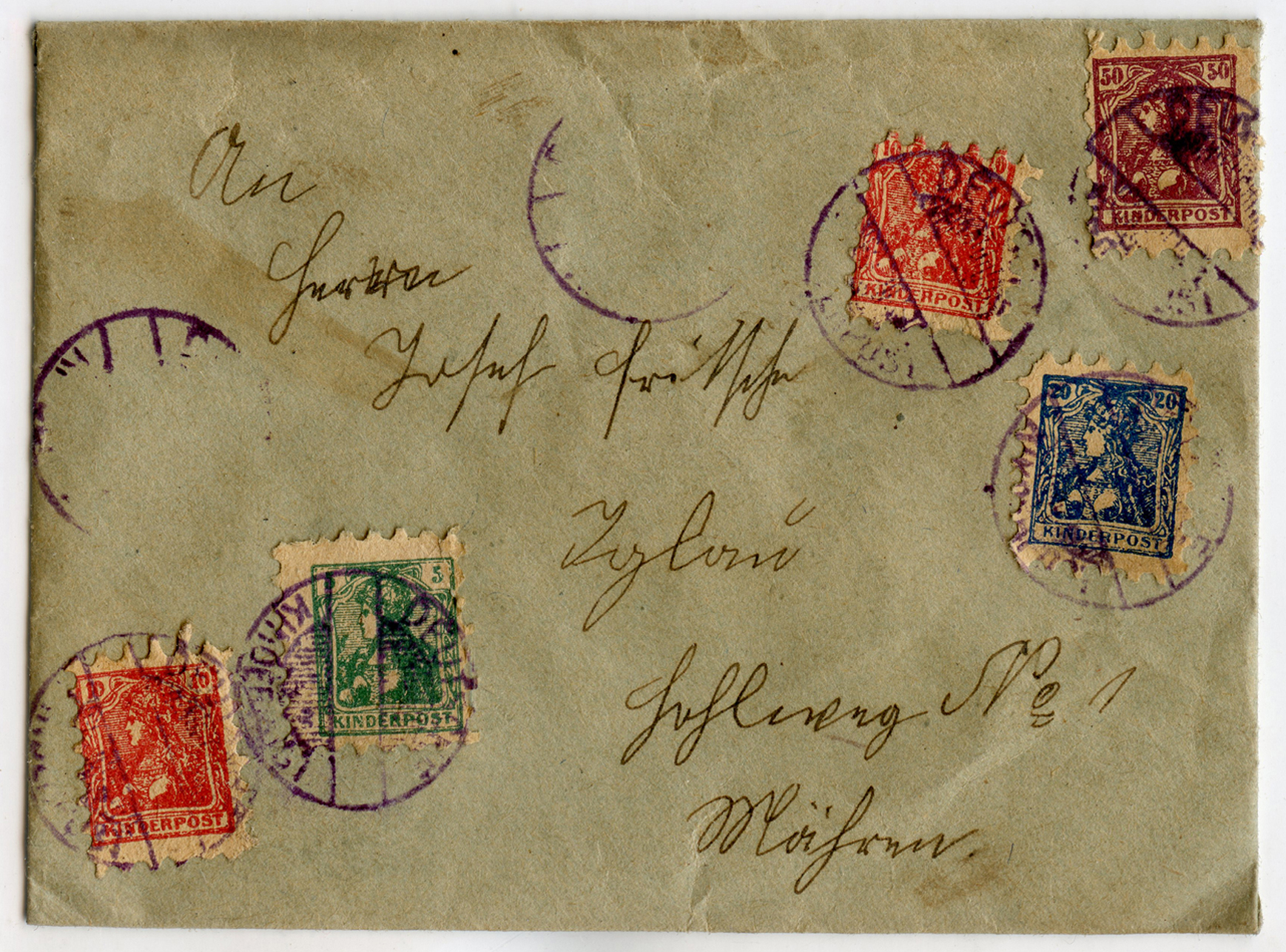
[Below: Envelope close-up.]
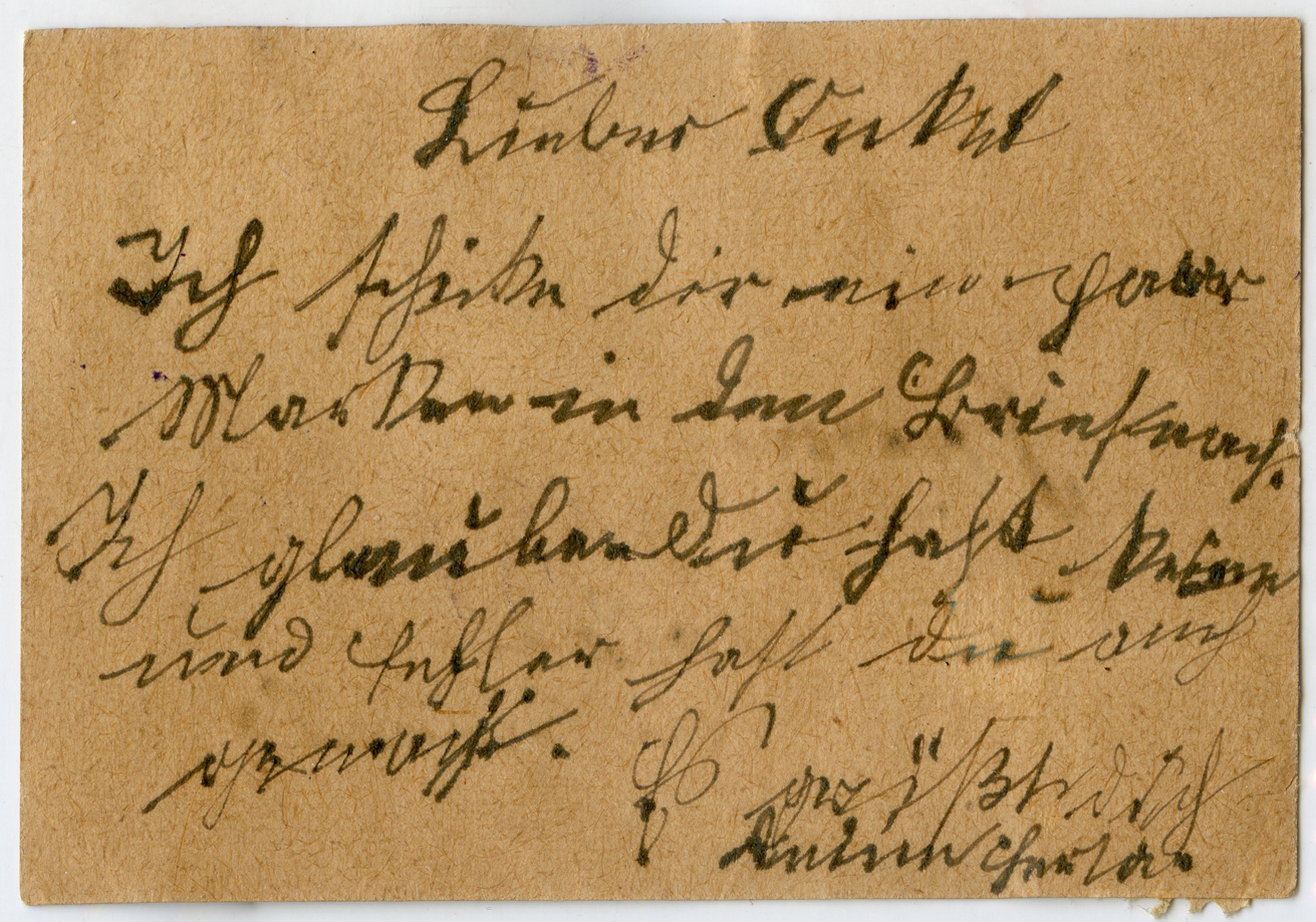
[Below: Here is a long message from the back of one of the envelopes. I wonder what it says?]
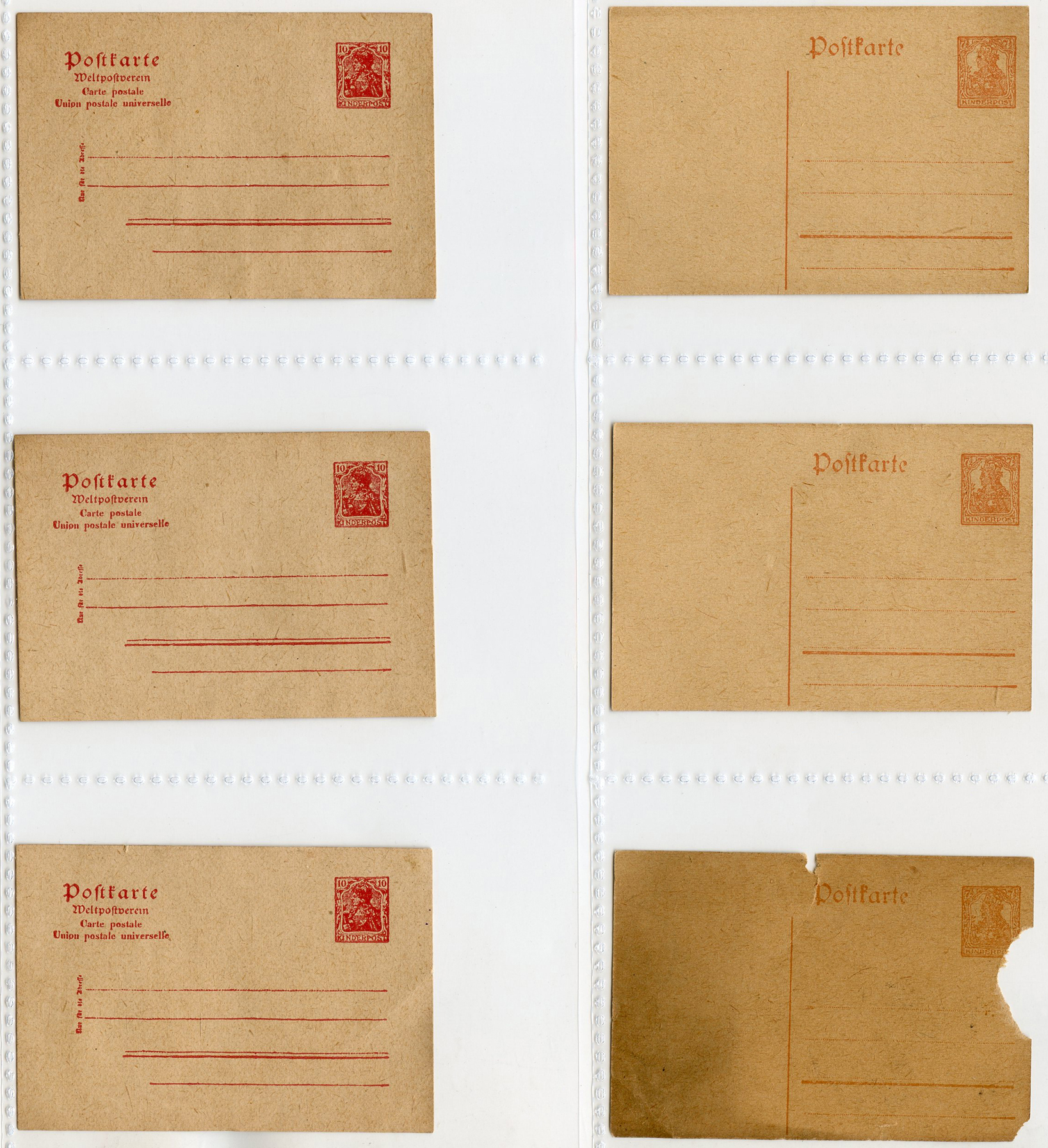
[Below: Here are some unused pre-paid postcards, as you can see there were different types, showing different denominations, just like the real ones.]
[Below: Postcards reverse.]
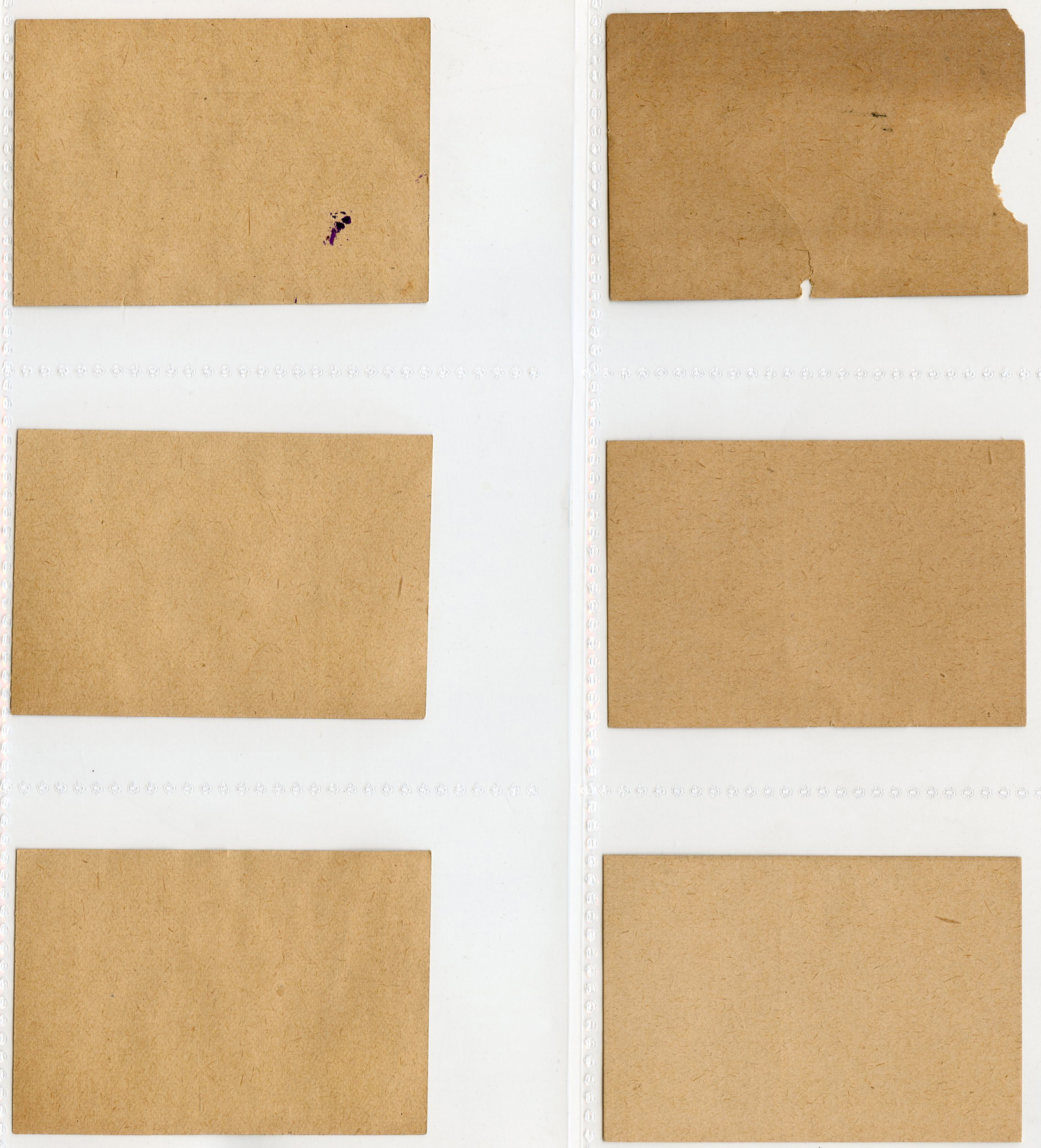
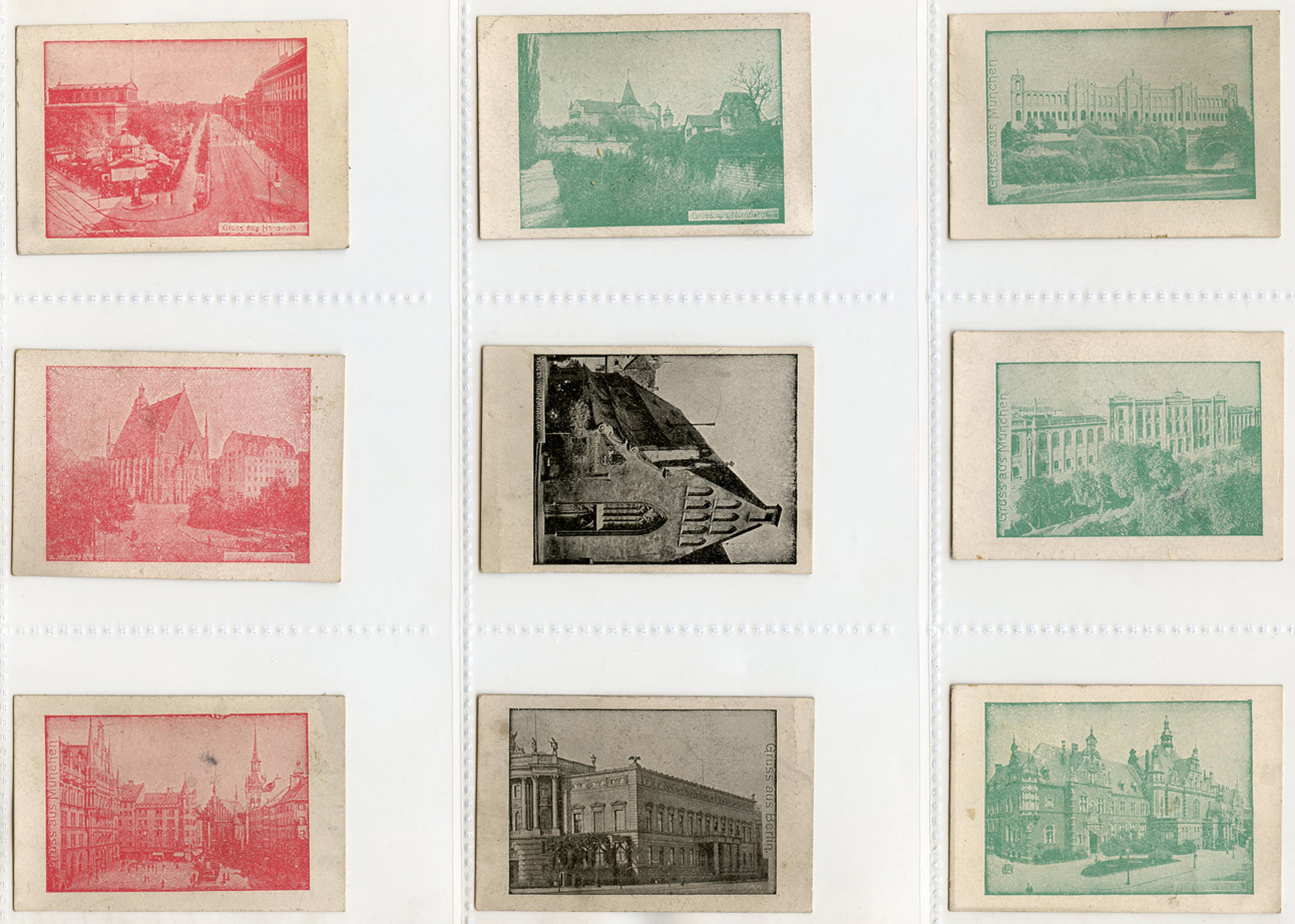
[Below: Scenic set of postcards.]
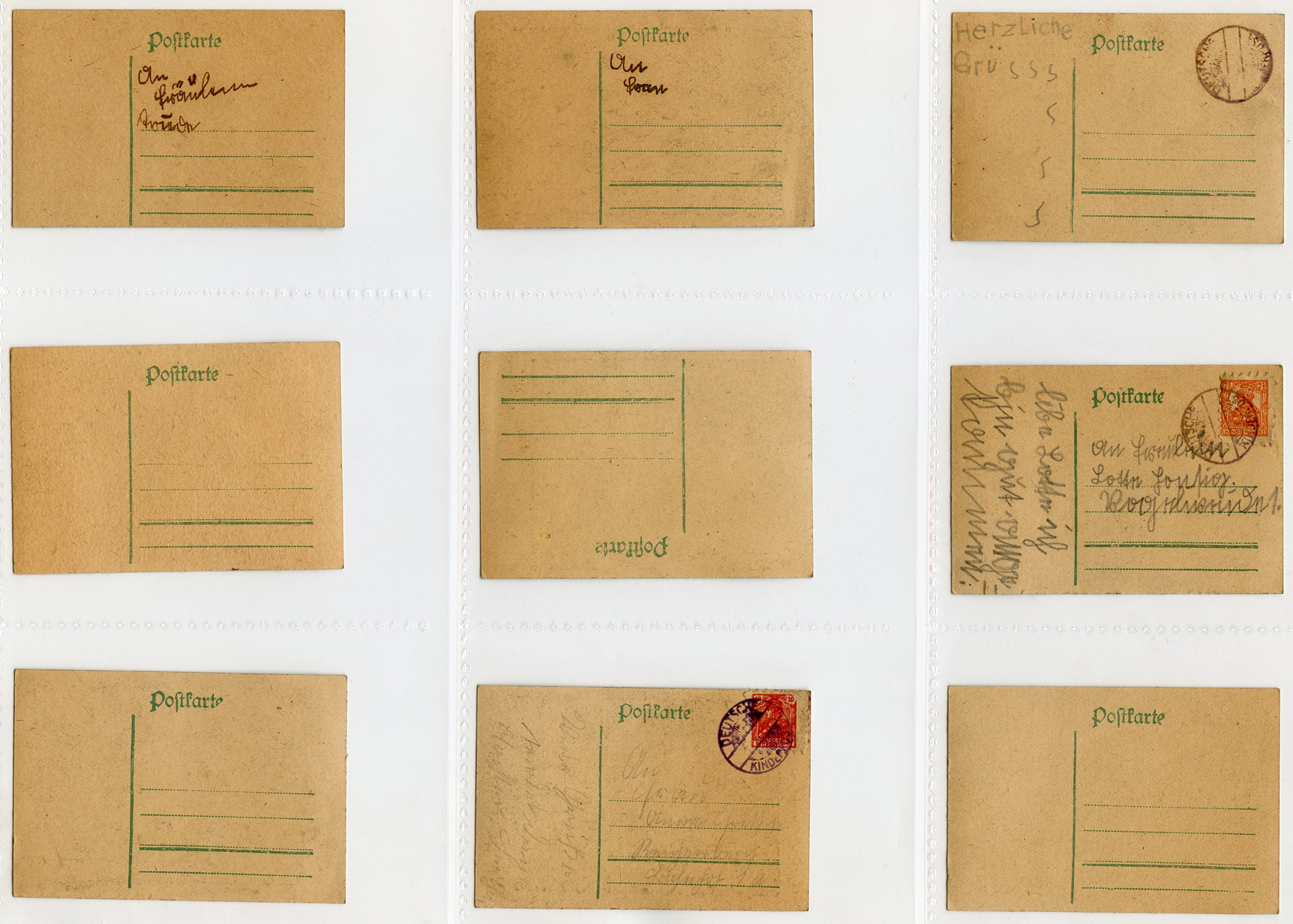
[Below: Postcards reverse. Some used, some not.]
[Below: Postcard close-up.]
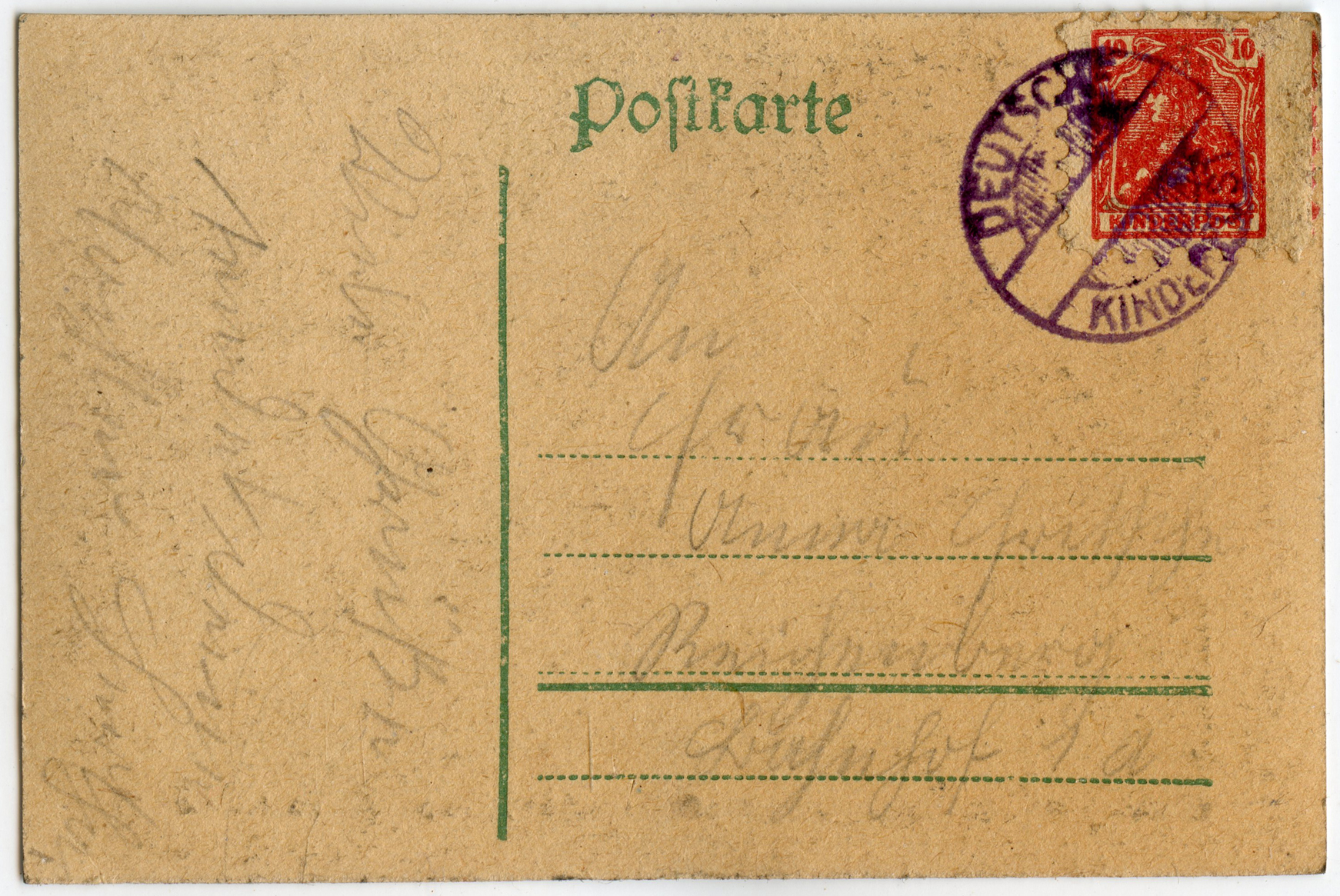
[Below: Postcard close-up.]
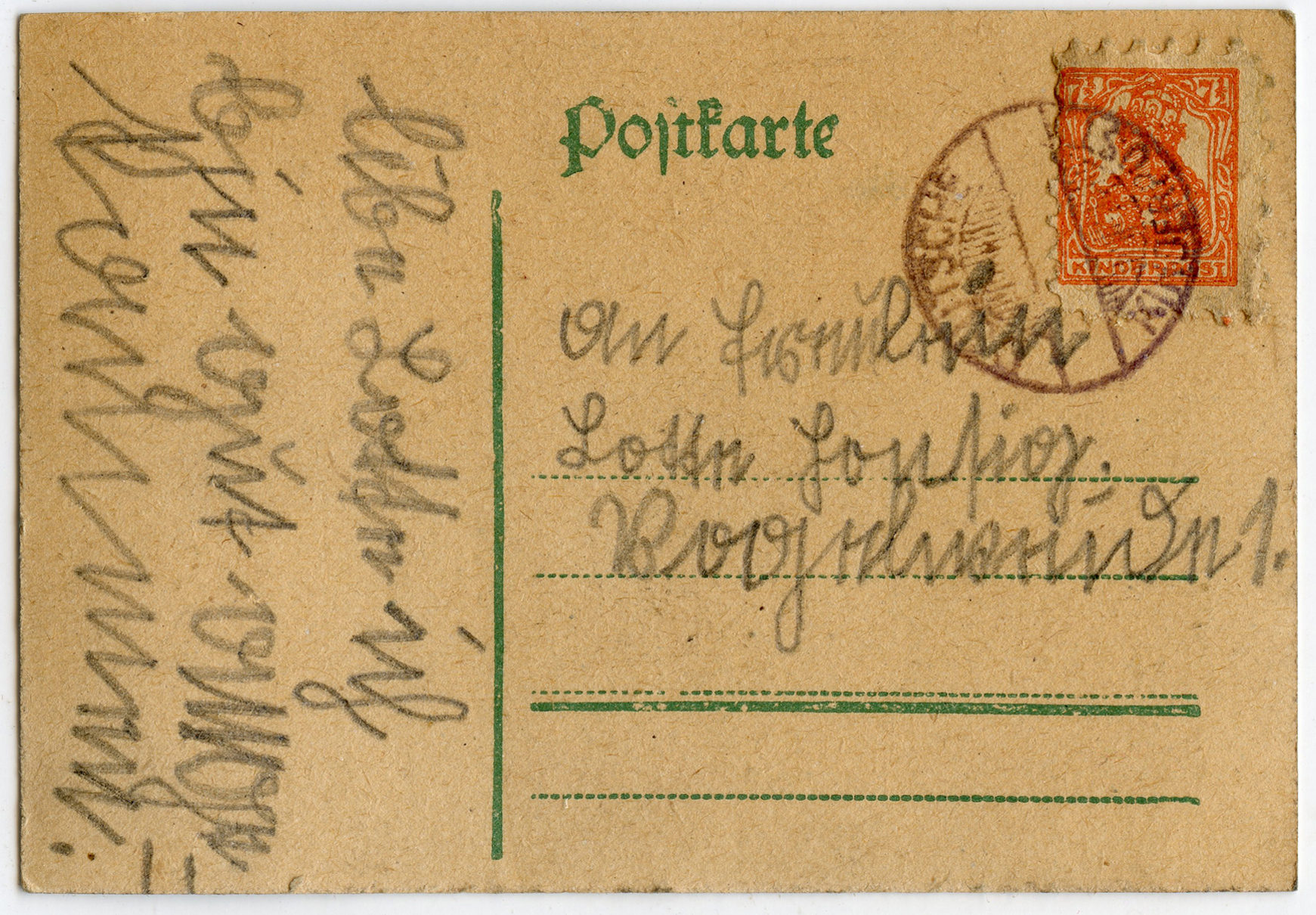
[Below: Also included are papers called 'Rechnung' (statement) and 'Postanweisung' (money order).]
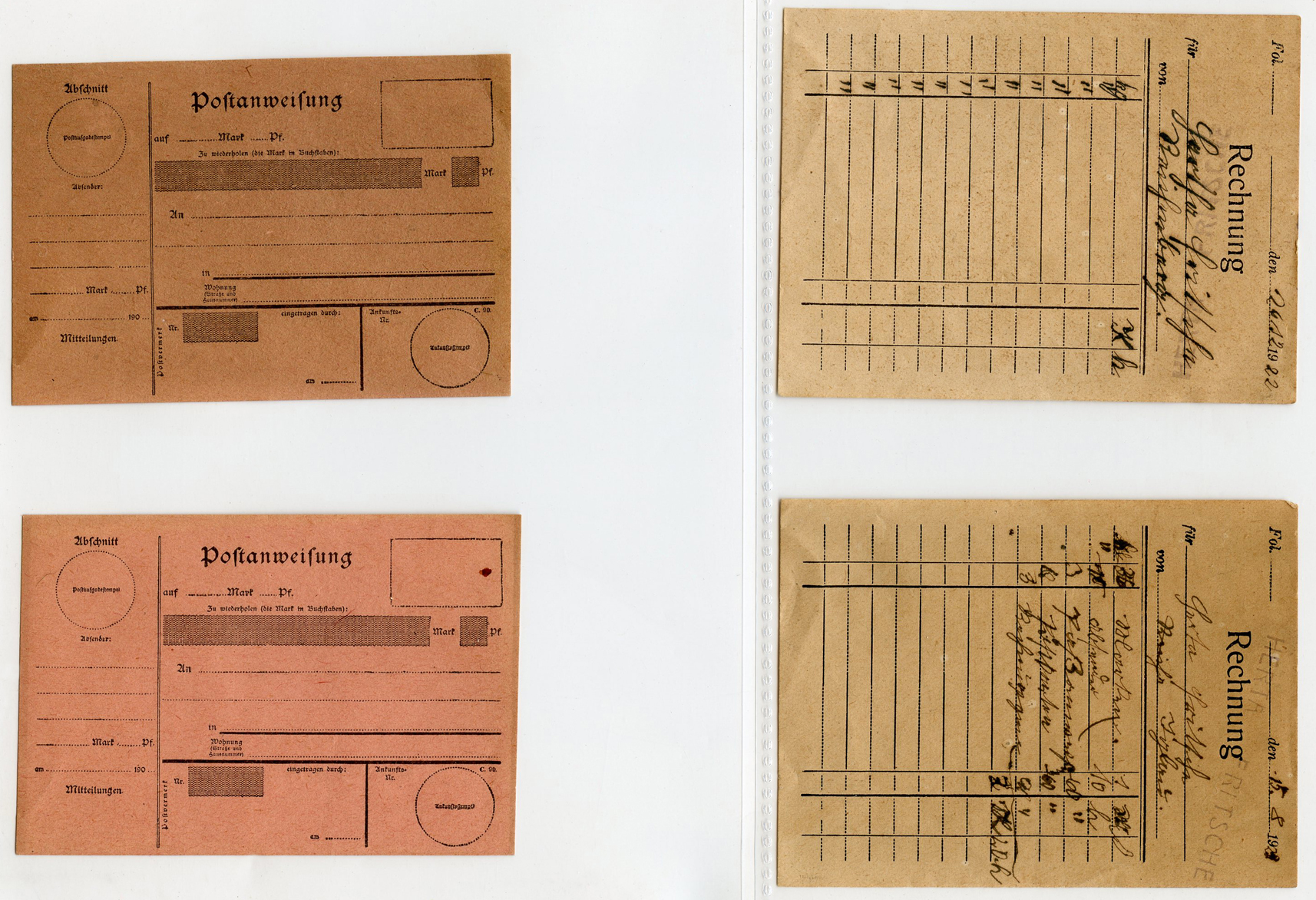
[Below: Reverse.]
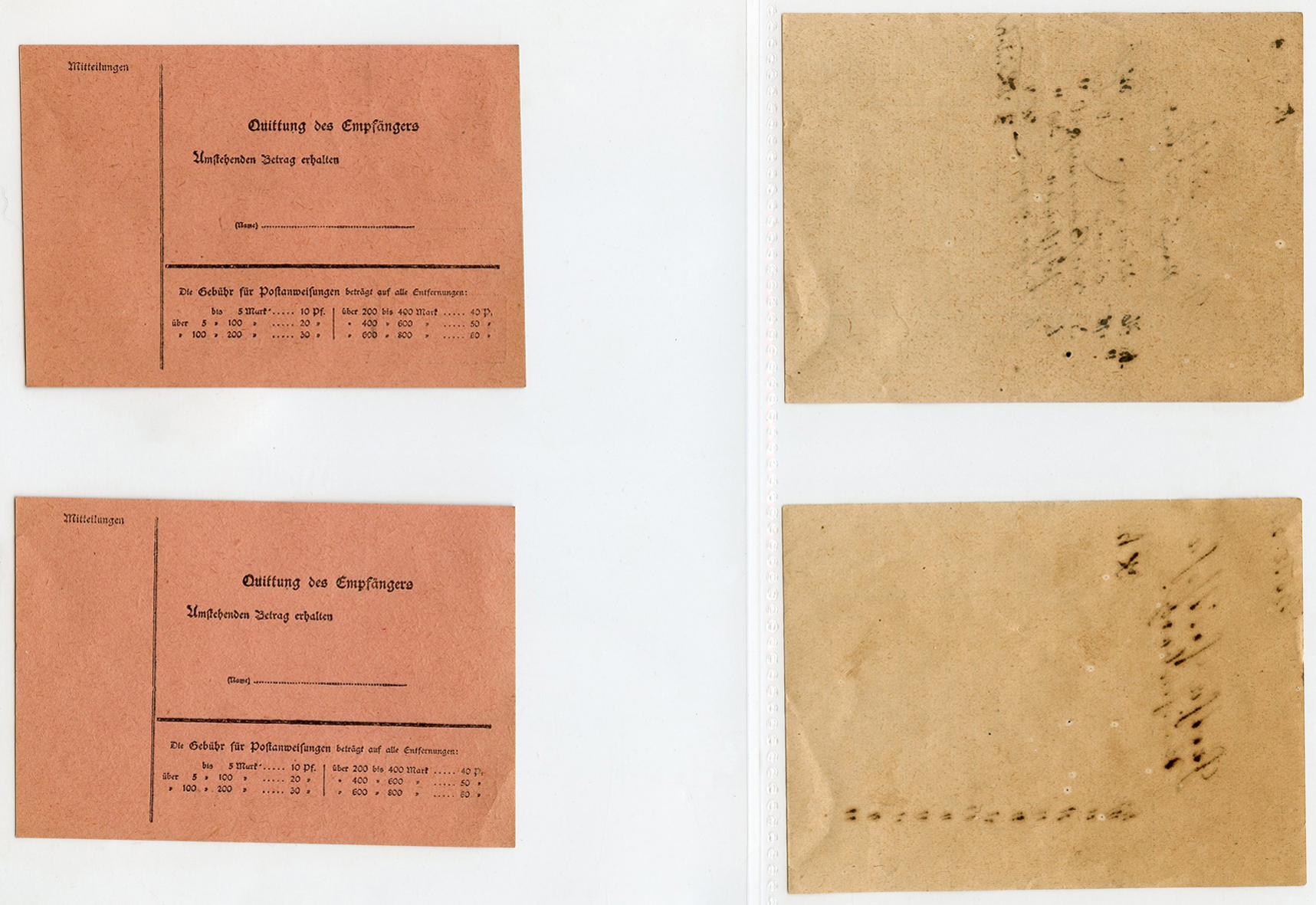
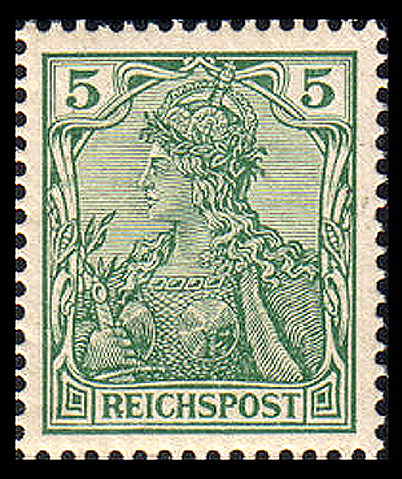
[Below: Some unused stamps. These are of the 'Germania' type stamps, the longest running series in German philately, issued between 1900 and 1922.]
[Below: Here is the actual Germania German postage stamp, which was issued with many different values.]
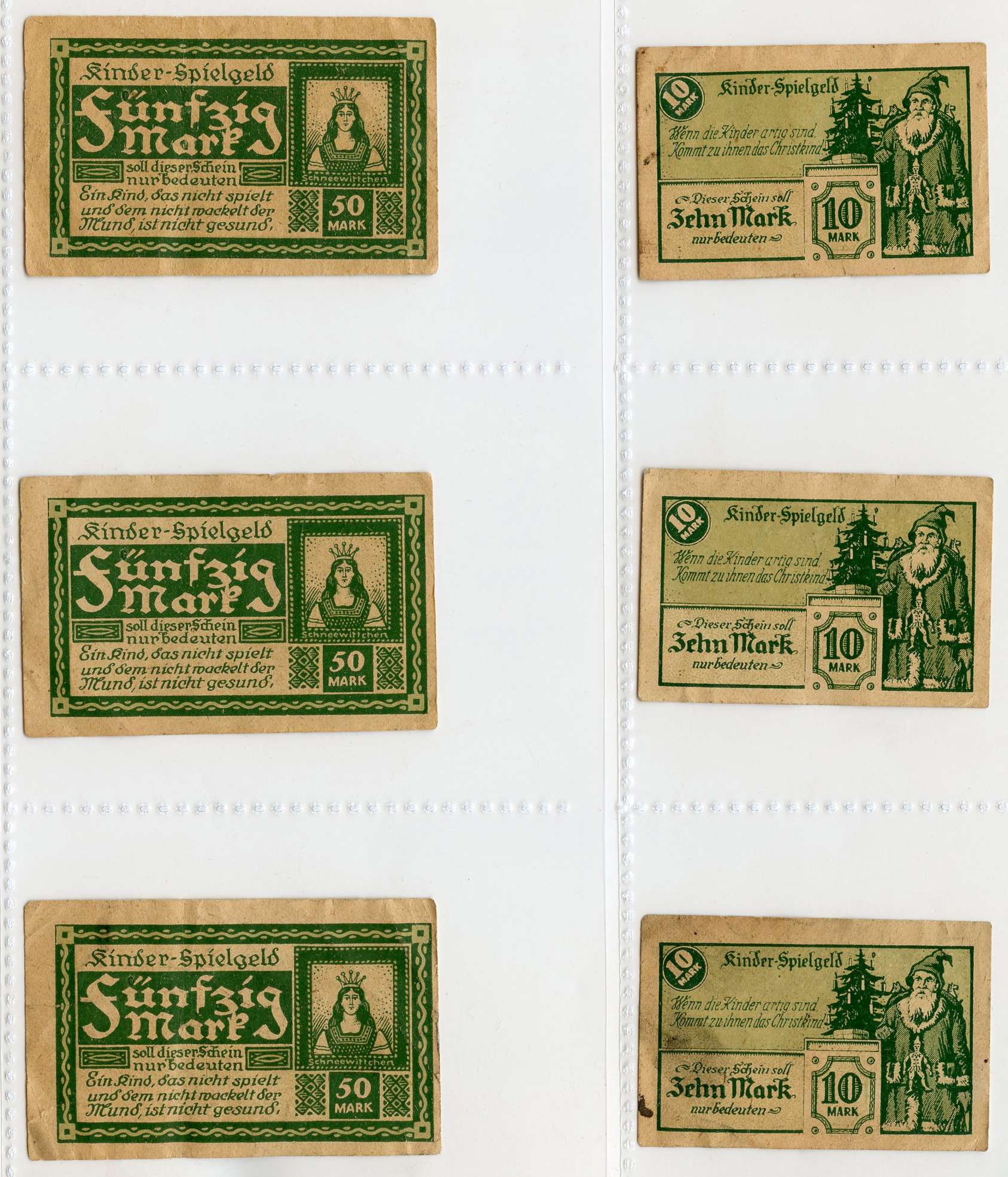
[Below: Very nicely made play money. These are better than a lot of the emergency money (Notegeld) made during the depression years!]
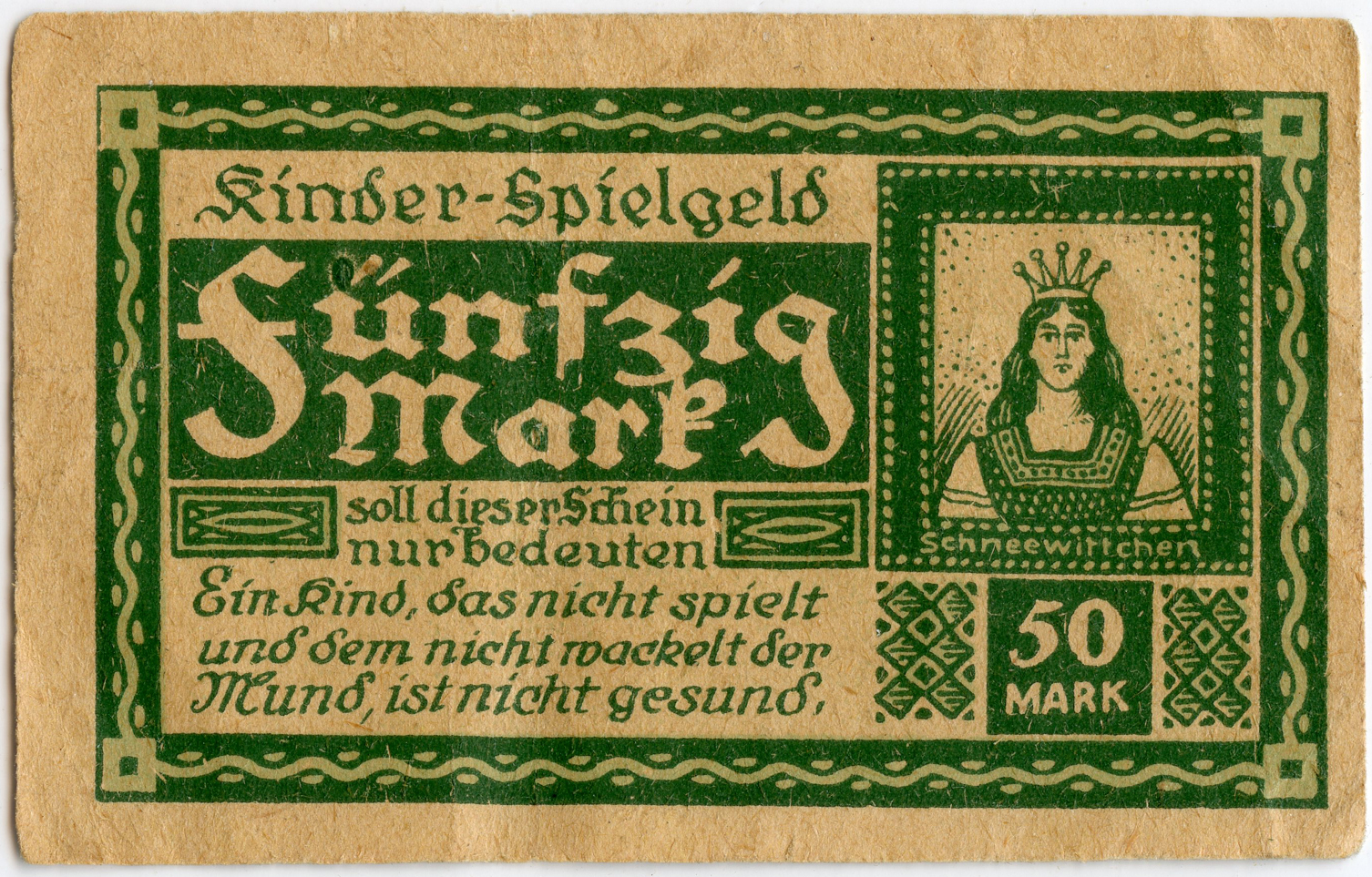
[Below: Note close-up. This says:
'Kinder-Spielgeld
Fünfzig Mark
Soll dieser Schein
nur bedeuten
Ein kind, das nicht spielt
und dem nicht wackelt der
Mund, ist nicht gesund.'
(Children's Play Money
Fifty Marks
Is this note supposed to mean
that a child who doesn't play
and whose mouth doesn't wobble is not healthy.)]
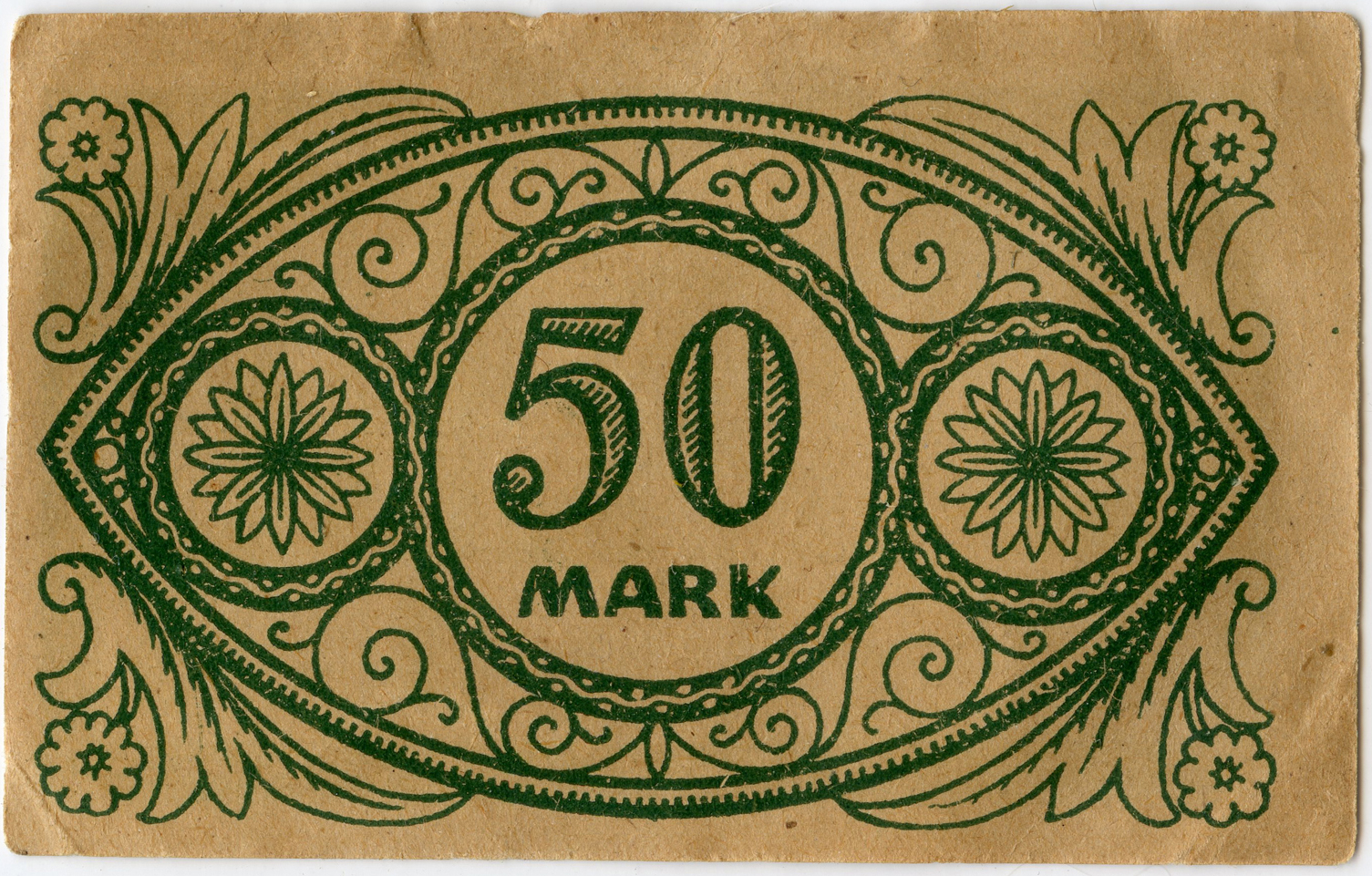
[Below: Reverse of note.]
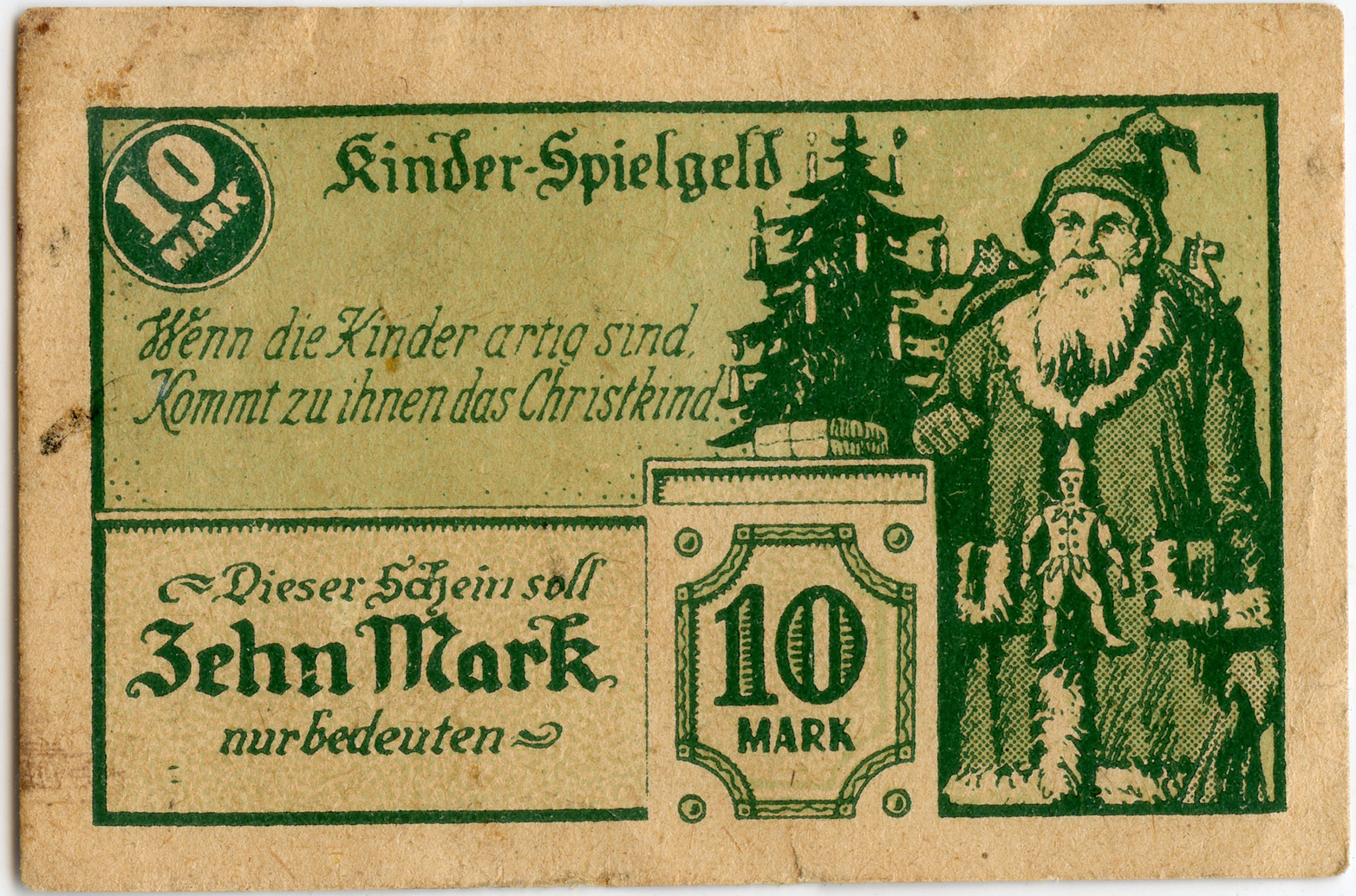
[Below: Here the second note from above close-up. This says:
'Kinder-Spielgeld
10 Mark
Wenn die Kinder artig sind,
Kommt zu ihnen das Christkind
Dieser Schein soll
Zehn Mark
nur bedeuten'
(Children's Play Money
10 Marks
If the children are good,
Christkind will come to them.
This note is meant to represent
Ten Marks
only.)
Hmm... this 'Christkind' is unfamiliar to me. It literally means 'Christ Child'
Very strange, a search engine defined 'Christkind' as:
'In English, "Christkind" directly translates to "Christ Child". It's a figure, often depicted as an angel-like being with blond hair and wings, who is the traditional gift-bringer in many German-speaking regions, including Austria, Switzerland, and parts of Germany. In some areas, children write letters to the Christkind, expressing their Christmas wishes. '
I have never heard of this at all. Is this a tradition still practices? I'll have to ask some of my German friends...]
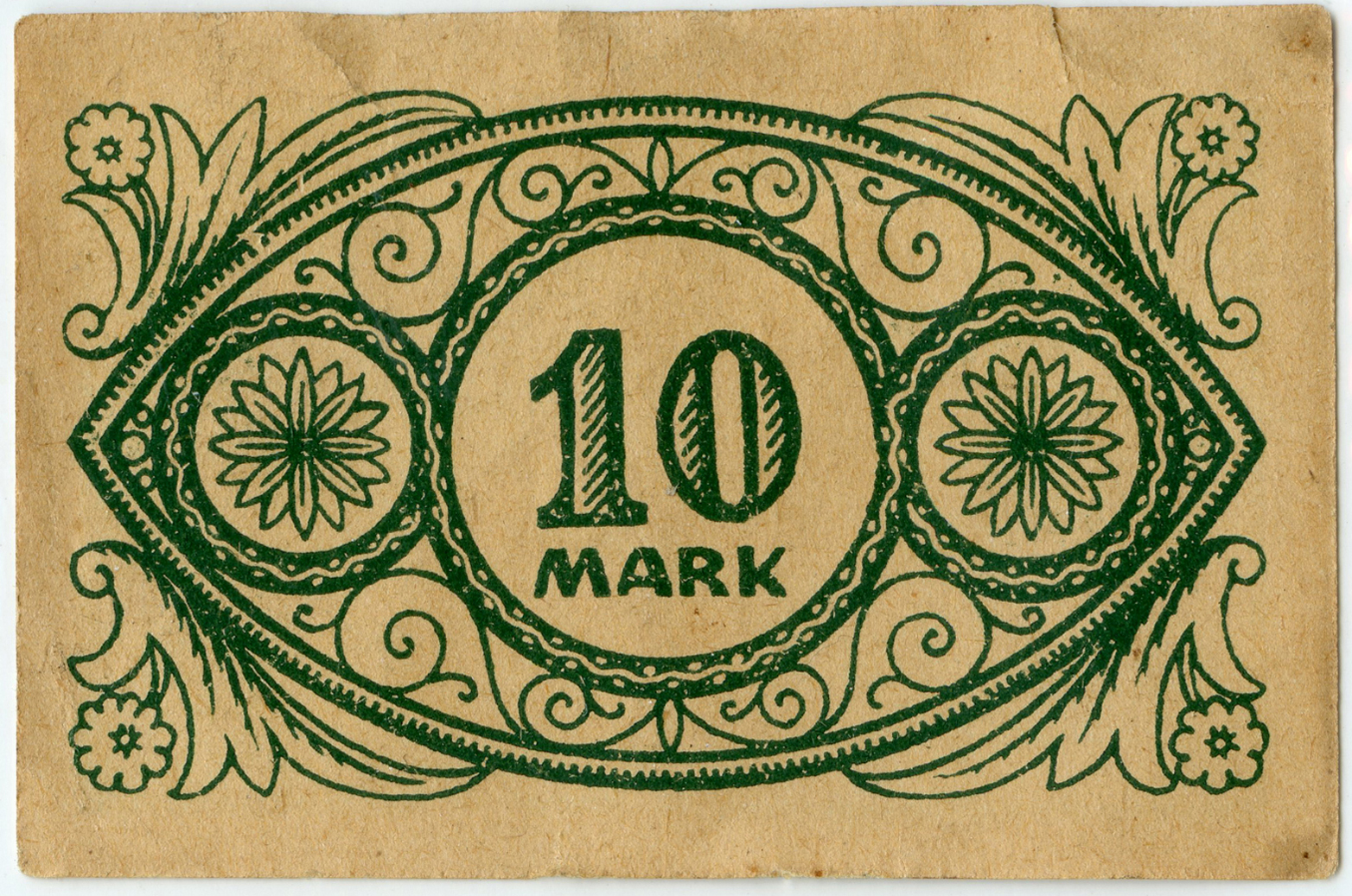
[Below: Reverse of note.]
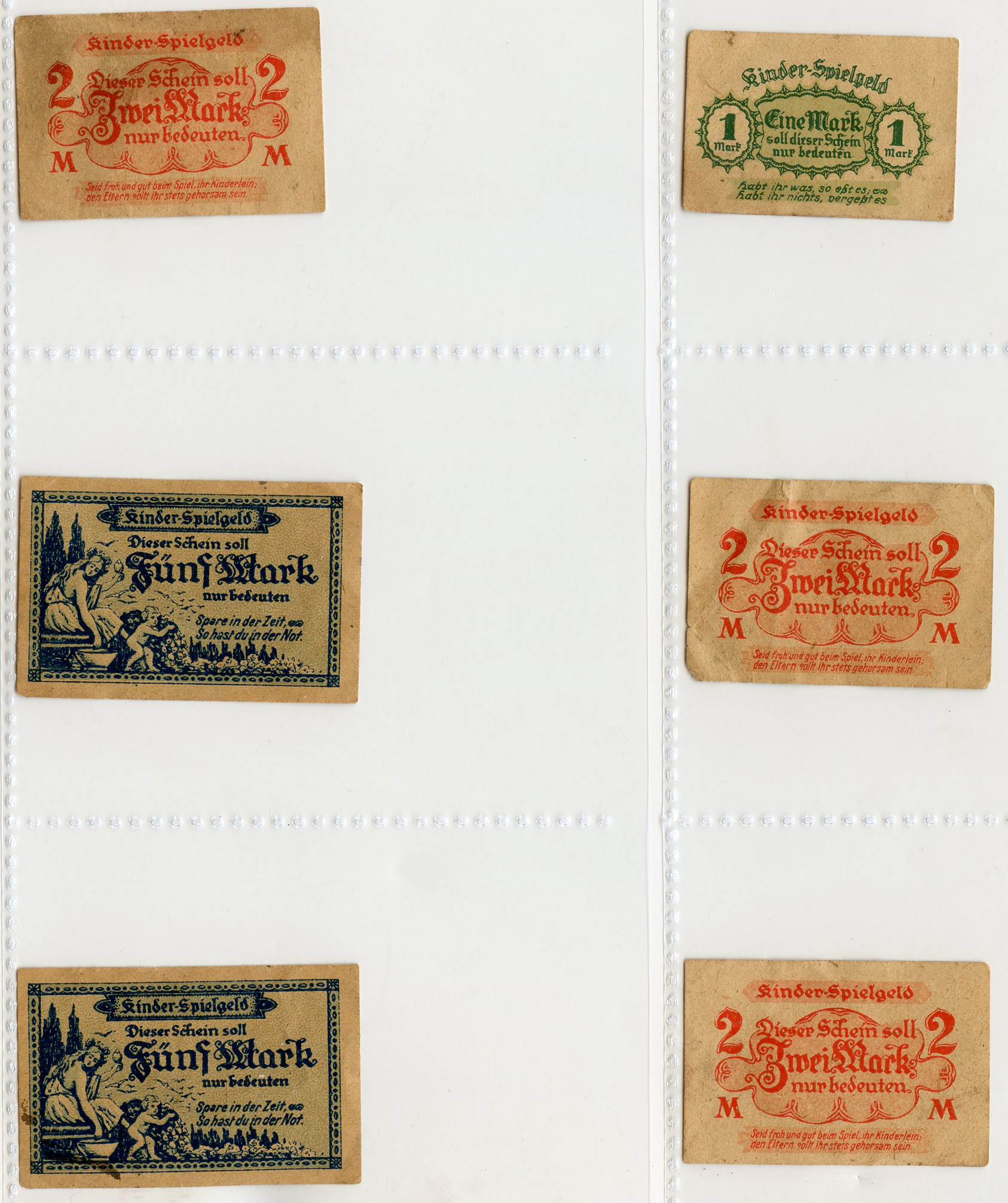
[Below: More play notes.]
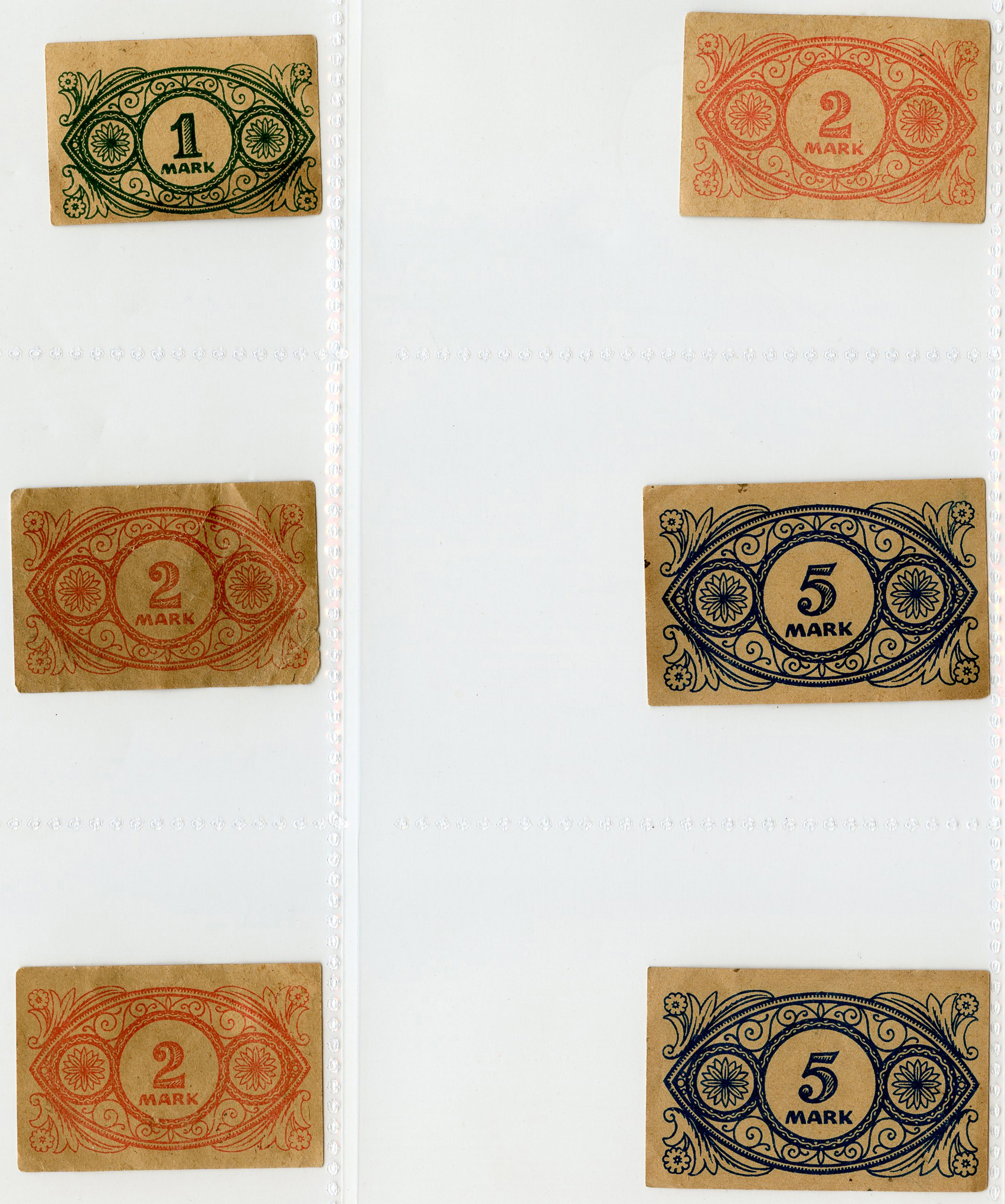
[Below: Reverse of play notes.]
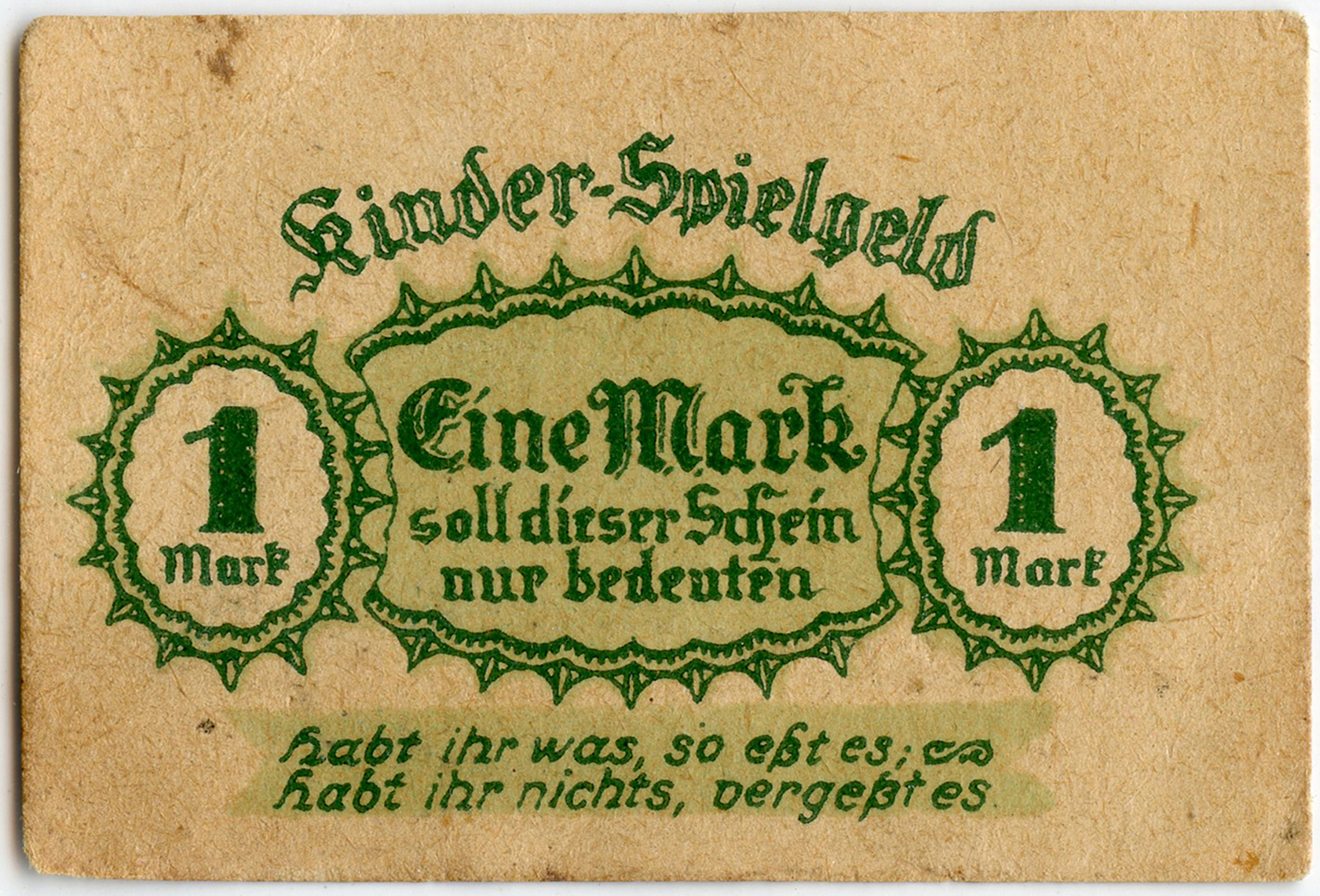
[Below: This note says:
'Kinder-Spielgeld
Eine Mark
Soll dieser Schein
nur bedeuten
habt ihr was, so eßt es;
habt ihr nichts, vergeßt es.'
(Children's Play Money
One Mark
This note is only meant to mean:
If you have something, eat it;
If you have nothing, forget it).
Hmmm... very strange. Maybe this was some sort of saying or something?]
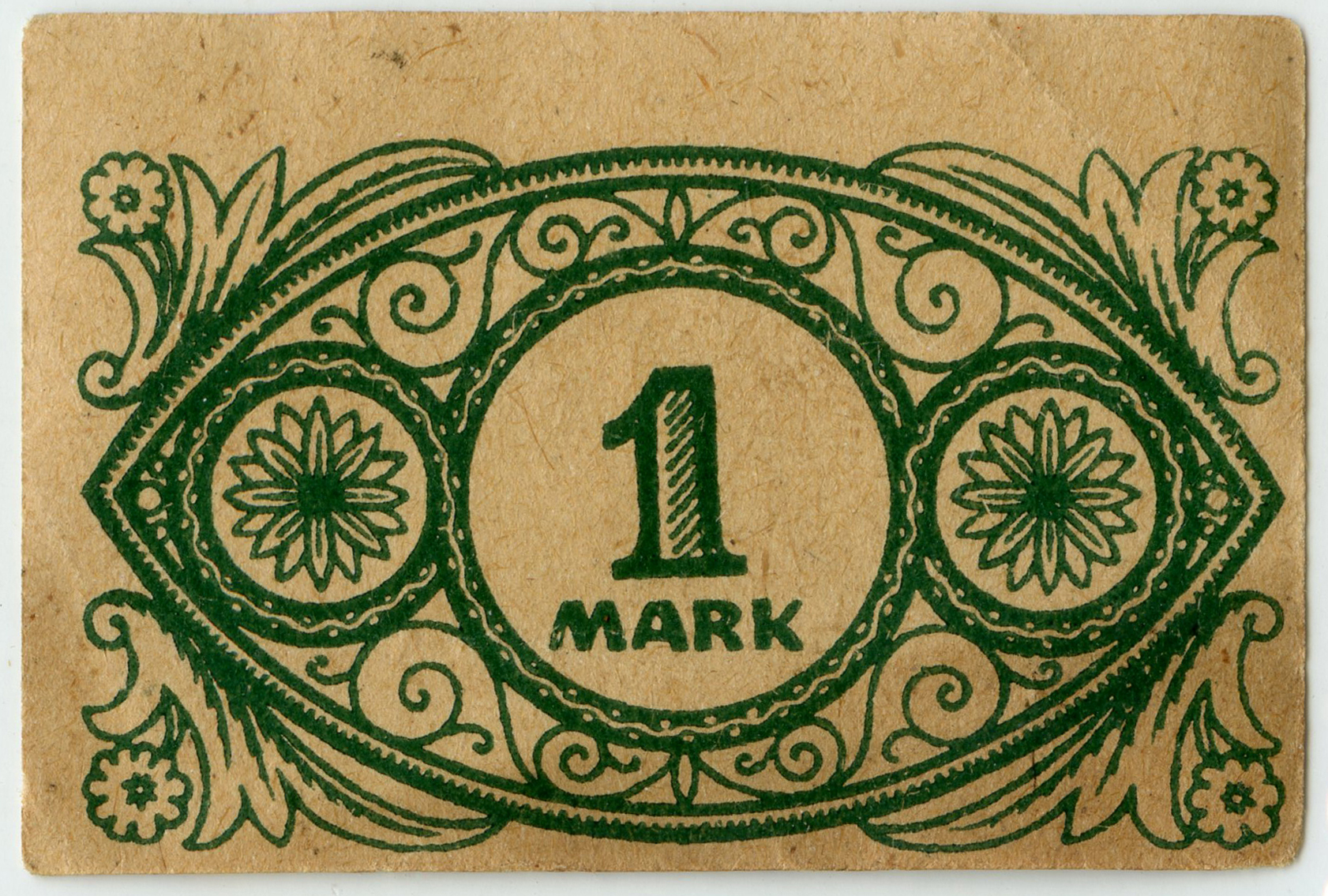
[Below: Reverse of note.]
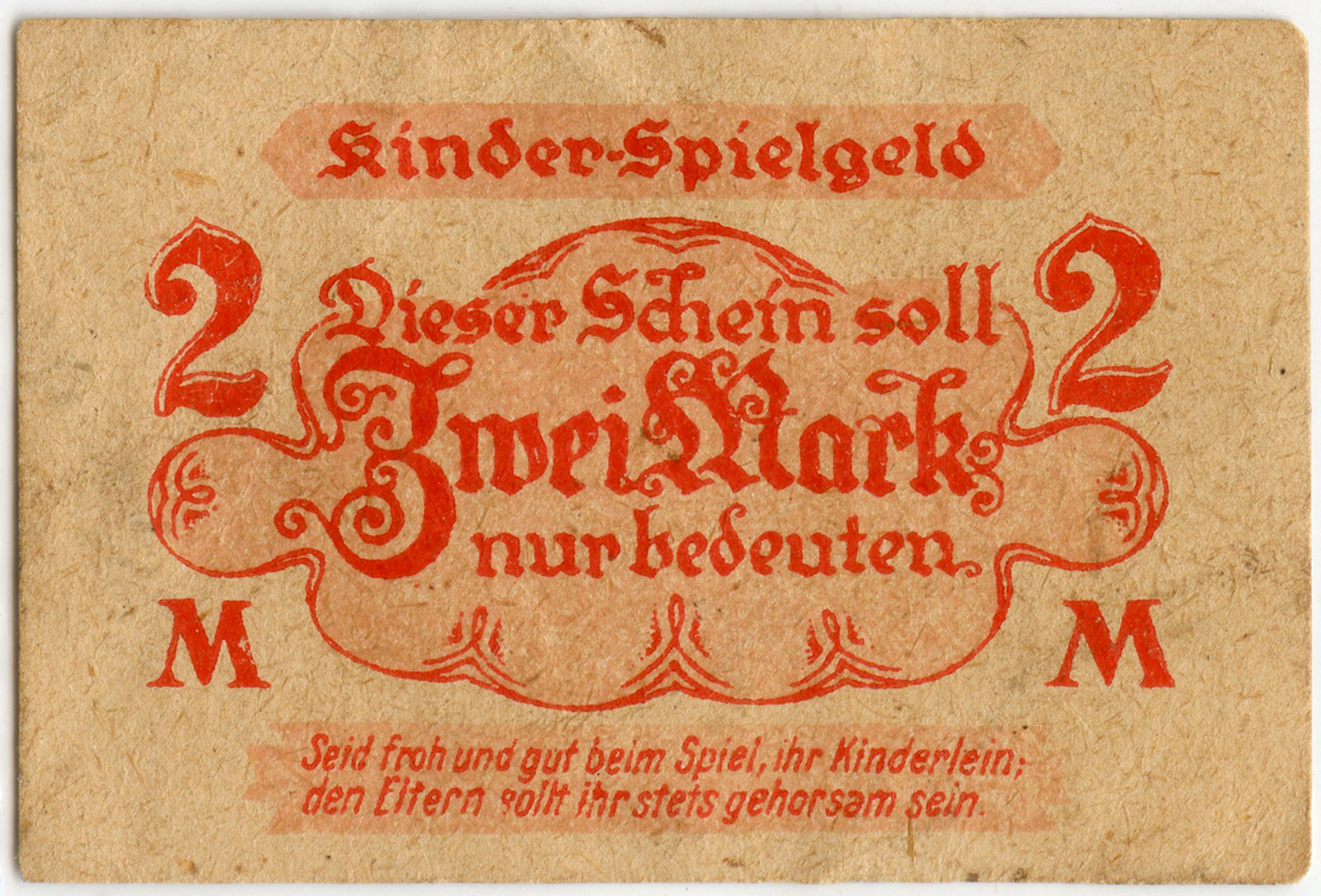
[Below: This note says:
'Kinder-Spielgeld
Dieser Schein soll
Zwei Mark
nur bedeuten
Seid froh und gut beim Spiel, ihr Kinderlein;
den Eltern soilt ihr stets gehorsam sein.'
(Children's Play Money
This note is only worth two marks.
Be happy and have fun playing, little children;
you should always obey your parents.)]
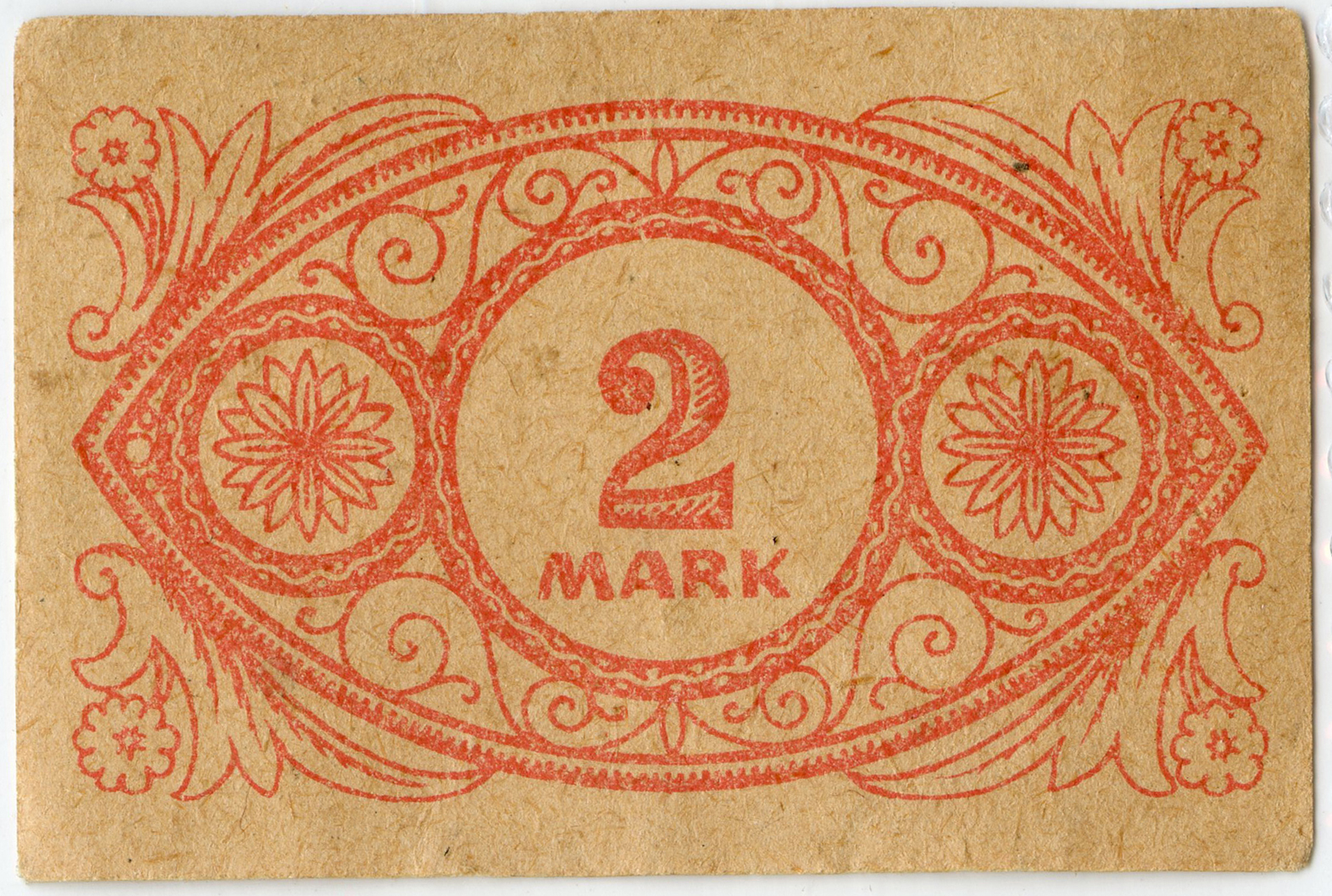
[Below: Reverse of note.]
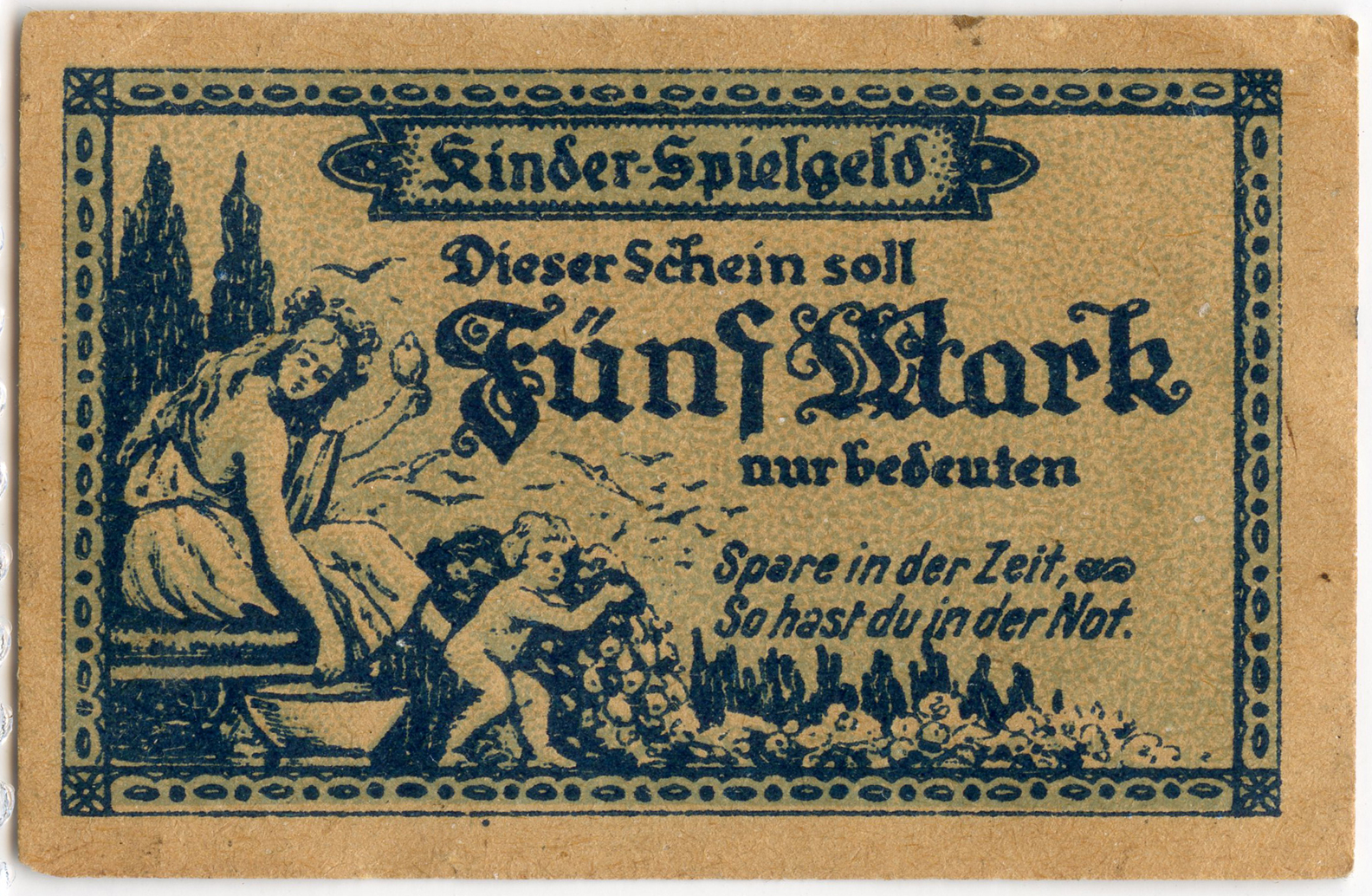
[Below: This says:
'Kinder-Spielgeld
Dieser Schein soll
Fünf Mark
nur bedeuten
Spare in der Zeit,
So hast du in der Not'.
(Children's play money
This note is only meant to be worth
Five marks
Save now,
So you have in times of need.)]
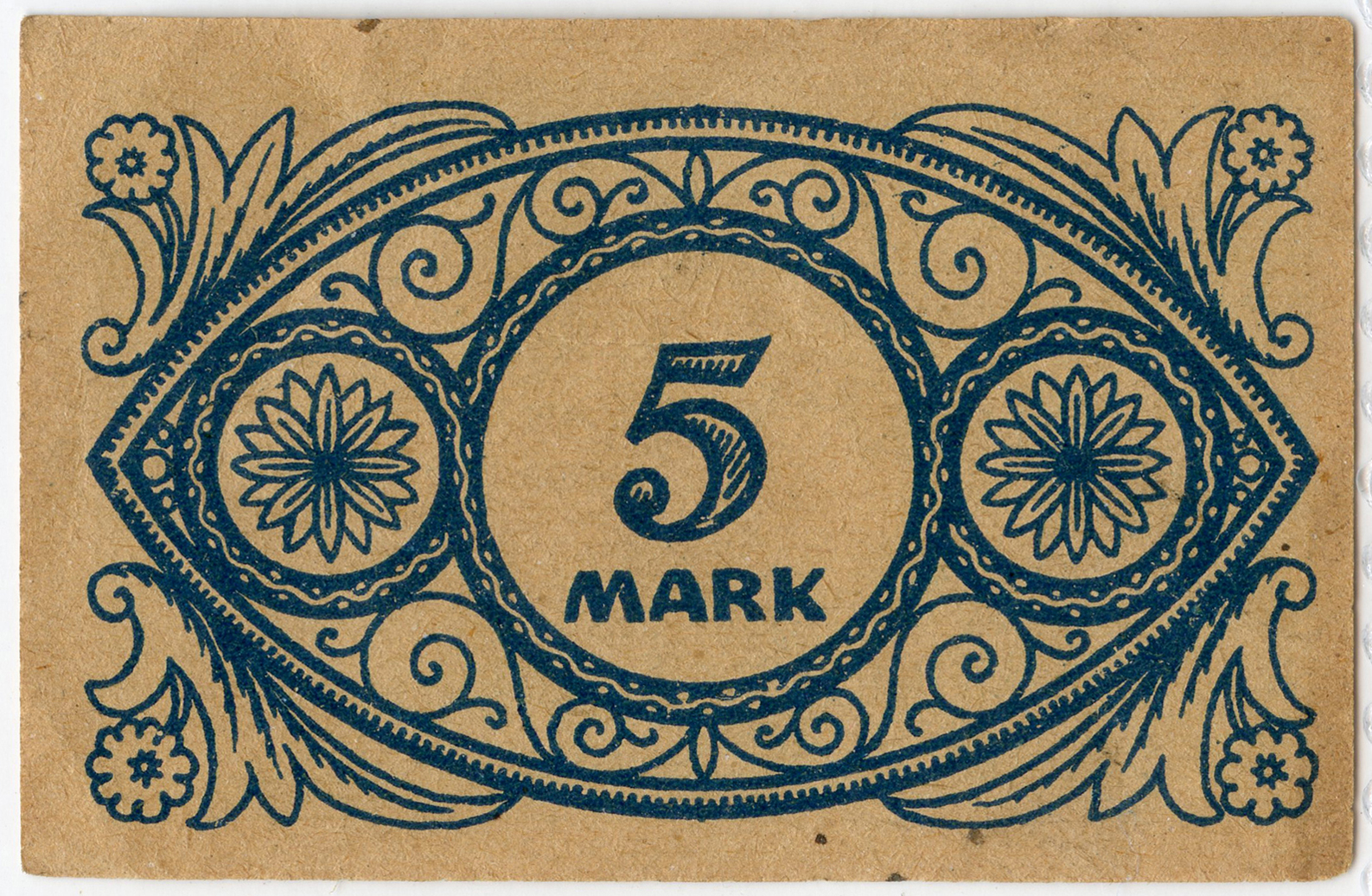
[Below: Reverse of note.]
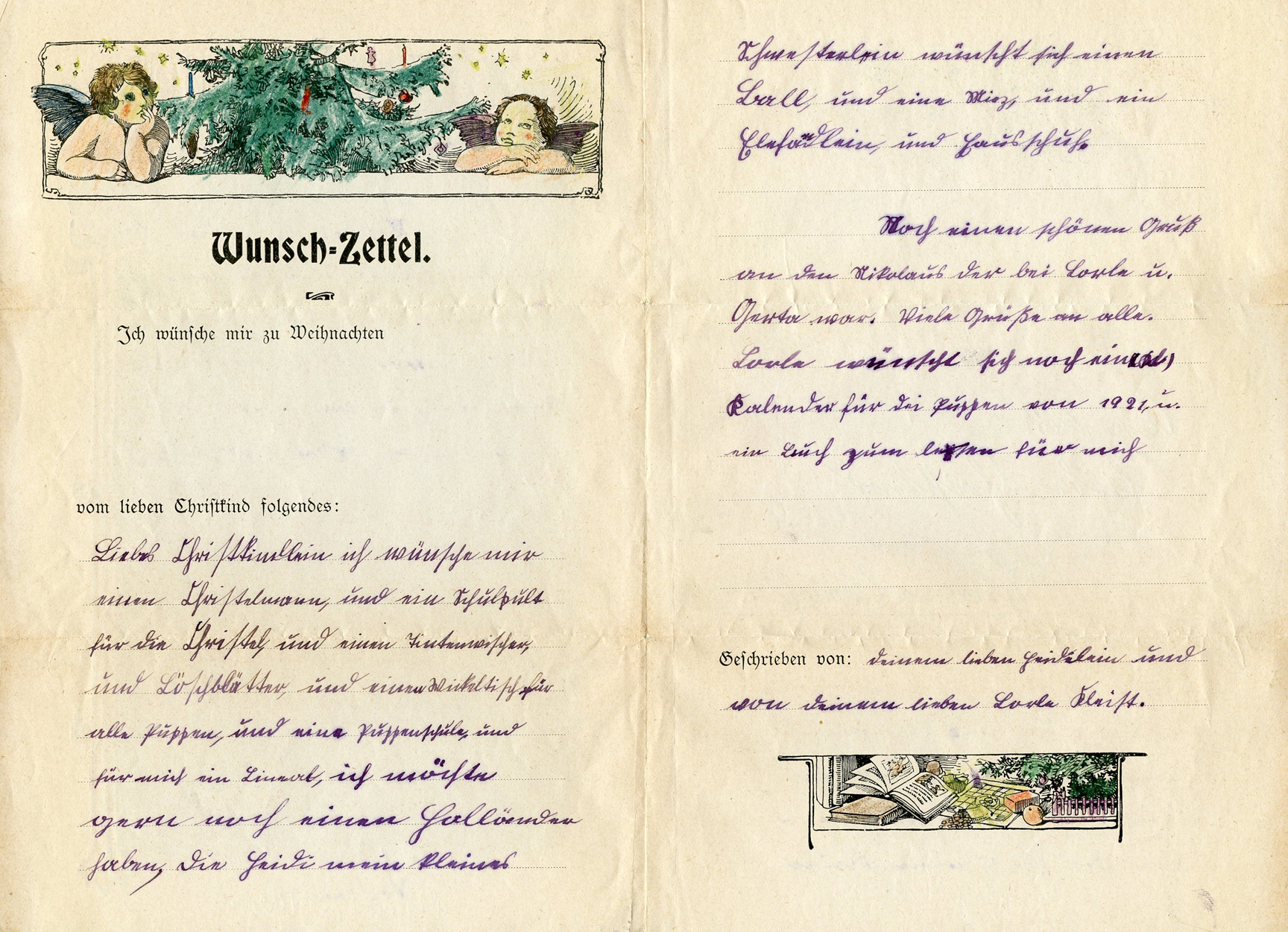
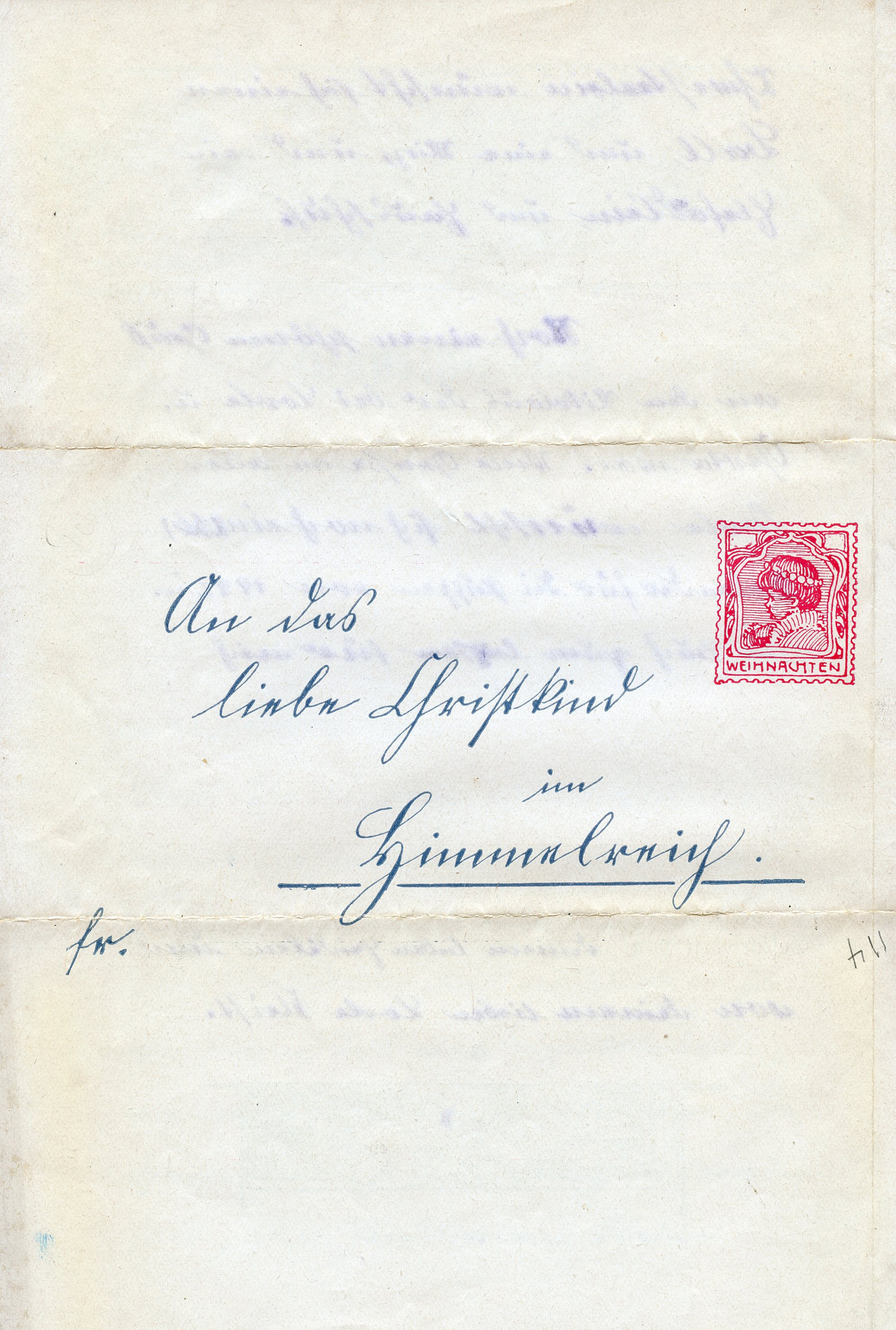
[Below: Here is a strange children's letter from 1921. The 'postage stamp' is not real and just says 'Christmas'. I've never seen one of these before...]
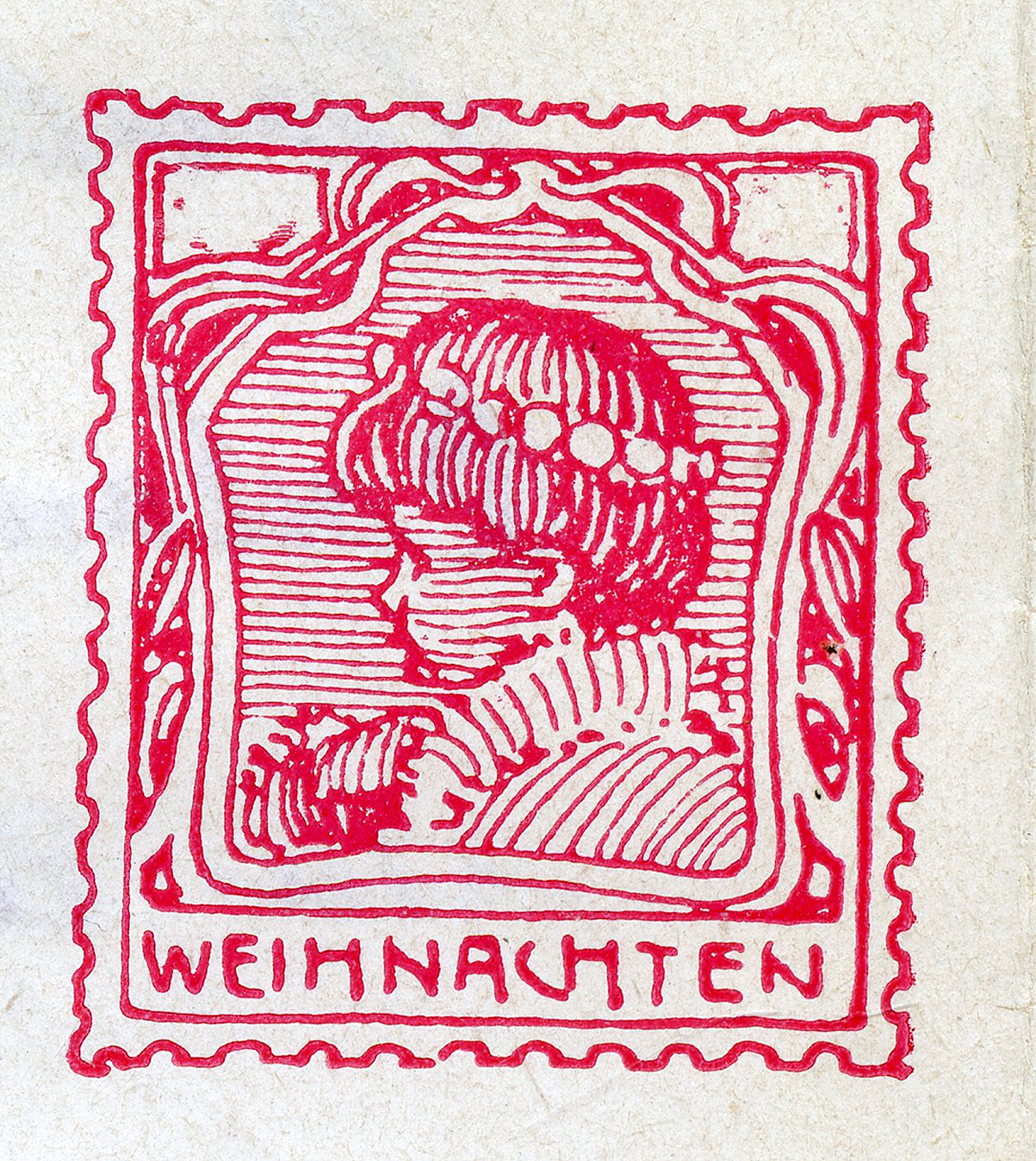
[Below: Close-up.]
[Below: Reverse of letter. This says 'Wish list for the dear Christ child'...]
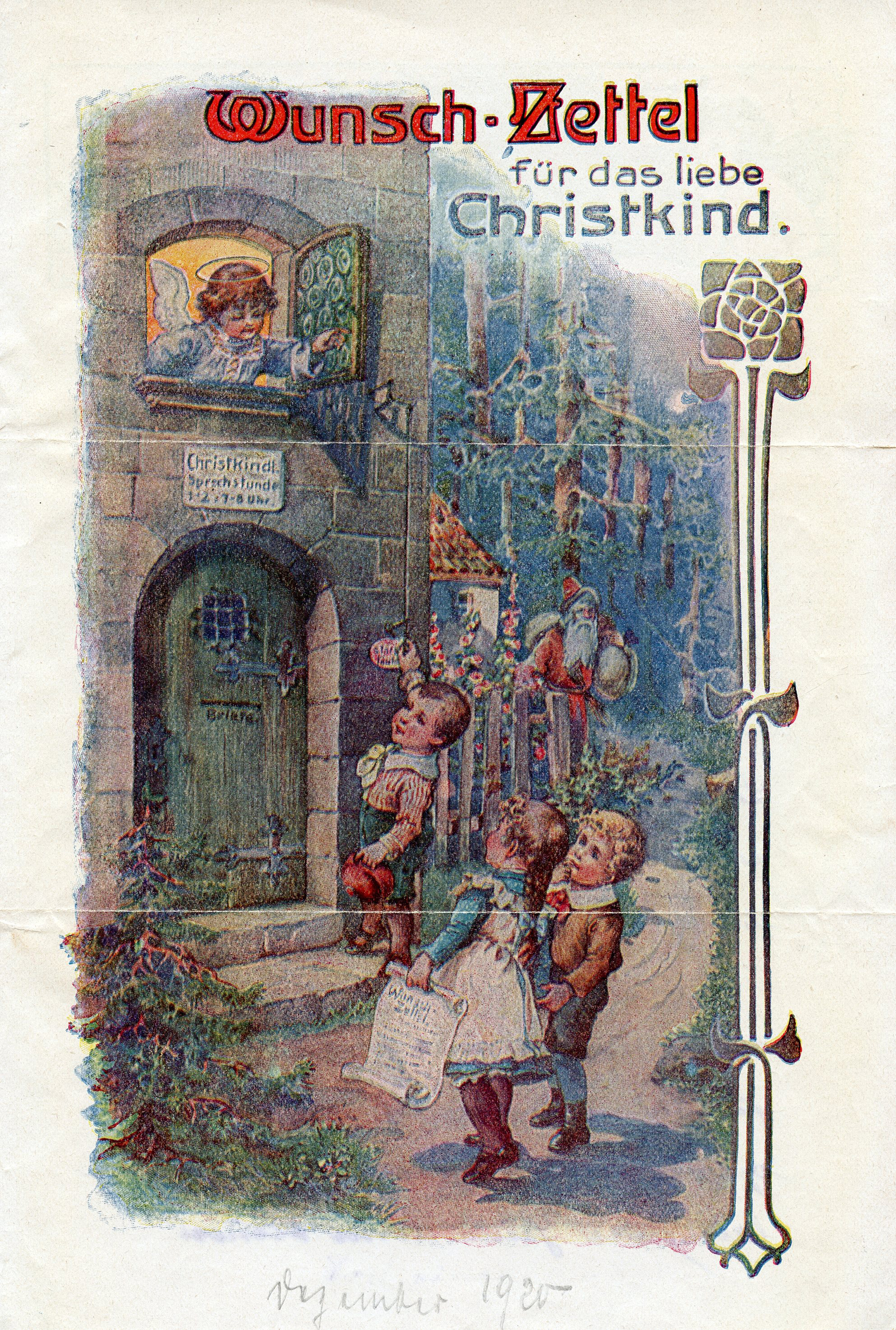
[Below: Letter open. 'For Christmas I wish...' This seems to be a list for the whole family, they ask for things like 'window cleaner, blotting paper, a changing table, something for a doll, a ball, a little elephant, slippers, a calendar and a book.]