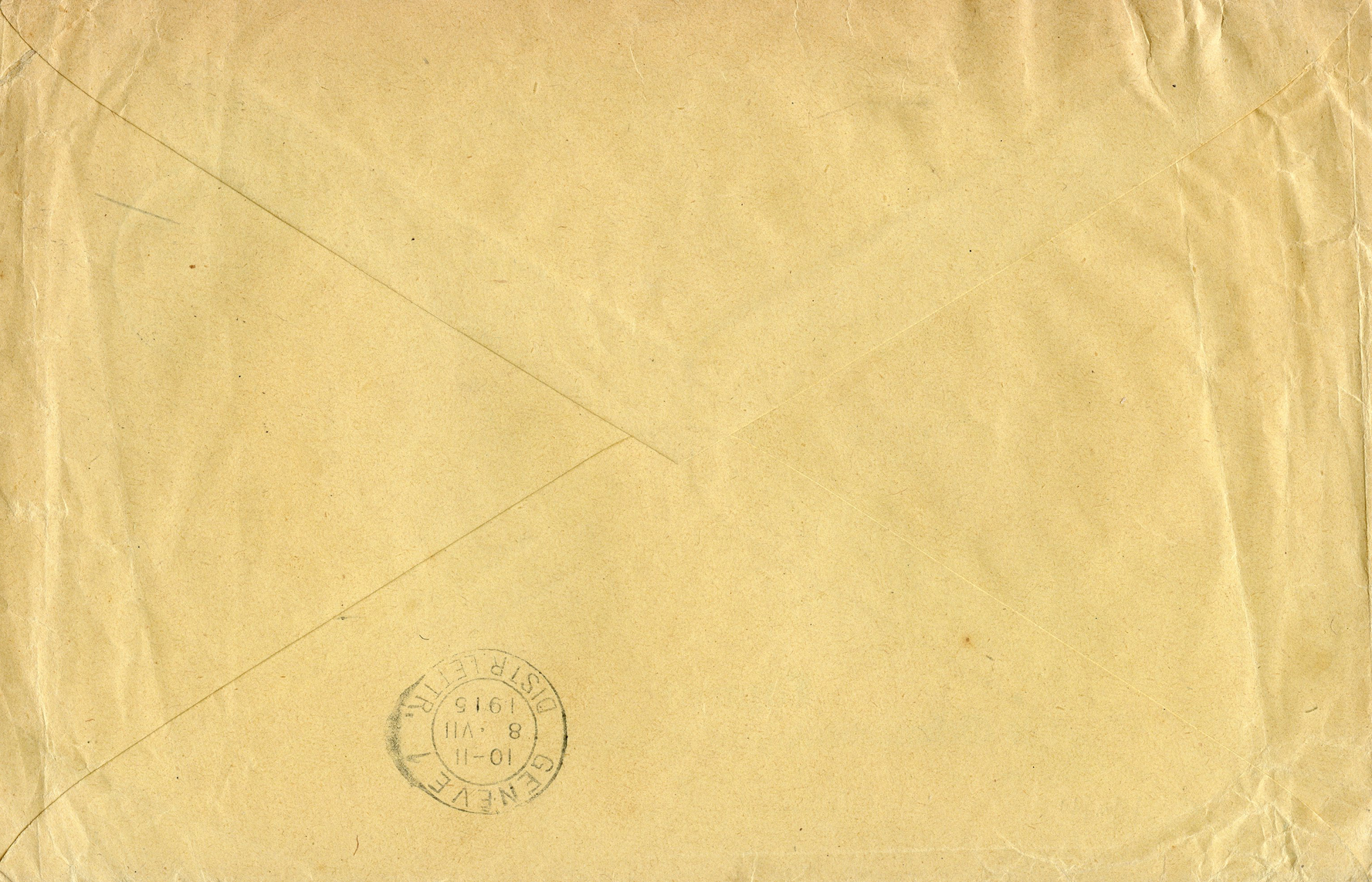
[Below: The is a Feldpost envelope from Stalag XIIIB camp, canceled on August 10, 1941. This was sent to Prague from Weiden/Oberpfalz, from 'Sonderführer Schwarz' (interpretor). Front.]

[Below: Reverse.]


[Below: This is an envelope for a German prisoner of war in Ottawa, Canada, canceled in Friedrichshafen, southern Germany. It is censored by both Canada and Germany. It was sent from Germany on February 18, 1943 and wasn't received until three months later on May 21, 1943.]

[Below: Reverse.]

[Below: Another interesting P.O.W. envelope, this one sent to a German Obergefreiter named Karl Kramer, imprisoned in a hospital in West Virginia. It's addressed to 'An den Kriegsgefangenen' (To the prisoner of war) and was canceled in Germany on December 18, 1944. It has an interesting German machine censorship stamp (with no eagle) and had also been censored by the USA.]

[Below: Reverse. Sent by Emmy Fleckenstein. Interestingly, Kramer and Fleckenstein are Jewish surnames.]

[Below: An envelope sent from London, England to a P.O.W. in Stalag camp XXA, September 5, 1940. It has been opened by Allied censors.]

[Below: Reverse.]

[Below: A postcard sent from a P.O.W. in Tarpoley/Cheshire, England to (British Zone) Germany. The P.O.W. is in a place called 'Racecourse Camp', October 16, 1946.]

[Below: Reverse.]

[Below: An envelope sent to the Red Cross in Switzerland from Stalag XII C, The word 'Postüberwachung' means 'Mail Surveillance', February 13, 1941.]

[Below: An envelope sent from a P.O.W. in Droitwich/Worcester, England to (Russian Zone) Germany, January 8, 1947. He is sending this to his mother in Dresden. You can imagine what rubble and hell Dresden was then...]

[Below: Reverse.]

[Below: Inside message.]

[Below: An envelope postmarked in Gent, Belgium and sent to a P.O.W. in Oflag IX B, August 20, 1940. An Oflag is an officer camp, while a Stalag camp was for enlisted men. It says 'Écrire lisiblement afin d'éviter les retardement' (Write legibly to avoid delays).]

[Below: An envelope from Serbian camp Stalag VI J and sent to the United States, November 3, 1942. It's been censored by both the Germans and the Americans.]

[Below: Reverse.]

[Below: An envelope to Stalag XVII B and postmarked on April 24, 1942 in Baden. It's been sent via Feldpost, and since it isn't addressed to anyone I presume it is official business.]

[Below: This is interesting... a P.O.W. camp in Roswell, New Mexico. The small town of Roswell is now world famous, since the 1947 'Roswell incident'. The camp was established southeast of Roswell. On January 1, 1943 the first prisoners of war arrived from the German Africa Korps. The camp would eventually house around 4,800 prisoners. This was canceled in the Roswell post office on December 20, 1943.]

[Below: Envelope reverse.]

[Below: Close-up of vignette stamp.]

[Below: Iron Cross made by German prisoners, while being used for manual labor projects. Some of the locals got angry at this and poured concrete over it, but years later the concrete washed away! Here it is today.]

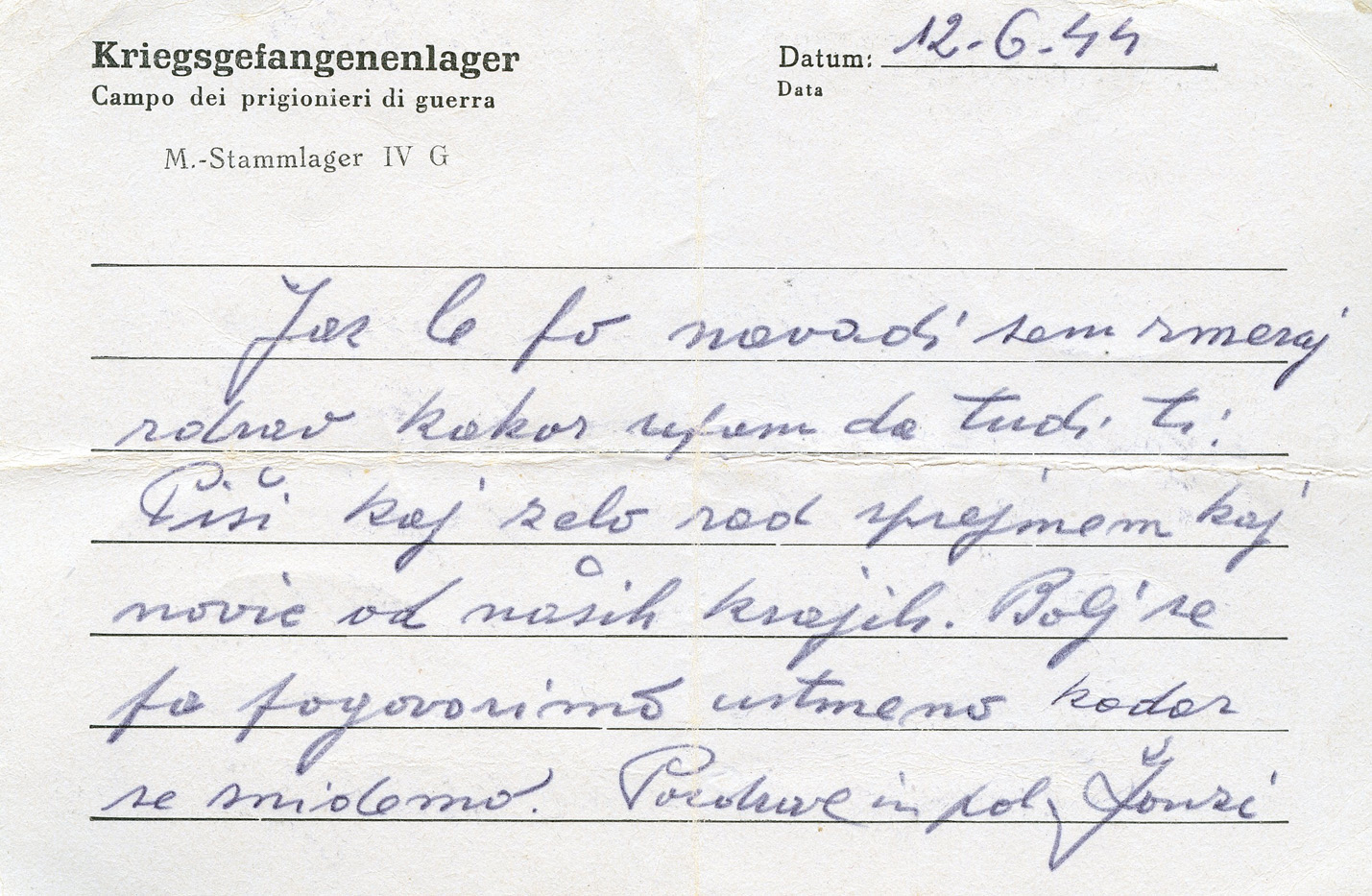
[Below: An envelope to Stalag IV and postmarked on June 12, 1944 in a POW camp in Germany. It's been sent to another POW camp in Italy.]

[Below: Reverse.]
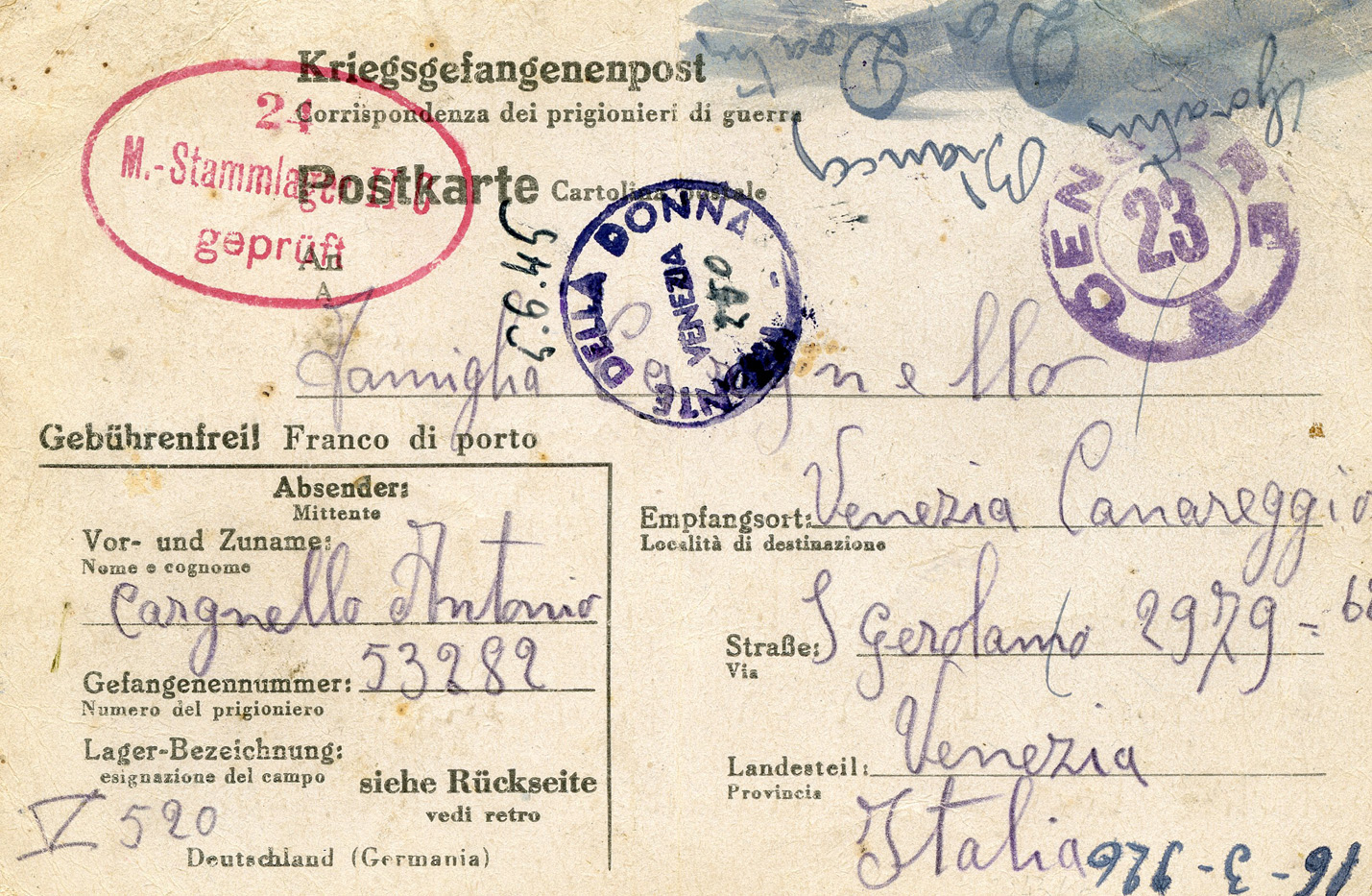
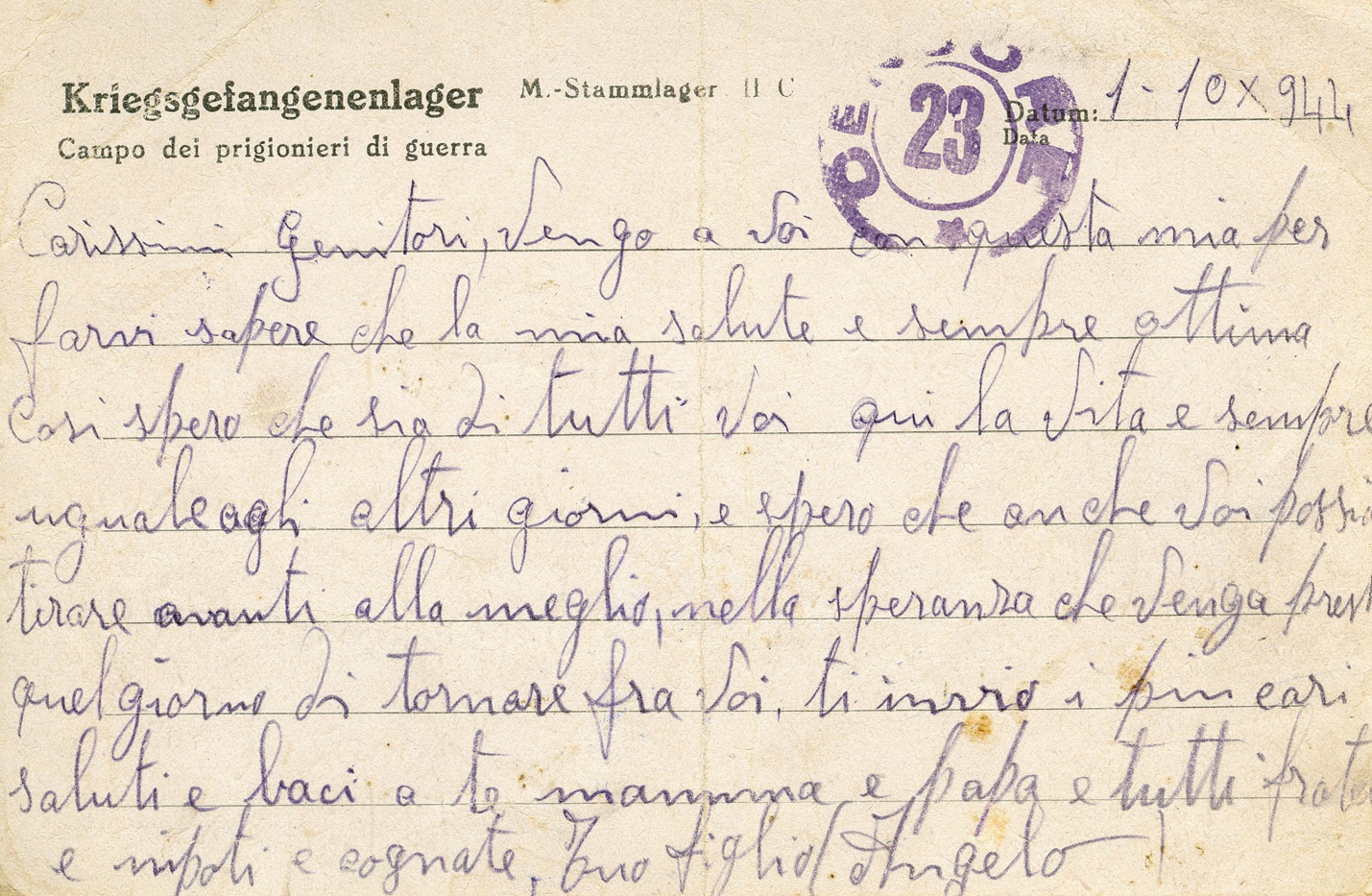
[Below: An envelope from an inmate at Camp II C in Italy and postmarked on October 1, 1944 in a POW camp in Germany. It's been censored by Italian authorities and you will also note the blue smear in the upper right hand corner, this is a chemical applied by the censor to detect secret writing.]
[Below: Reverse.]
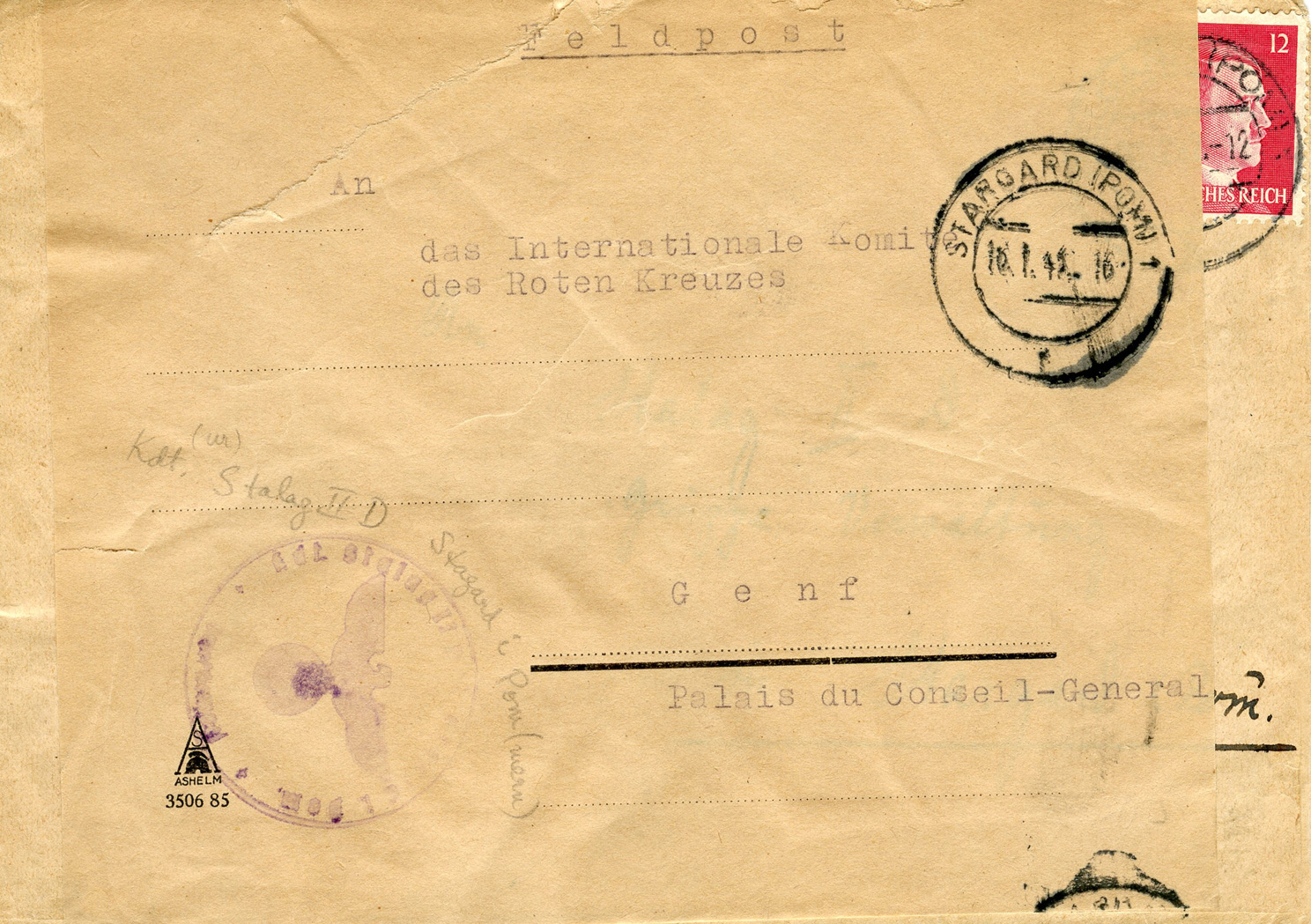
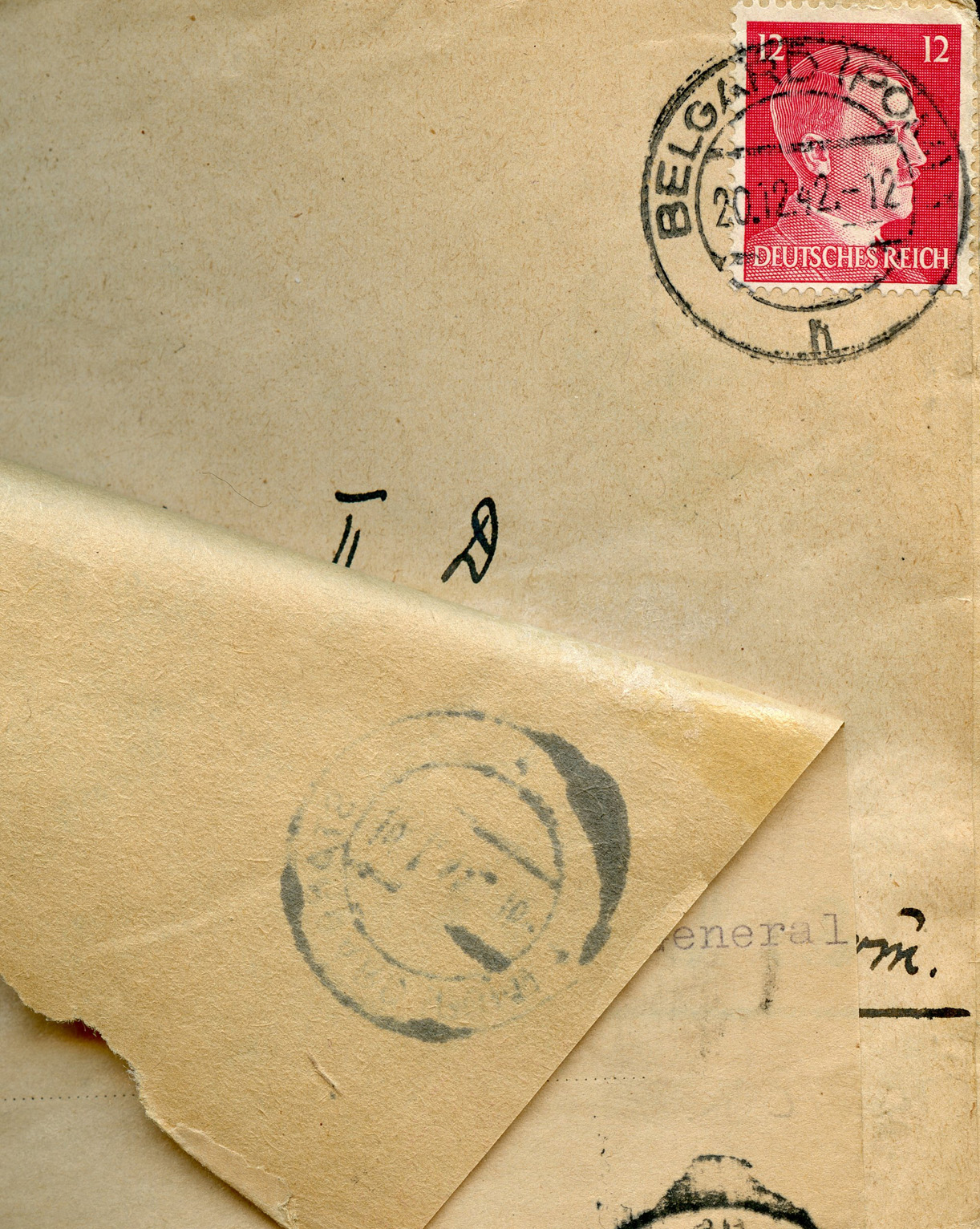
[Below: This was sent from Stalag II-D, a German P.O.W. camp which held various soldiers from a large number of Allied countries up until nearly the end of the war. It was located near Stargard, Pomerania. You can't quite read the date on the cancel, but we know it is post December 20, 1942, since that is the date of the cancel on a stamp beneath the paper glued-on to reuse the envelope. I'm not sure why it was sent Feldpost, perhaps a soldier stationed there for work? But since this is addressed to the Red Cross it is usually either a prisoner or their family writing, but that obviously isn't the case here.]
[Below: Beneath the glued on label shows this was originally cancelled in Belgard, a former district in Eastern Pomerania that existed from 1818 to 1945, before being stolen by Poland after WWII.]
[Below: Close-up of Stalag II-D stamp.]
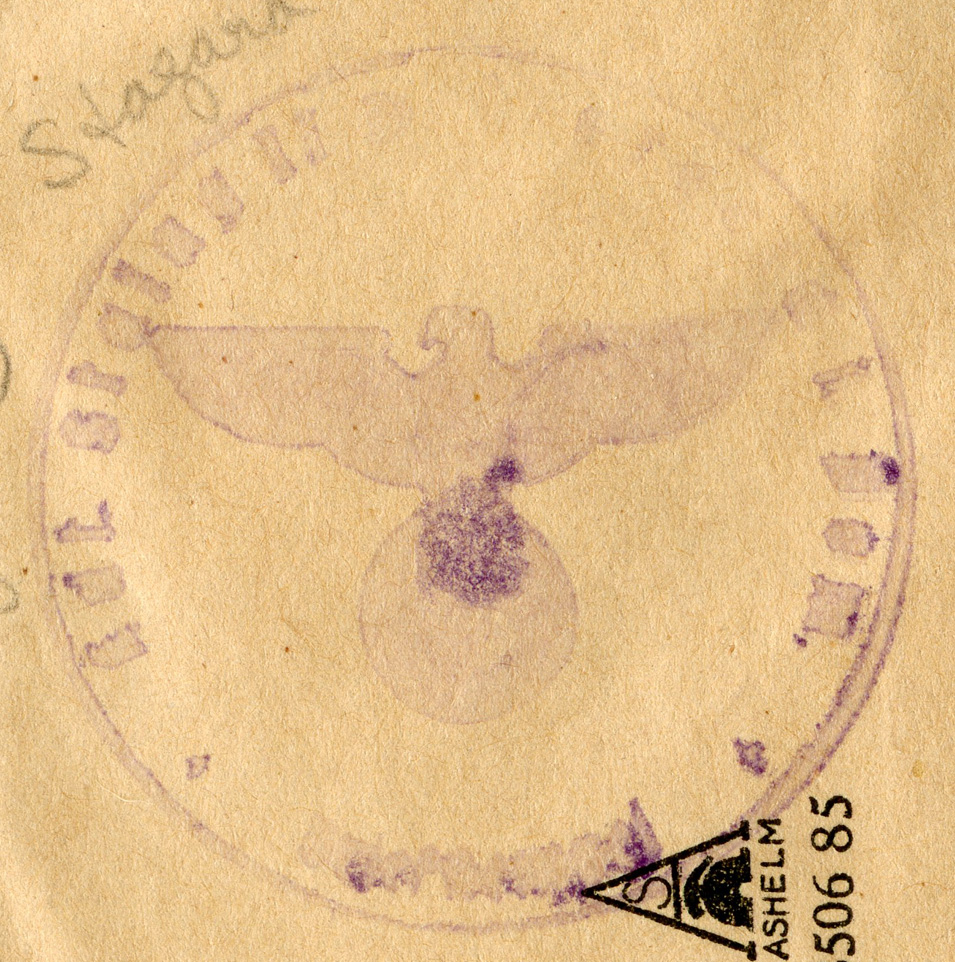
[Below: This is sent from Andalusia, a concentration camp in South Africa during World War II that housed German-speaking citizens of South West Africa. Isn't that democracy for you? The camp was located on the Farm Andalusia and by the end of the war the official statistics listed a total of 6636 civilian internees. It was sent to Keetmanshoop, South West Africa.]
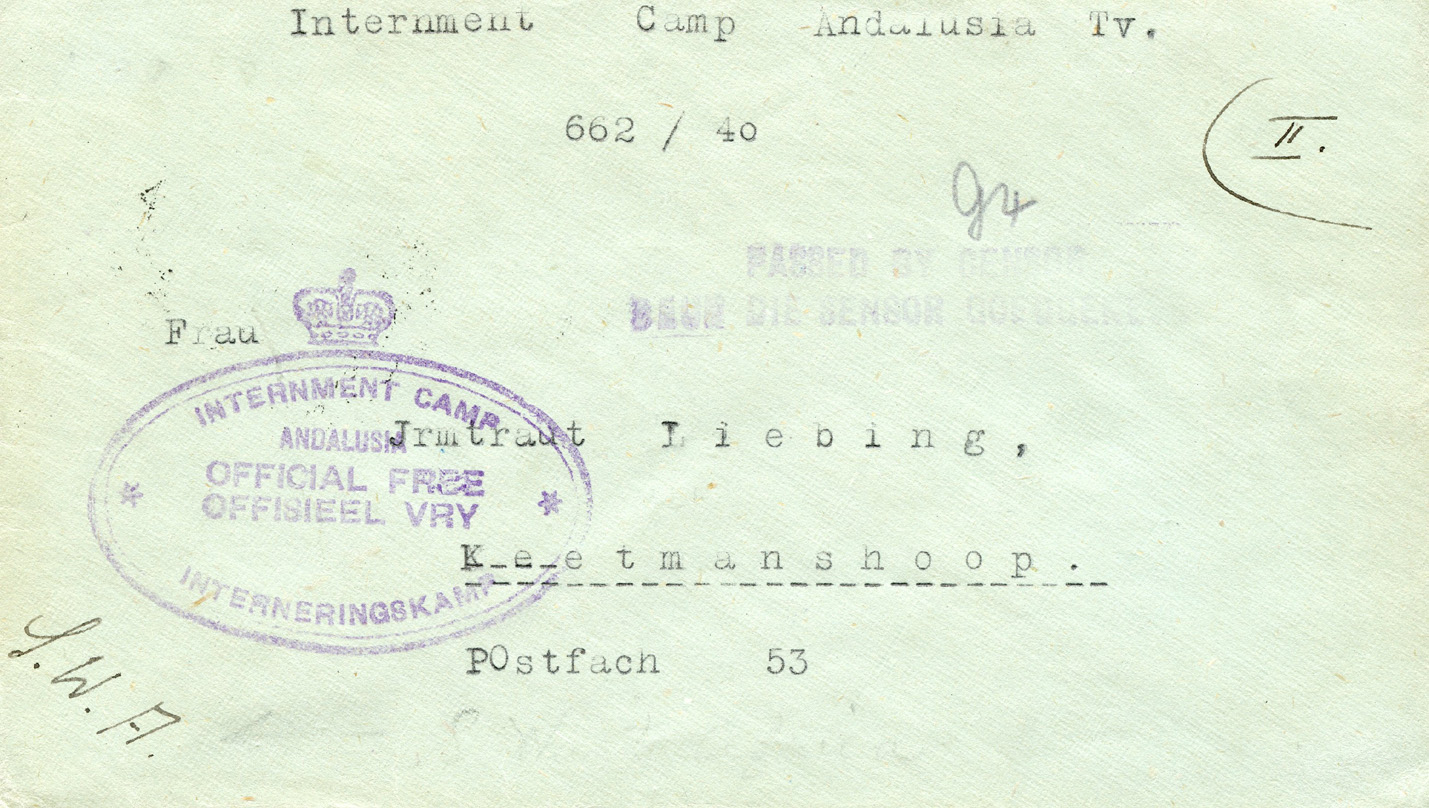
[Below: Close-up of ink stamp. Note it is in English and Afrikaner]
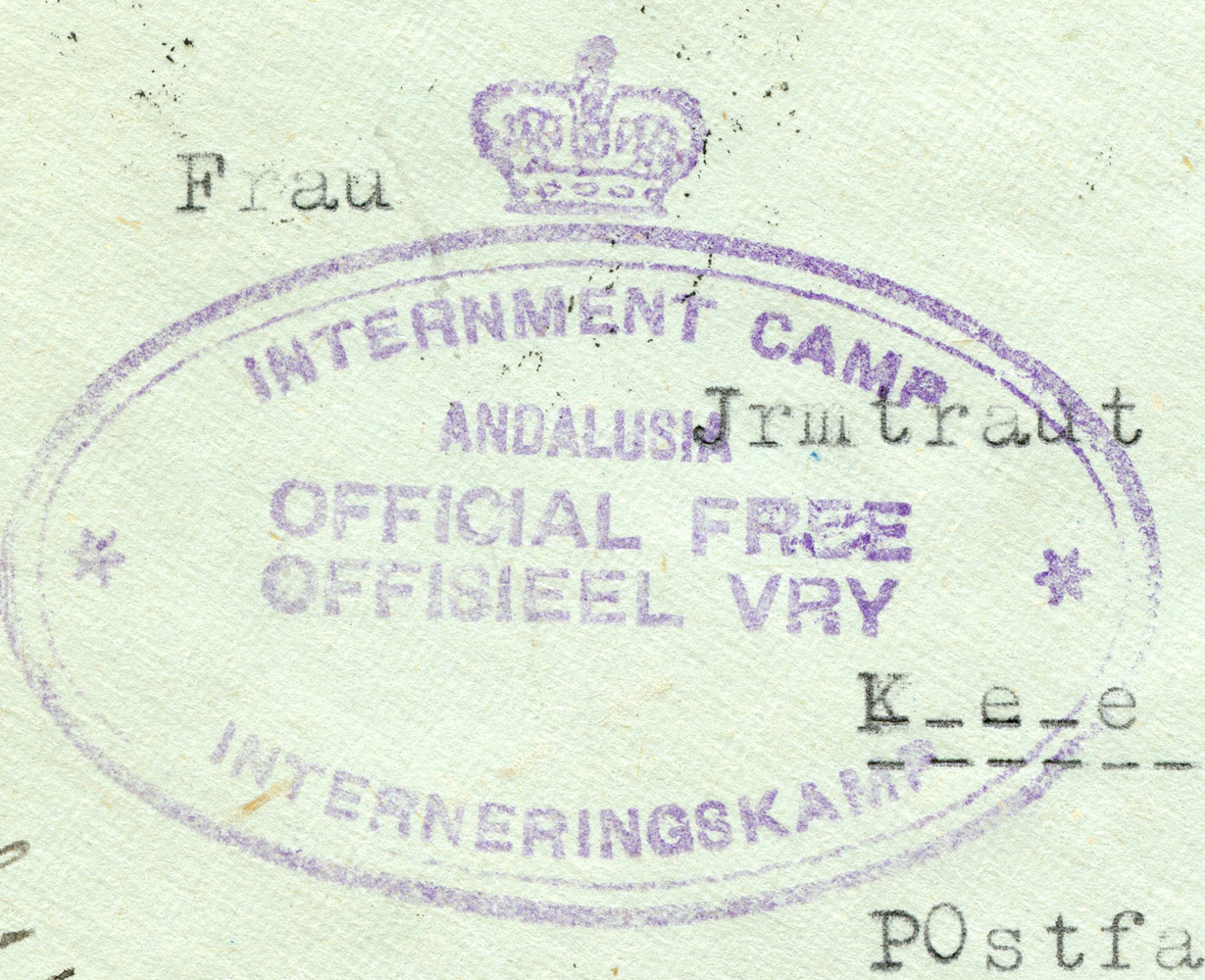
[Below: Reverse of envelope. This was postmarked in Keetmanshoop, South West Africa in May 1942.]
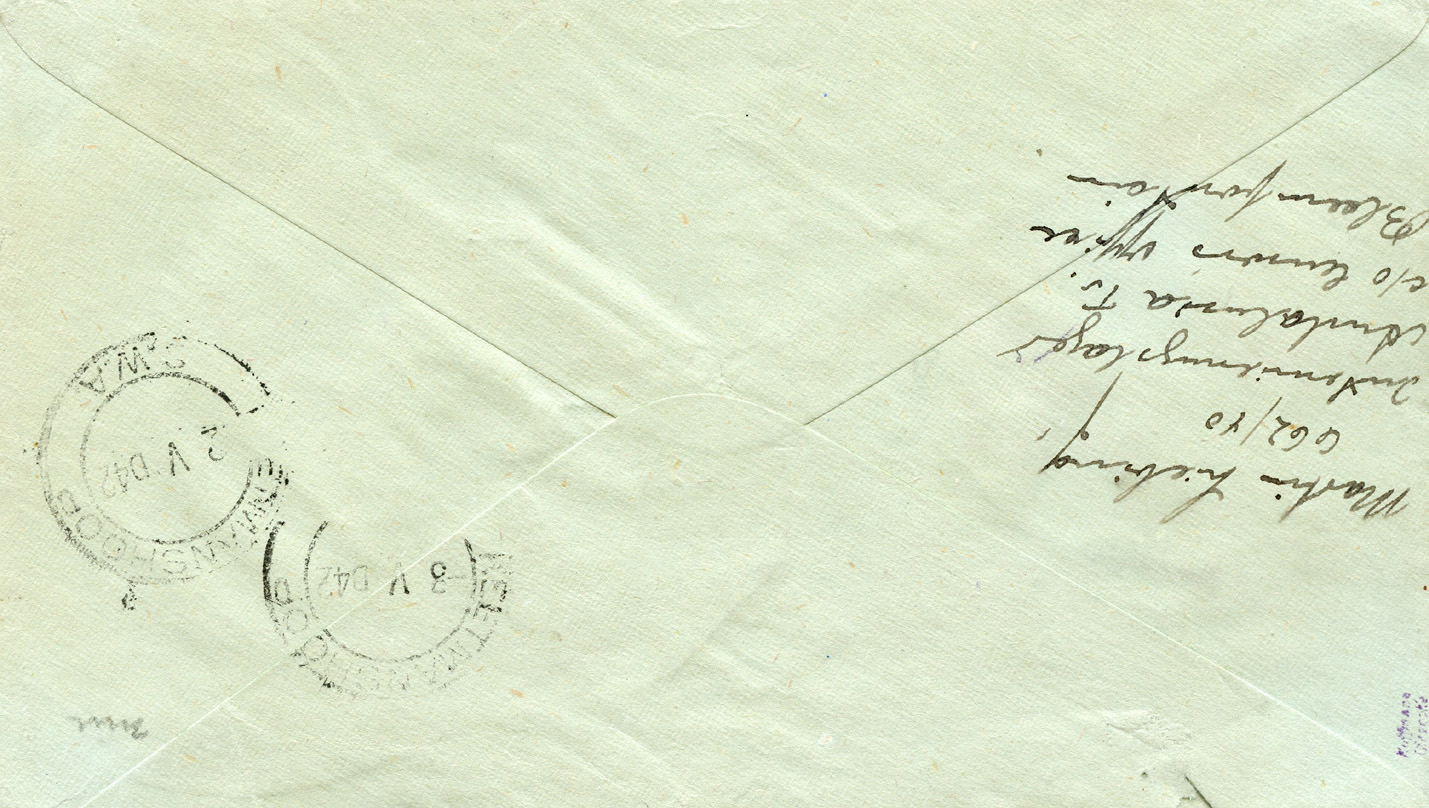
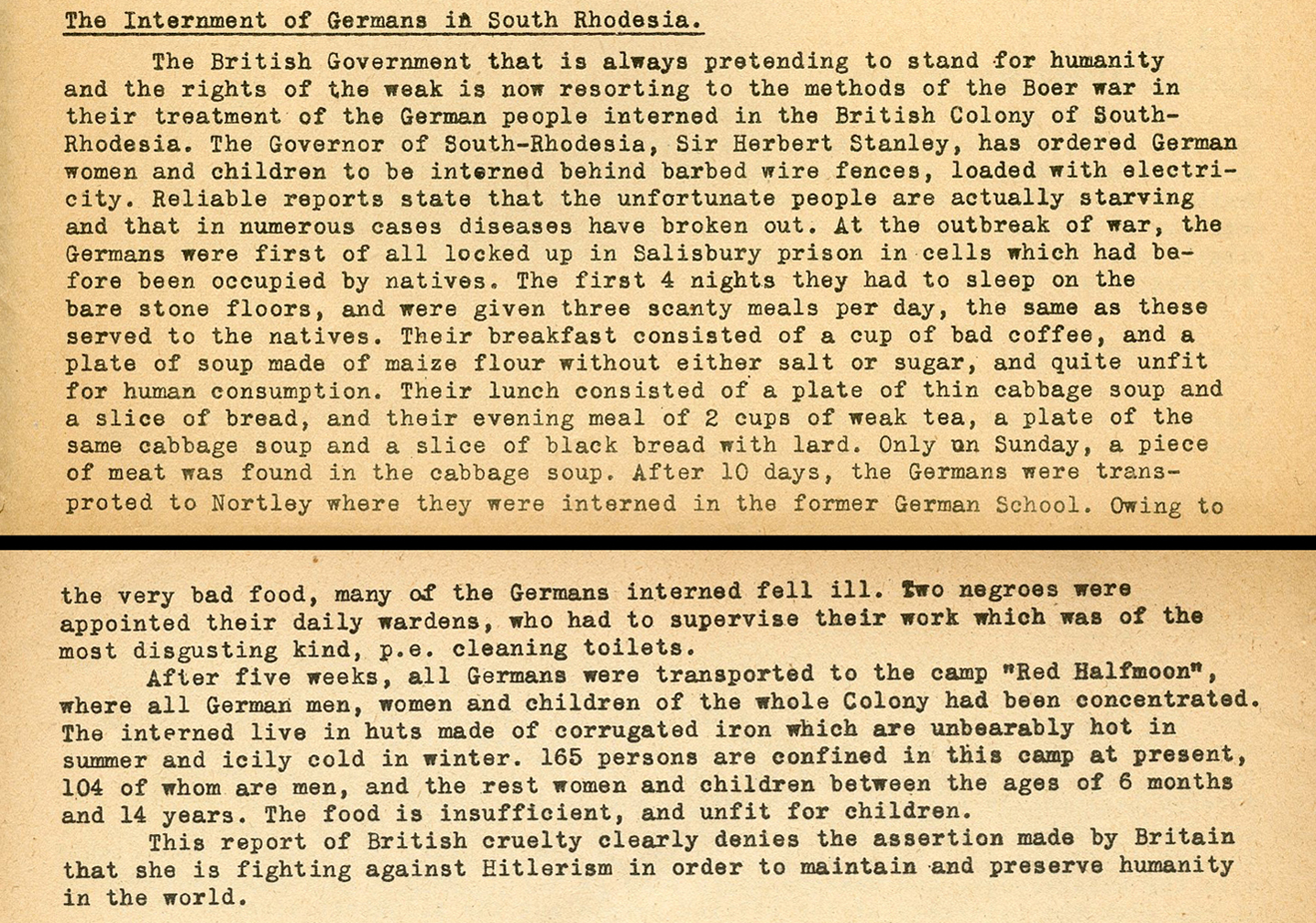
[Below: Here is an article on the dismal conditions of a concentration camp for Germans in Southern Rhodesia, from News from Germany #27/28, December 1939.]
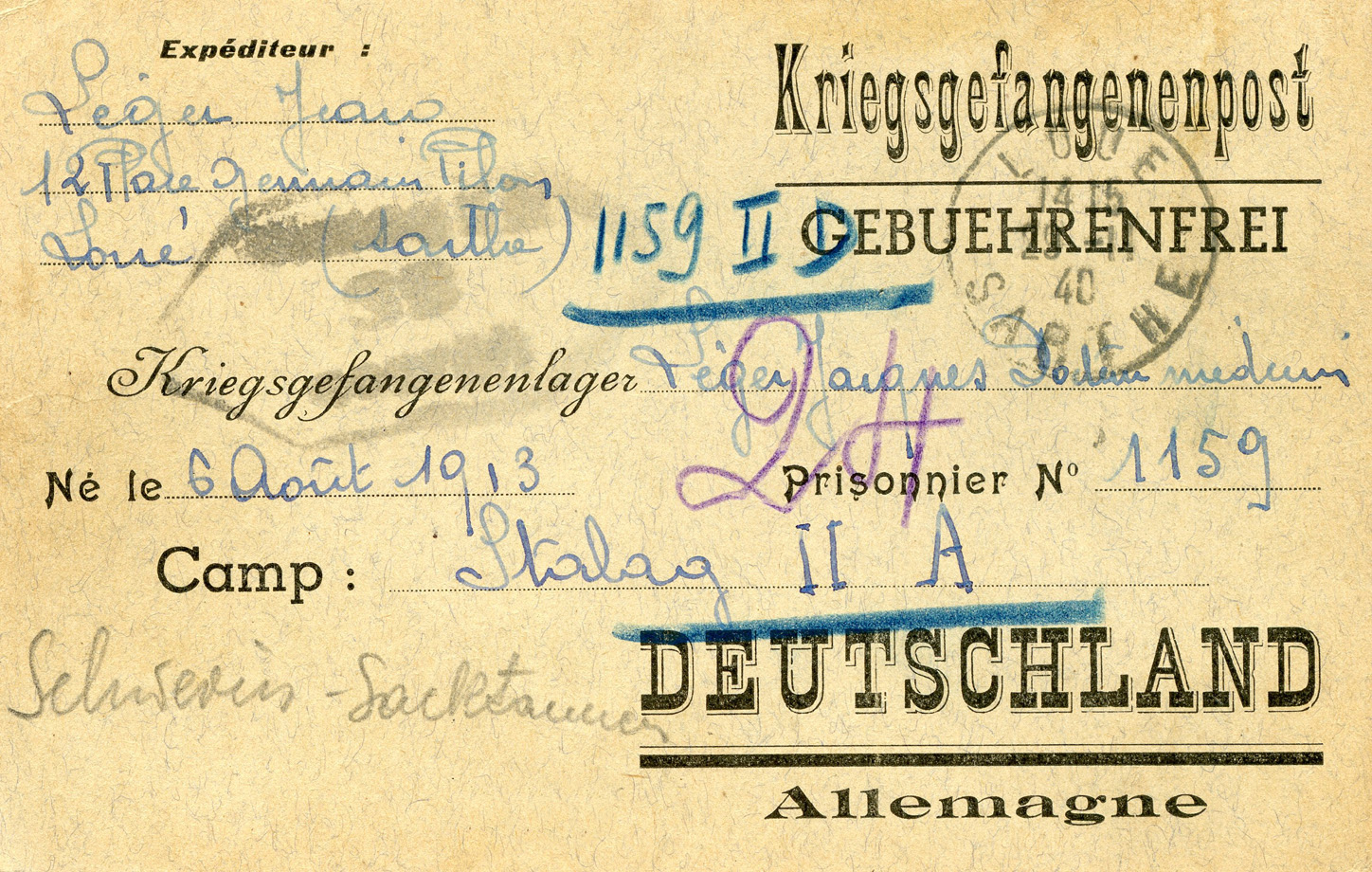
[Below: This postcard was sent from the German P.O.W. camp, Stalag II A, near Neubrandenburg, Western Pomerania. After the war the Soviets took over the camp and proceeded to murder over 5,000 German men, women and children who were interned in the camp. Like many places in Germany today, there are three mass graves where these innocent Germans are buried. This was sent from Sarthe, France in November 1940, probably to a French P.O.W.]
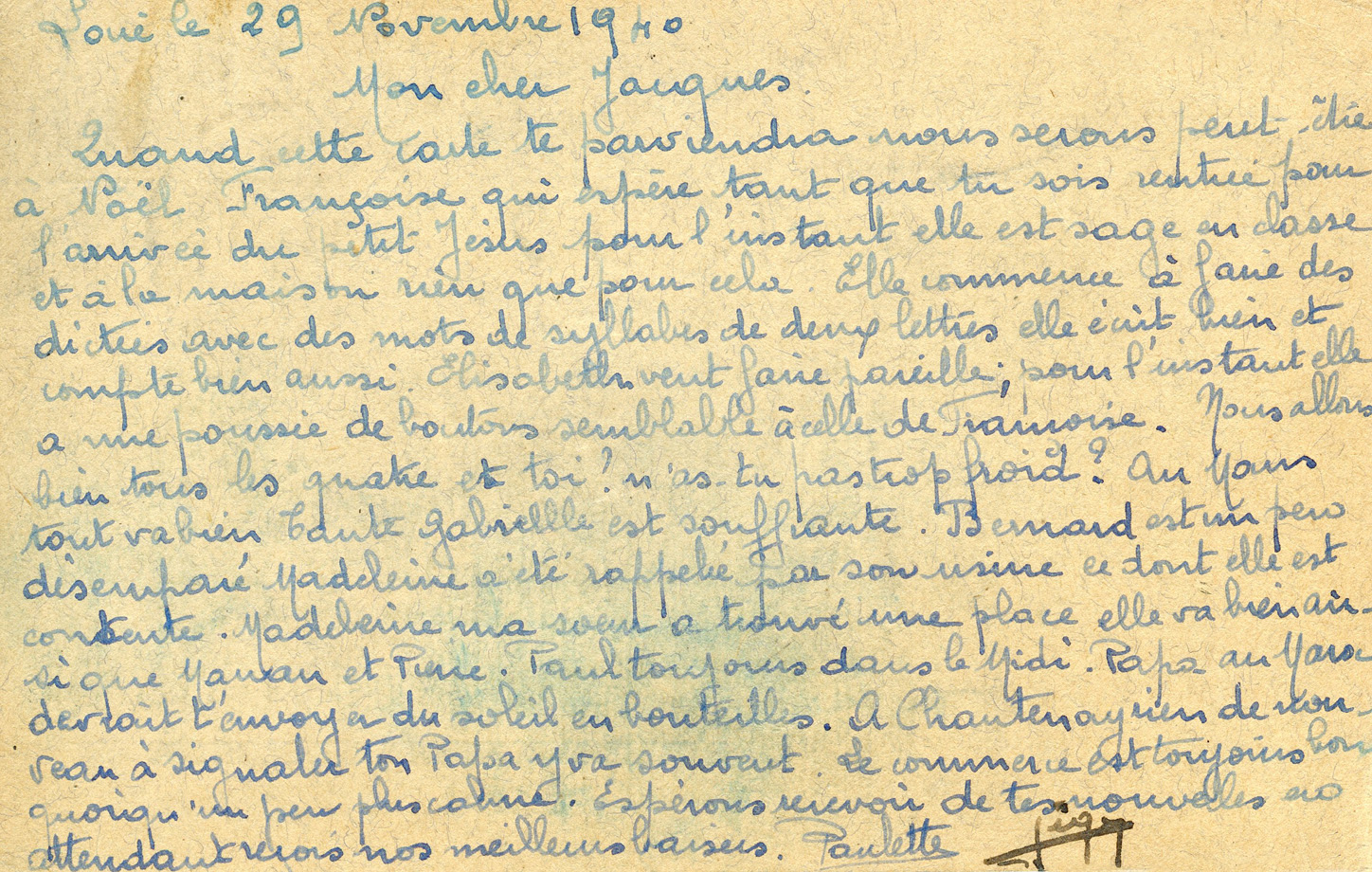
[Below: Postcard reverse.]
[Below: This was sent to German P.O.W. camp Oflag VI B from Kalk Bay, South Africa, postmarked in April 1942 and censored in South Africa. The difference between Oflag camps and Stalag camps is Oflags were for officers. It was located near today's Warburg, North Rhine-Westphalia and held French, British, Polish and other Allied officers.]
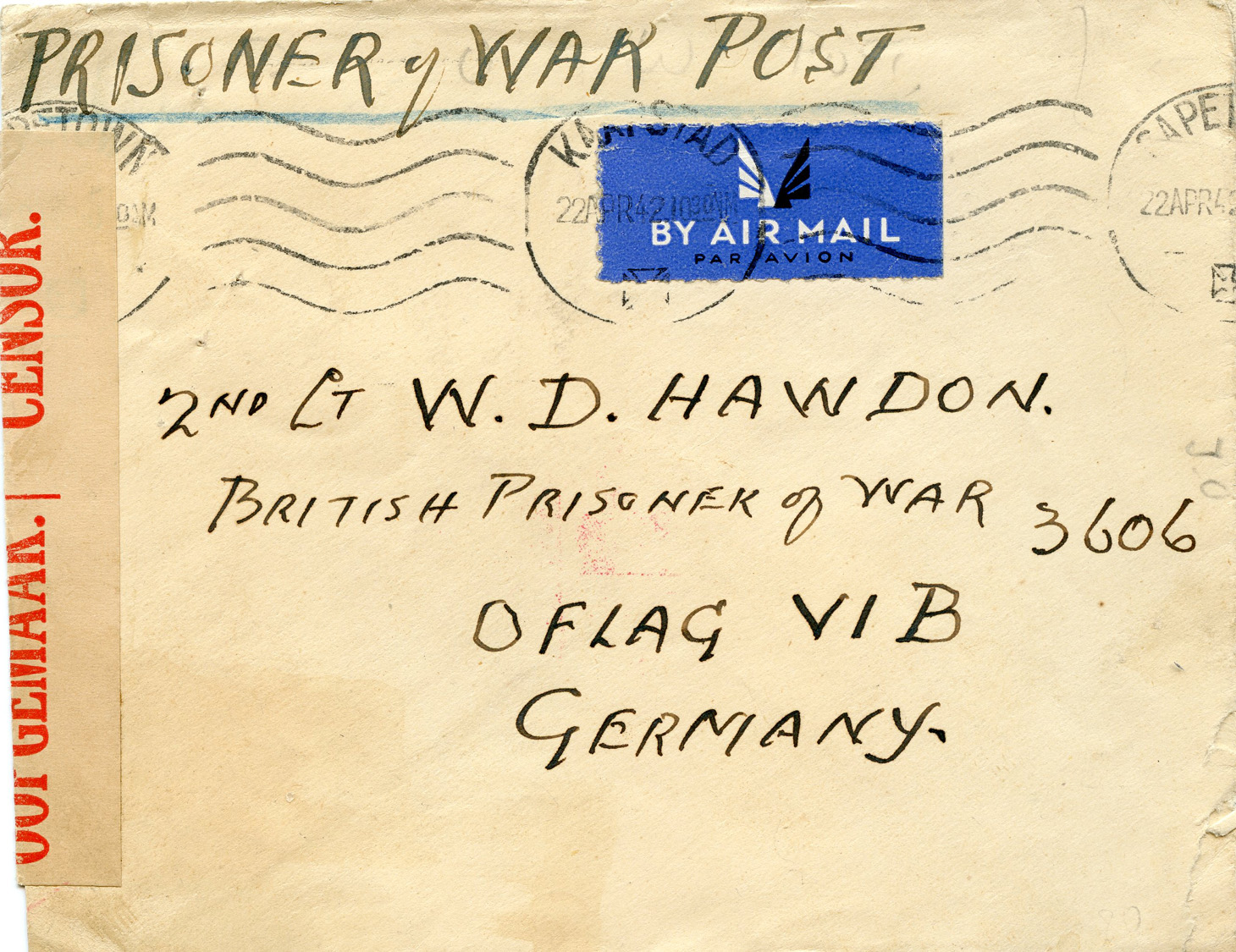
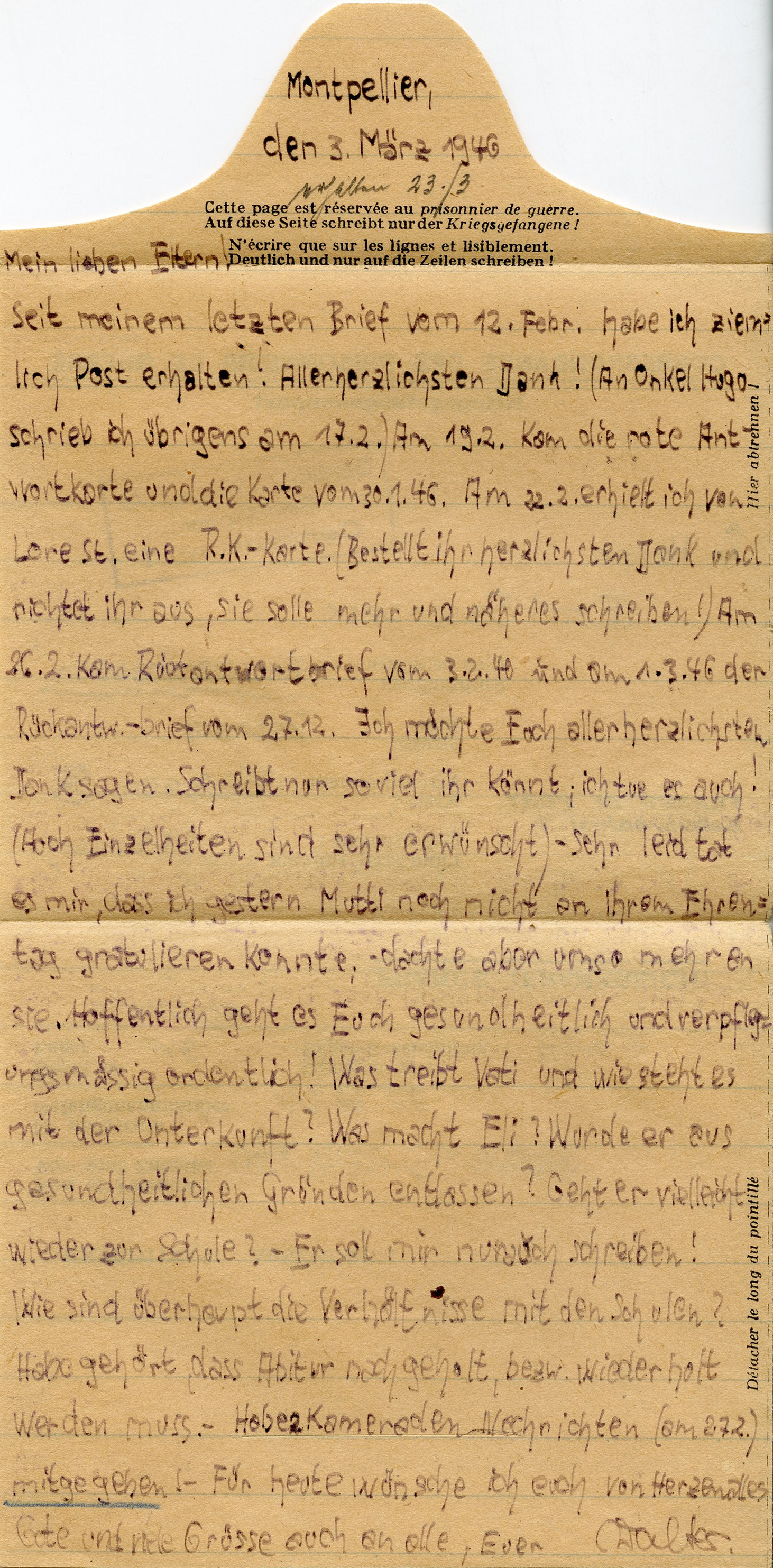
[Below: Envelope reverse - note the South African censor tape sealing the envelope.]
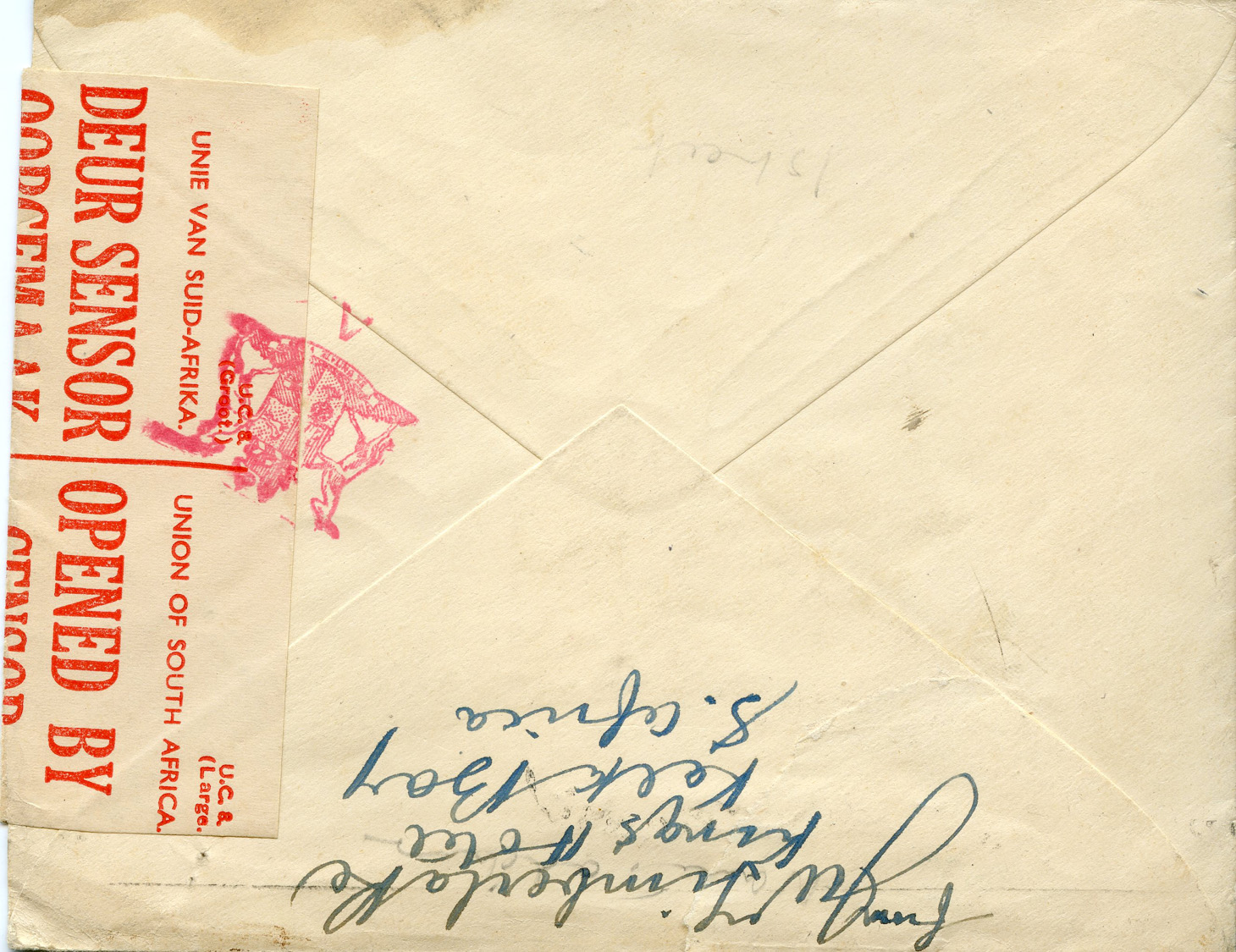
[Below: This is interesting, it is made from notebook paper. This was sent from Montpellier, Herault, France, from a German P.O.W. in March 1946. It was sent to Württemberg, Germany.]
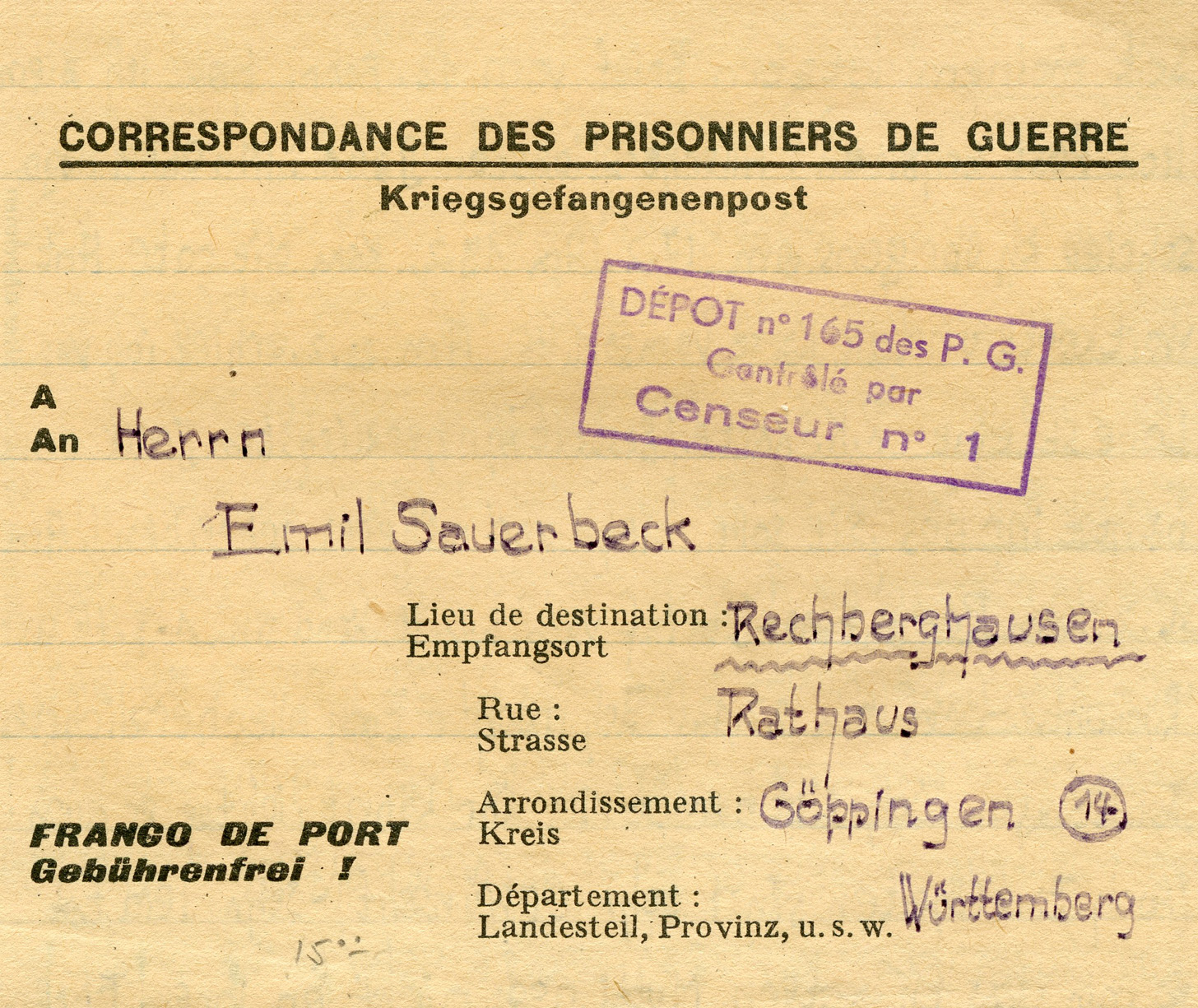
[Below: Envelope reverse.]
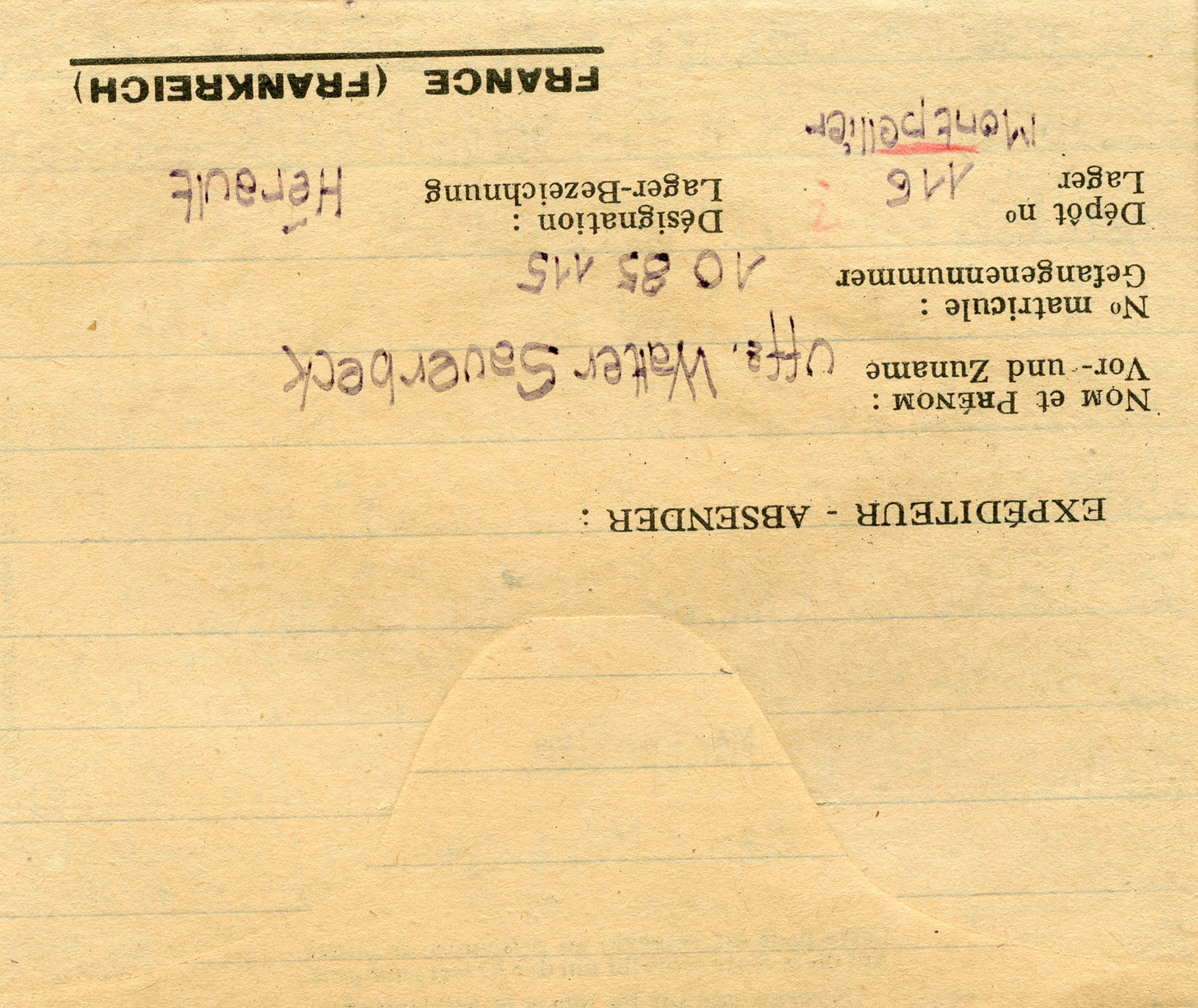
[Below: Inside letter.]
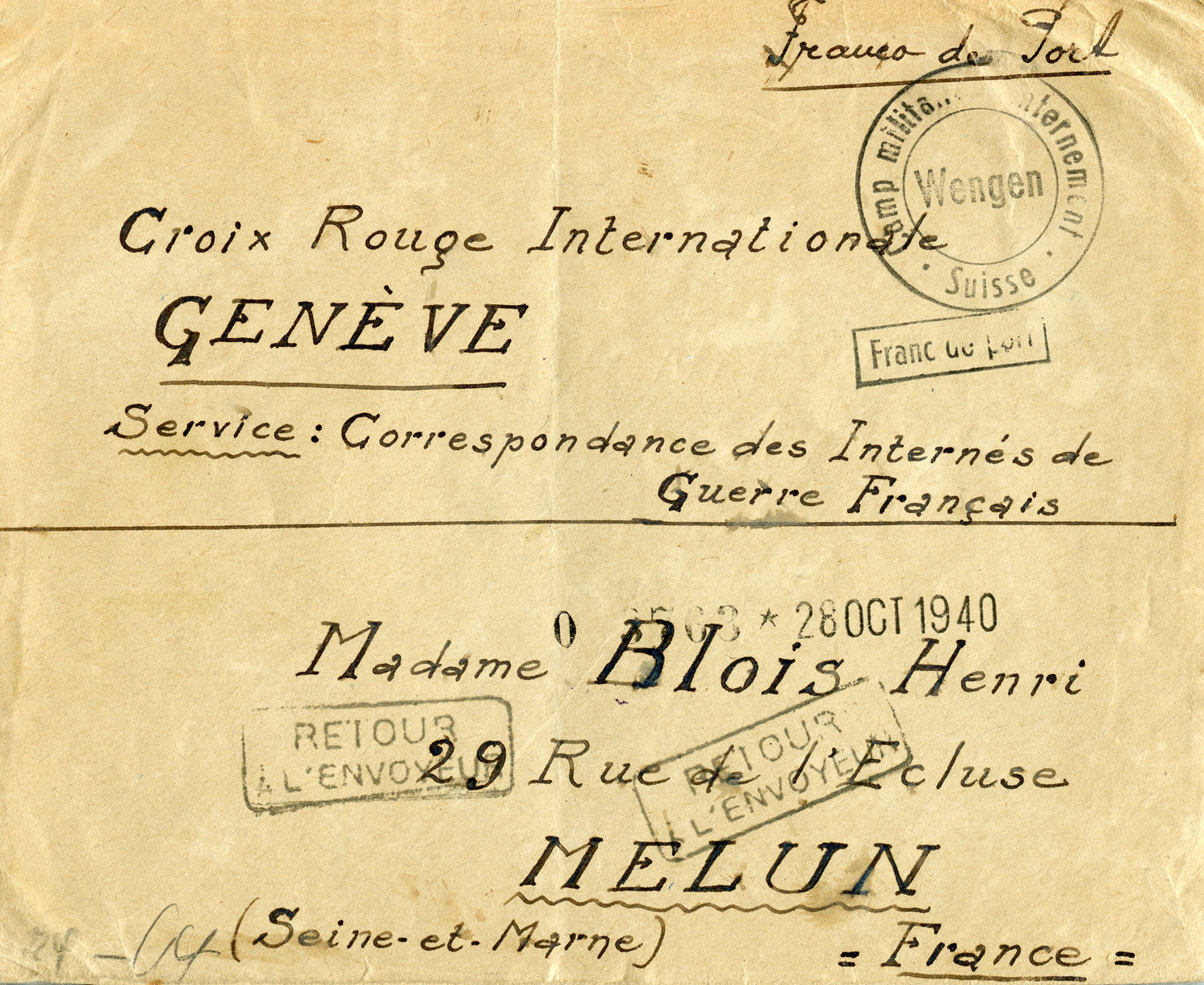
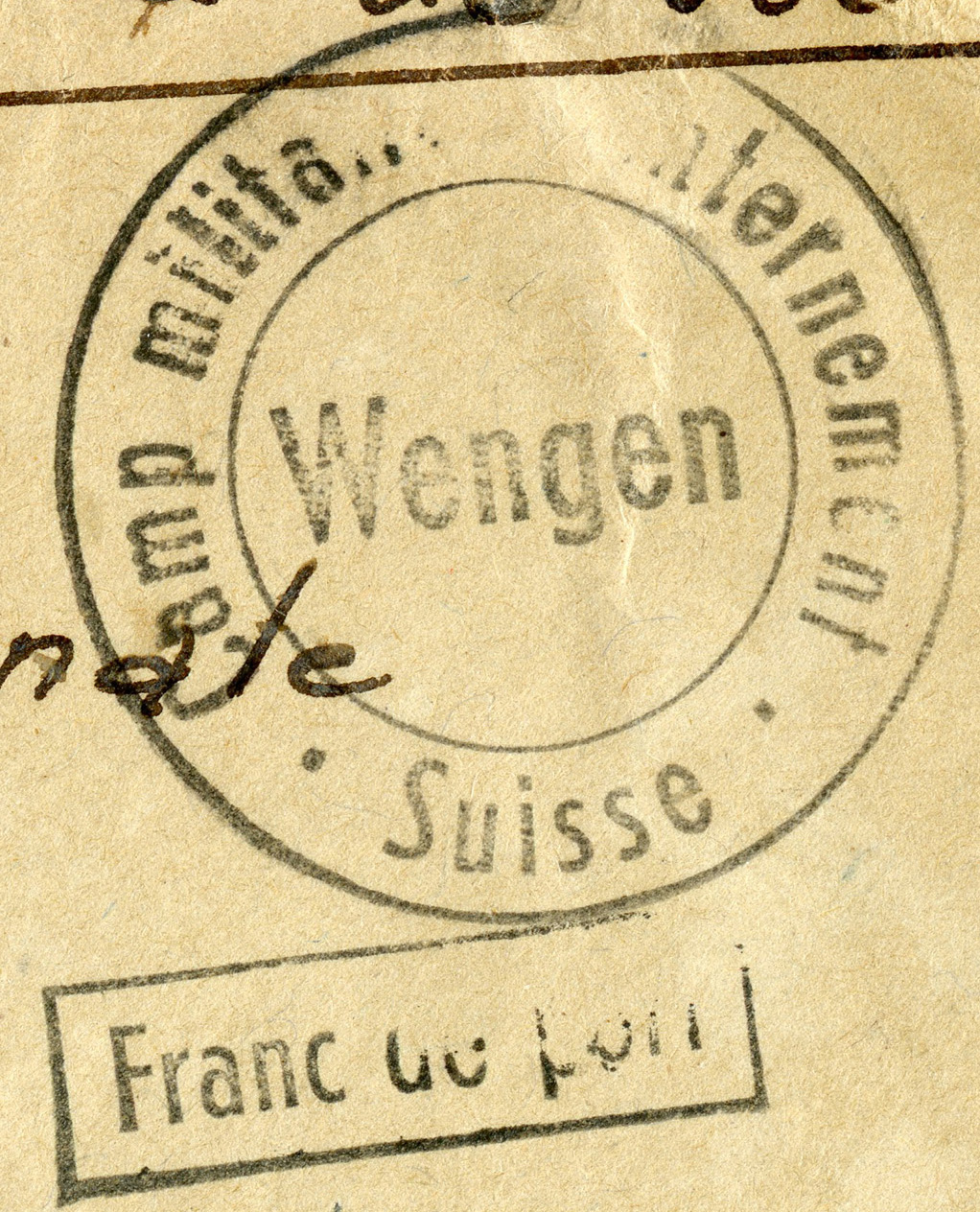
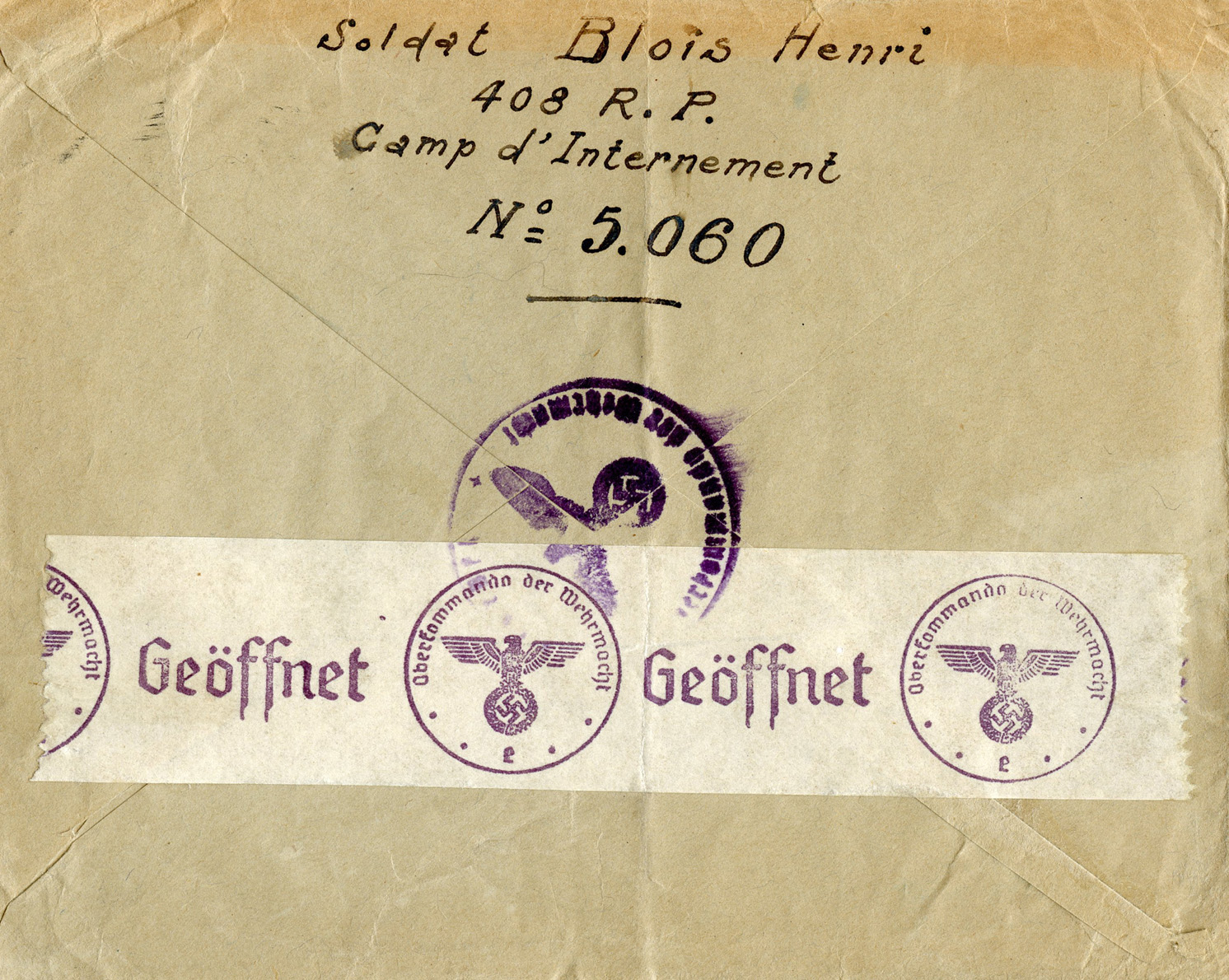
[Below: Here's an interesting one. It is sent from a French prisoner of war being held in Switzerland, and sent to his wife in France (c/o the Red Cross). Wengen was a ski resort village in Switzerland where the Swiss authorities converted luxury hotels into housing for prisoners of war during World War II. Switzerland interned soldiers from 38 nations in 768 communities across the country!]
[Below: Close-up. This says:'Wengen Camp Militaire Internment Suisse'.]
[Below: Envelope reverse.]
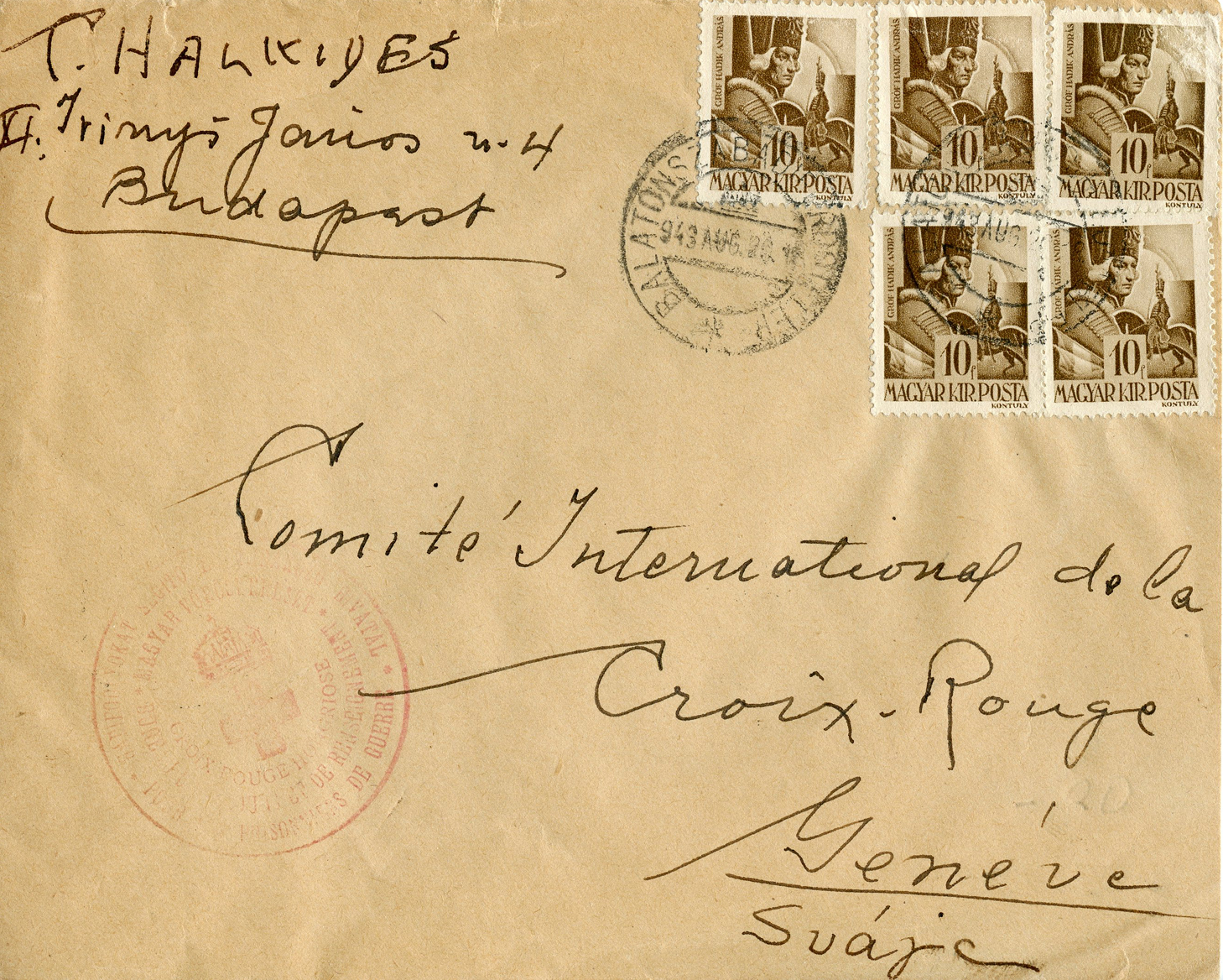
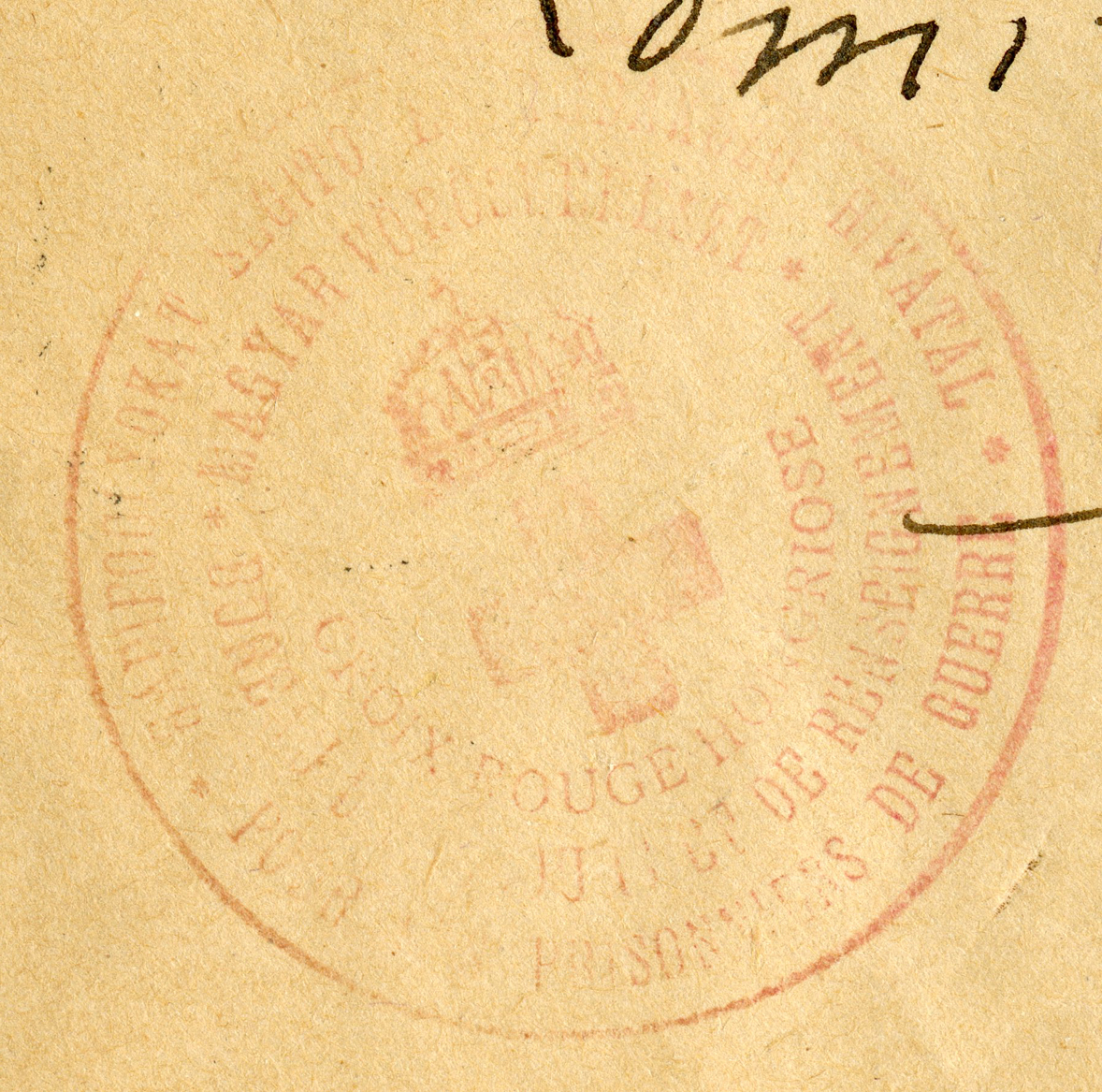
[Below: Hungarian Red Cross to Swiss Red Cross from August 1943 with prisoner of war red ink stamp.]
[Below: Close-up.]
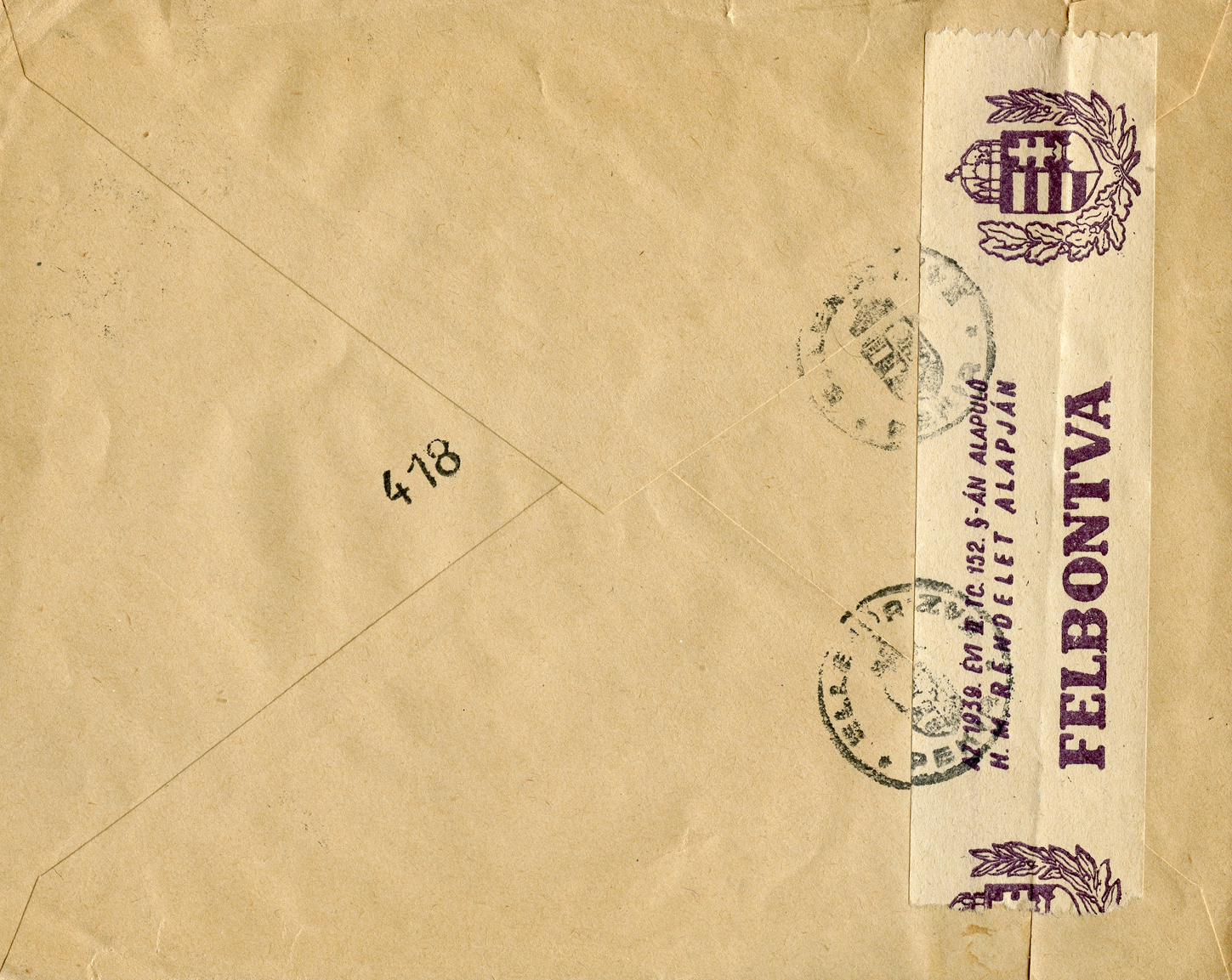
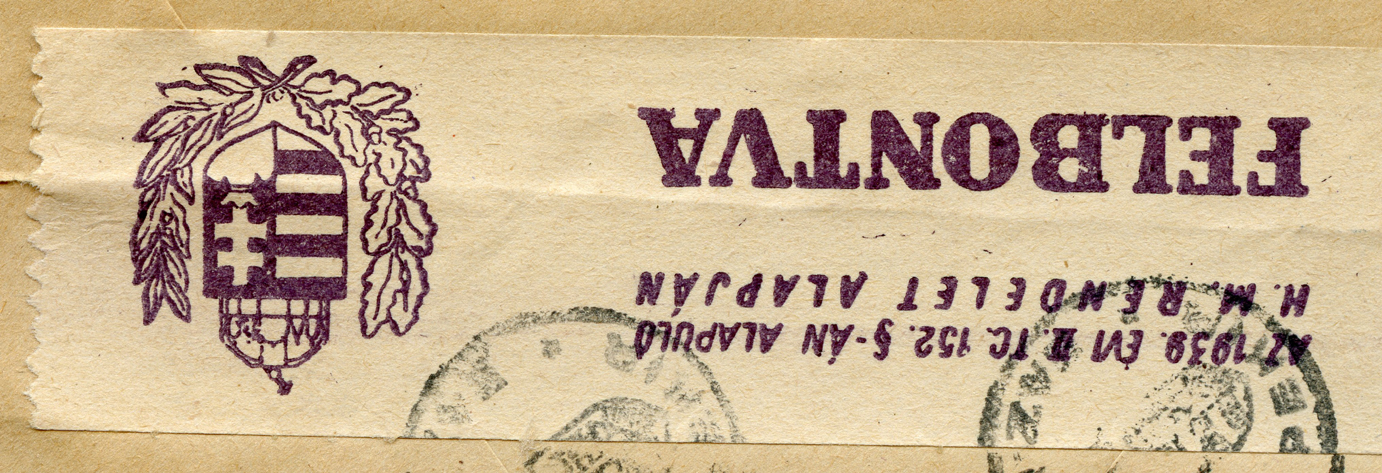
[Below: Reverse showing Hungarian censor tape.]
[Below: Close-up.]
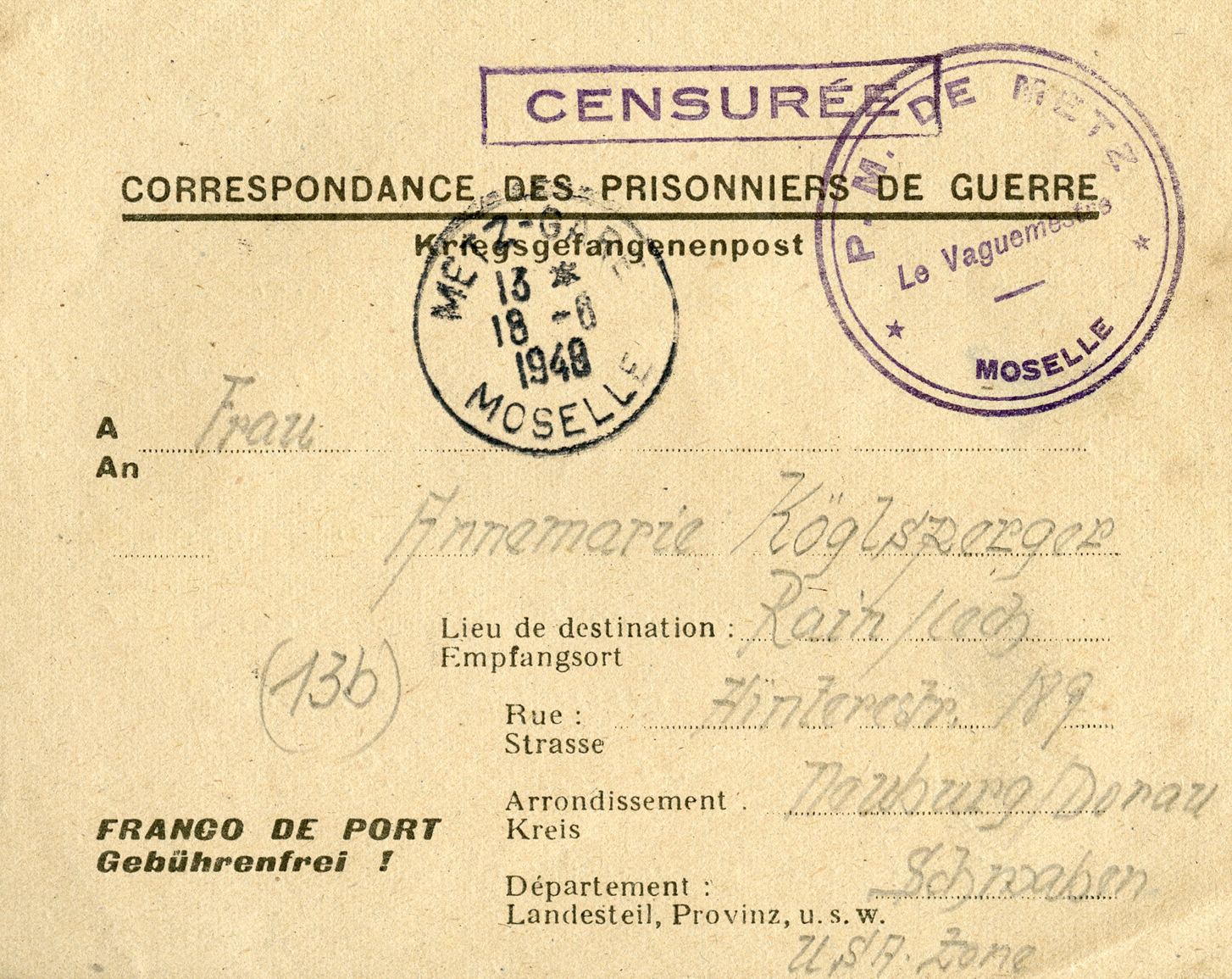
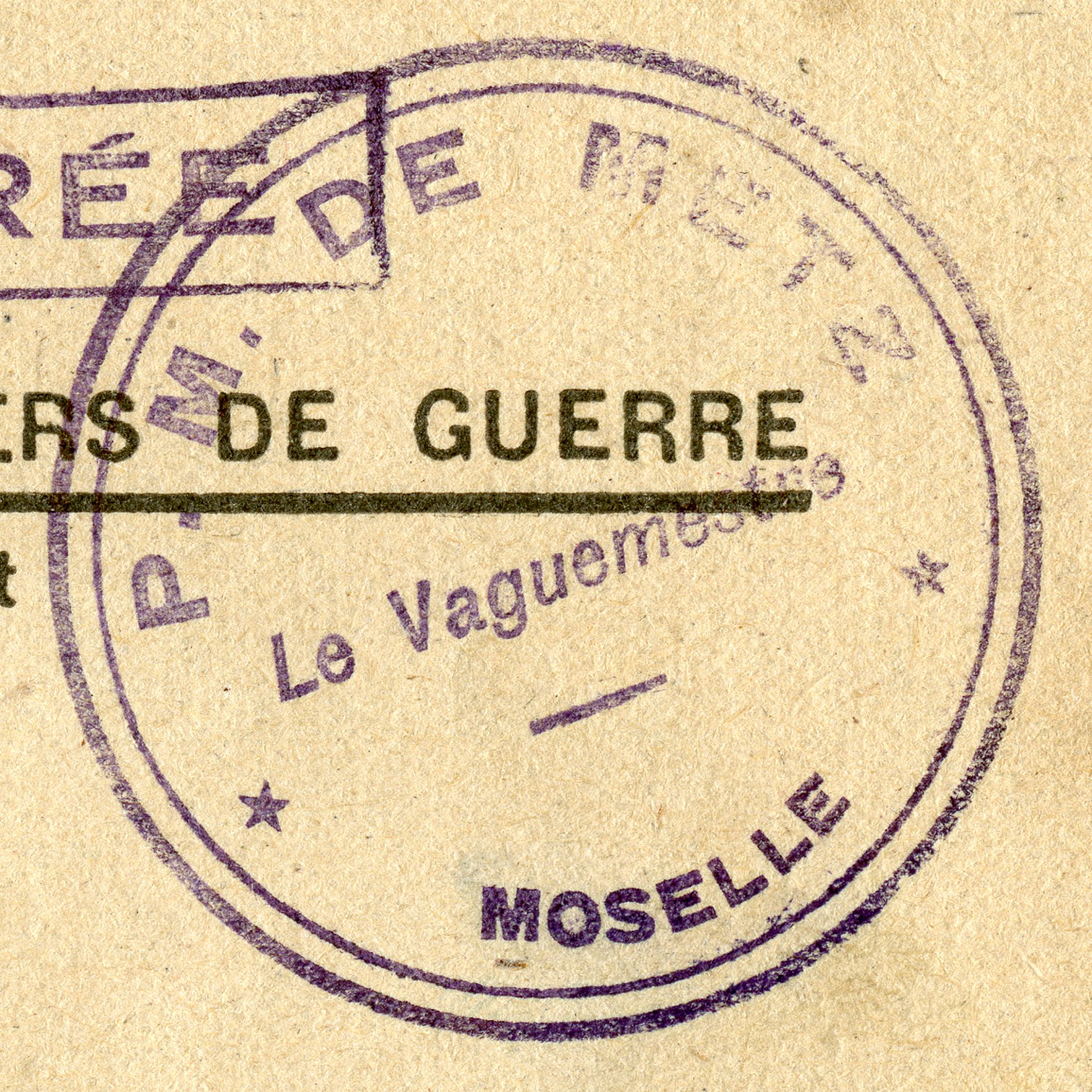
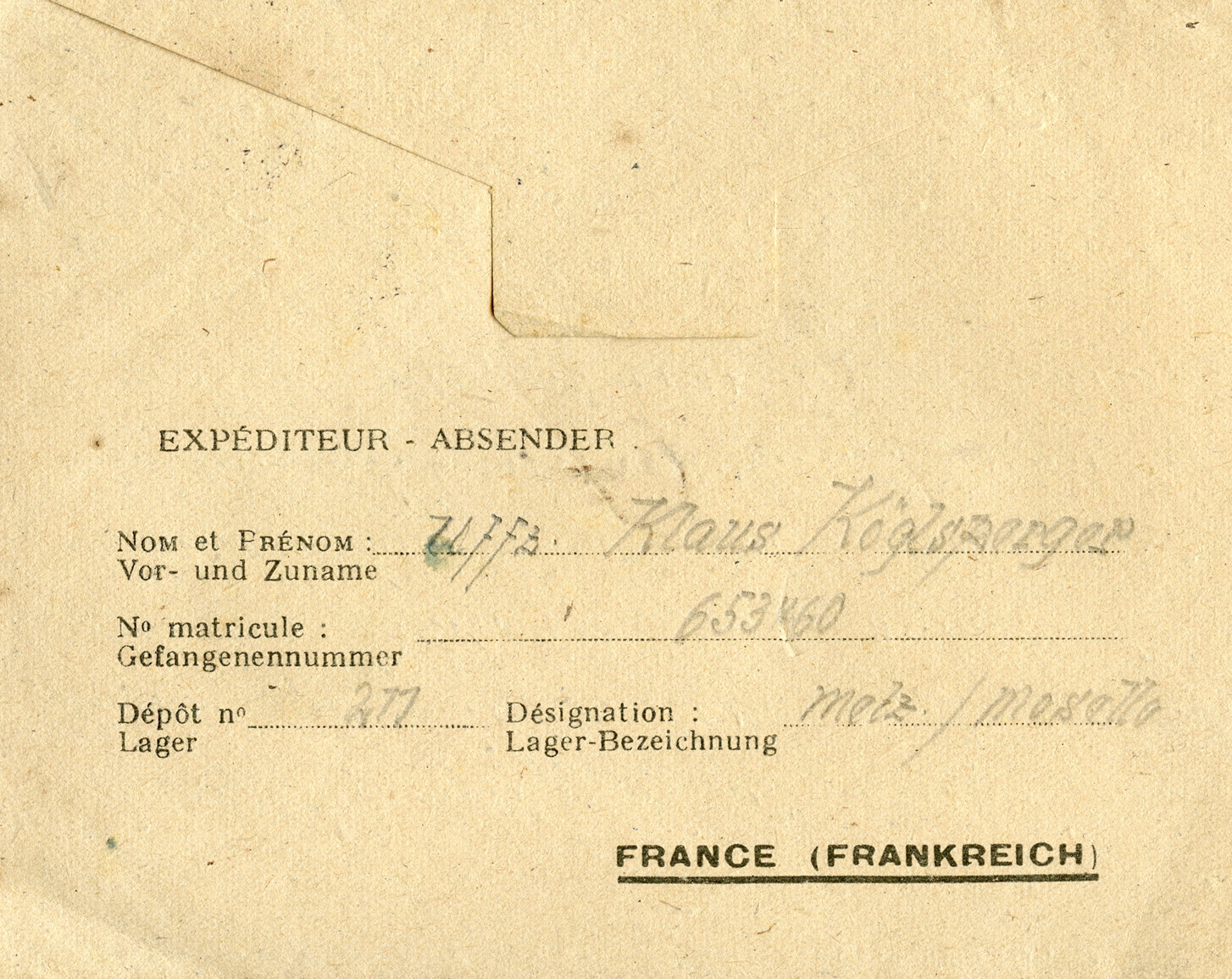
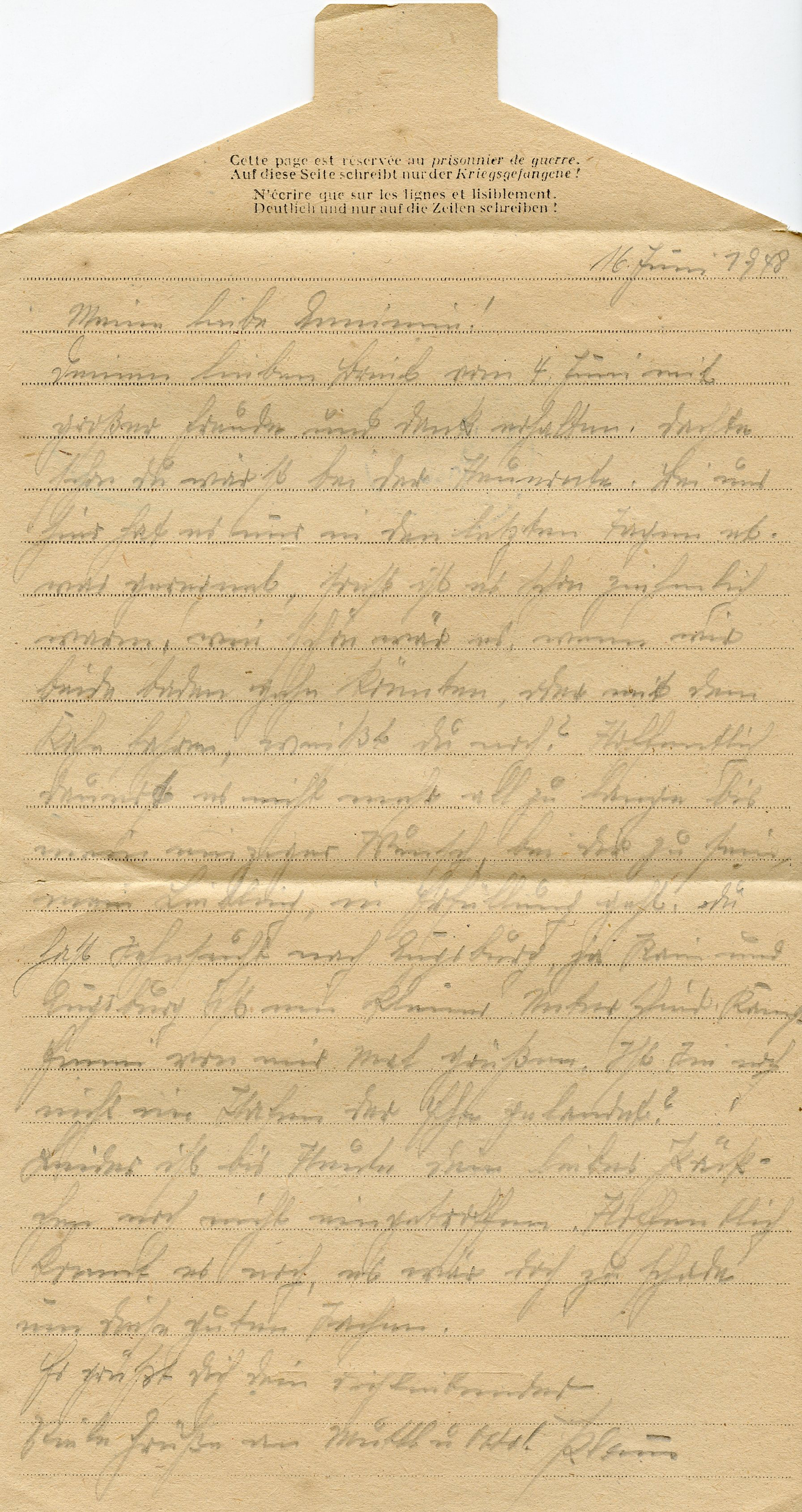
[Below: Post war prisoner of war camp for German soldiers in Moselle, France.]
[Below: Close-up.]
[Below: Reverse.]
[Below: Letter within.]
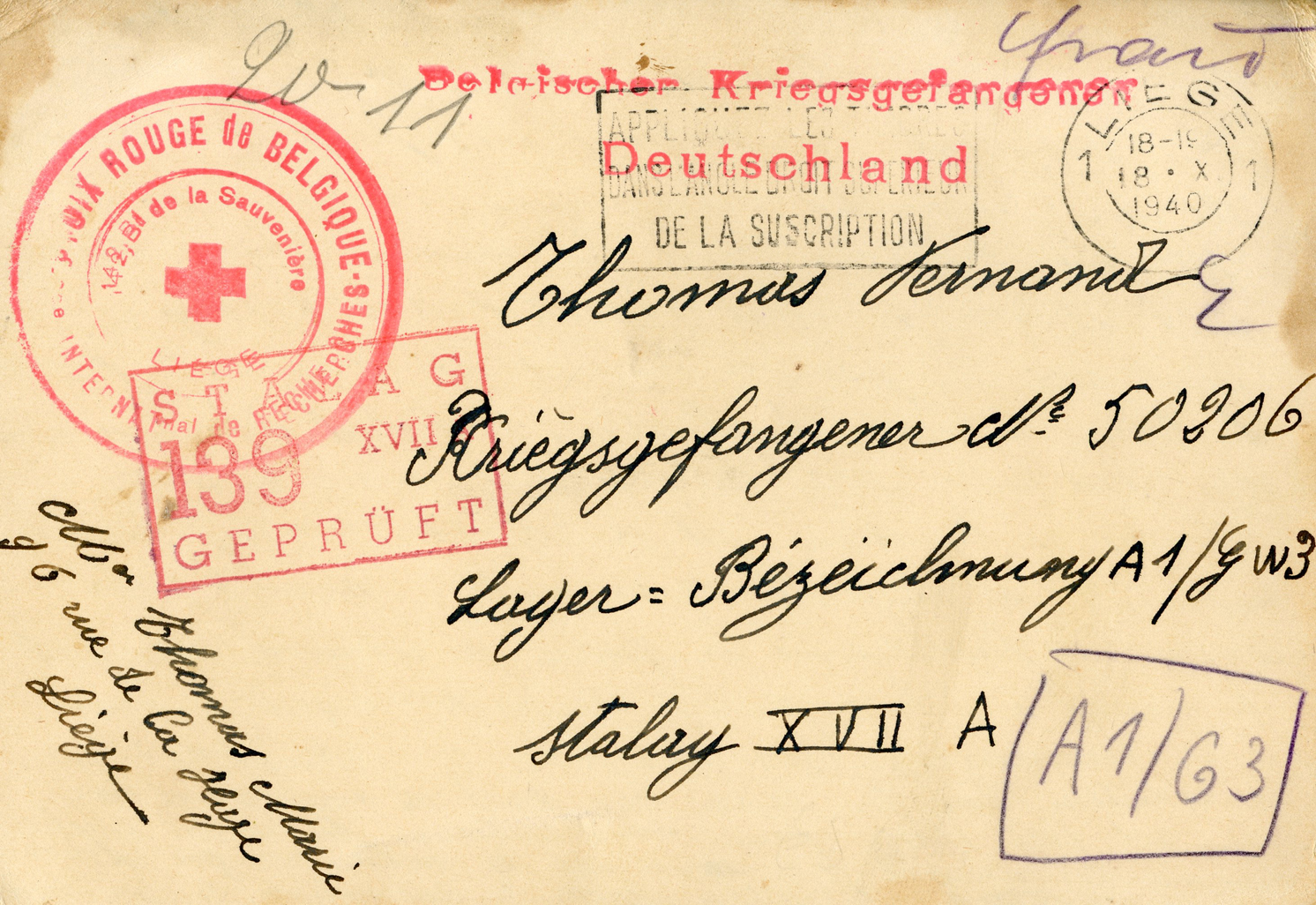
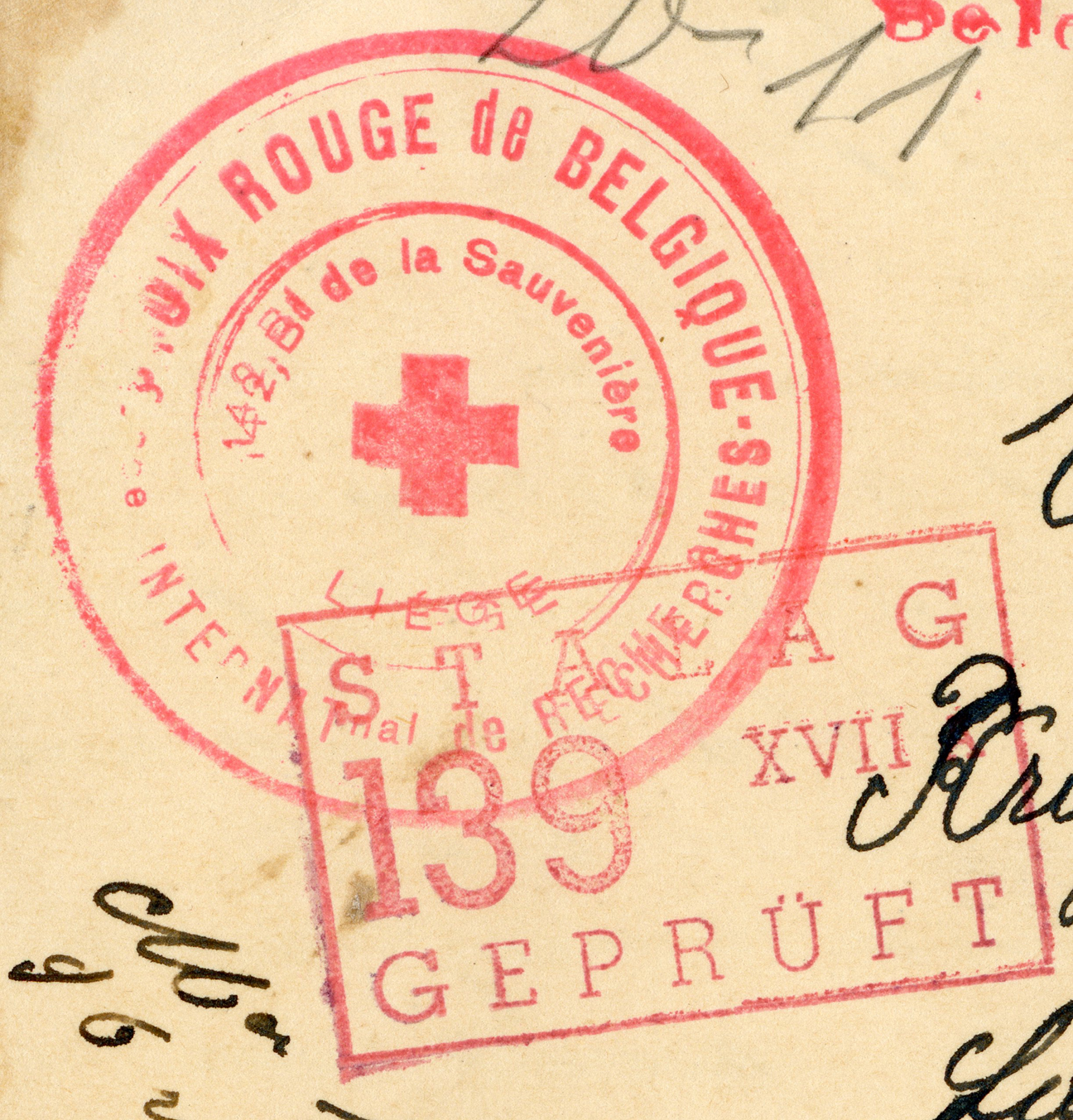
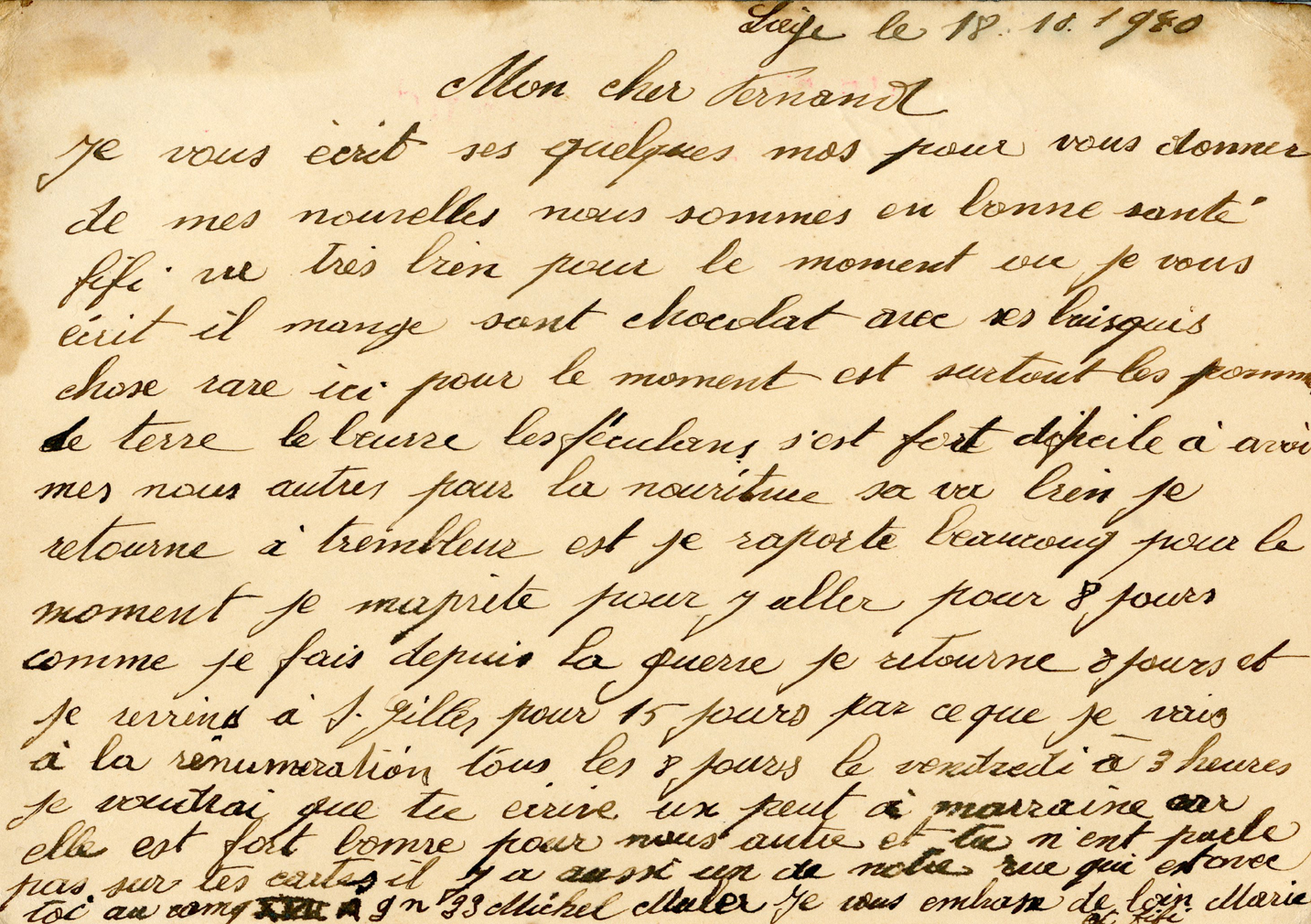
[Below: Postcard from Belgian prisoner of war from October 18, 1940 in Stalag 139 XVII A in Liege.]
[Below: Close-up.]
[Below: Reverse.]
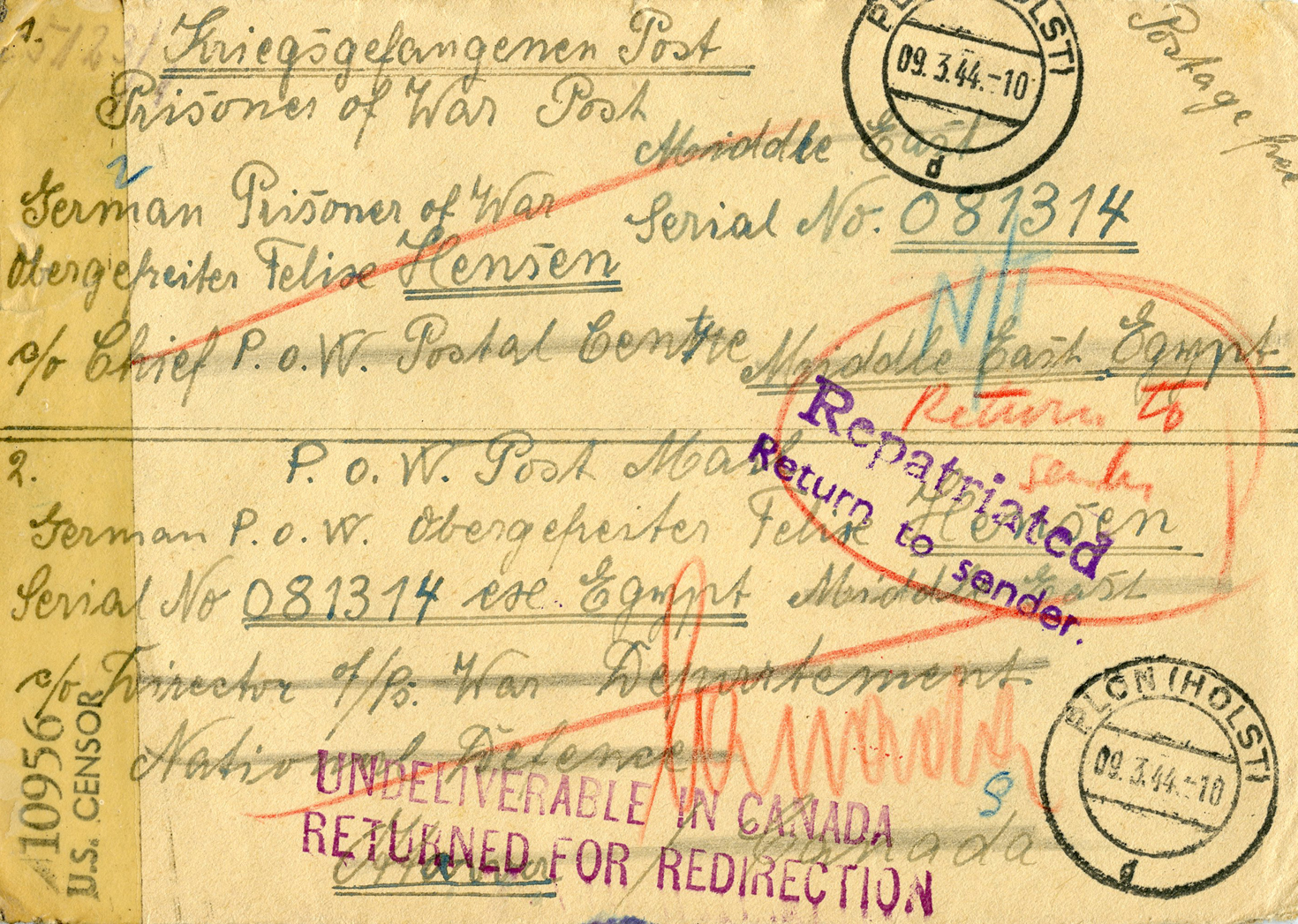
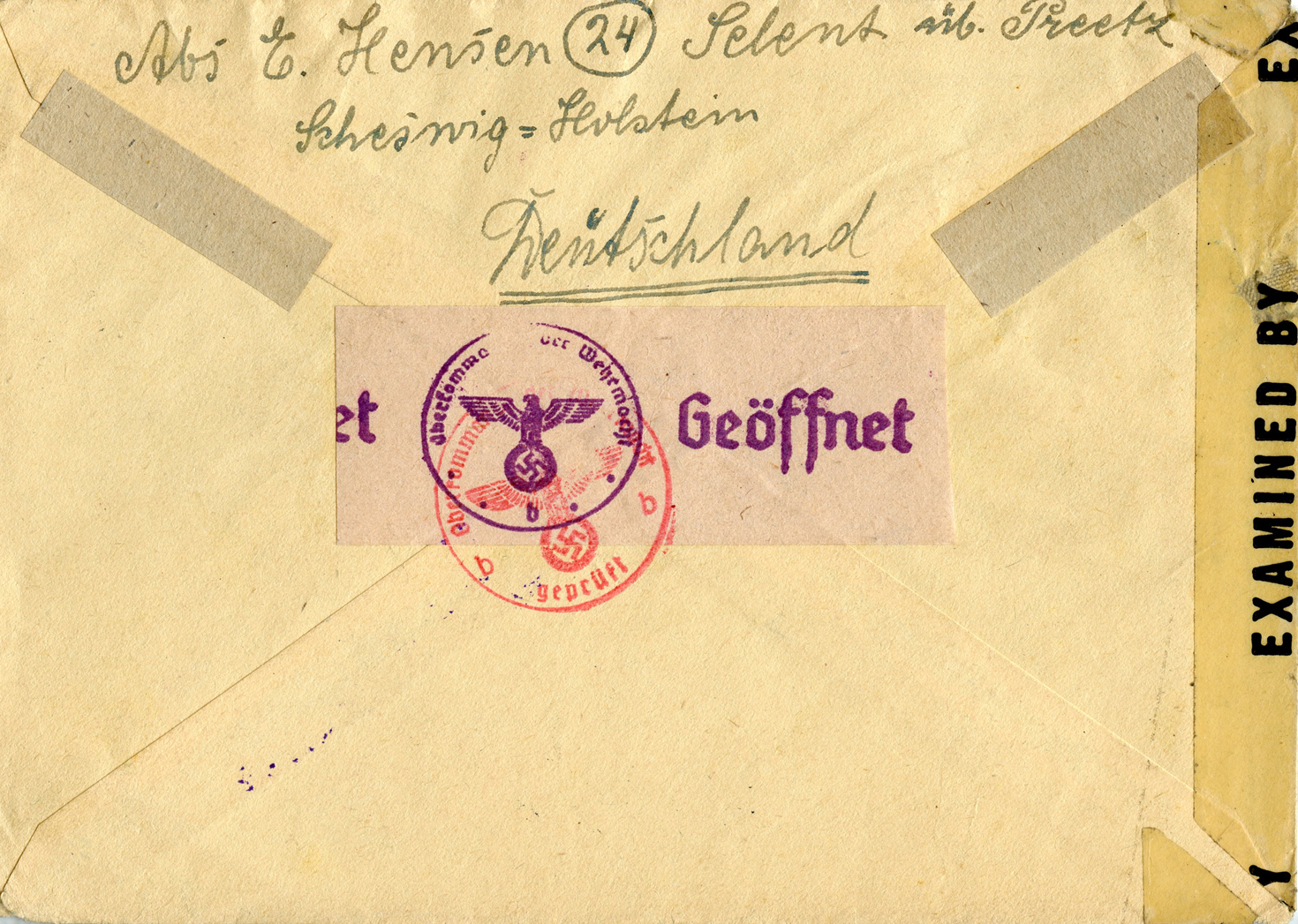
[Below: Interesting envelope sent from Germany to a German prisoner of war in Egypt, postmarked March 9, 1944. It has a couple of strange and interesting stamps, the first being 'Repatriated - Return to sender' (why would they have been repatriated when the war was still going on?) and 'Undeliverable in Canada - Returned for redirection' (I wonder why it ended up in Canada?) It is also censored by the German and the American authorities.]
[Below: Reverse.]
[Below: Letter within. The cutout seen here was done by the Allied censors. Why I don't know, I'm guessing it just said 'Briefpost' (letter post)?]
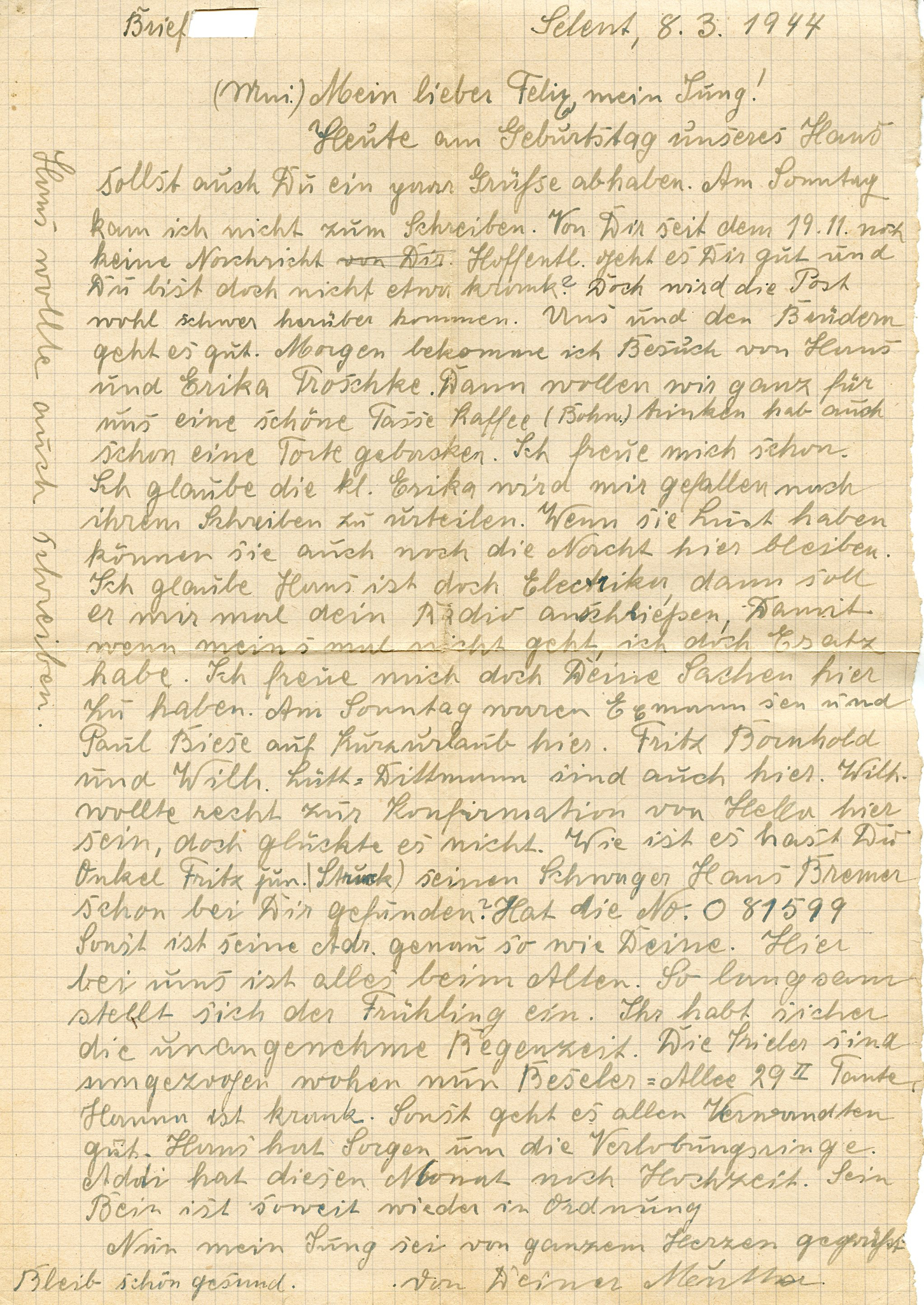
[Below: This was sent from Andorno Micca, Italy, from a camp that was used as a POW camp for Jewish refugees, foreign nationals, POWs and Italian traitors. This was postmarked on November 8, 1943 and has German OKW censor tape.]
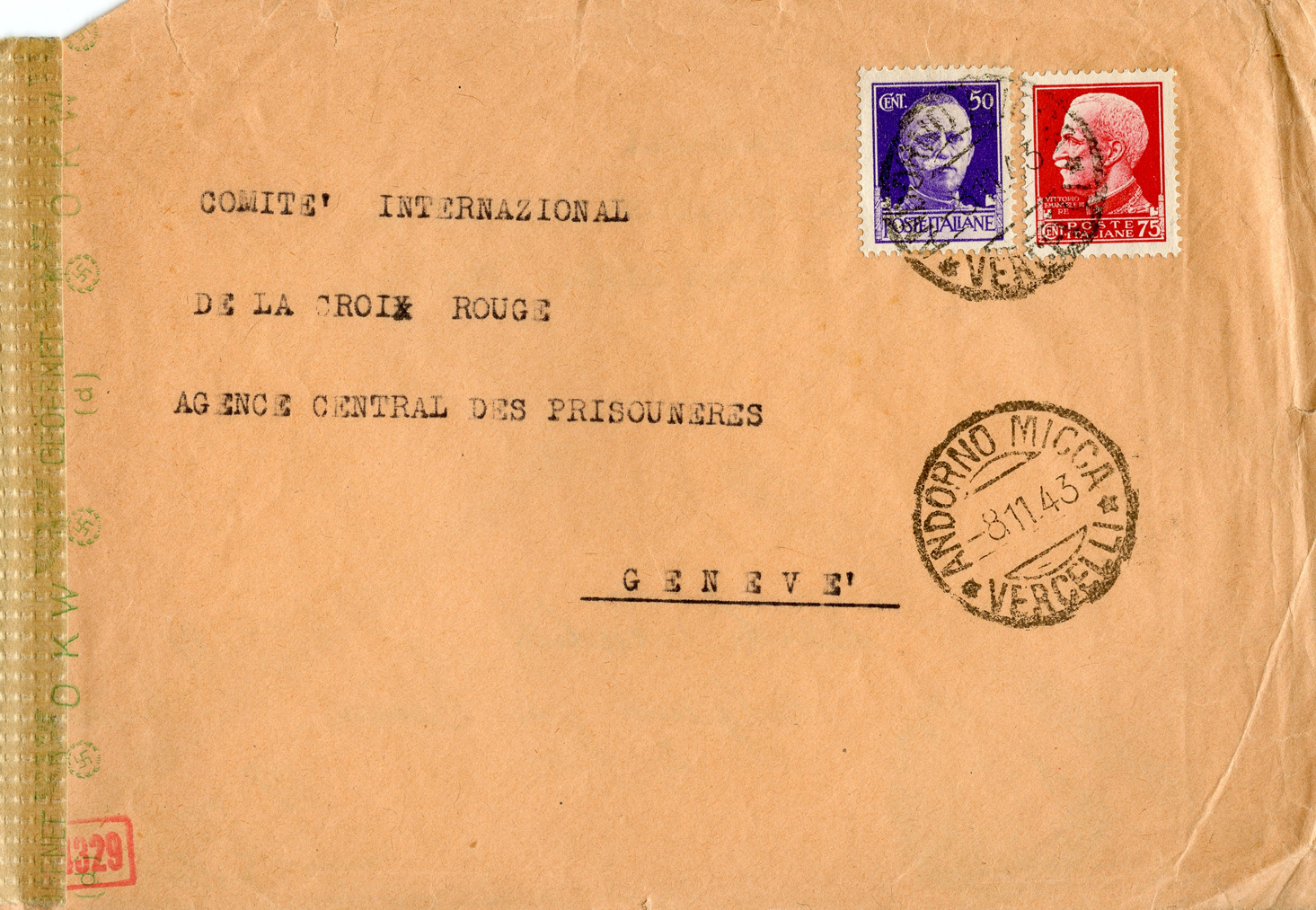
[Below: Reverse. We see here that this was sent from an Italian.]
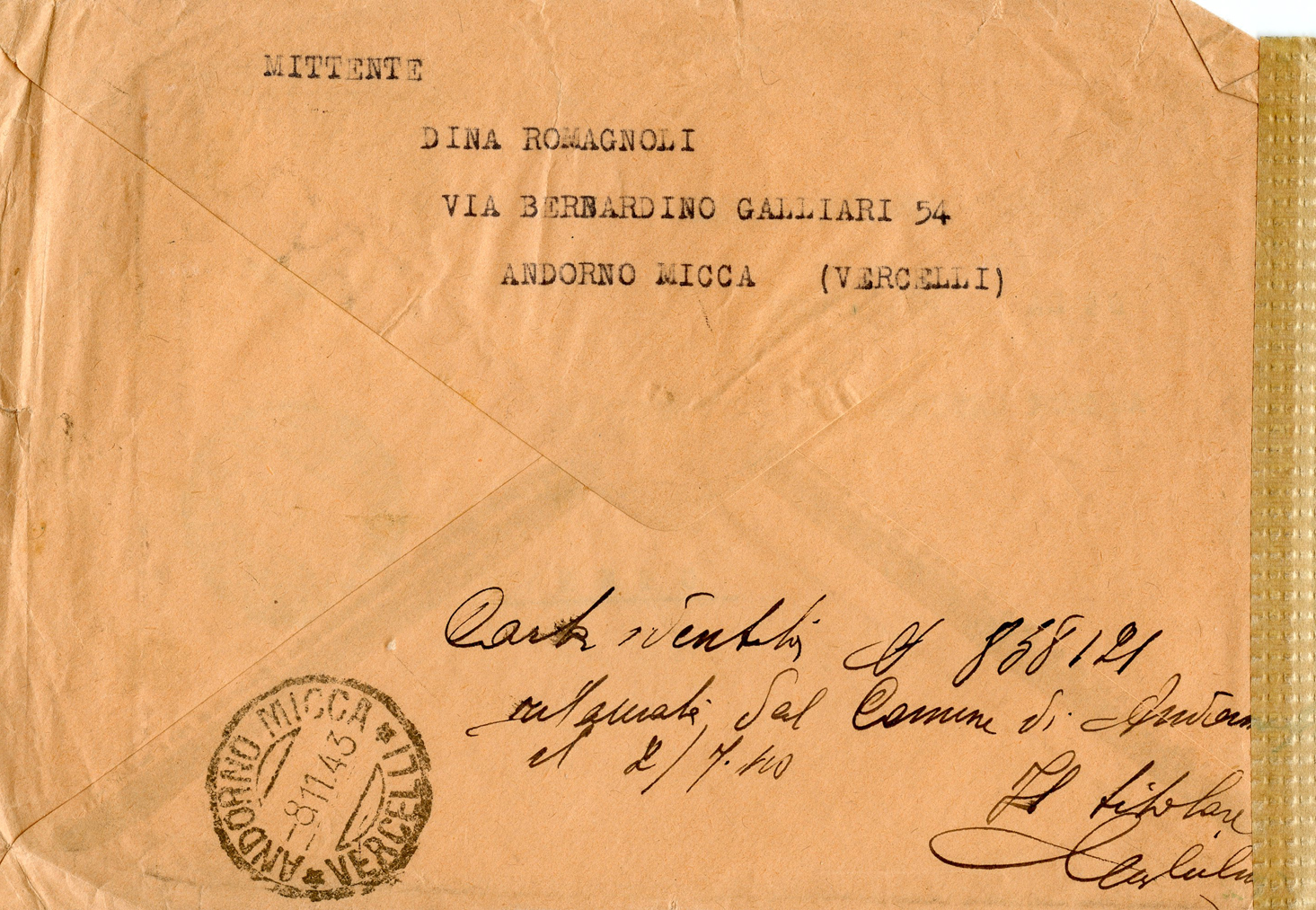
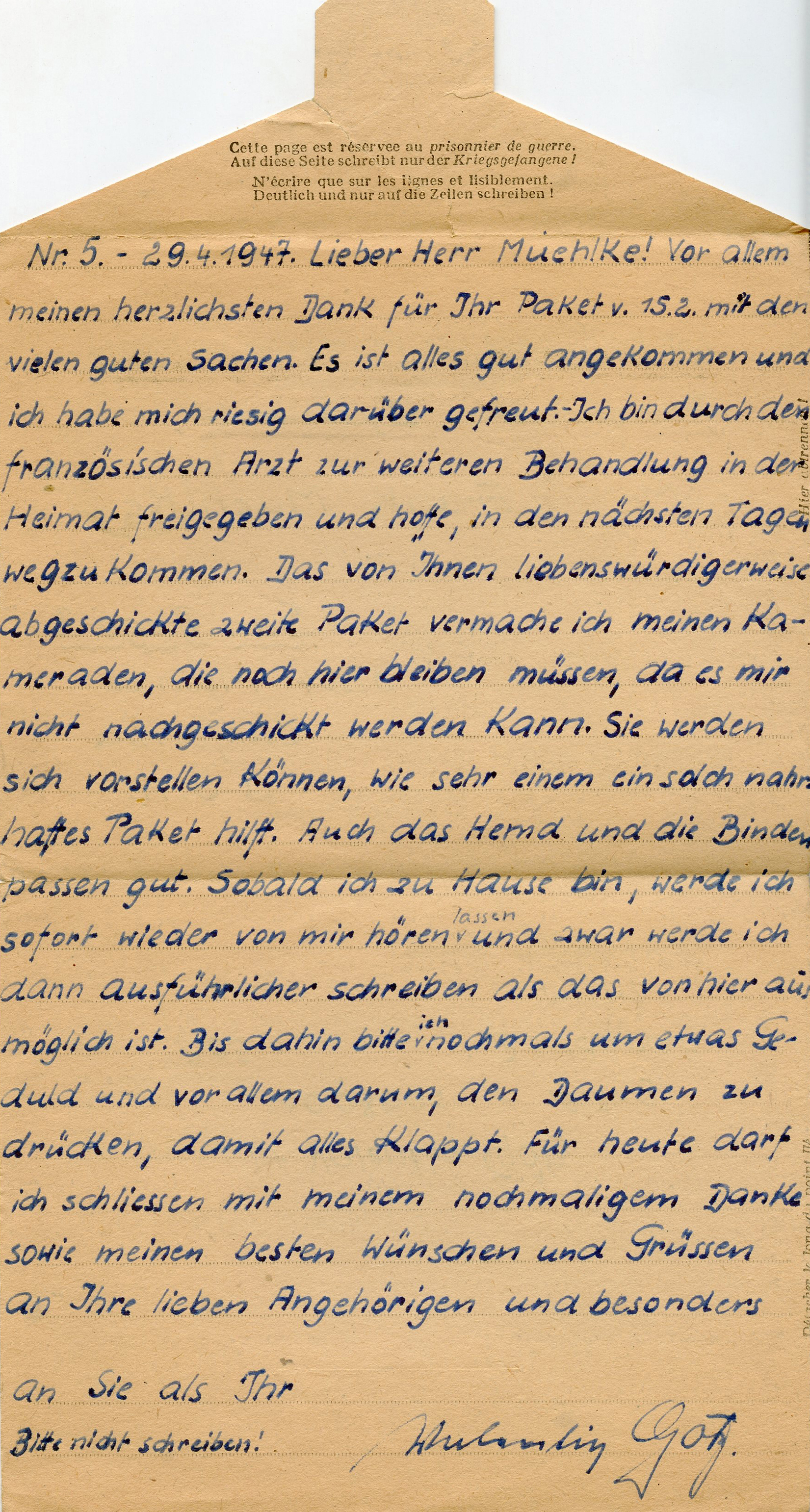
[Below: This was sent from a German in a French prisoner of war camp, postmarked June 14, 1947, to San Diego, USA. It was sent by Lt. Valentin Götz from a POW camp in the town of Baccarat, France. In 1940, The Baccarat factory was occupied by German troops and was made into a POW transit camp which held 20,000 French prisoners.]
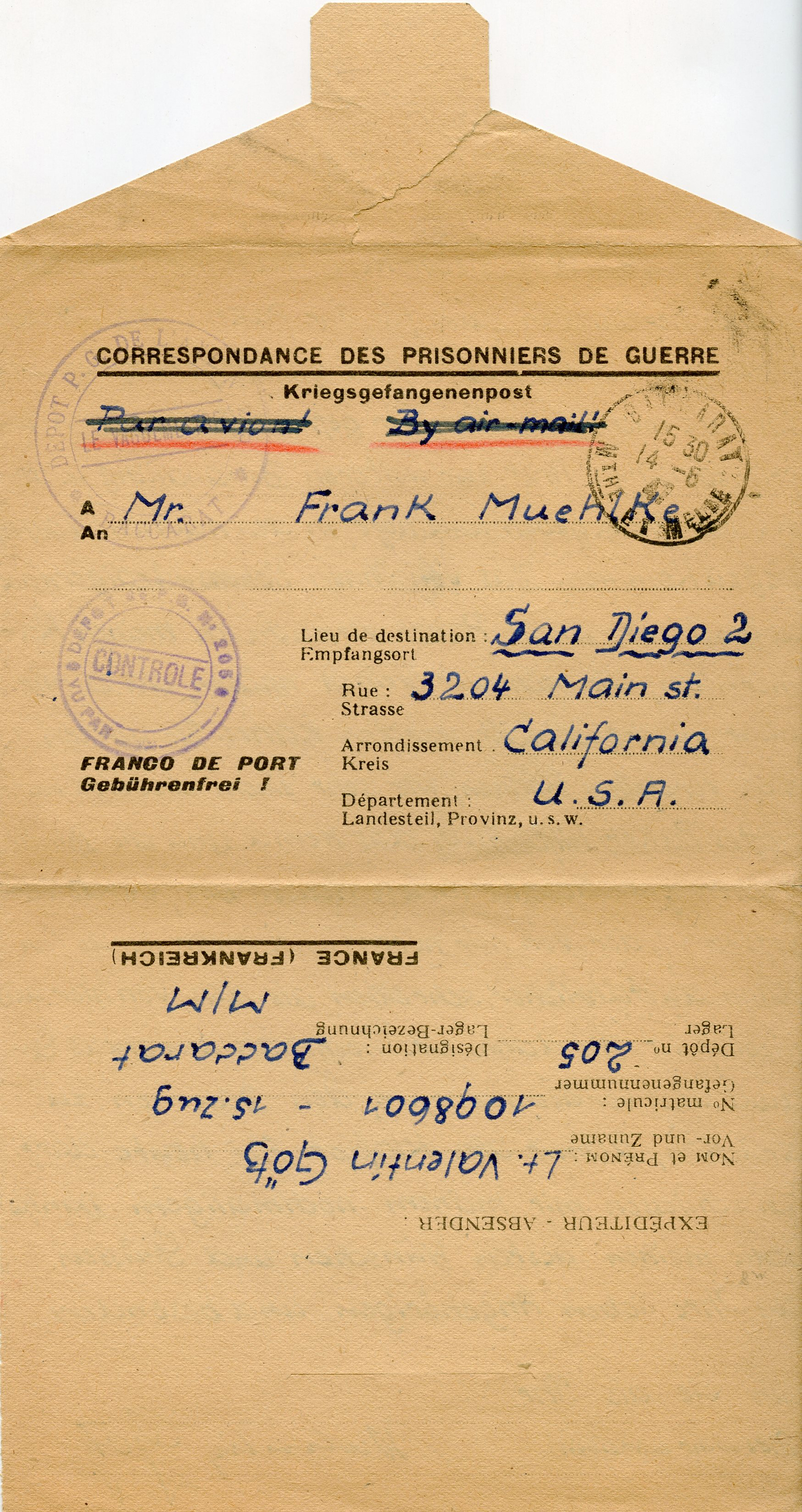
[Below: Reverse. This tells of the prisoner being cleared by a French doctor to be released due to illness to be treated at home. The Germans who were lucky enough to ever return home often had life long health problems due to their intentional ill treatment by their captors. Conventions of war do not apply to the victors, nor does humane treatment.]
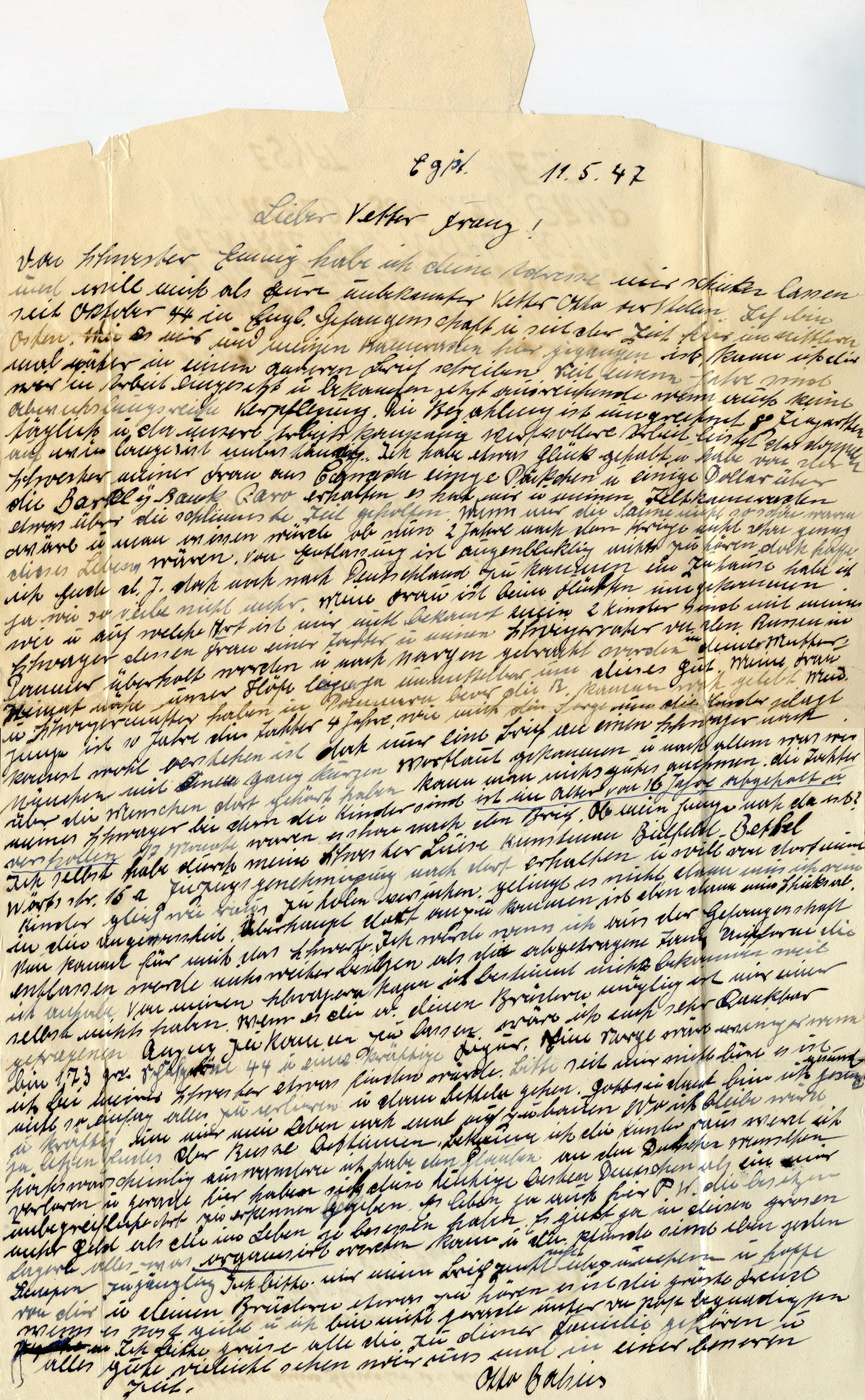
[Below: Here is another POW letter sent to the same address in San Diego, perhaps this was an organization that helped German needy. If you look up the address on Google maps the address is a business today and is in an industrial area. This was sent from a British POW camp for Germans in Egypt. This envelope is homemade and on the other side is the letter (it is very long vertically).]
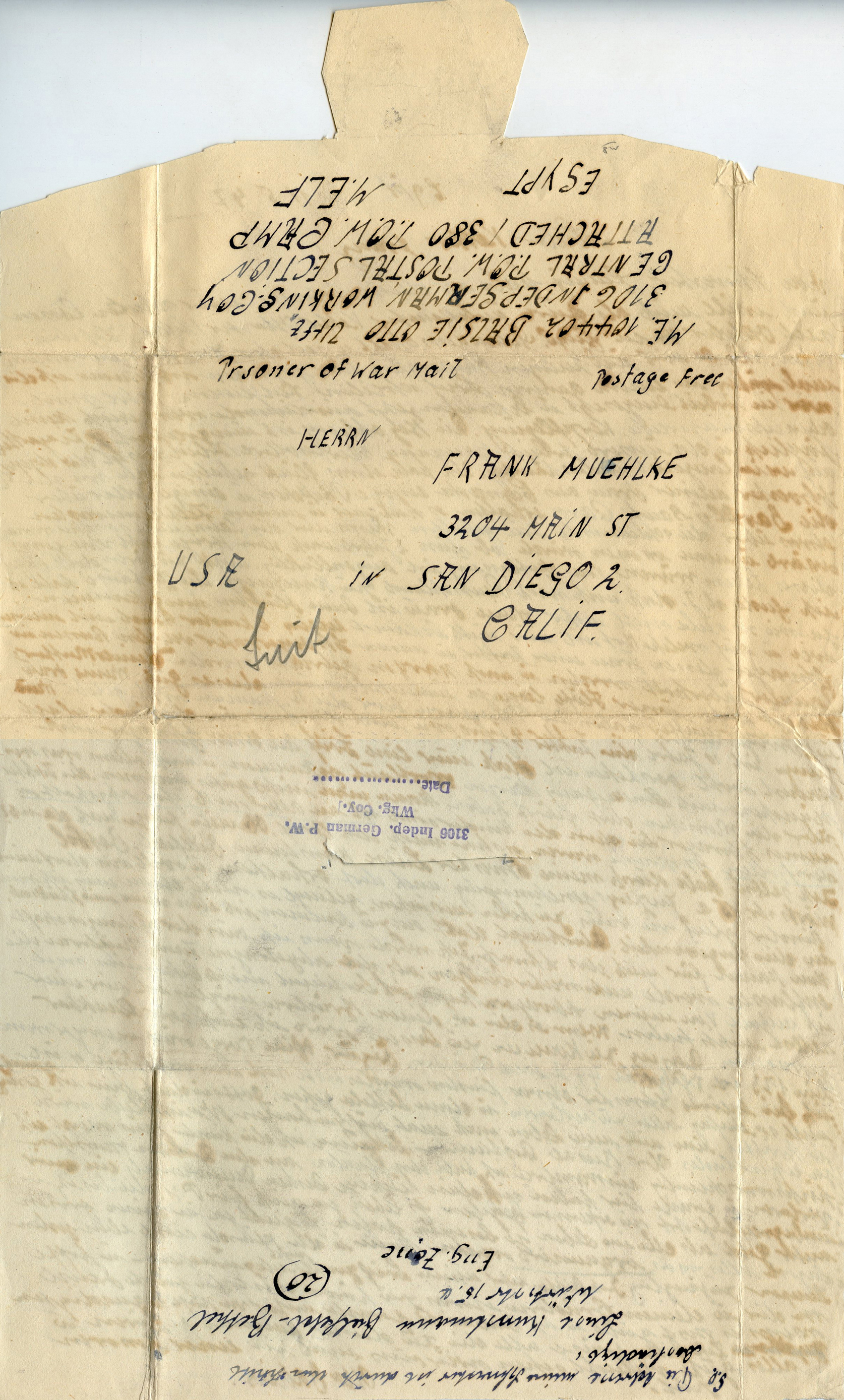
[Below: Close-up of ink stamp.]
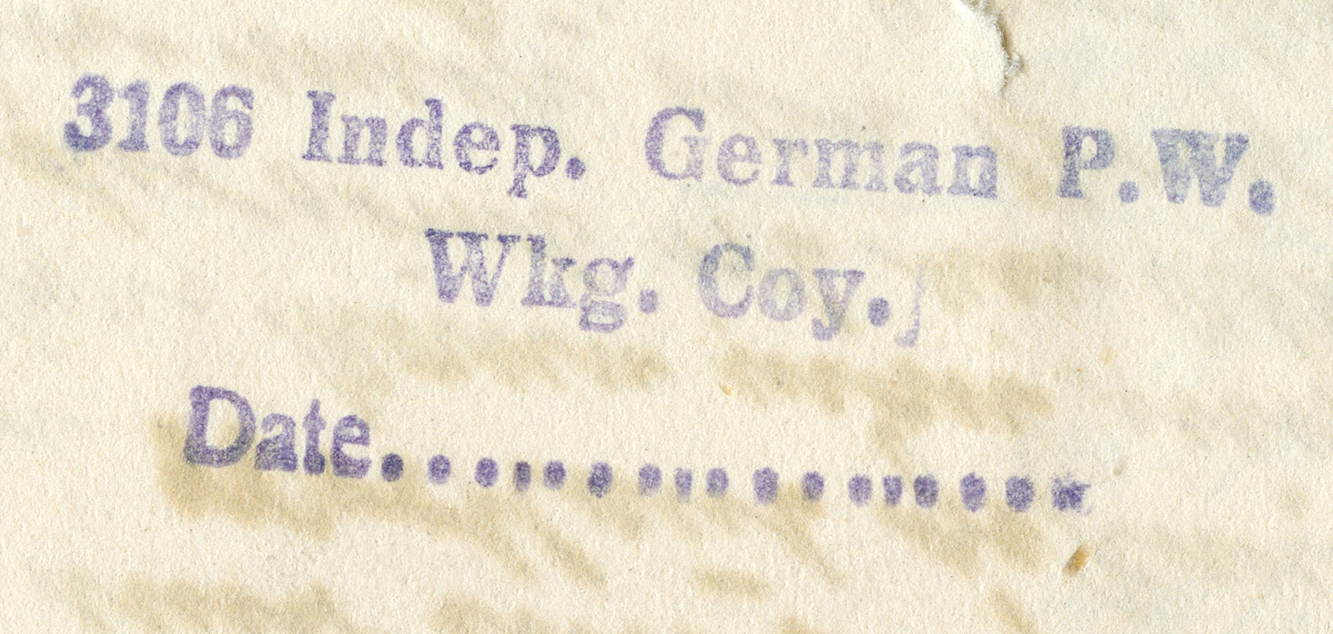
[Below: Reverse of envelope. Here we see that it was written on May 11, 1947.]
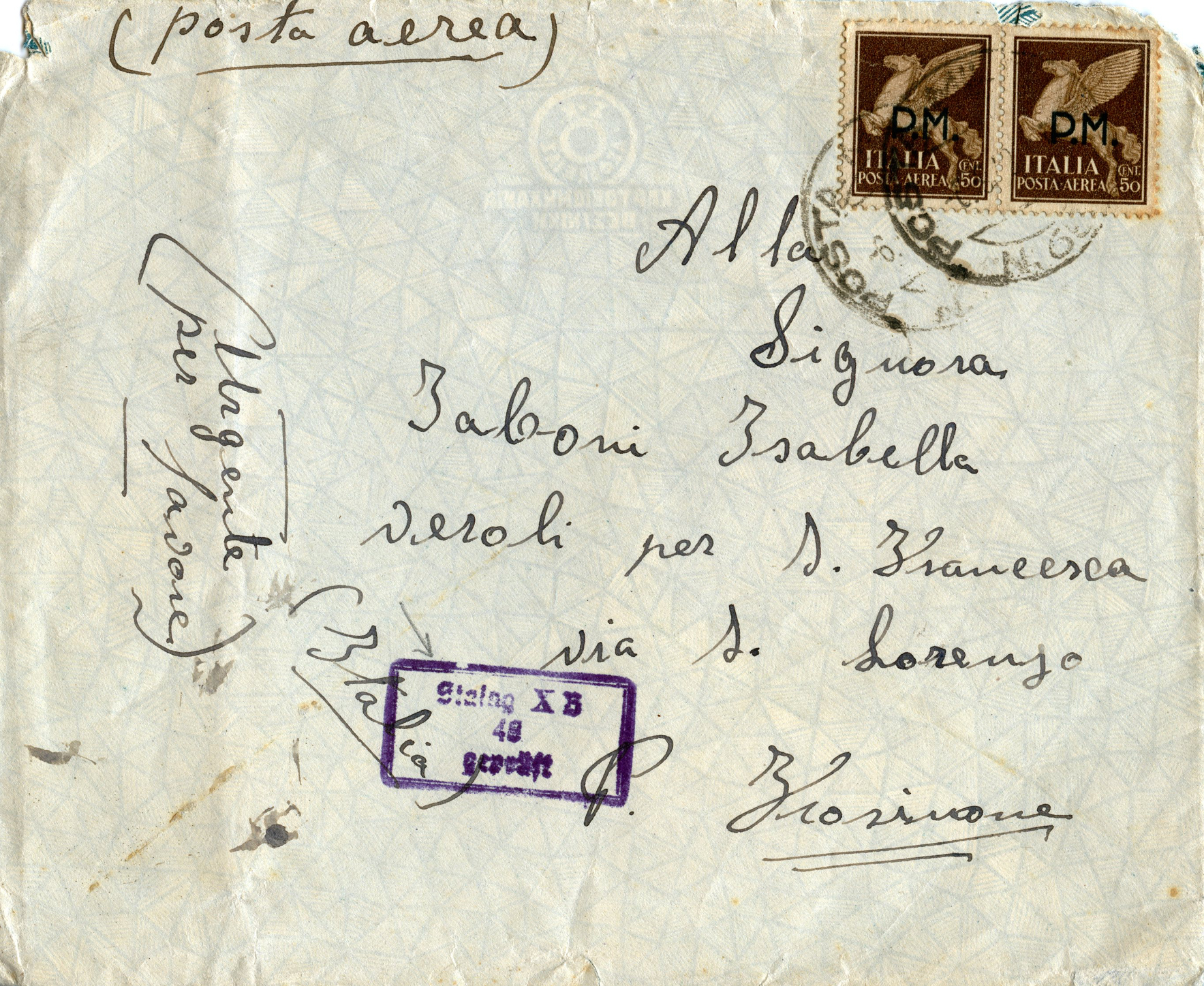
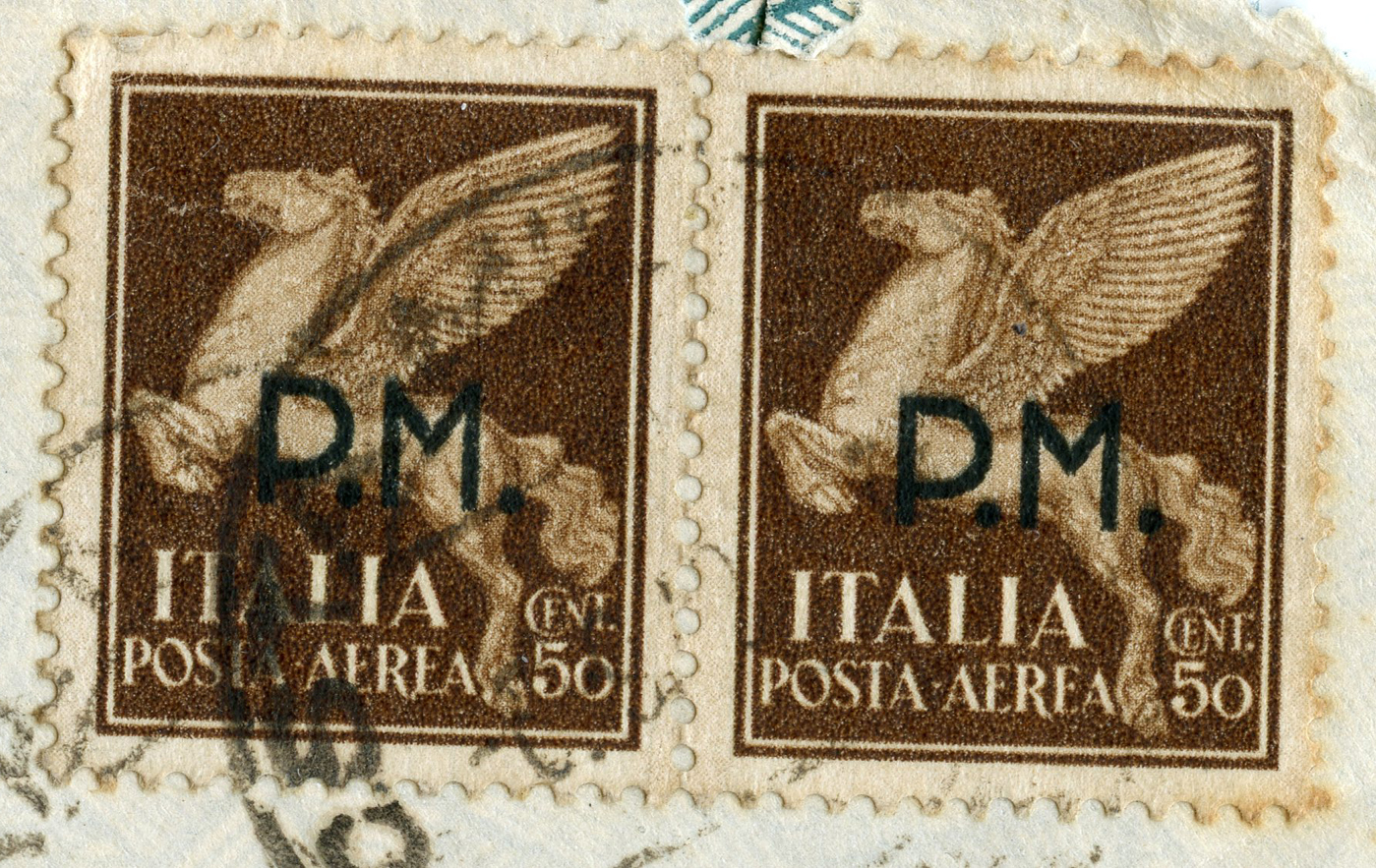
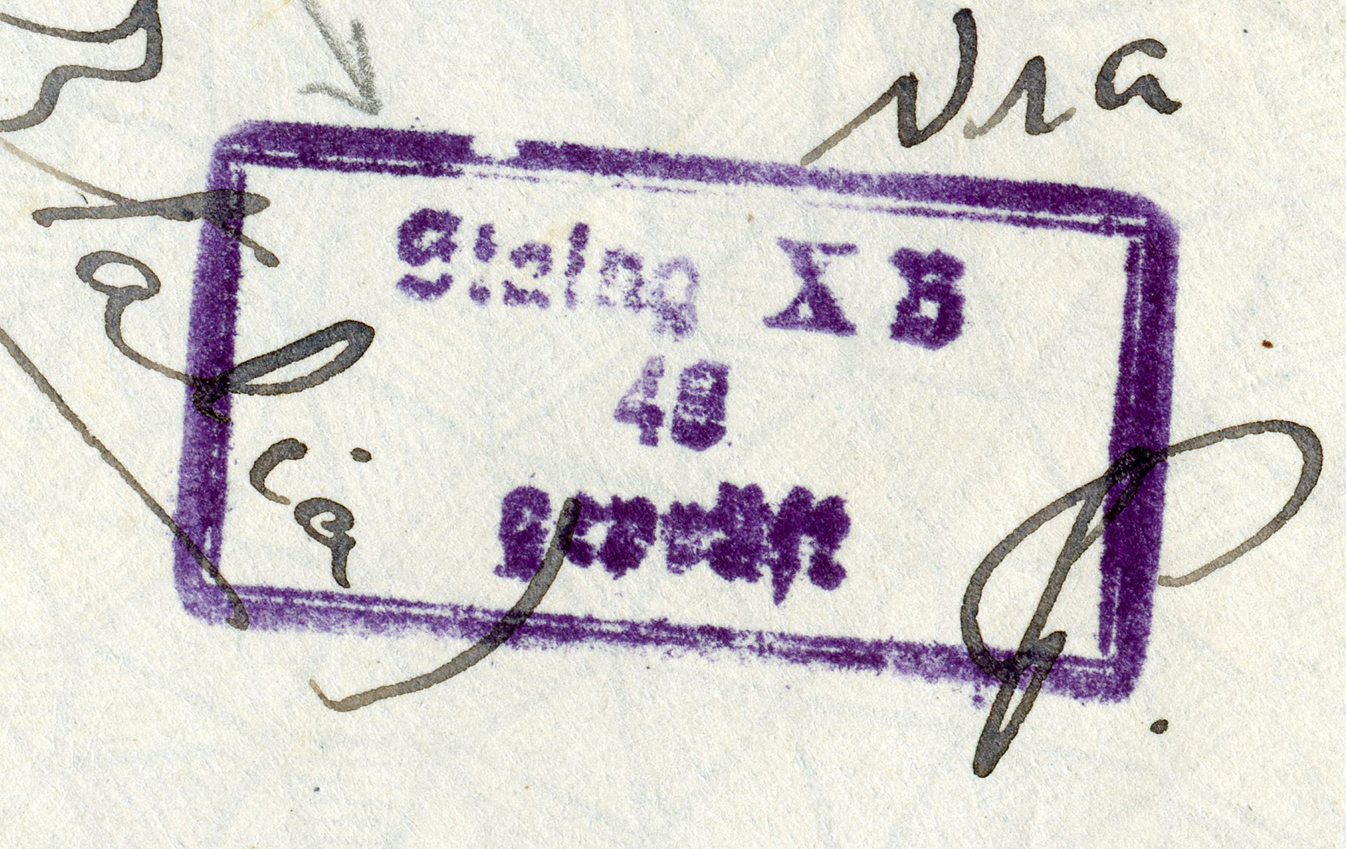
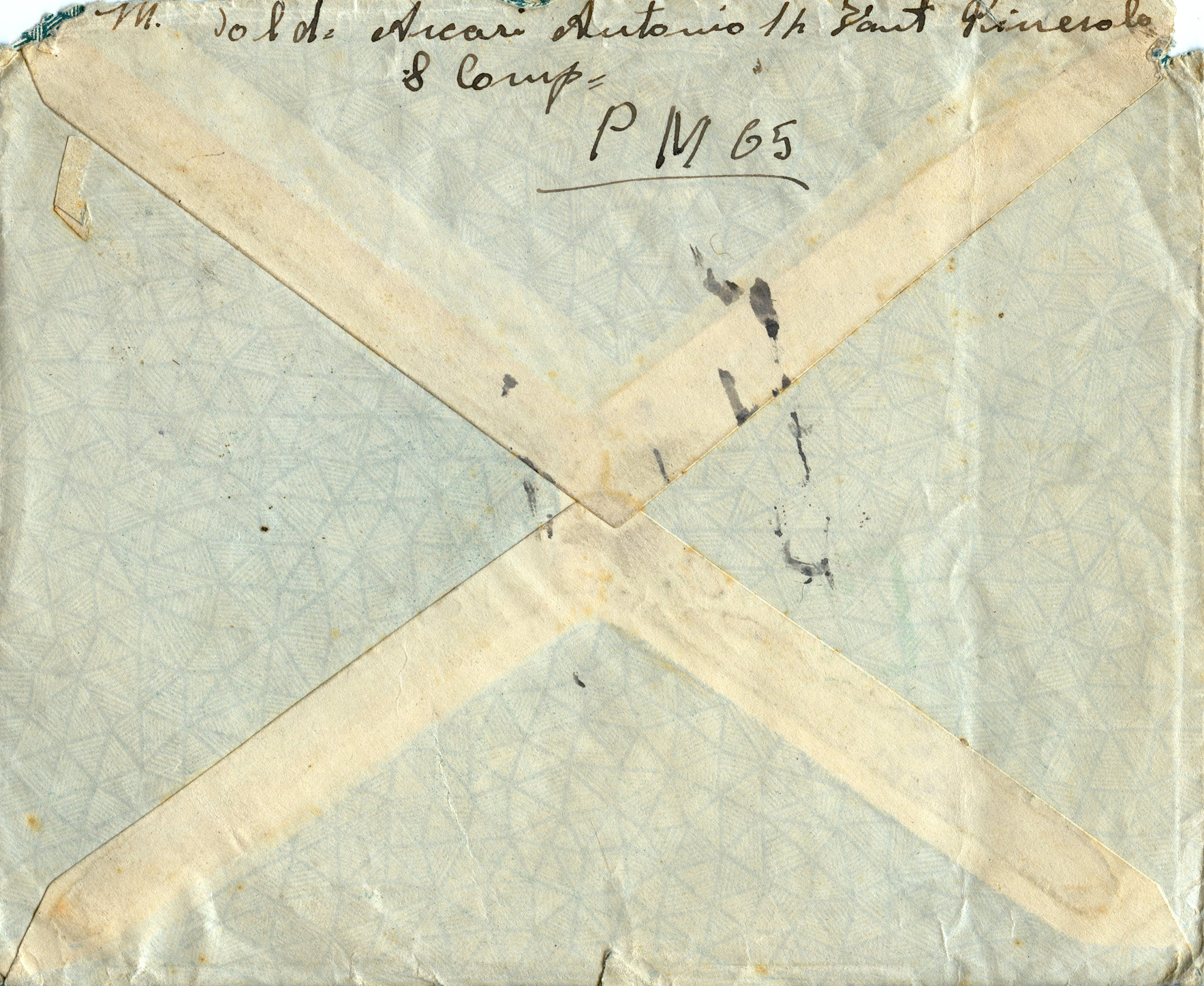
[Below: This is from Stalag XB/48 in Italy, postmarked in 1943. It was sent to Frosenone, a city in Italy. It has a pair of Italian airmail stamps overprinted 'P.M.' for 'Posta Militare', which are rare to find used on an envelope. This camp was apparently an old barracks turned into a prison camp by the Germans for Italian soldiers who surrendered after the fall of Mussolini.]
[Below: Close-up of postage stamps.]
[Below: Close-up of Stalag ink stamp. 'Gepruft' means 'Checked'.]
[Below: Here we see the return address.]
[Below: Here we see a neatly and rather intricately folded letter within, also stamped with the Stalag ink stamp.]
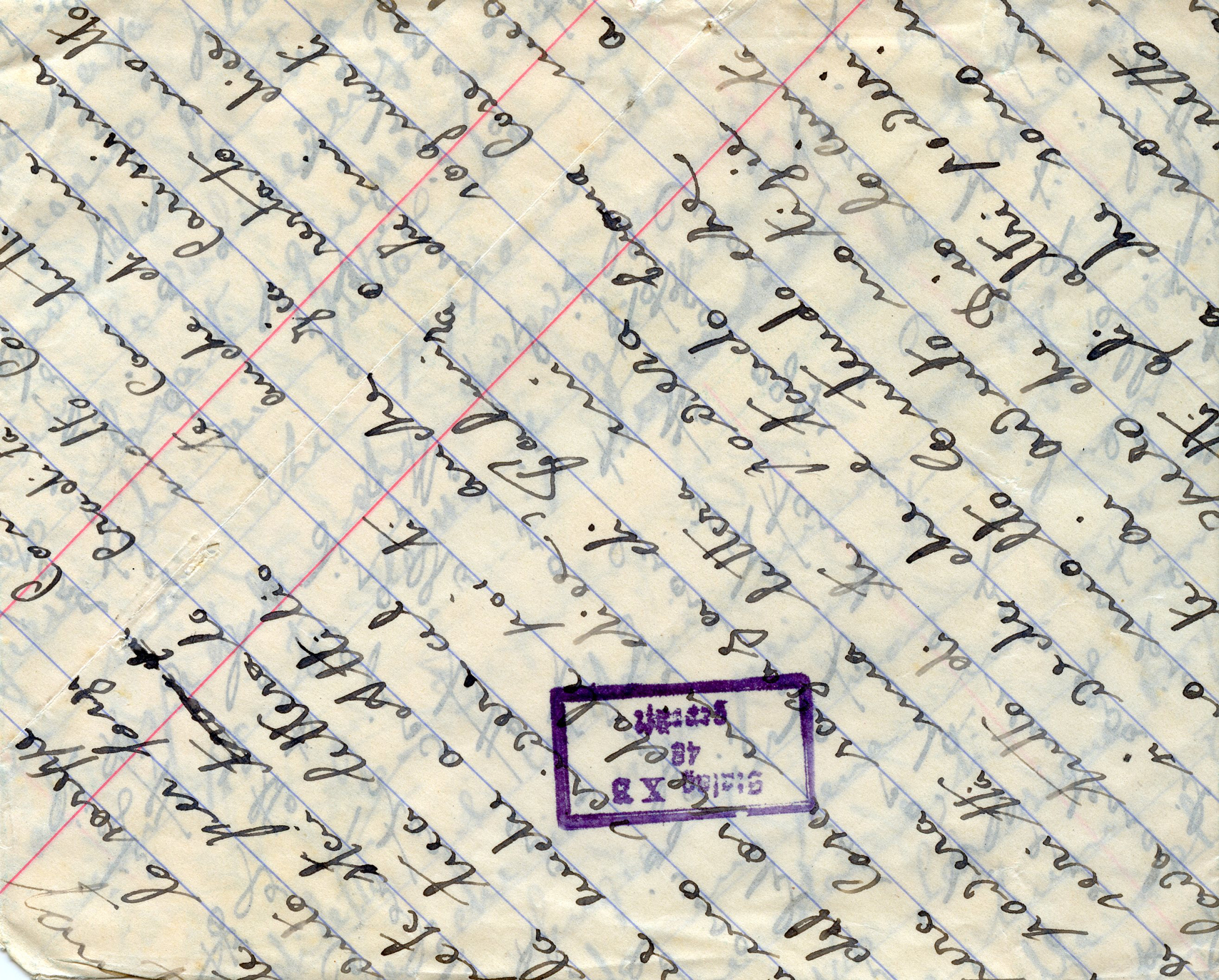
[Below: Back of folded letter.]
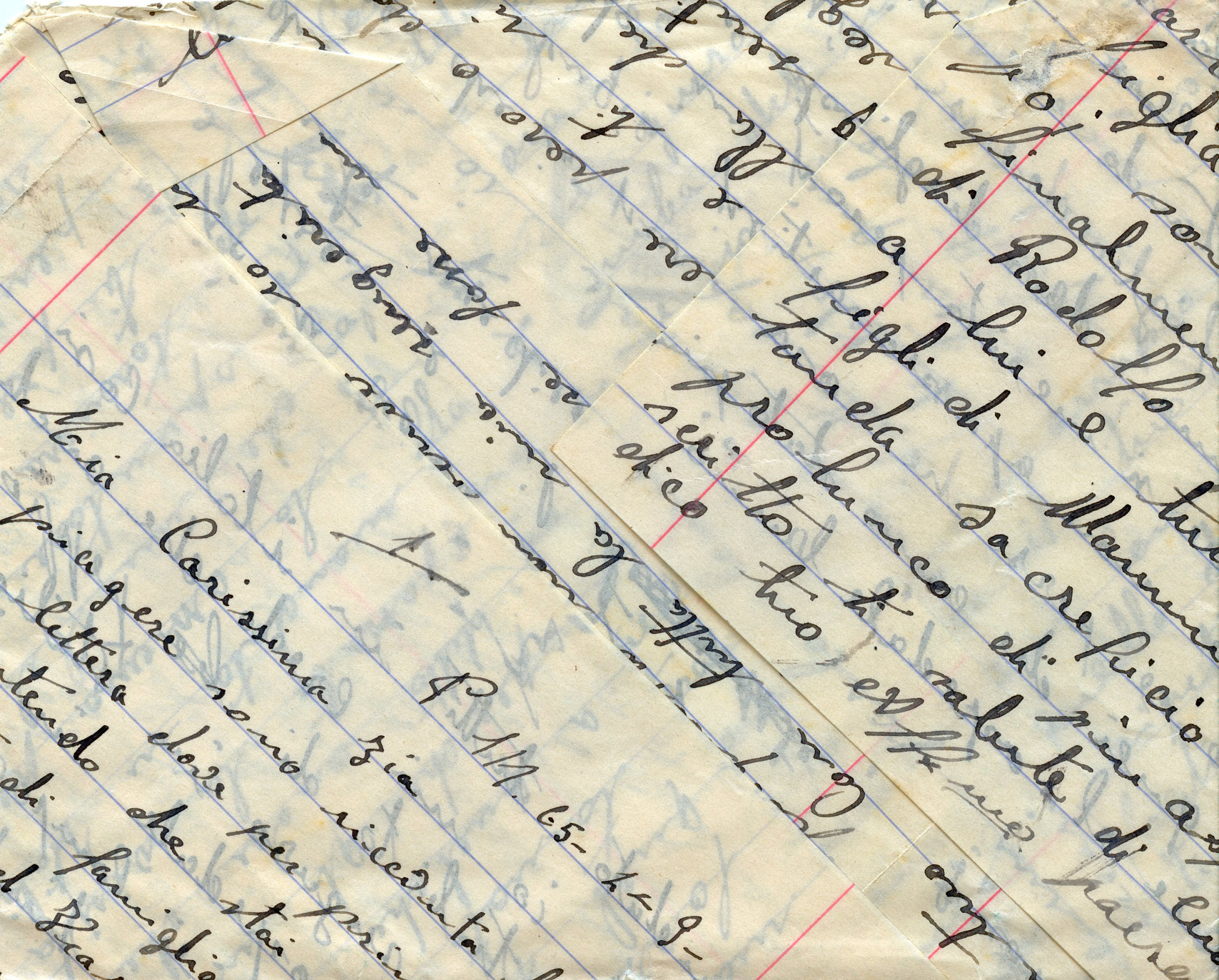
[Below: Reverse/front of letter (in Italian). Dated September 1943.]
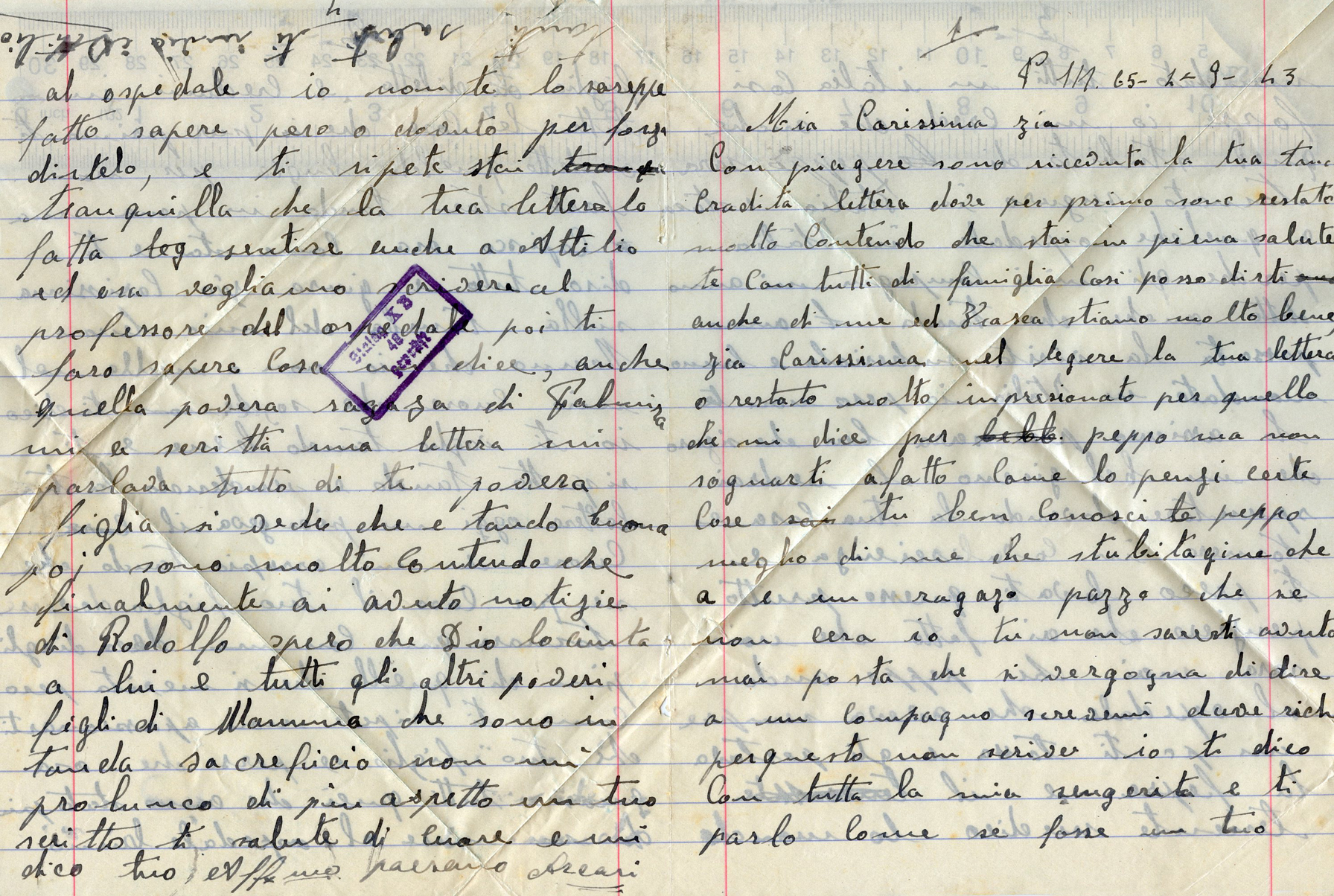
[Below: Inside of letter.]
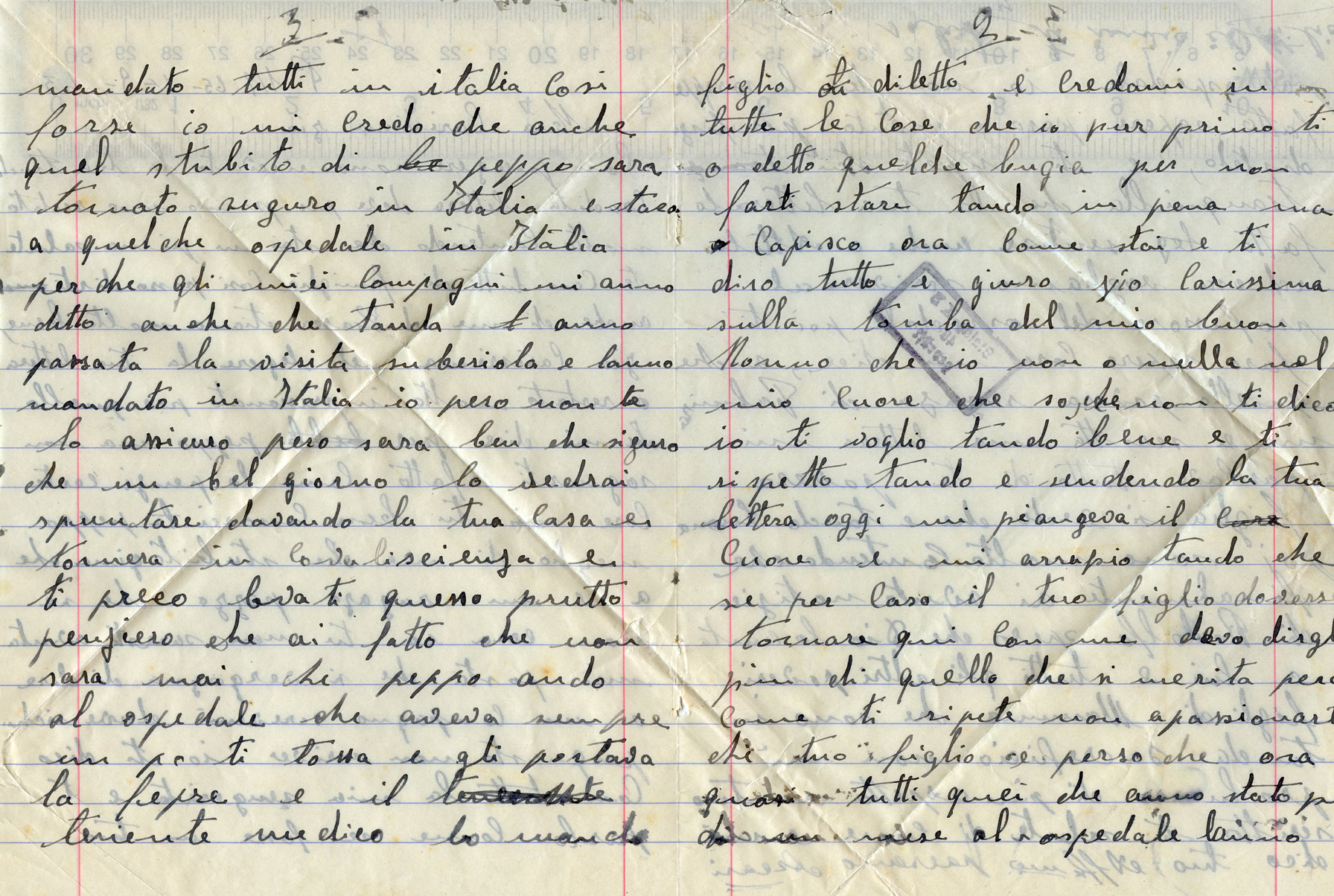
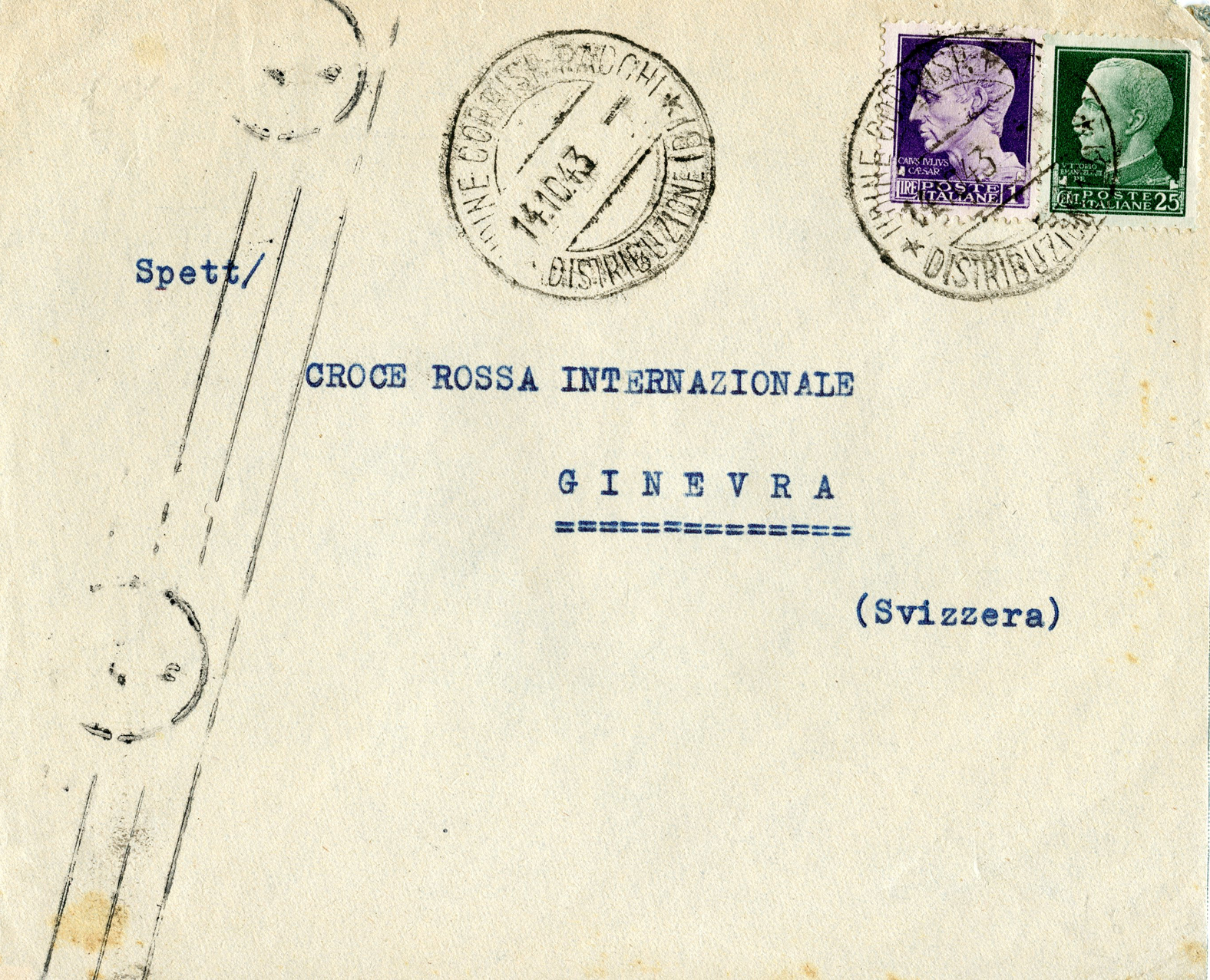
[Below: This was sent from Udine, Italy on October 14, 1943 to the Swiss Red Cross.]
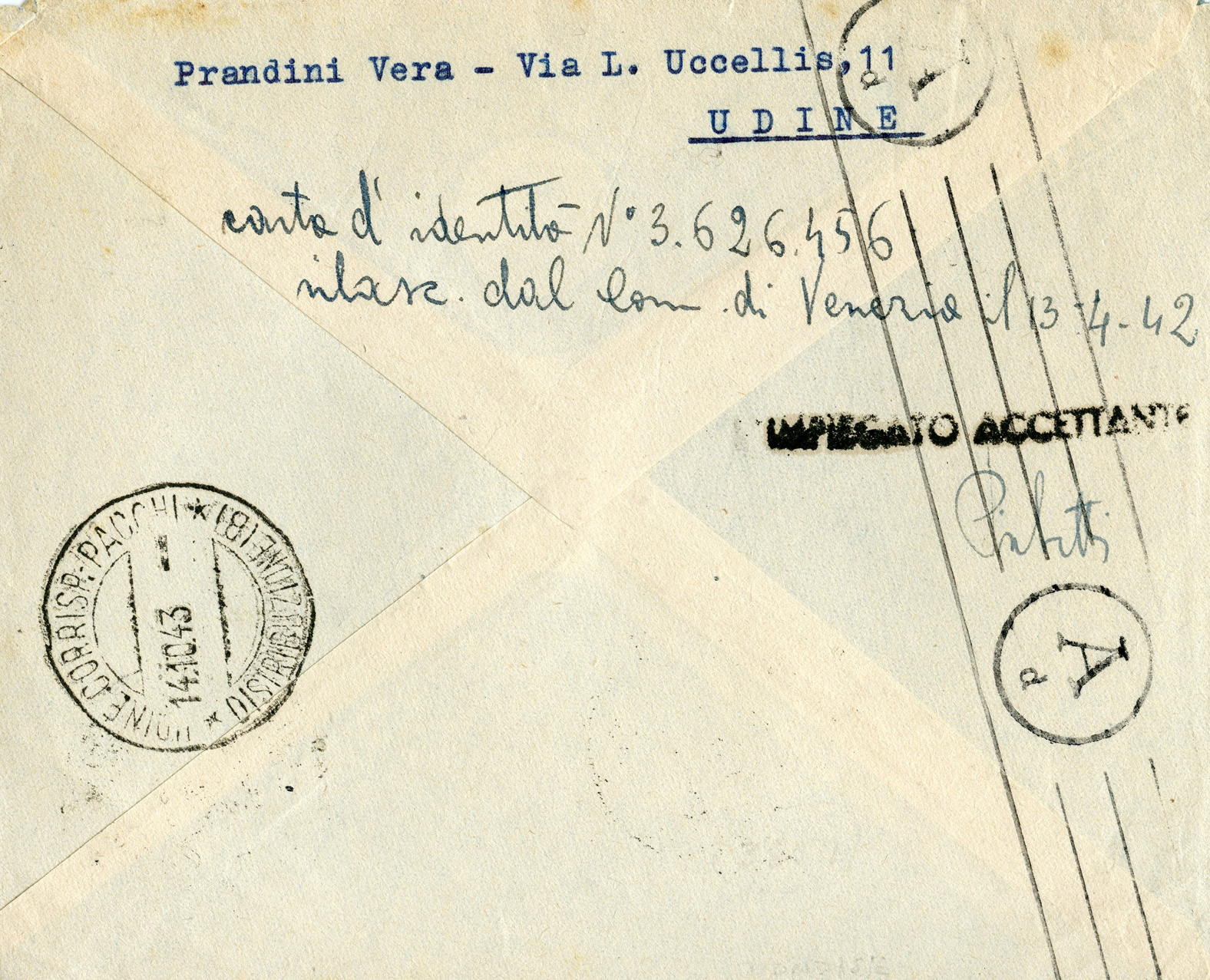
[Below: Reverse. The long ink stripe on the right hand side is a German machine censor. The words 'impiegato accettante' mean 'accepting clerk'. The written words 'conto d'identità' mean 'identity account'.]
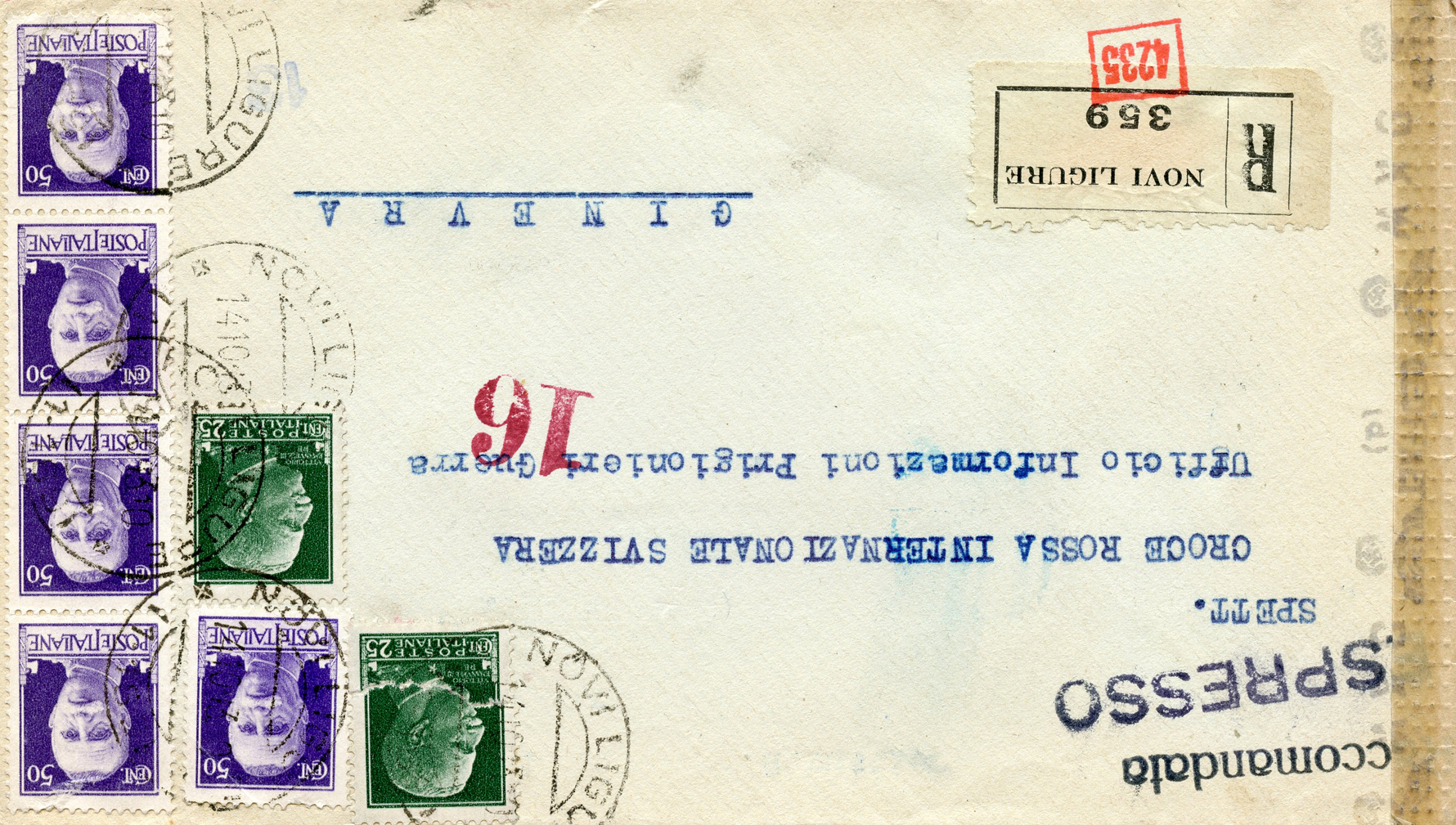
[Below: This was sent from Udine, Italy on October 14, 1943 to the Swiss Red Cross.]
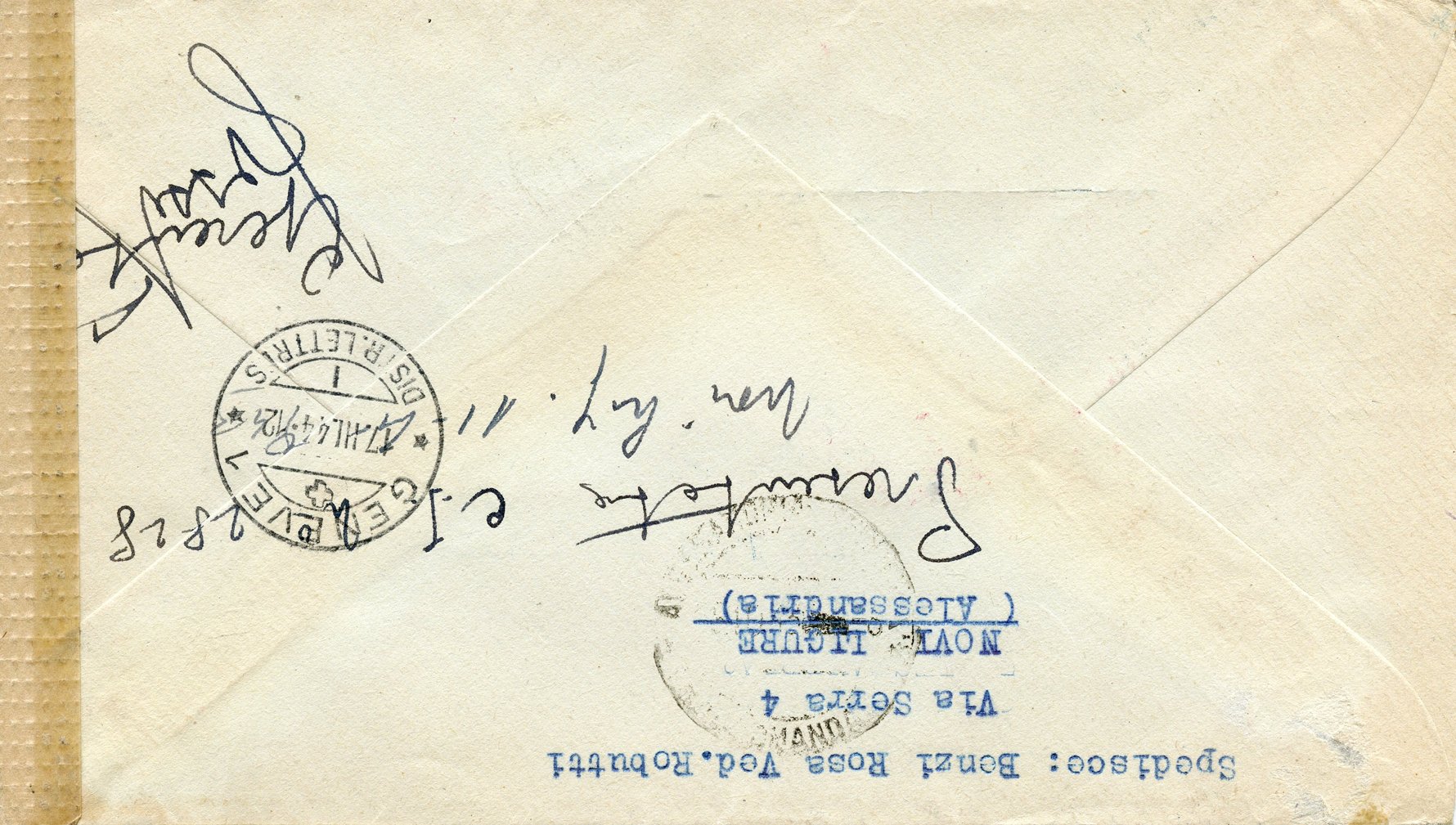
[Below: Reverse. This shows a Swiss receival stamp dated March 17, 1944]
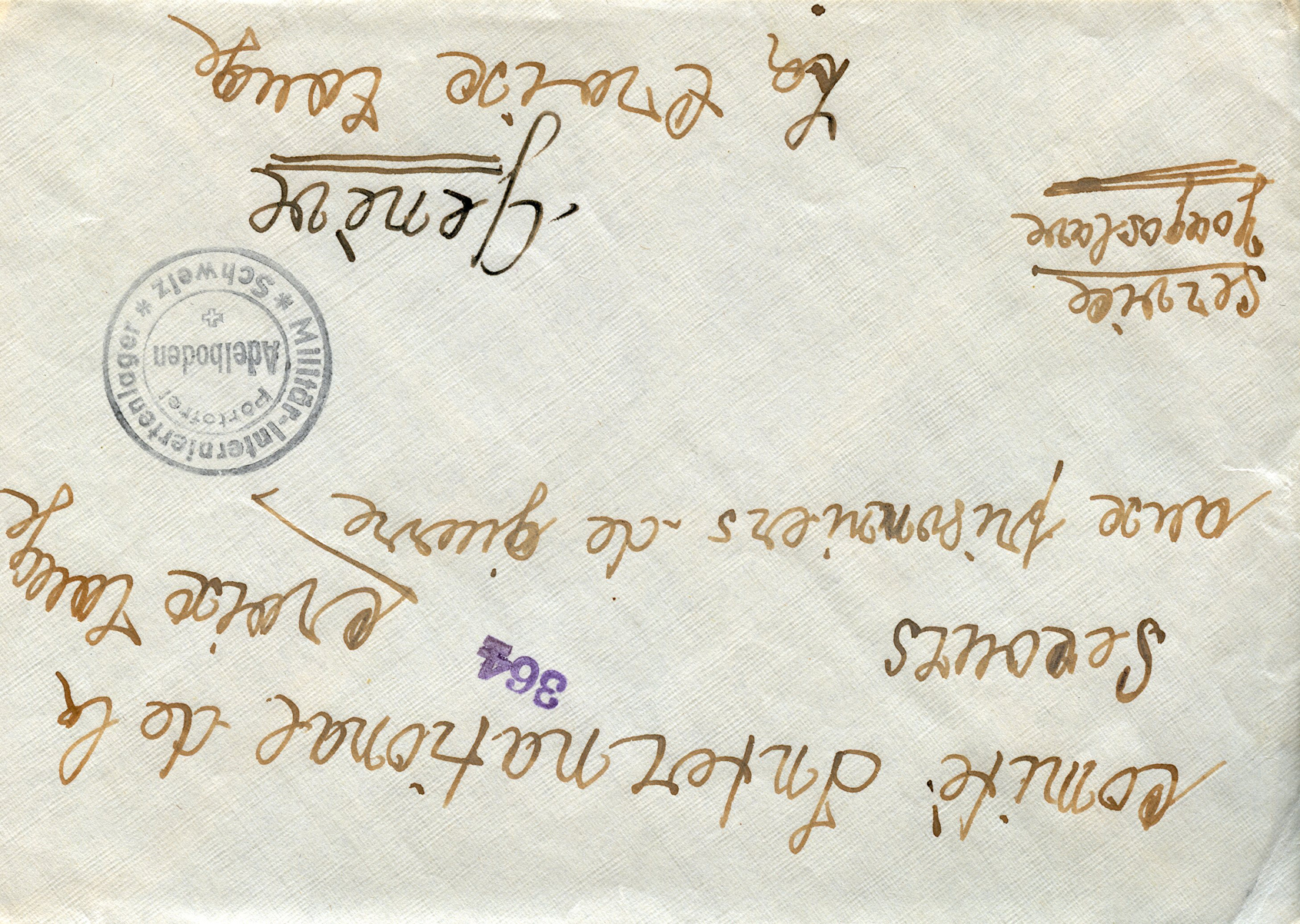
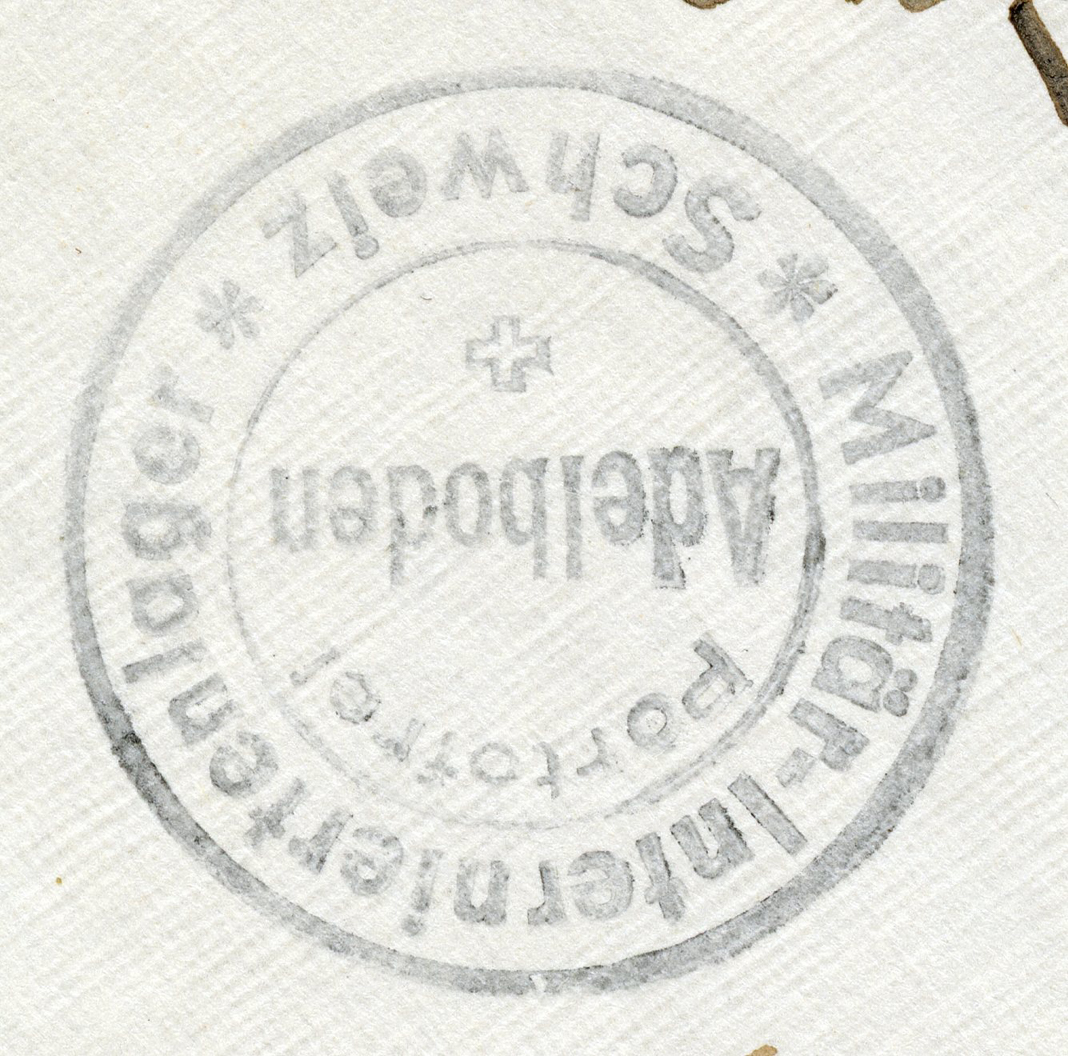
[Below: This was sent from Yugoslavia to the Red Cross in Switzerland, where it was sent to an international prison camp in Switzerland called 'Adelboden', or 'Camp Maloney', as it was called by American internees. The camp was primarily used for Allied airmen whose planes were damaged while terror bombing Europe. The camp was chosen for its remote location, nestled in the Swiss Alps, making escape difficult.]
[Below: Close-up.]
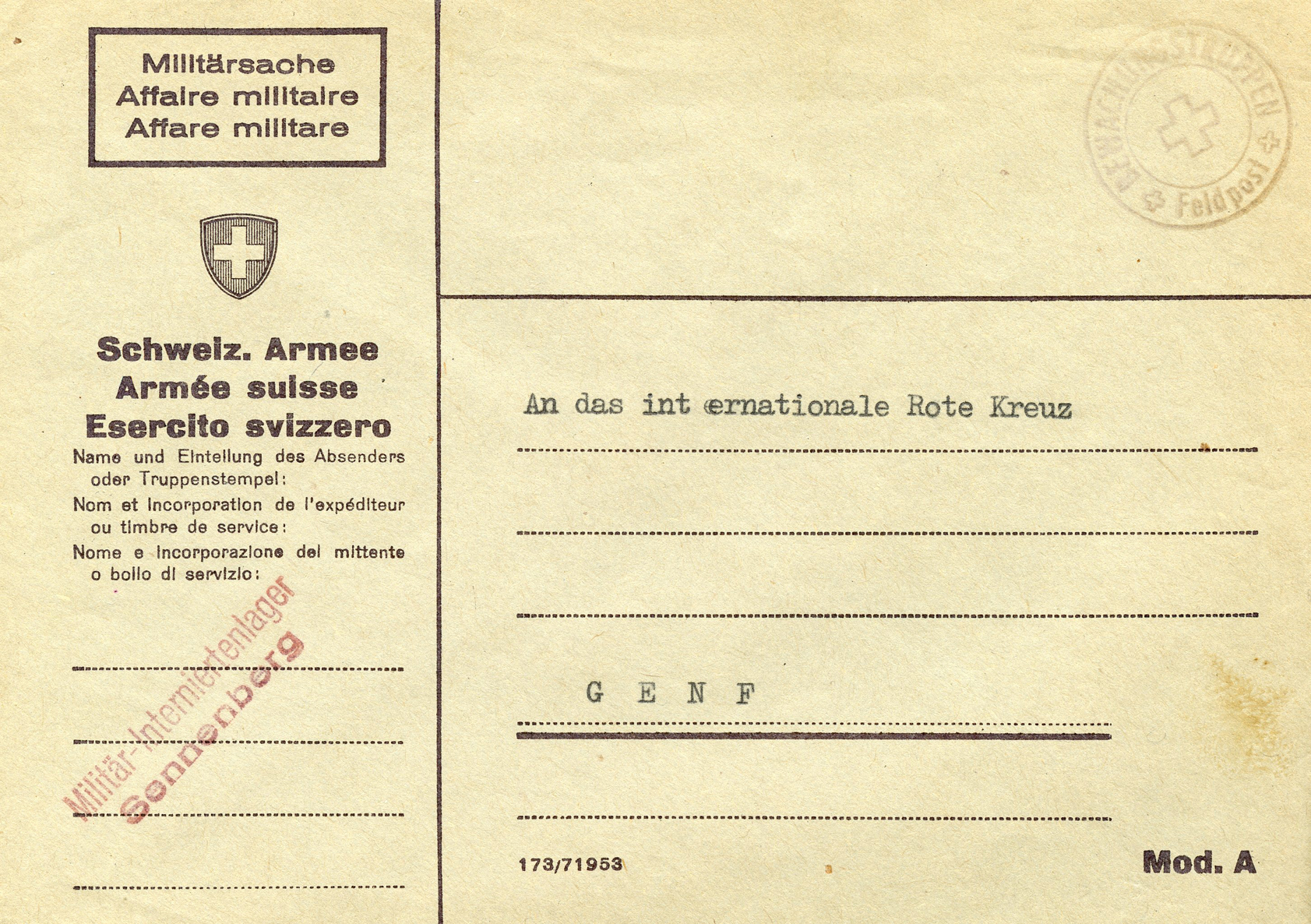
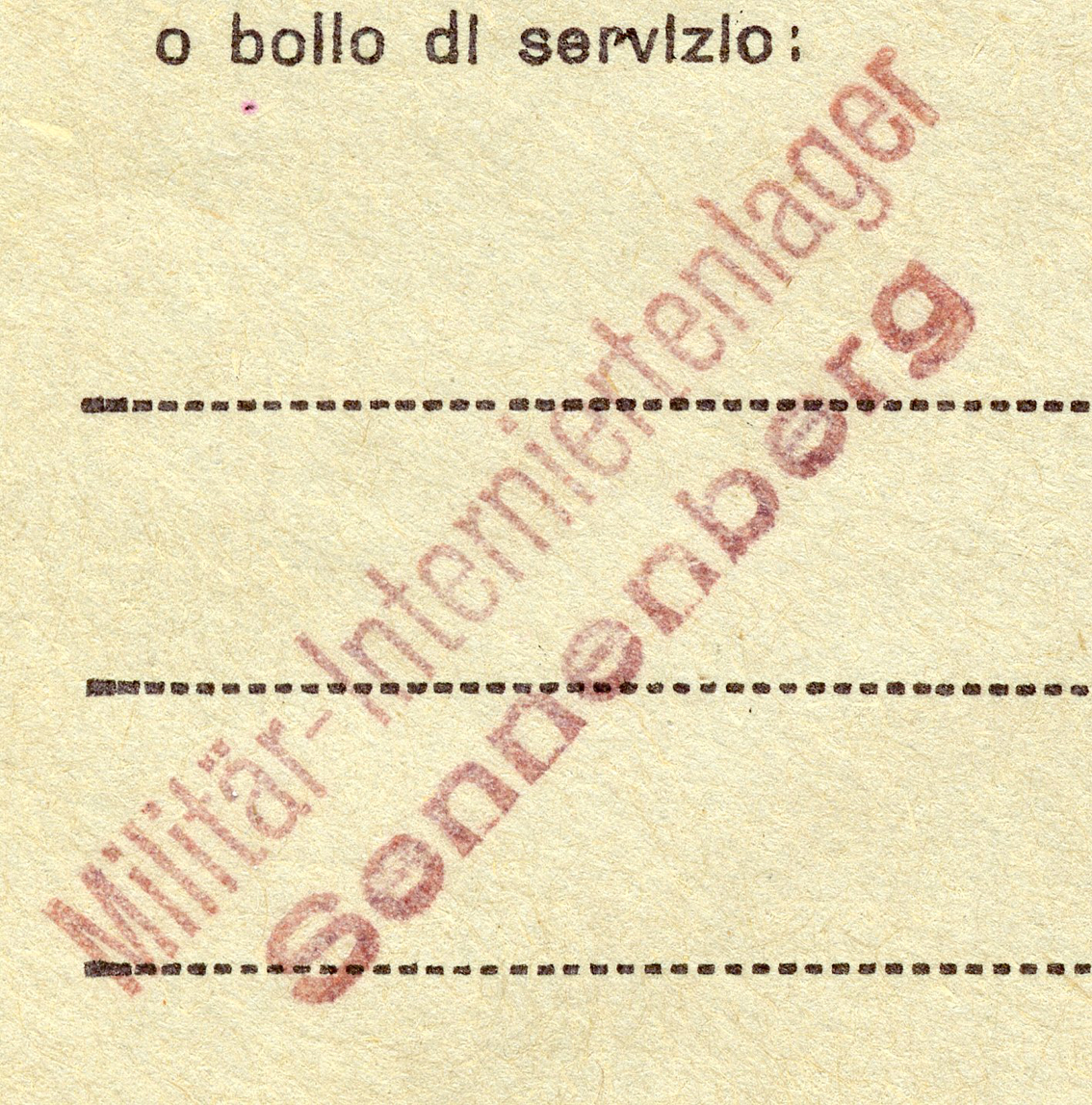
[Below: This is from the Swiss internment camp of 'Sennenberg'. The reverse is blank.]
[Below: Close-up.]
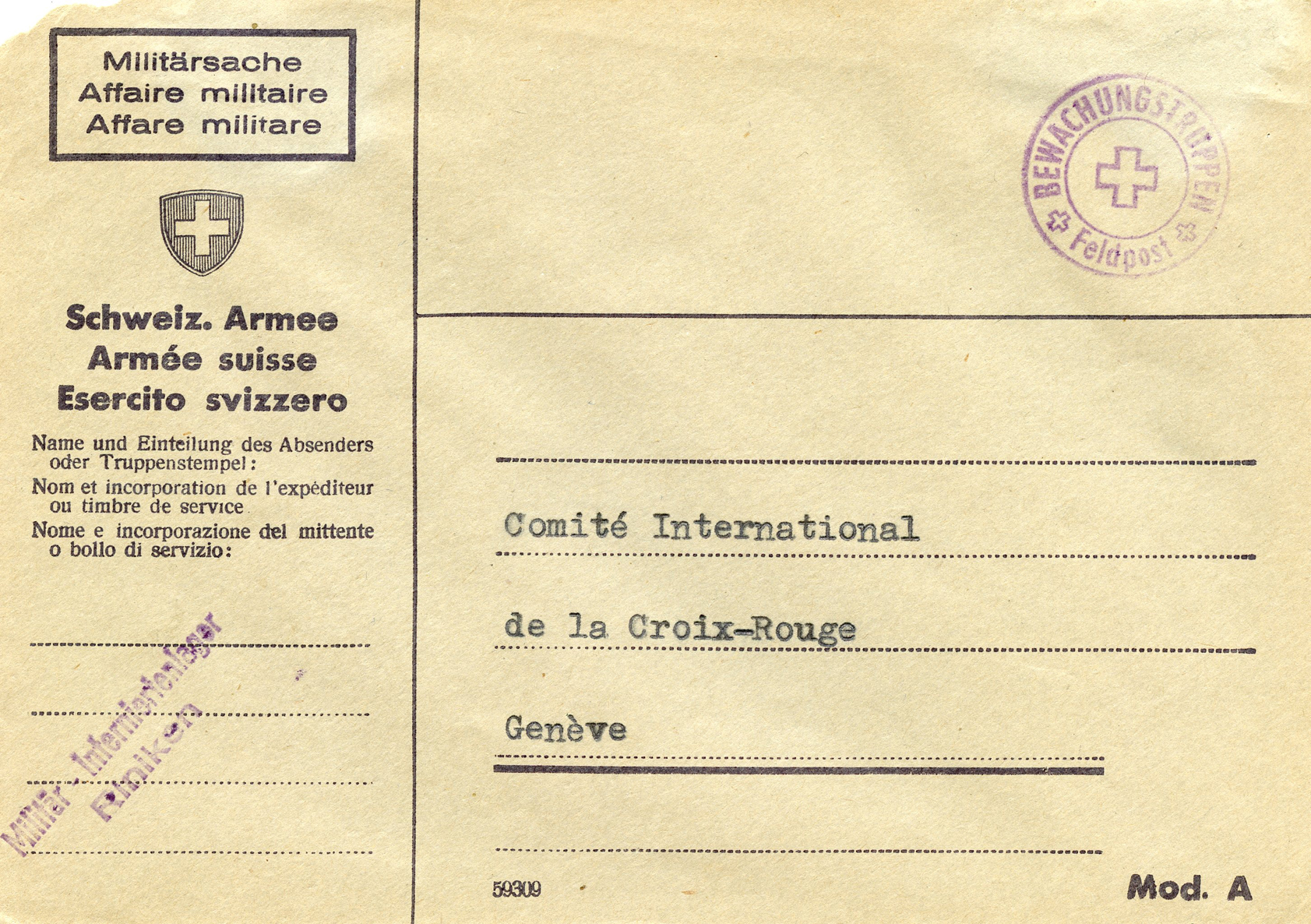
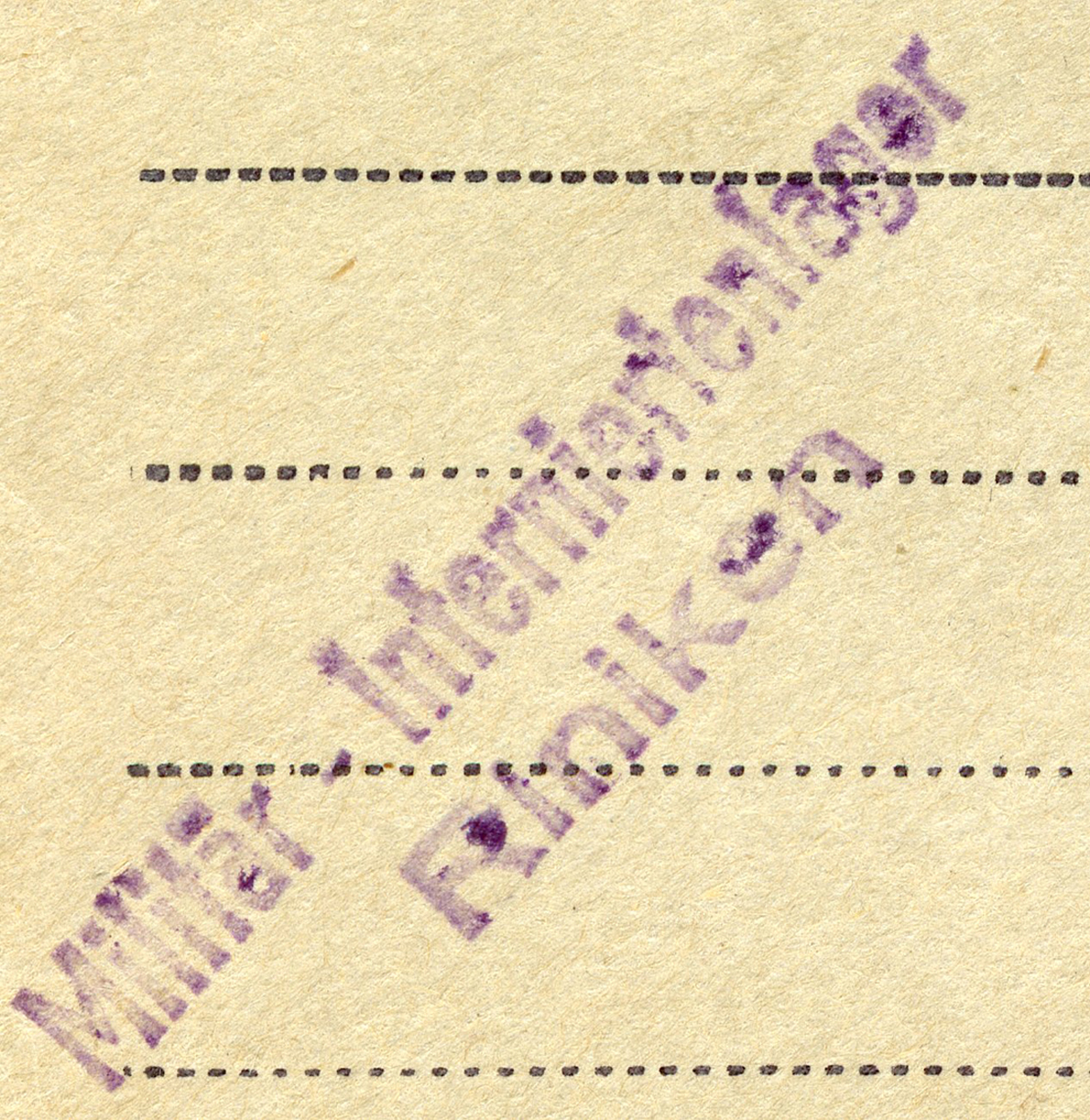
[Below: This is from the Swiss internment camp of 'Riniken'. The reverse is blank.]
[Below: Close-up.]
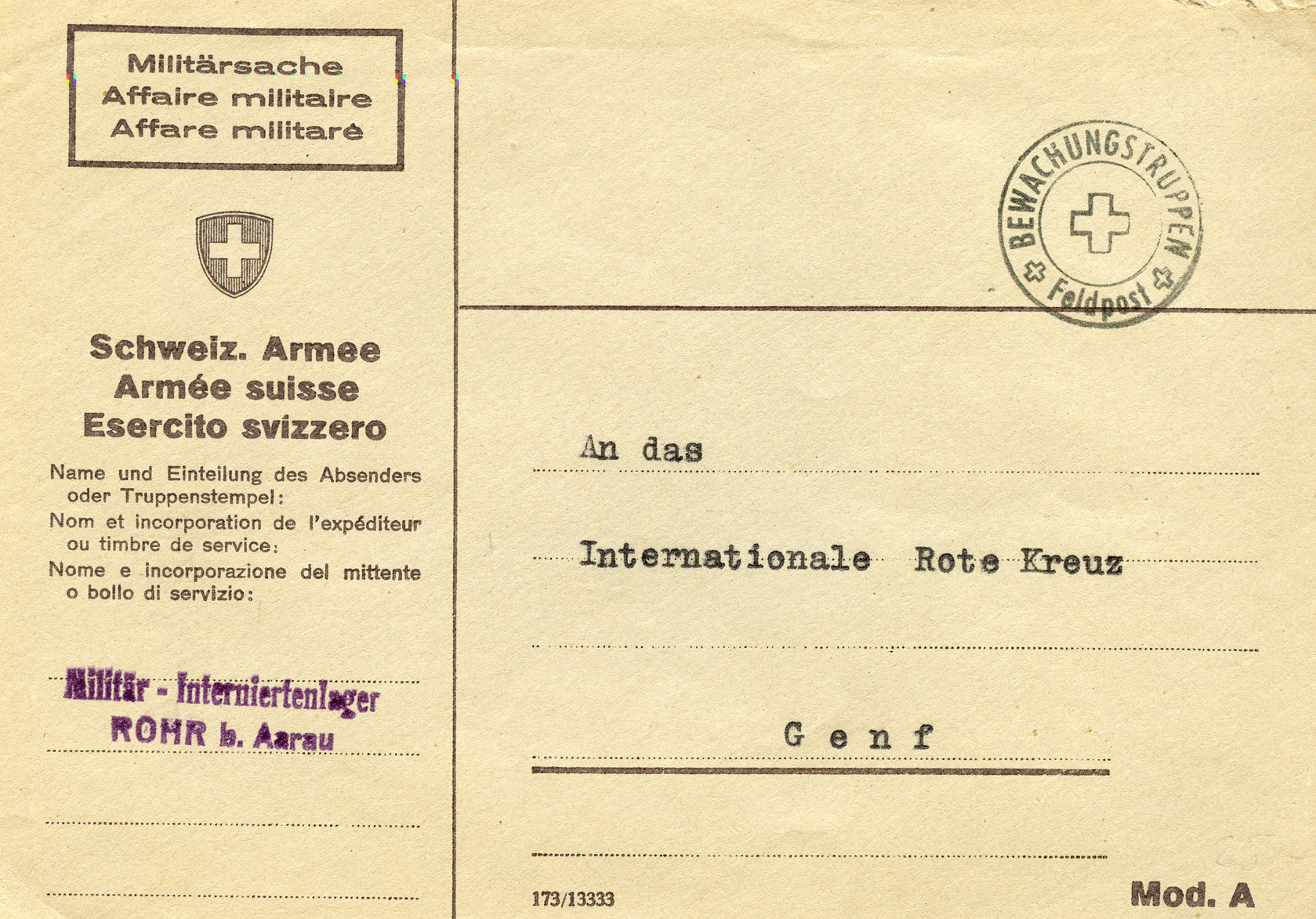
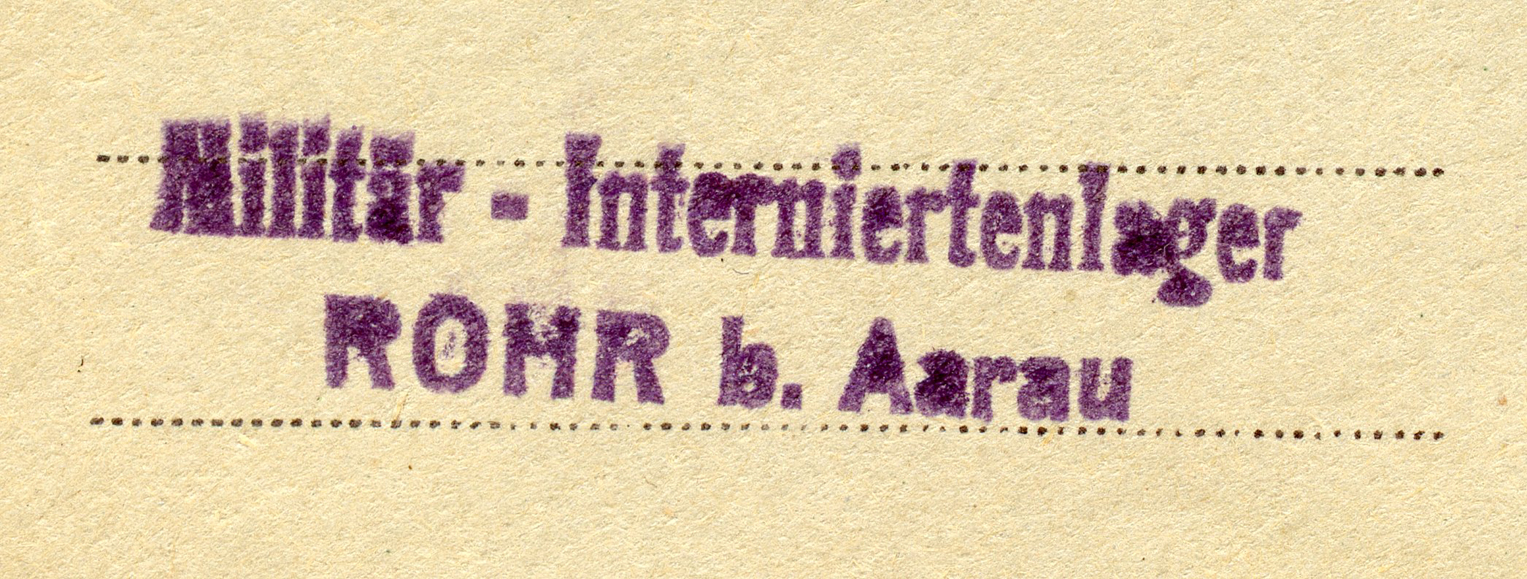
[Below: This is from the Swiss internment camp of 'Rohr'. The reverse is blank.]
[Below: Close-up.]
[Below: This is from the Swiss internment camp of 'Toggenburg'. The reverse is blank.]
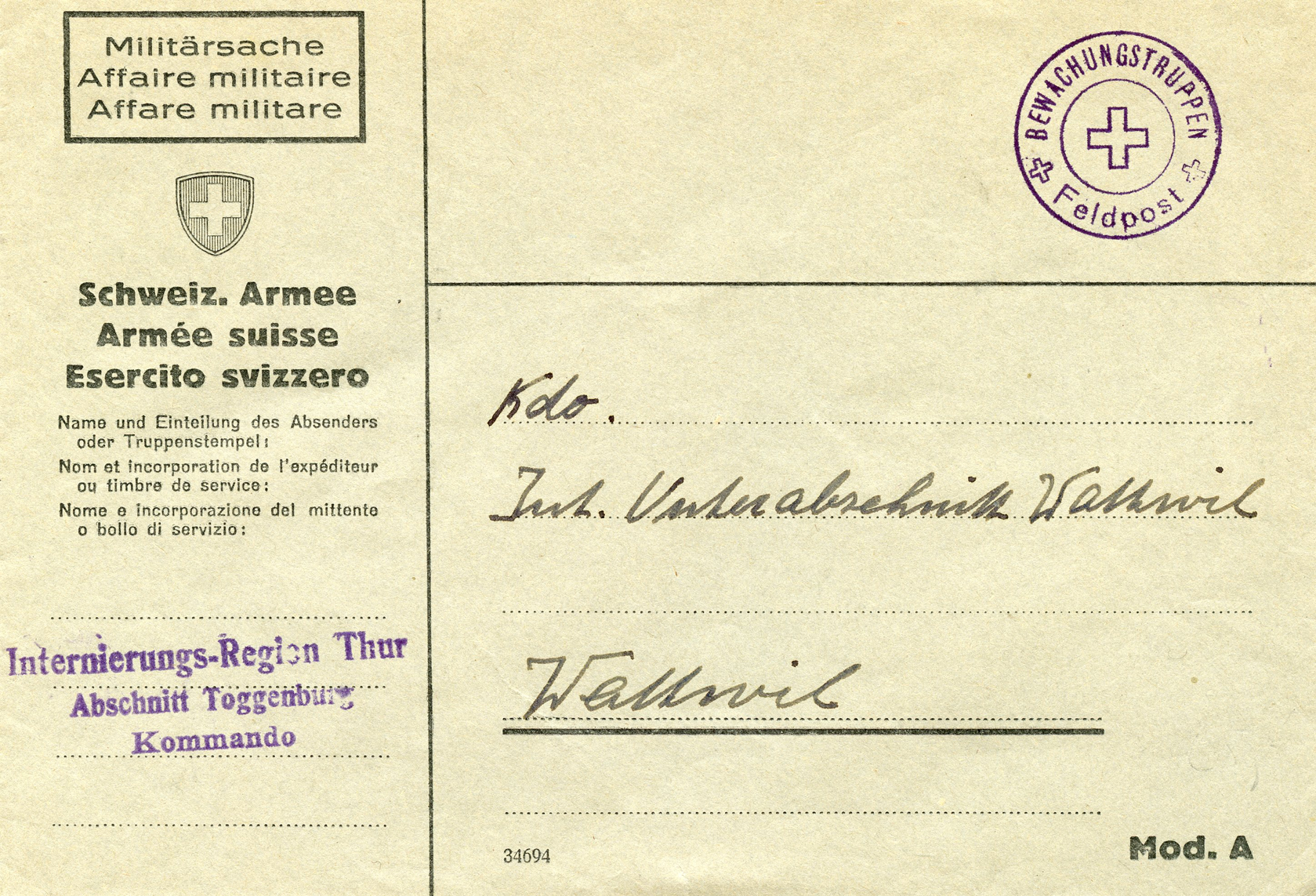
[Below: Close-up.]
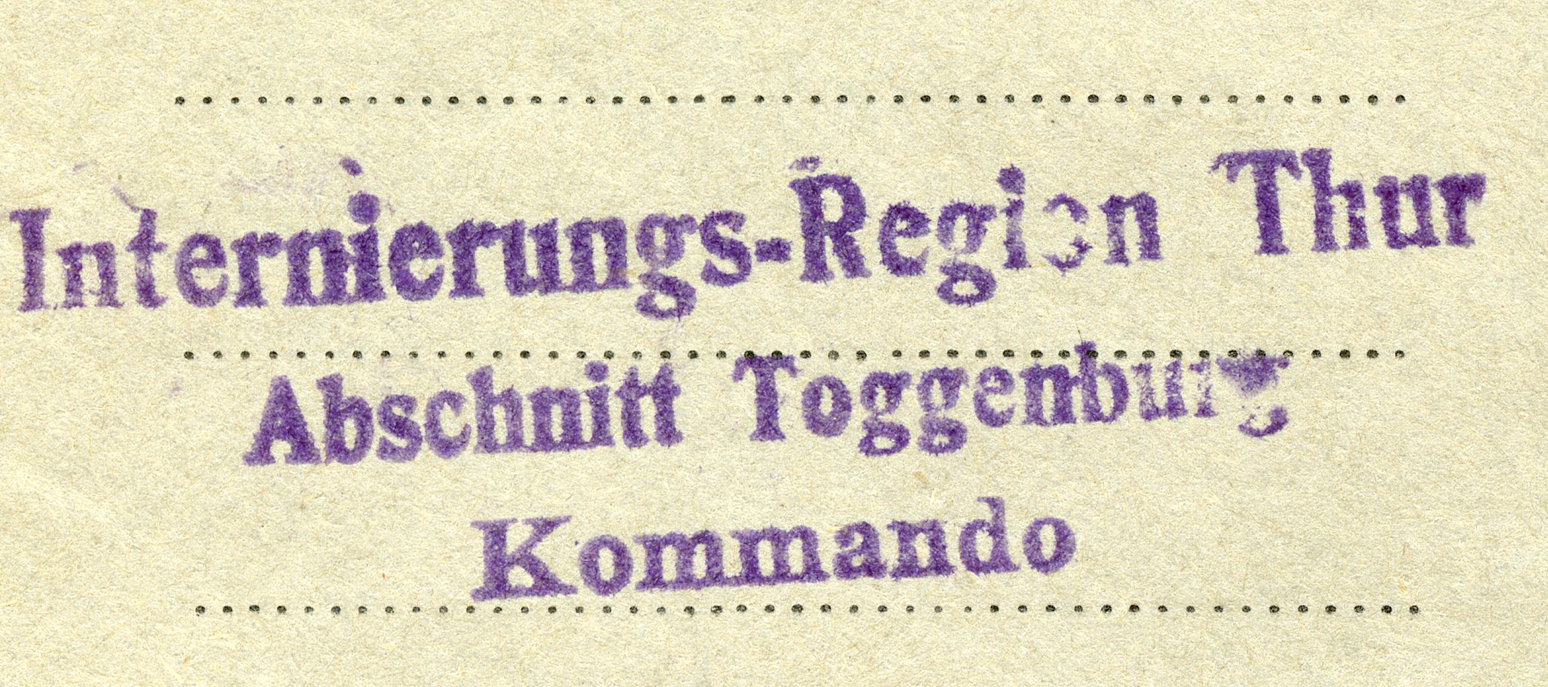
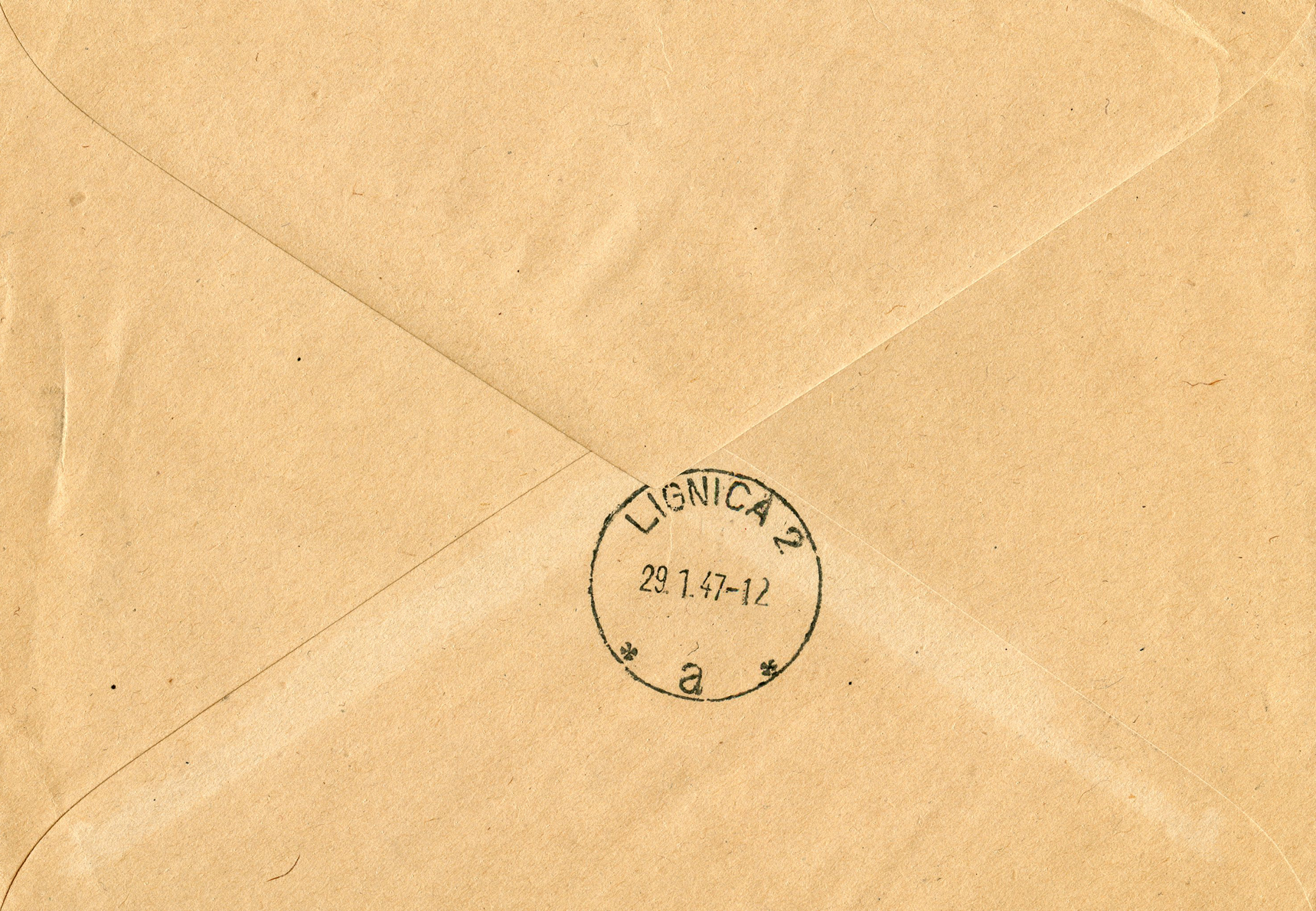
[Below: This is an envelope sent from Poland to Germany in search of a P.O.W., sent postage free on January 29, 1947.]
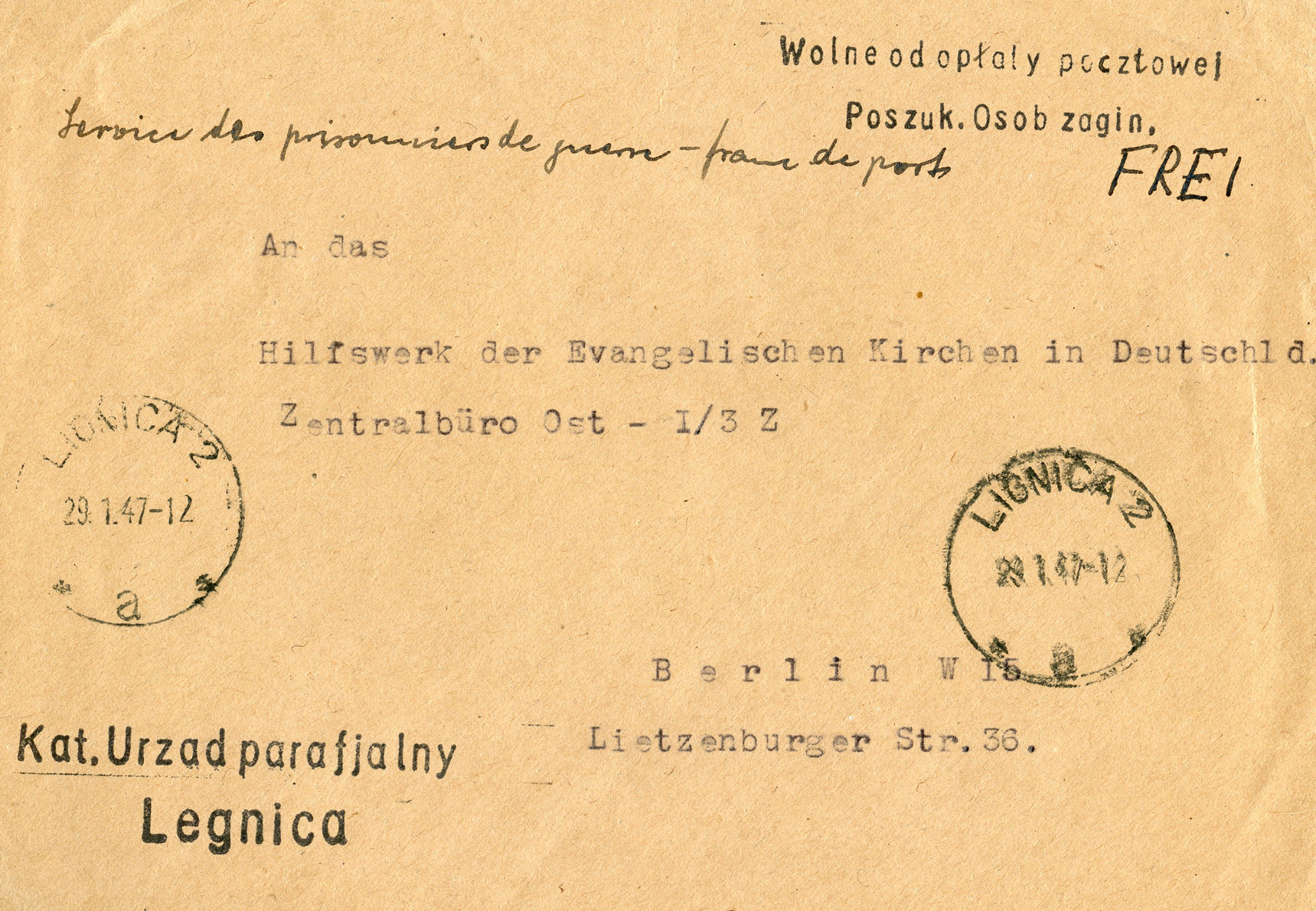
[Below: Close-up.]
[Below: Reverse showing arrival stamp.]
p>
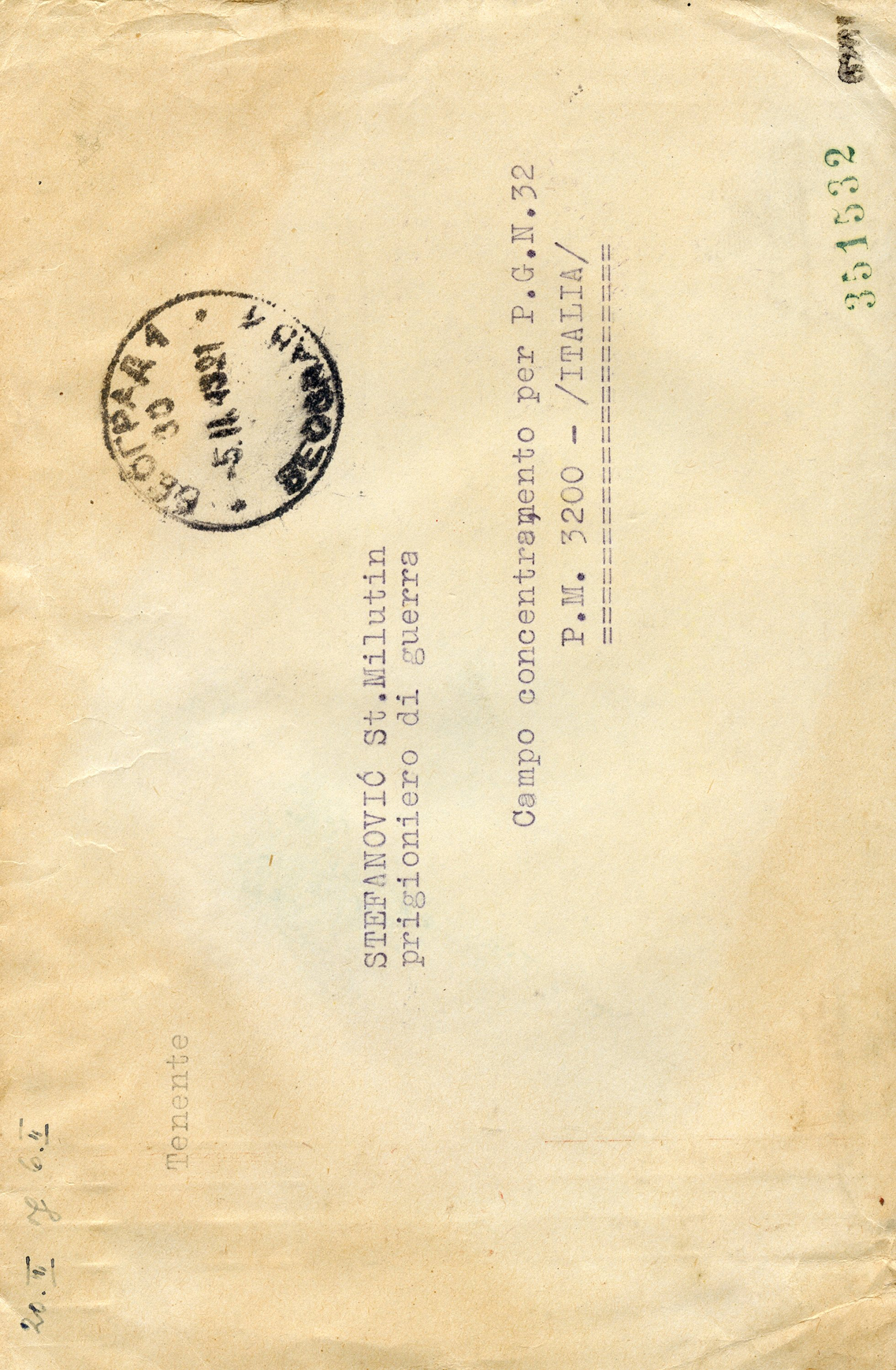
[Below: This was sent from Serbia to an Italian P.O.W. camp on February 5, 1943. Those strange numbers on the right/bottom of the envelope are censor identification numbers.]
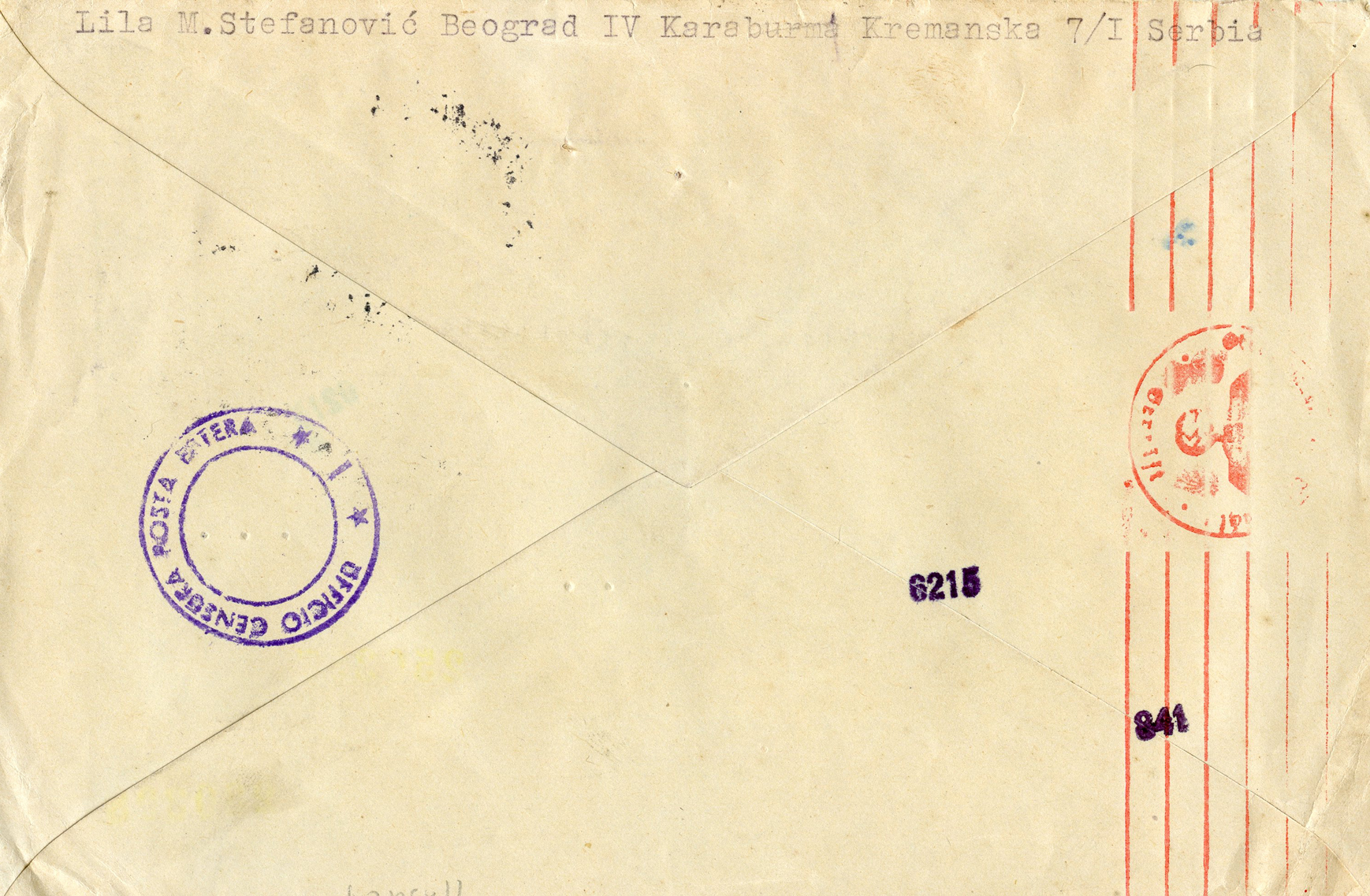
[Below: This shows more censor identification numbers, plus a German and Italian censor mark.]
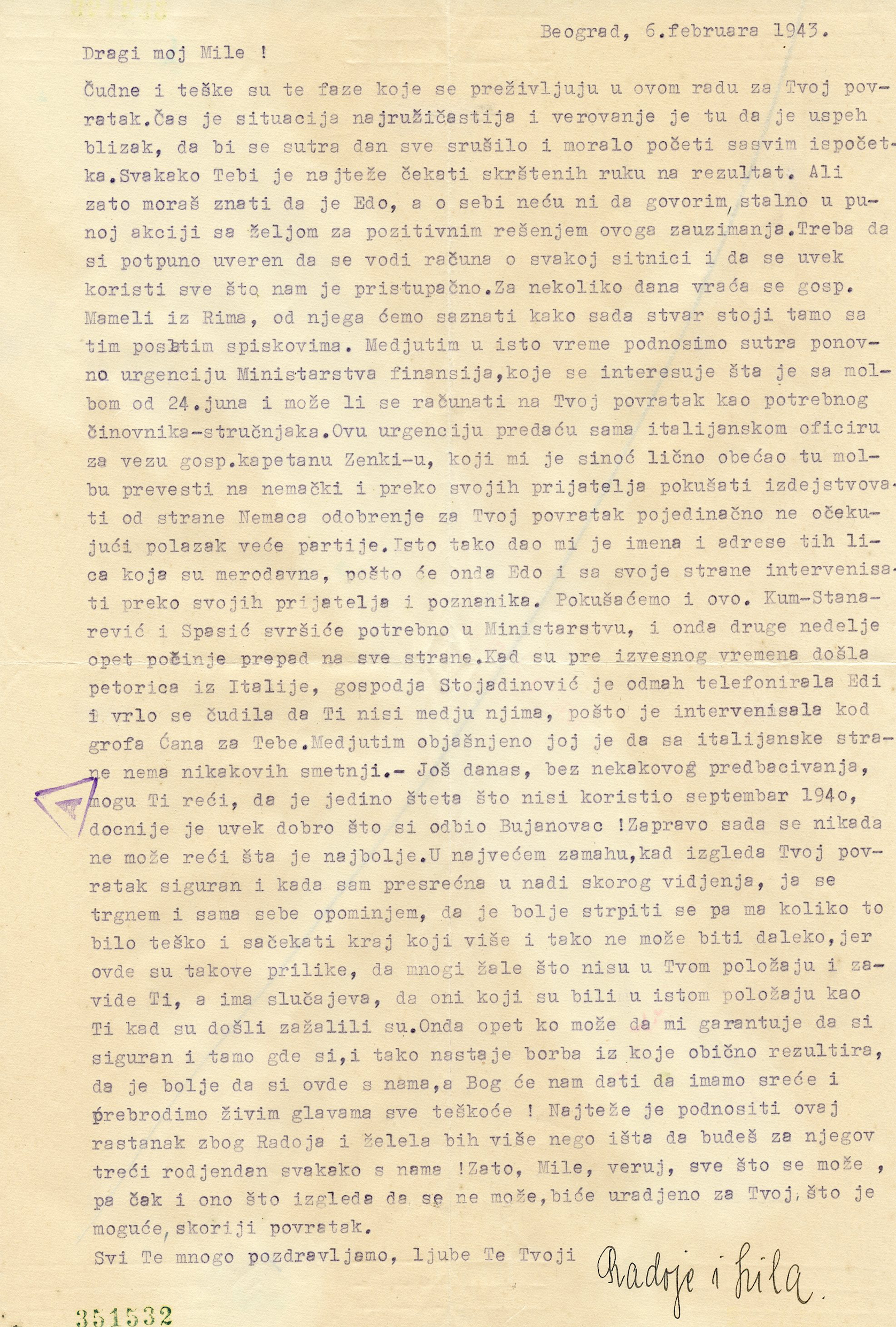
[Below: Letter within.]
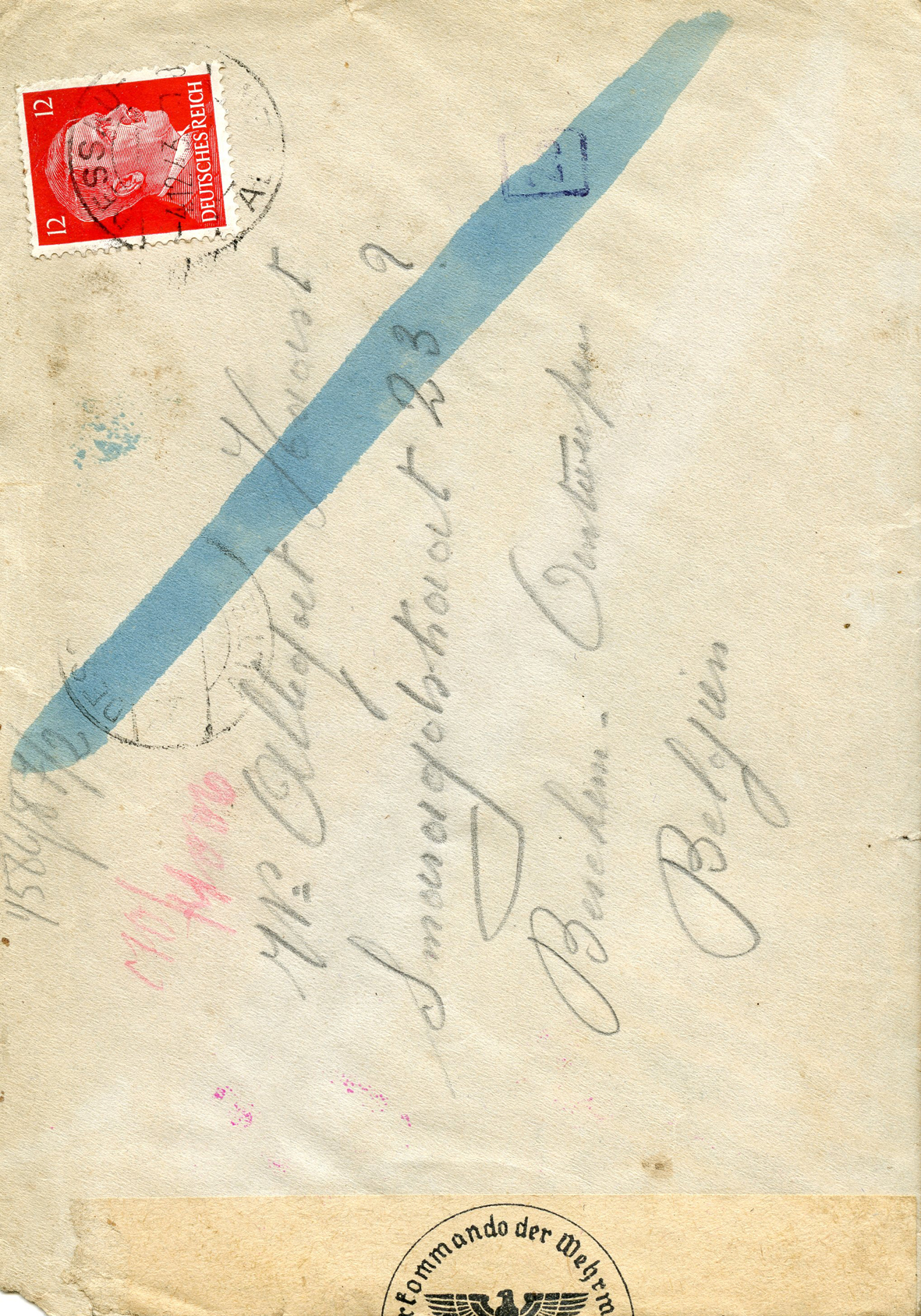
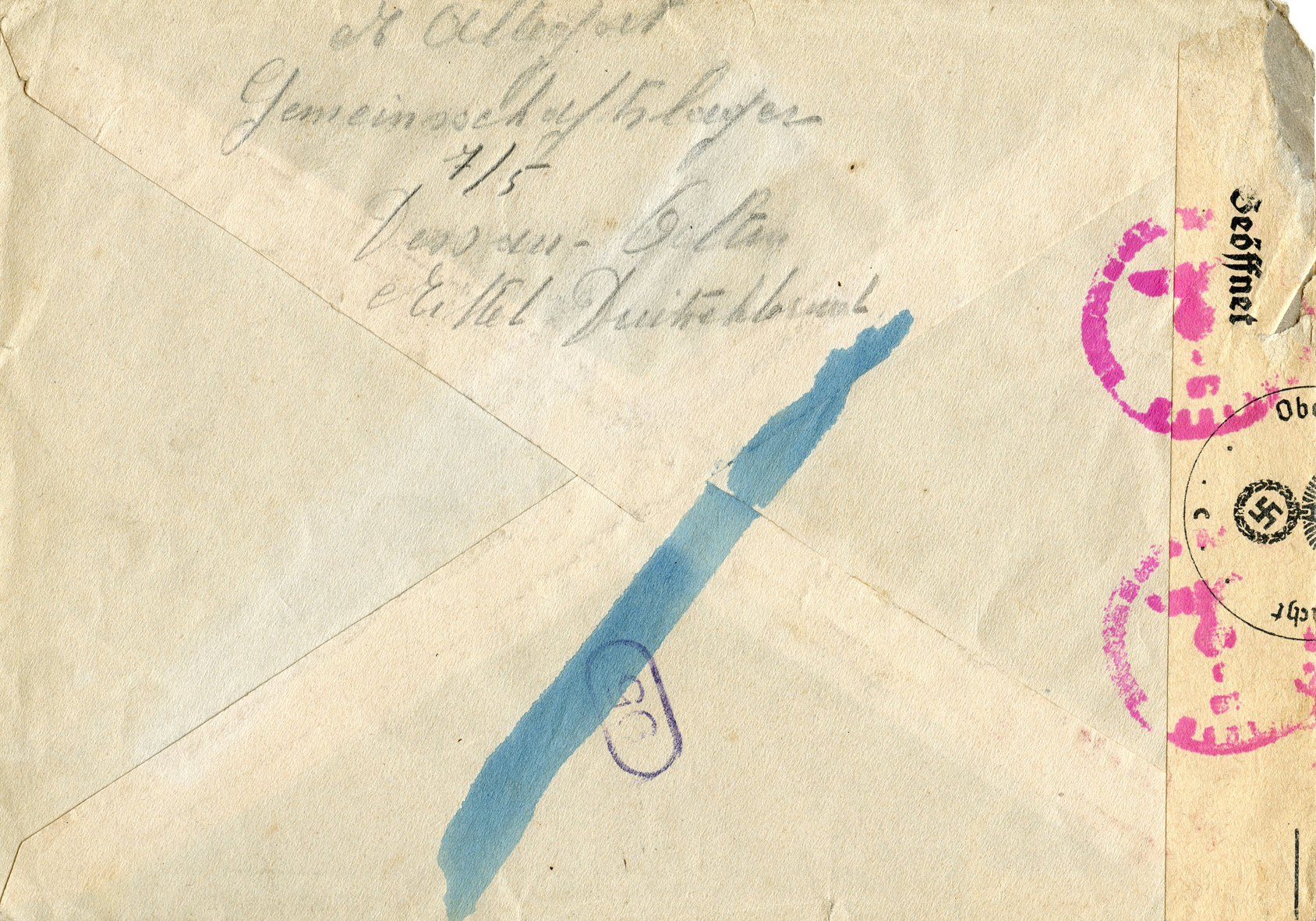
[Below: This was sent from Dessau, Germany to a Belgian labor camp on December 4, 1943. The blue marking here is a chemical used by the censors to spot hidden messages.]
[Below: Reverse.]
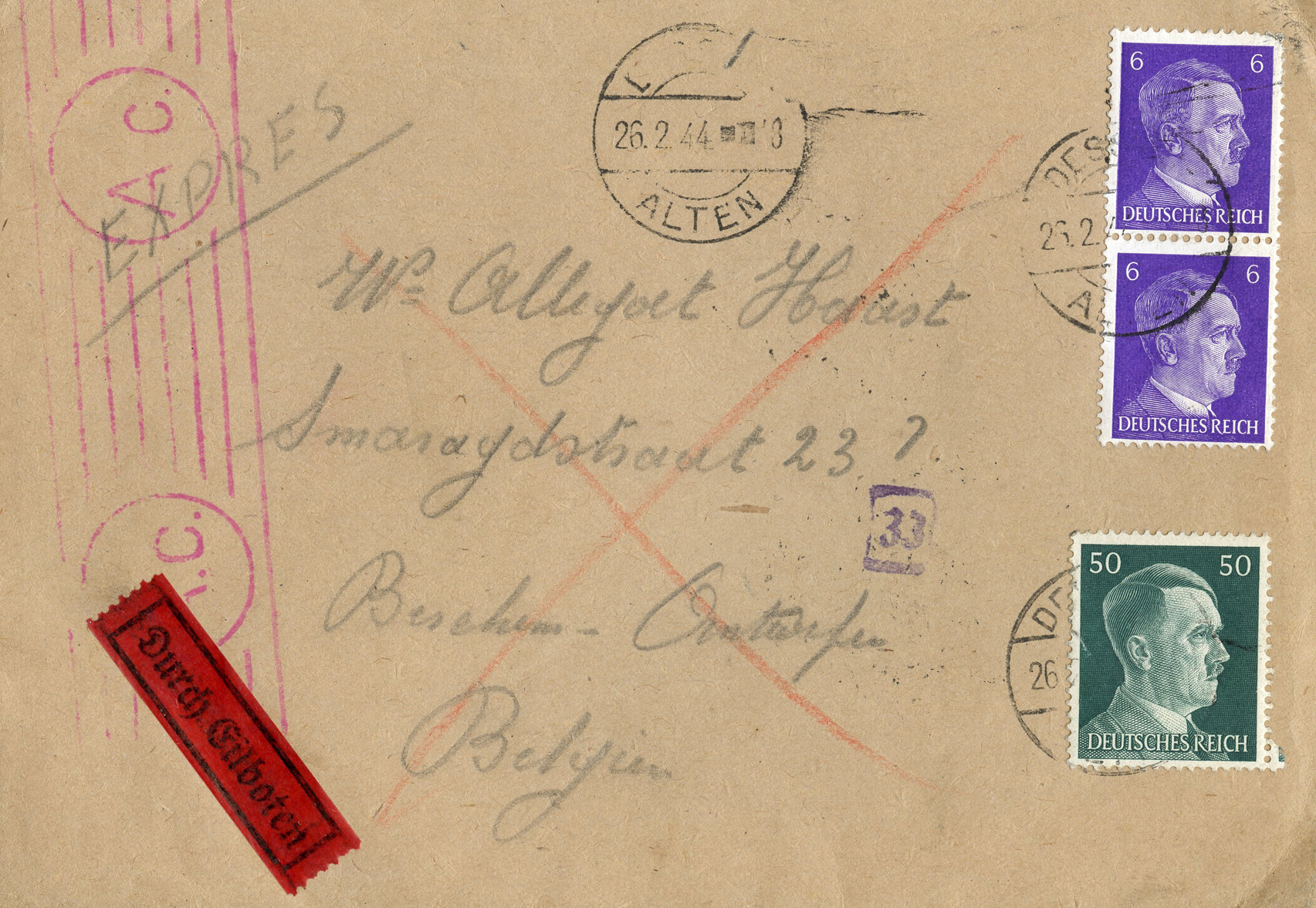
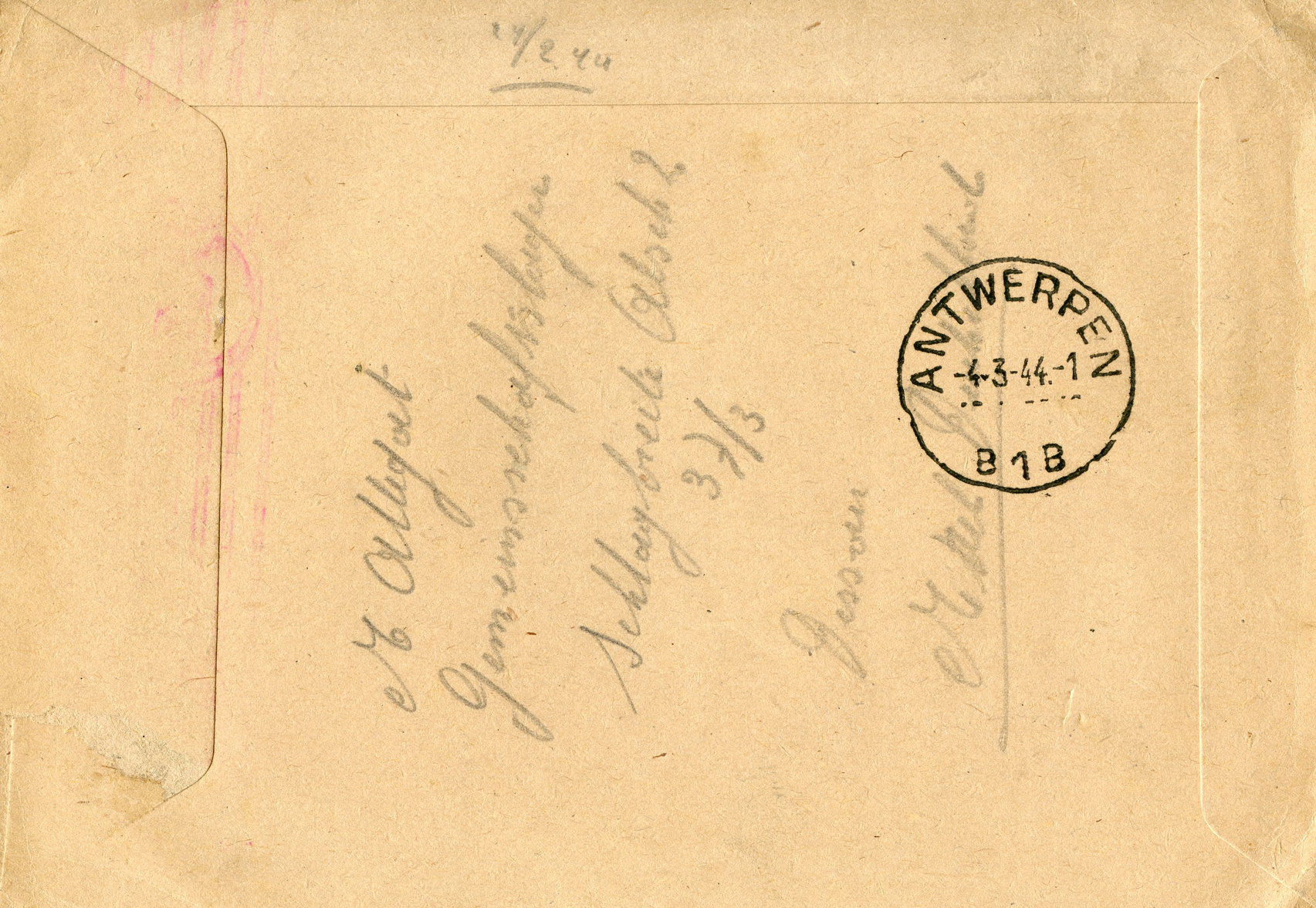
[Below: This is from the same person above and sent and sent to the same person in a Belgian labor camp on February 26, 1944. It was sent express (which cost 50 Pfennig, which was purchased through the stamp on the right bottom) and shows a red machine censor mark. The blue marking here is a chemical used by the censors to spot hidden messages.]
[Below: Reverse.]
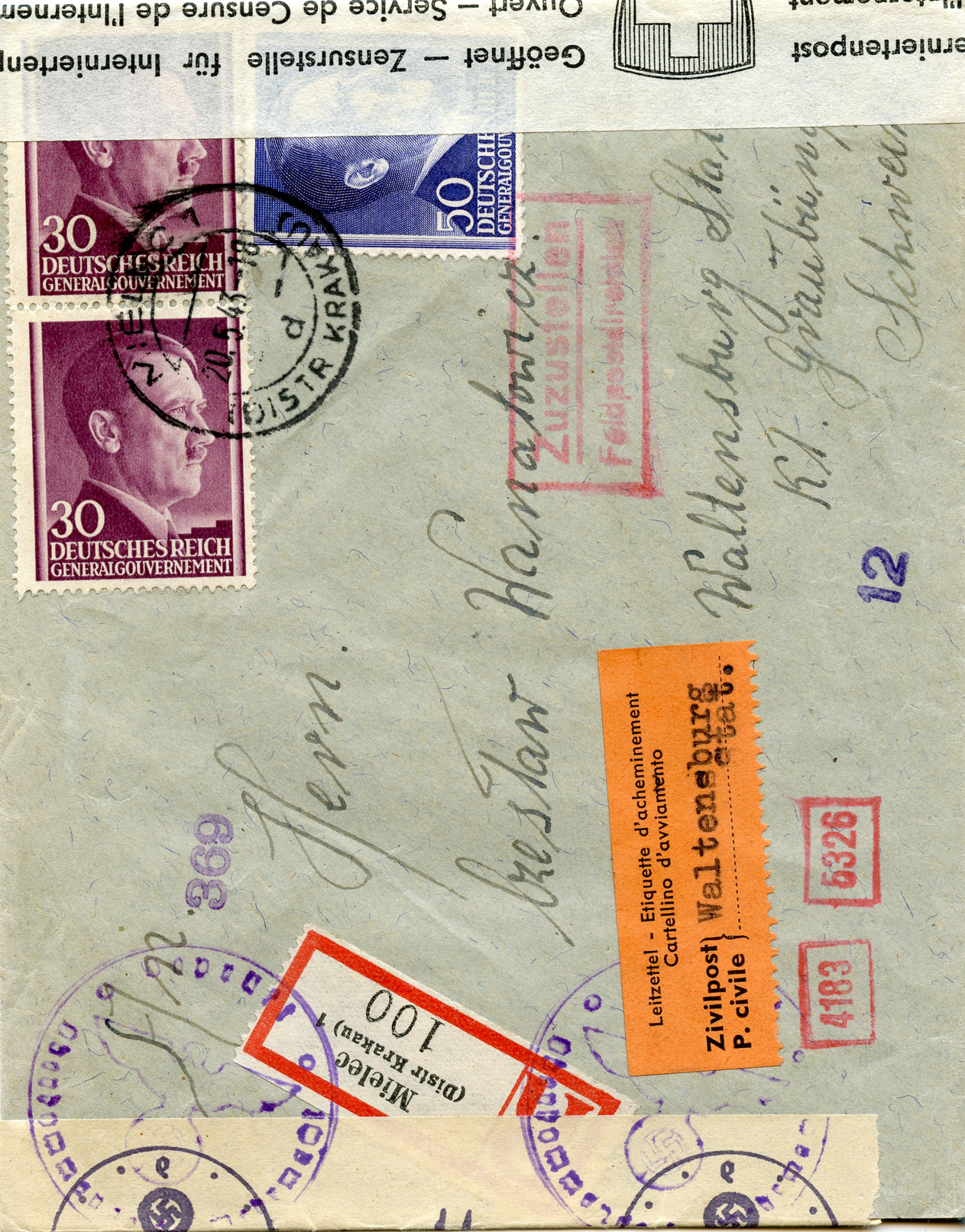
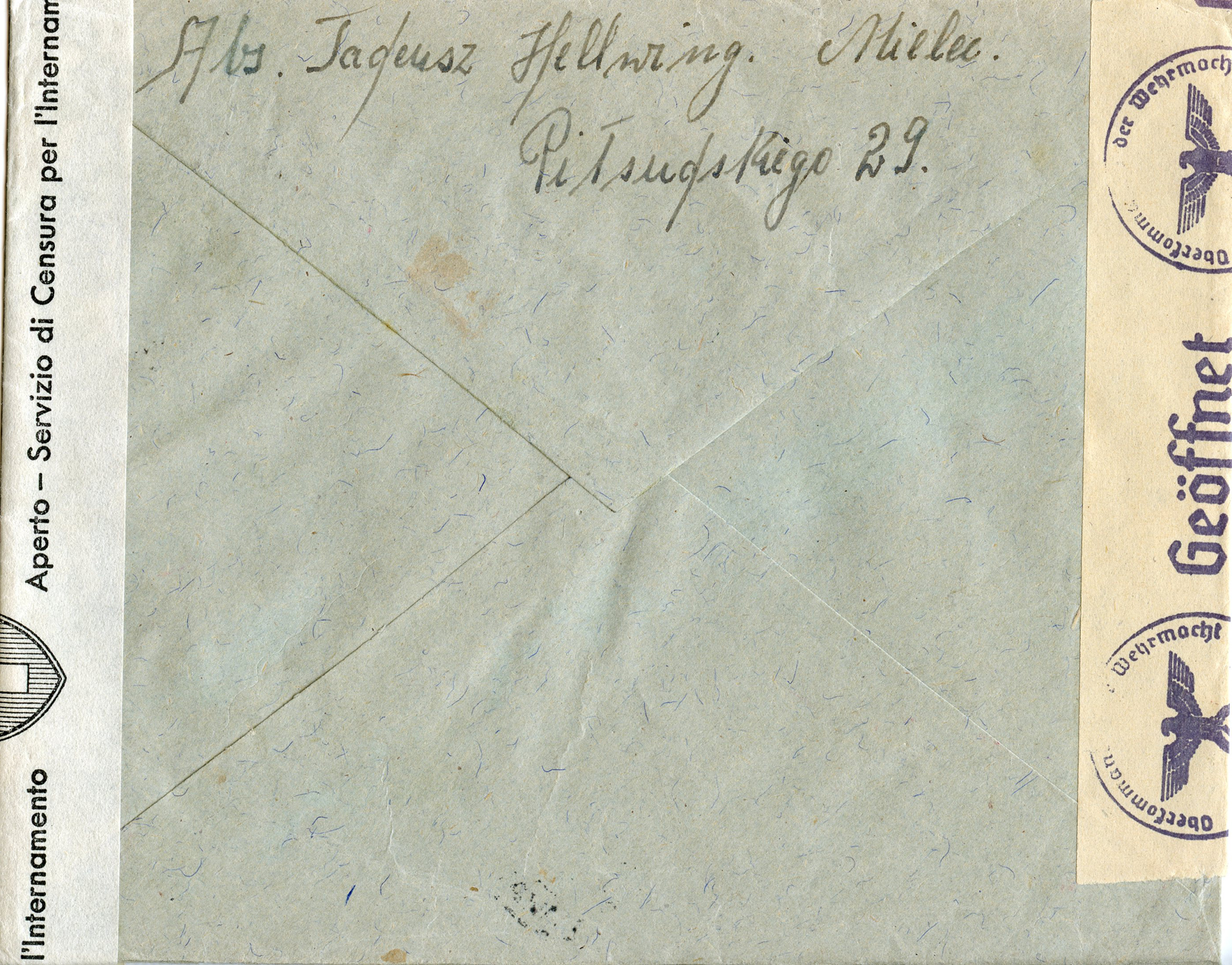
[Below: This was sent from Krakau, Poland to a Pole in an internment camp in Switzerland. It was canceled on May 20, 1943 and sent registered with censorship tape from Germany and Switzerland.]
[Below: Reverse.]
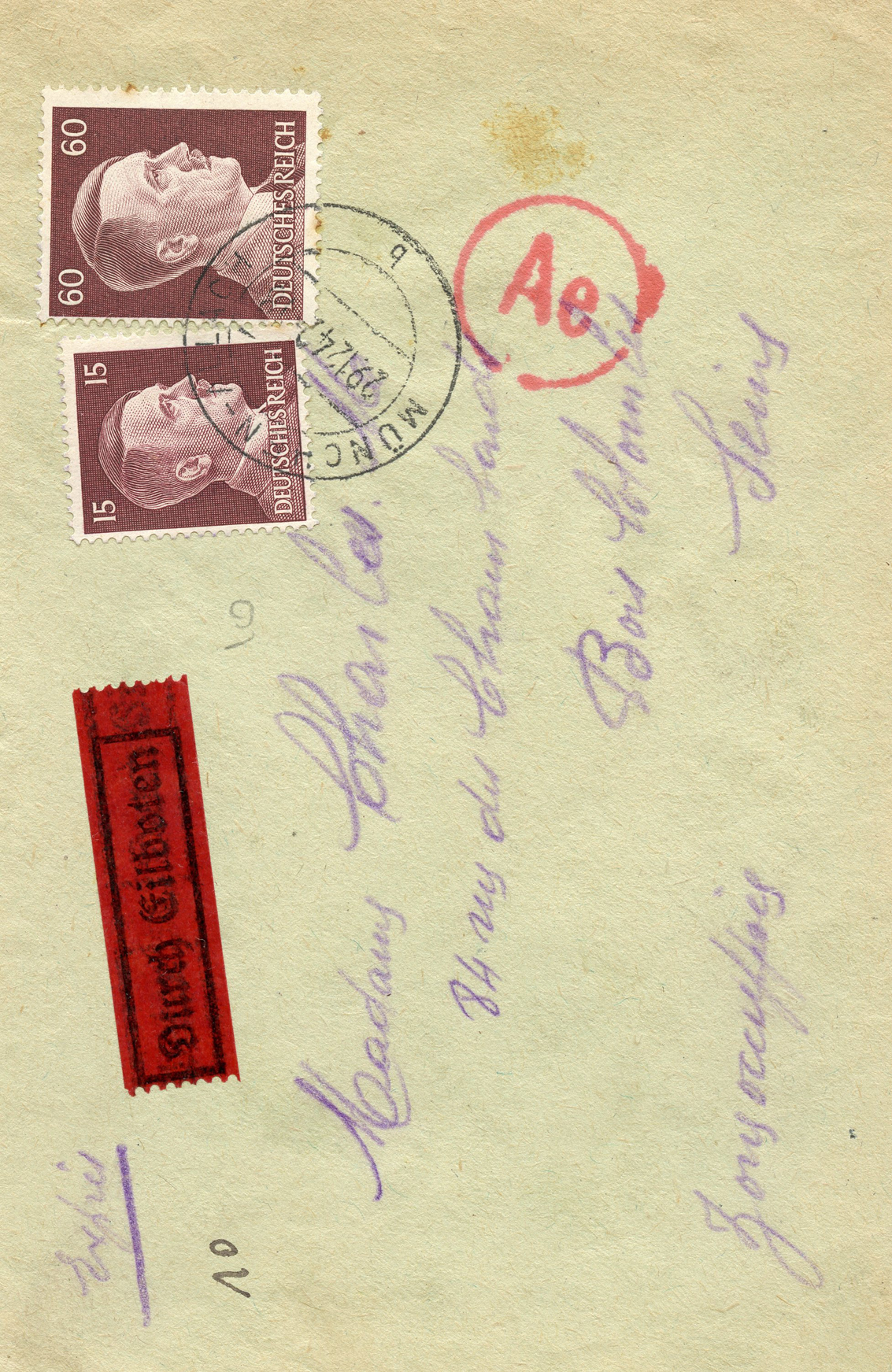
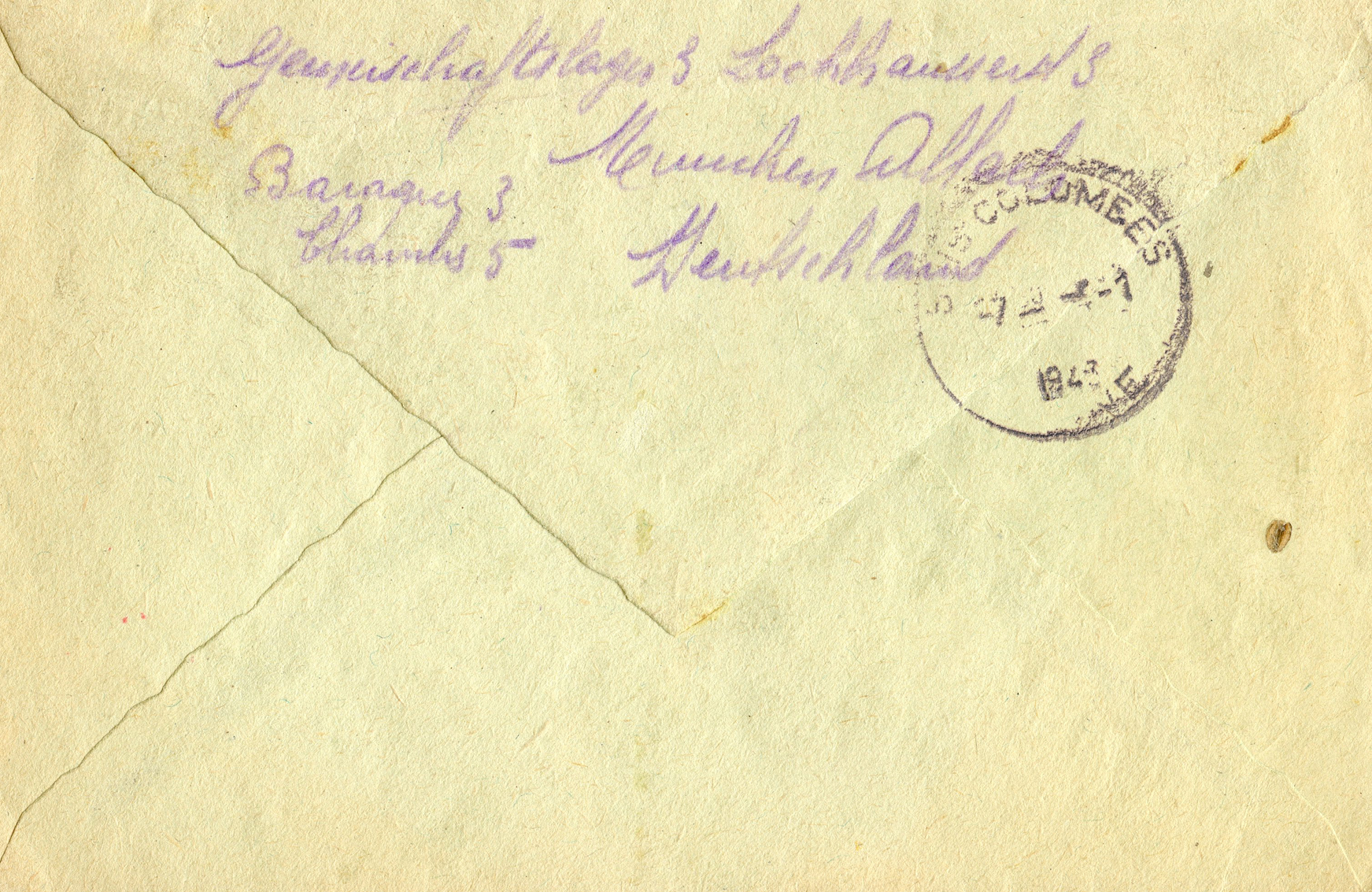
[Below: This was sent express from a French labor camp in Germany to France. It was canceled on December 29, 1942. The red stamp 'Ae' is a German censorship mark.]
[Below: Reverse.]
[Below: This is POW mail postmarked on July 5, 1941, sent from the leader of the camp, in Hoyerserda to Leipzig with boxed Sealau uber Hoyerswerda cancel. Note this is a reused envelope, due to a lack of paper. A bit of information:
'Sealau refers to Zeischa, a village just outside Bad Liebenwerda in Germany. This area served as an administrative extension, work detail (Arbeitskommando), or quarantine zone attached to Stalag IV-A (Elsterhorst), a major WWII prisoner of war camp near Hoyerswerda in Saxony. Stalag IV-A Elsterhorst was located south of the village of Elsterhorst, now known as Nardt, just outside Hoyerswerda. Established in 1939, it was one of the largest POW camps in Germany. It held a vast multinational array of Allied prisoners, including Polish, French, Belgian, British, Soviet, Italian, and—later in the war—American personnel. Satellite camps or work detachments like those in the Zeischa (Sealau) area were utilized by the Germans to provide labor for nearby industries, including agriculture and forestry.'
It is interesting that after the war the Soviets occupied the camp, which by then was full of not only the original prisoners, but thousands of German refugees. Not surprisingly, thousands died of starvation and disease in the ensuing days. This outcome was extremely common. Those stacks of bodies you see on the old videos are usually inmates and German civilians who the Soviets murdered, whether intentionally or by extreme neglect.]
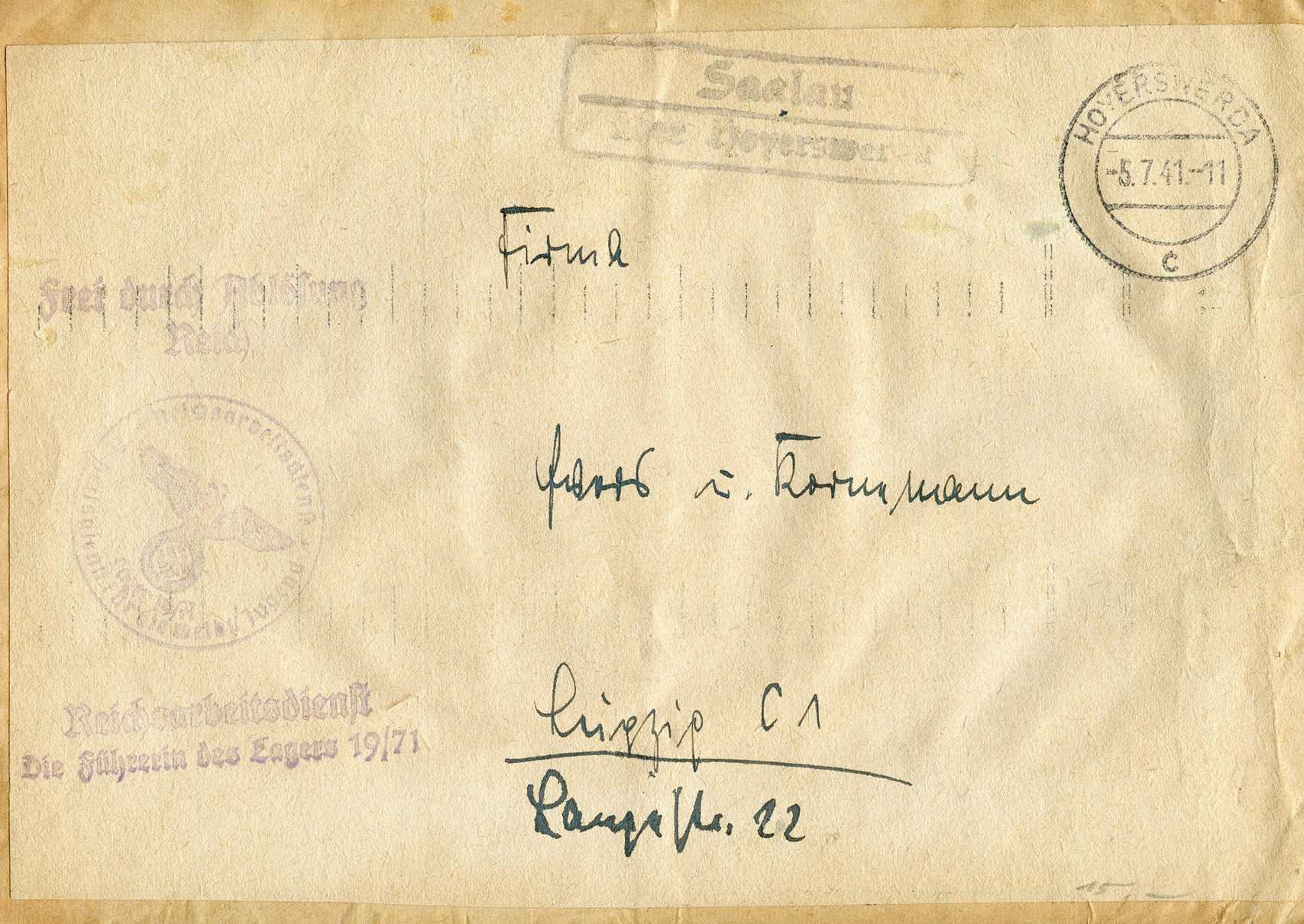
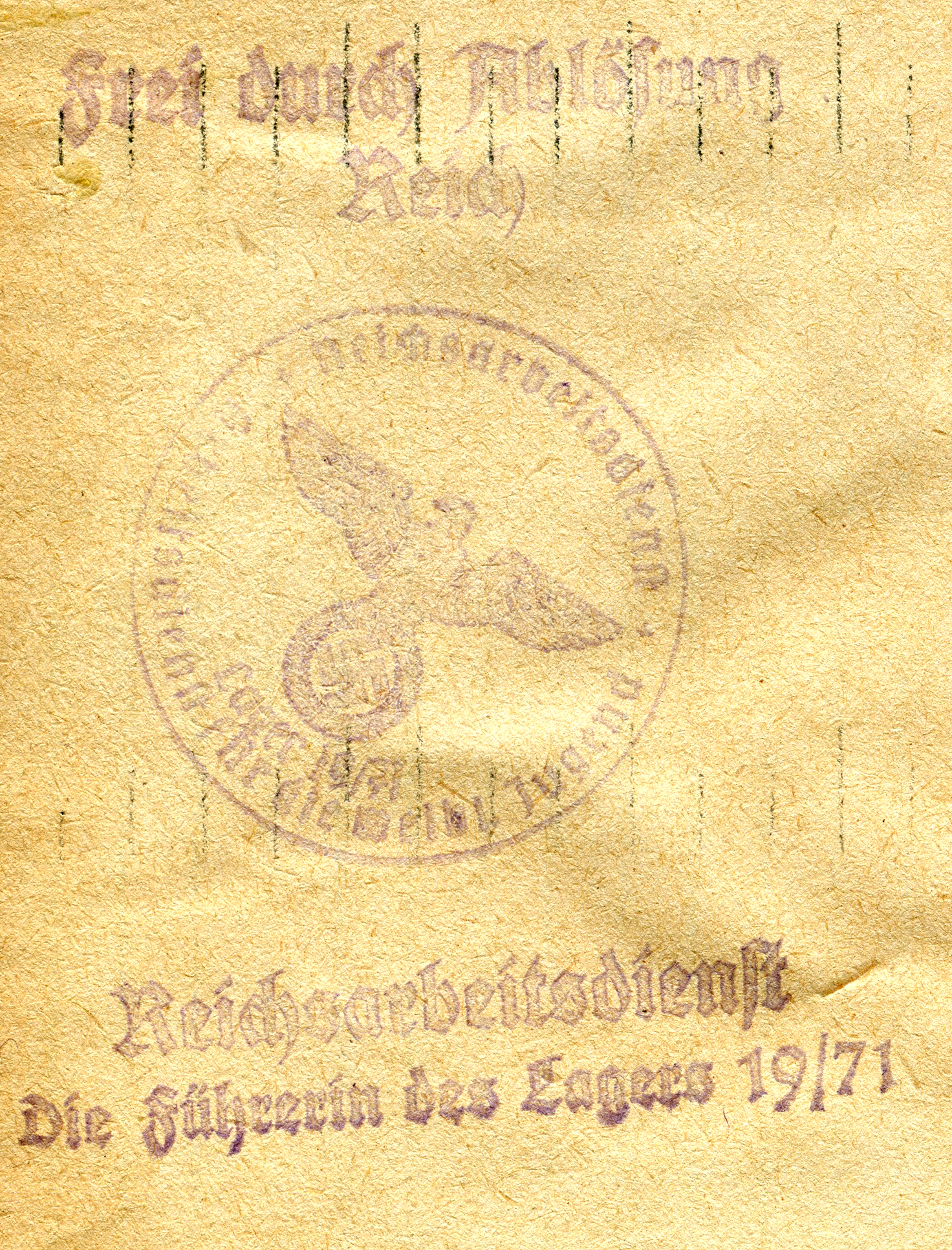
[Below: Close-up. This has been darkened to better see the stamp. This says: 'Reichsarbeitsdienst die Führerin des Lagers 19/17' (Reich Labor Service: the Leader of Camp 19/17).]
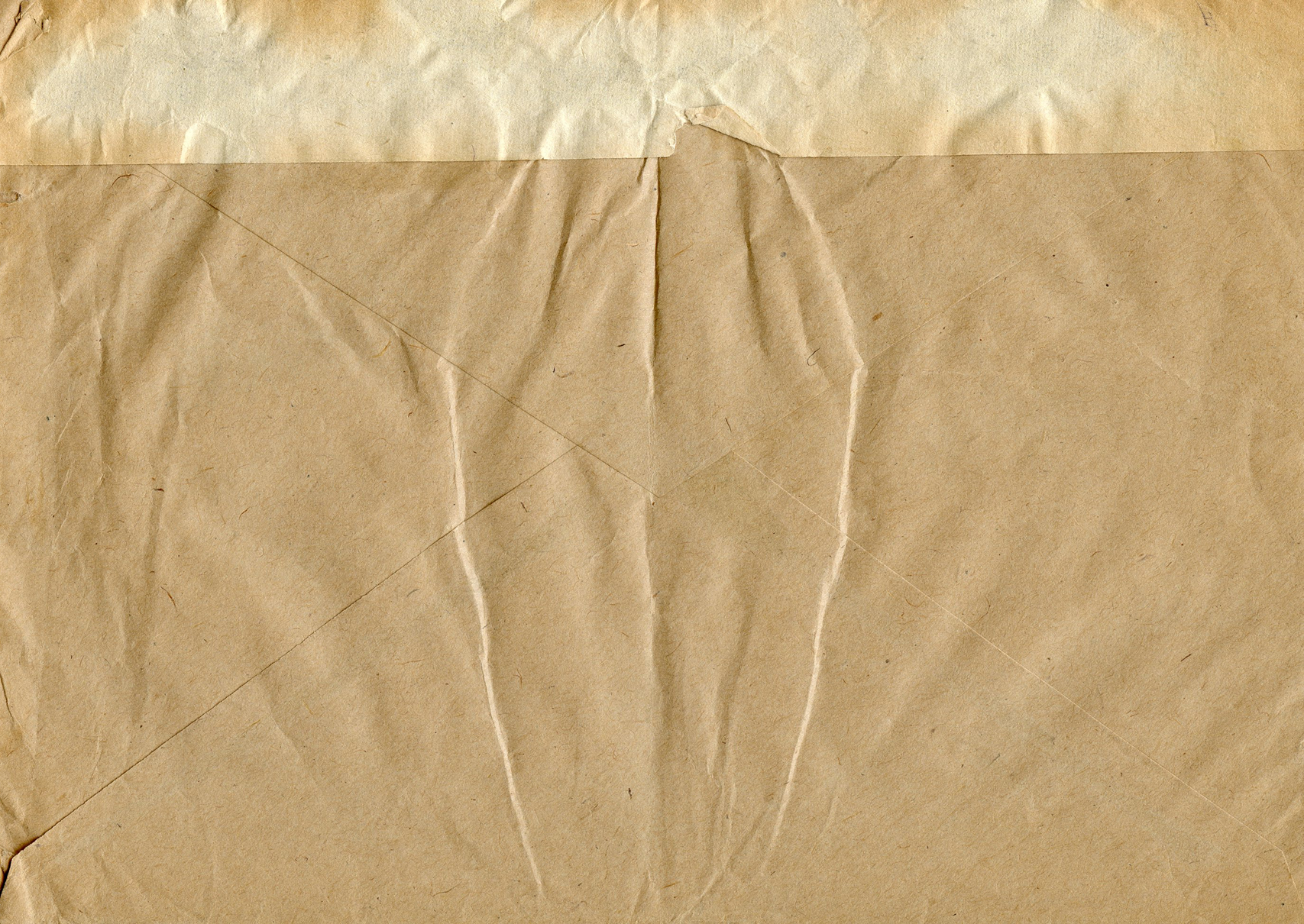
[Below: Reverse.]
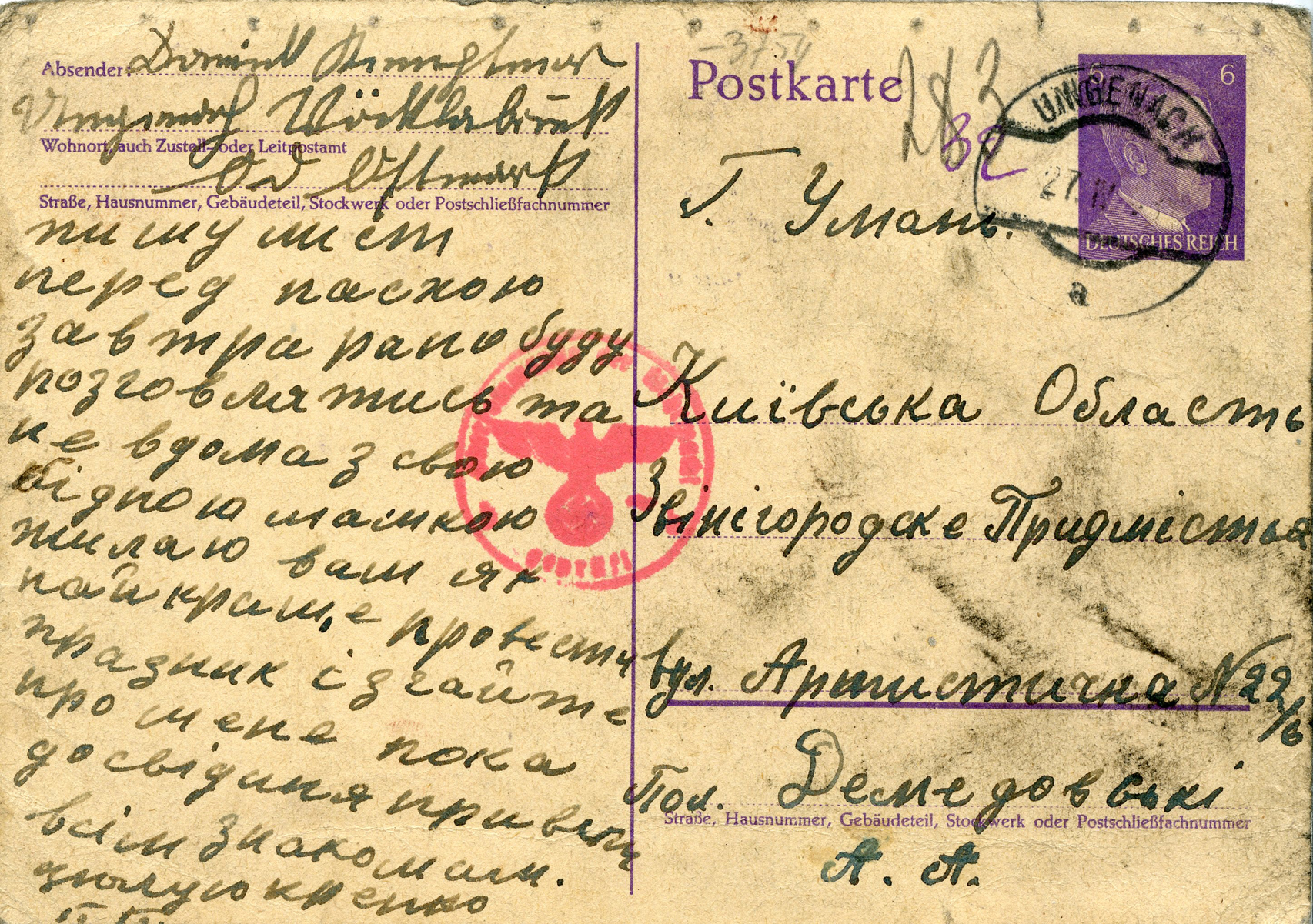
[Below: This was postmarked on April 27, 1943 in Ungenach (a municipality in Upper Austria). The red stamp is a censor's mark.]
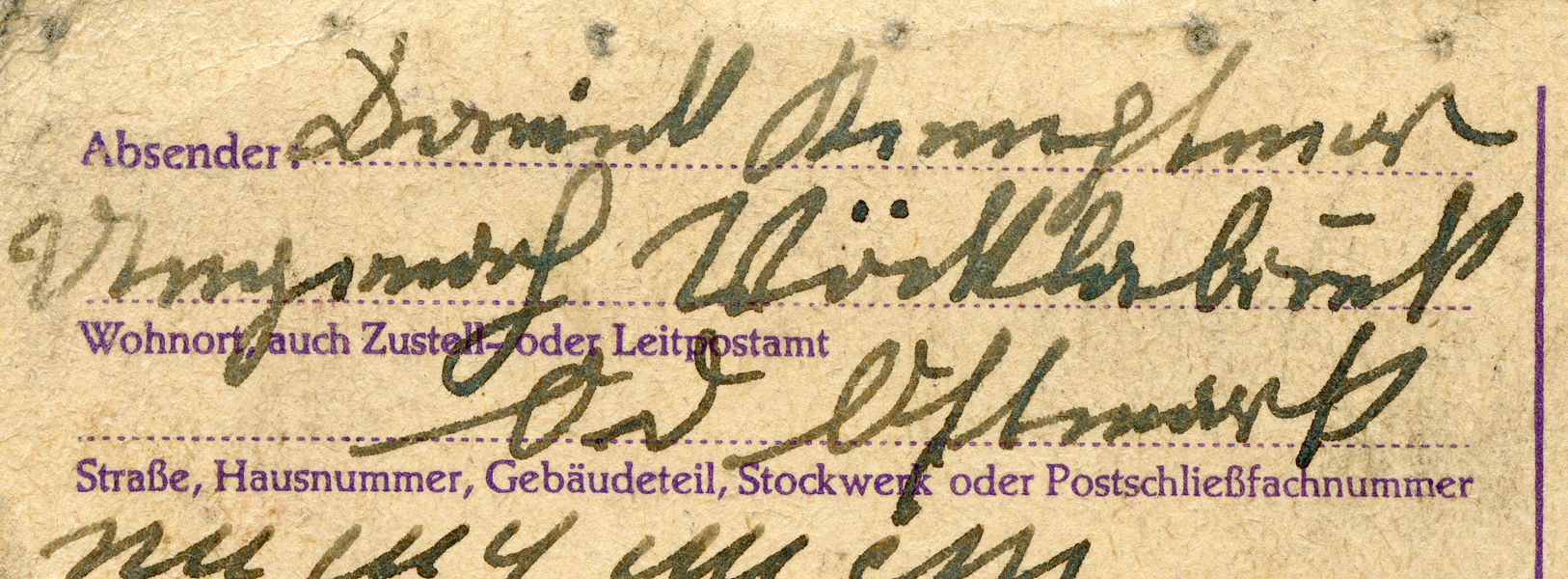
[Below: Close-up.]
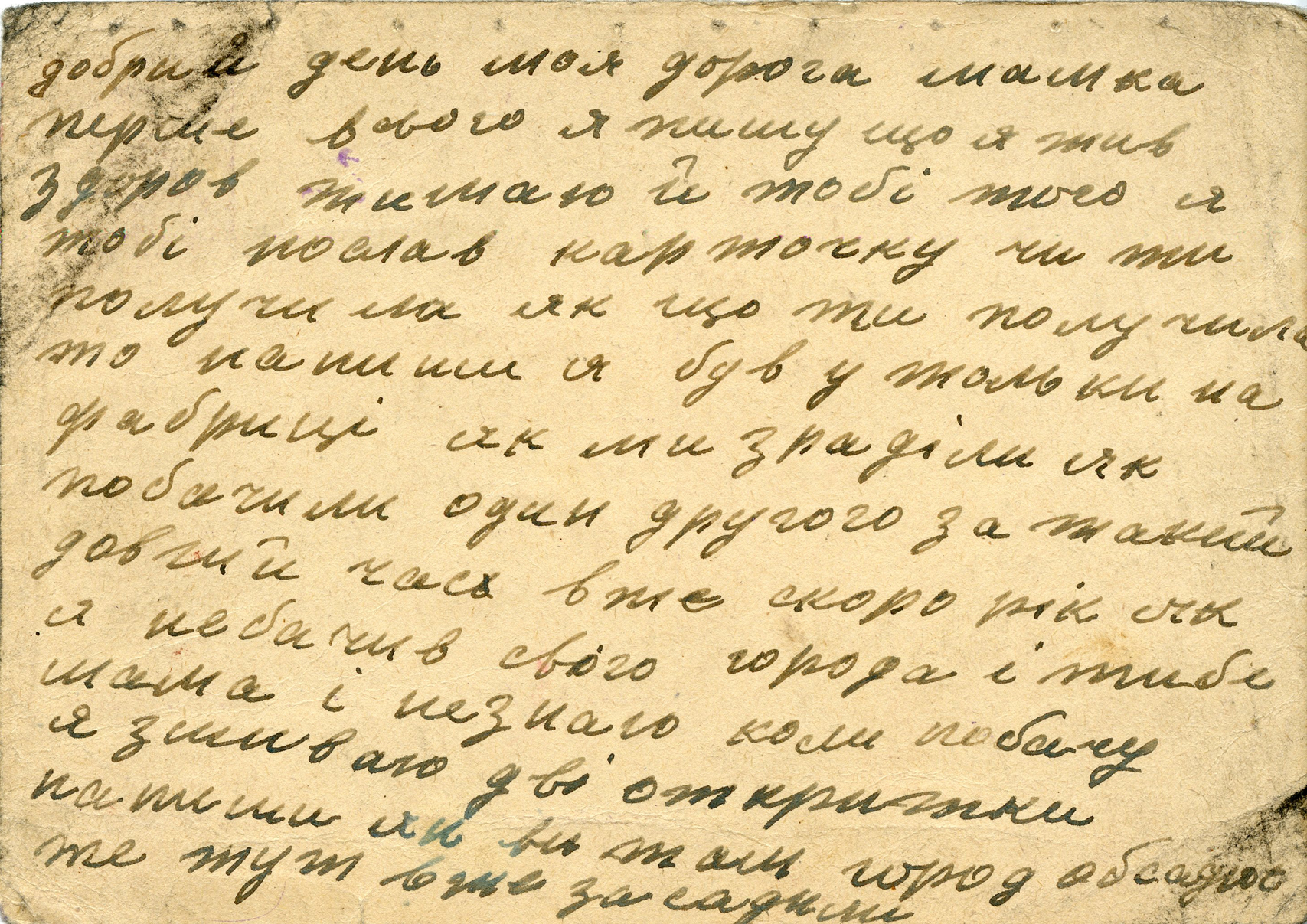
[Below: Reverse.]
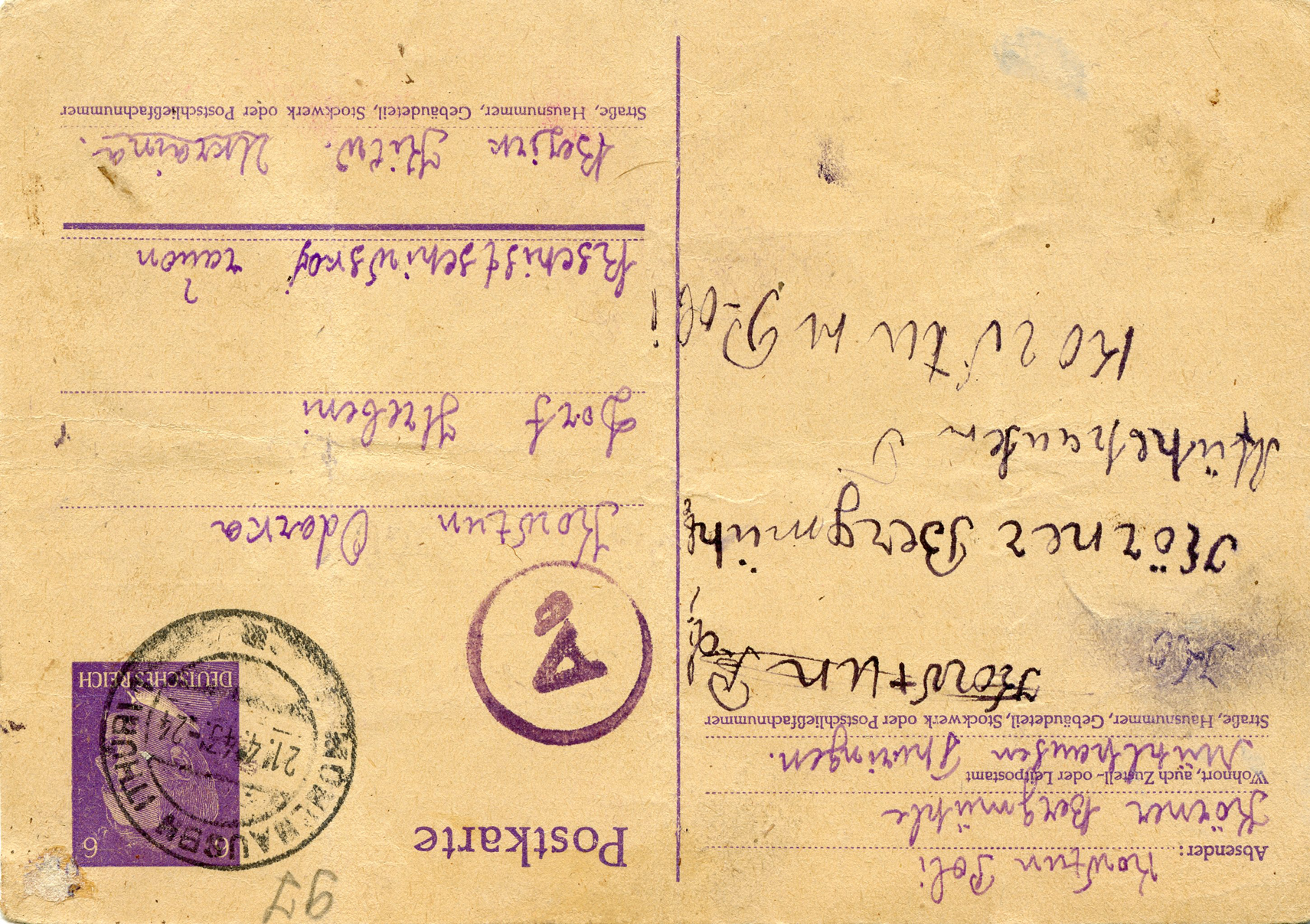
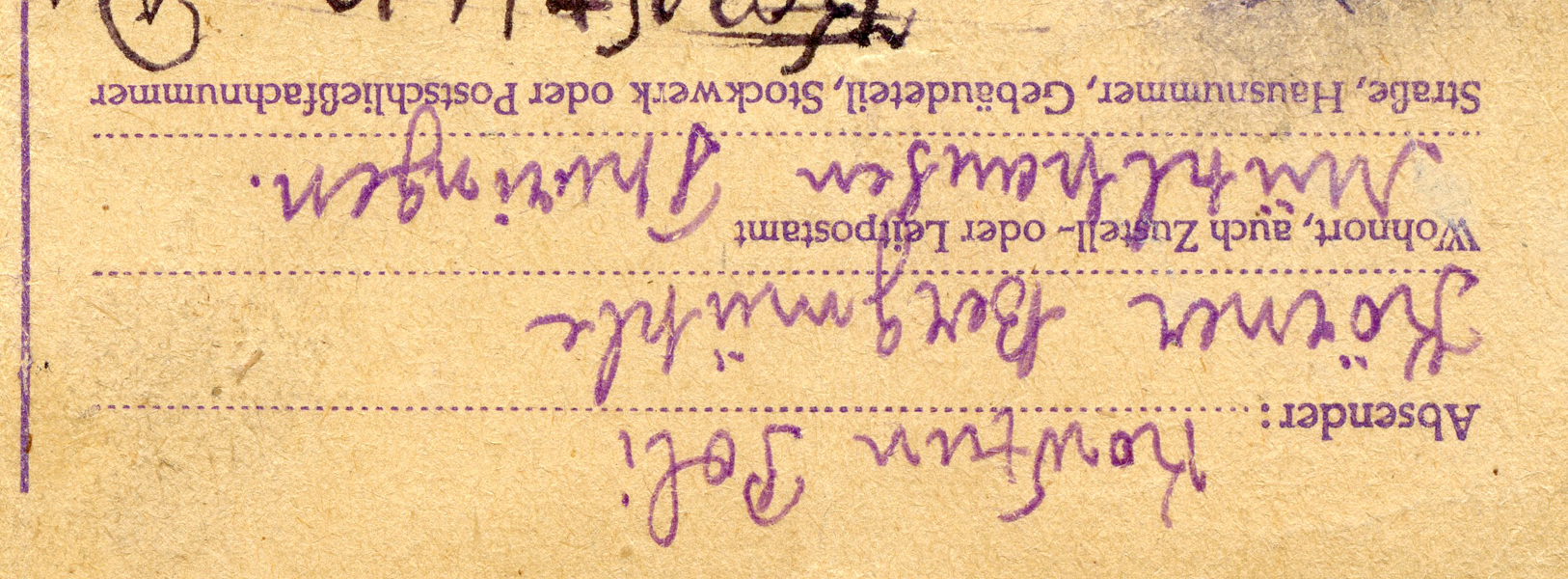
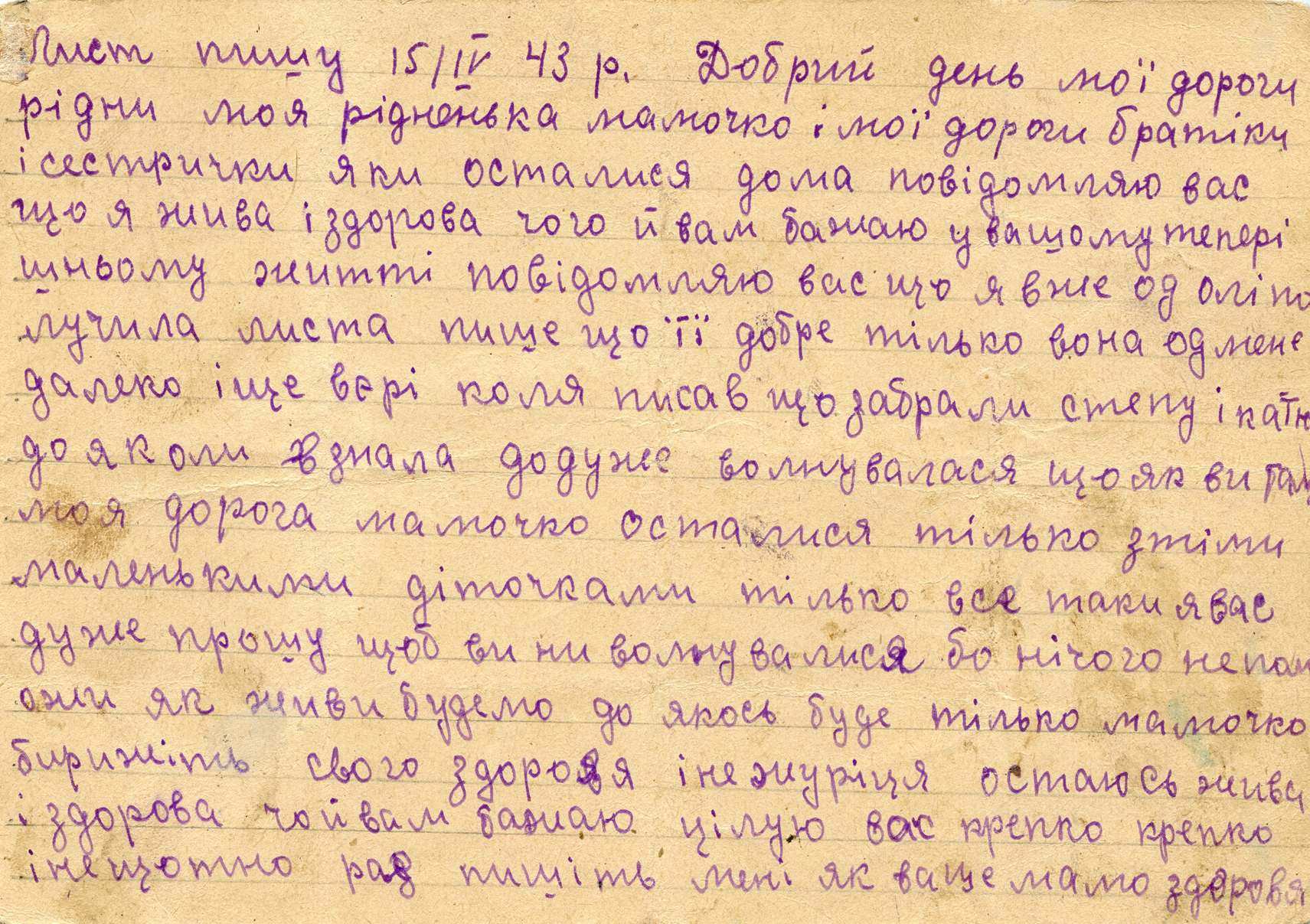
[Below: This was postmarked on April 21, 1943 in Mühlhausen (a town in the north-west of Thuringia), Germany and was sent to the Ukraine. The 'Ab' stamp is a censor's mark.]
[Below: Close-up.]
[Below: Reverse.]
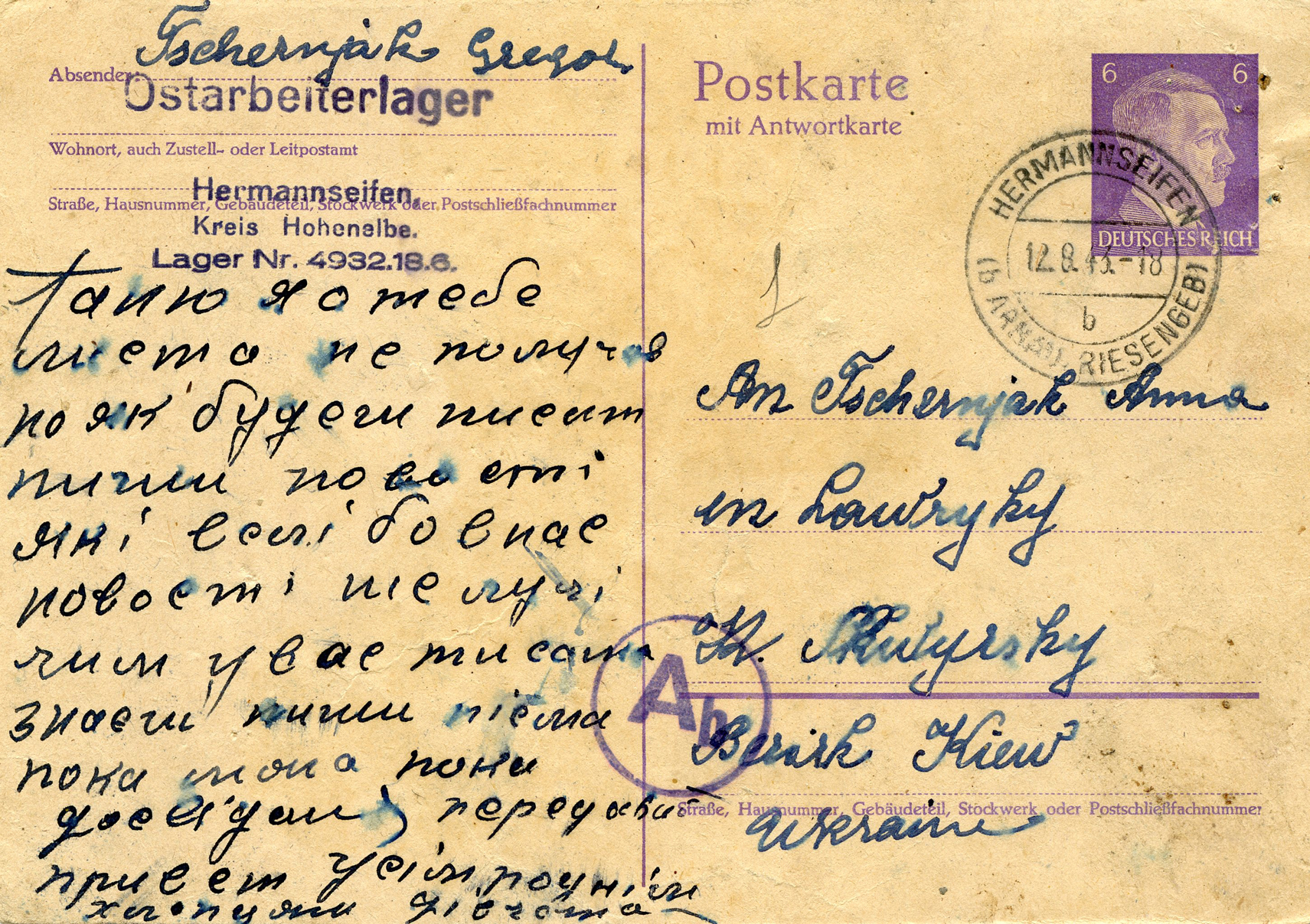
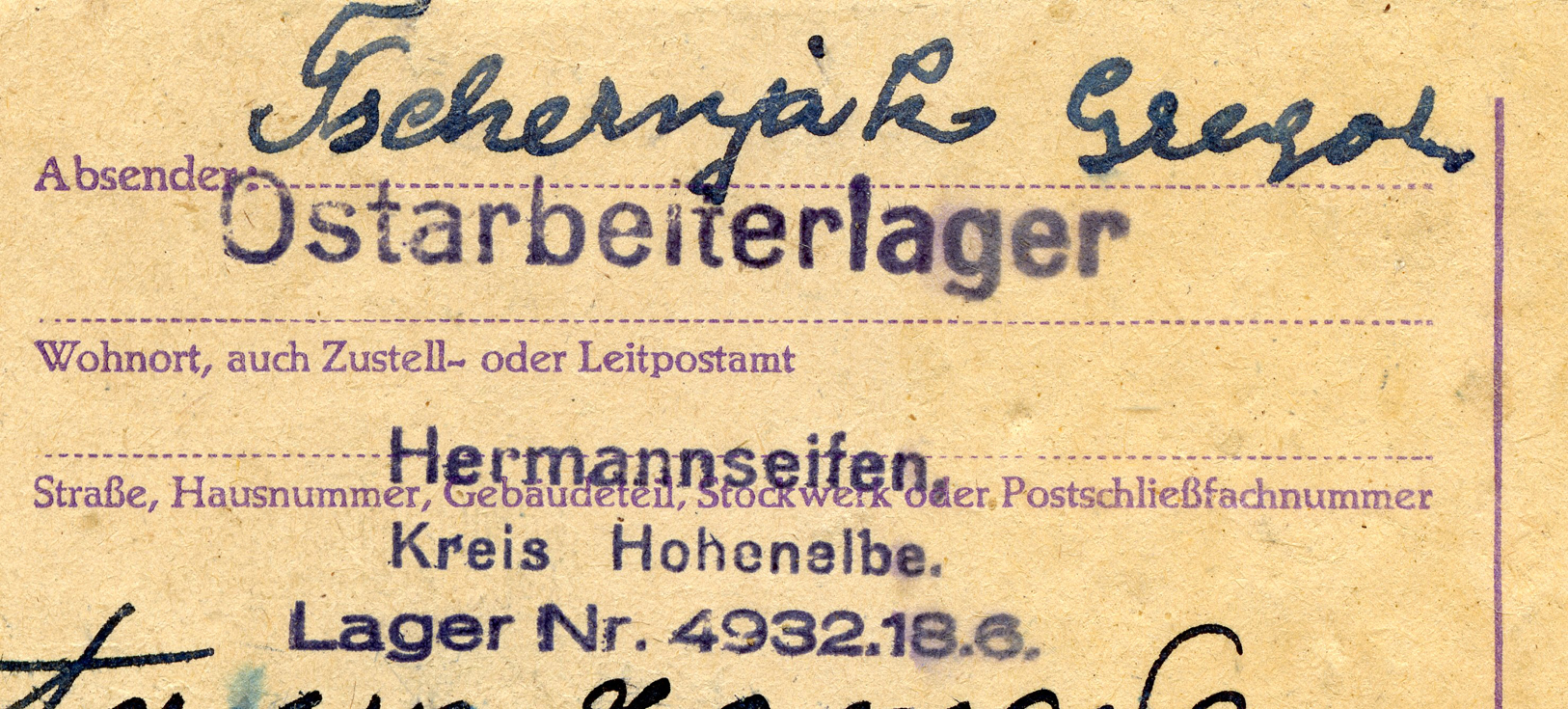
[Below: This was postmarked on August 12, 1943 in Hermannseifen the former German name for what is now the municipality of Rudník in the Czech Republic), Germany and was sent to the Ukraine. The 'Ab' stamp is a censor's mark.]
[Below: Close-up.]
[Below: Reverse.]
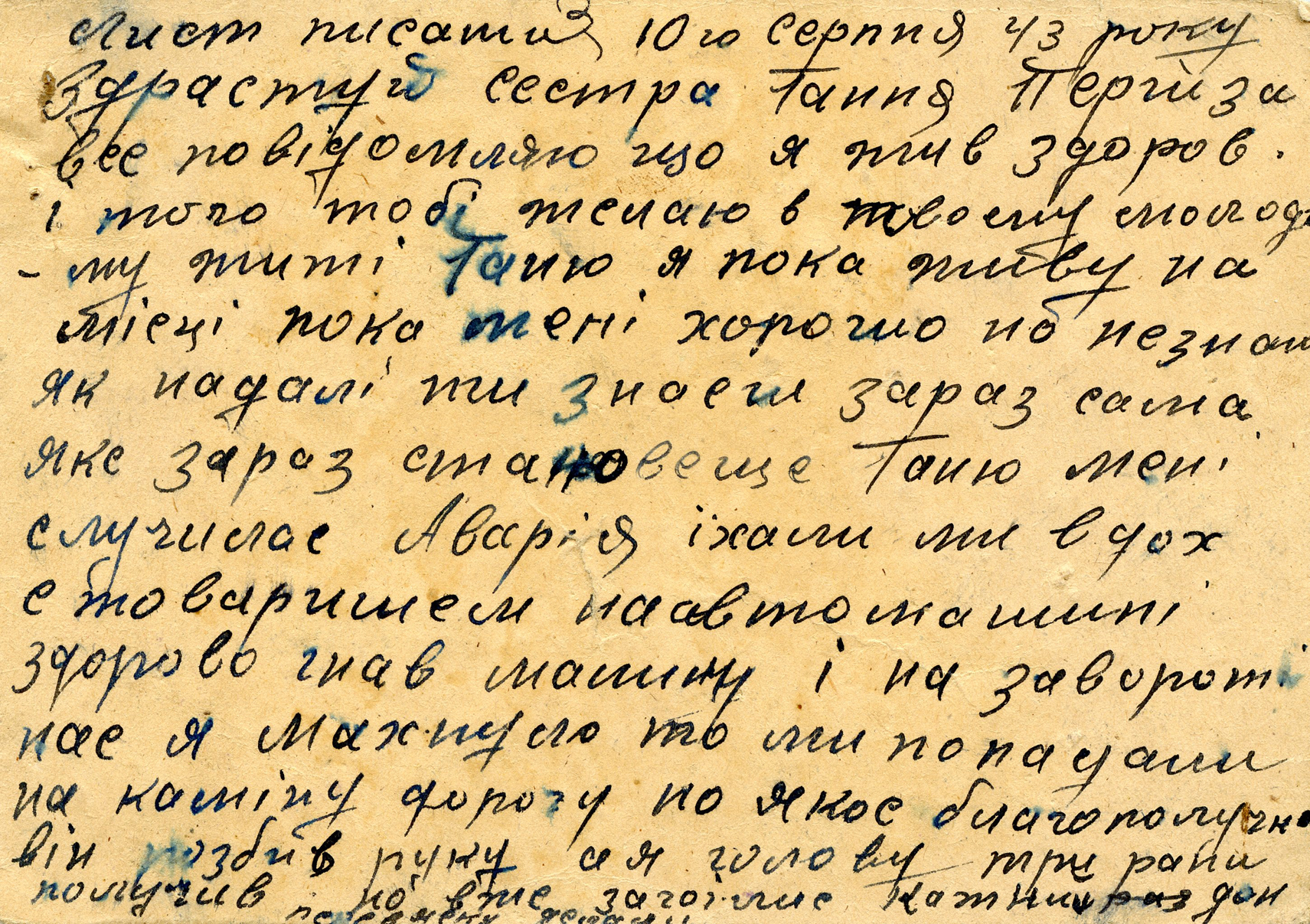
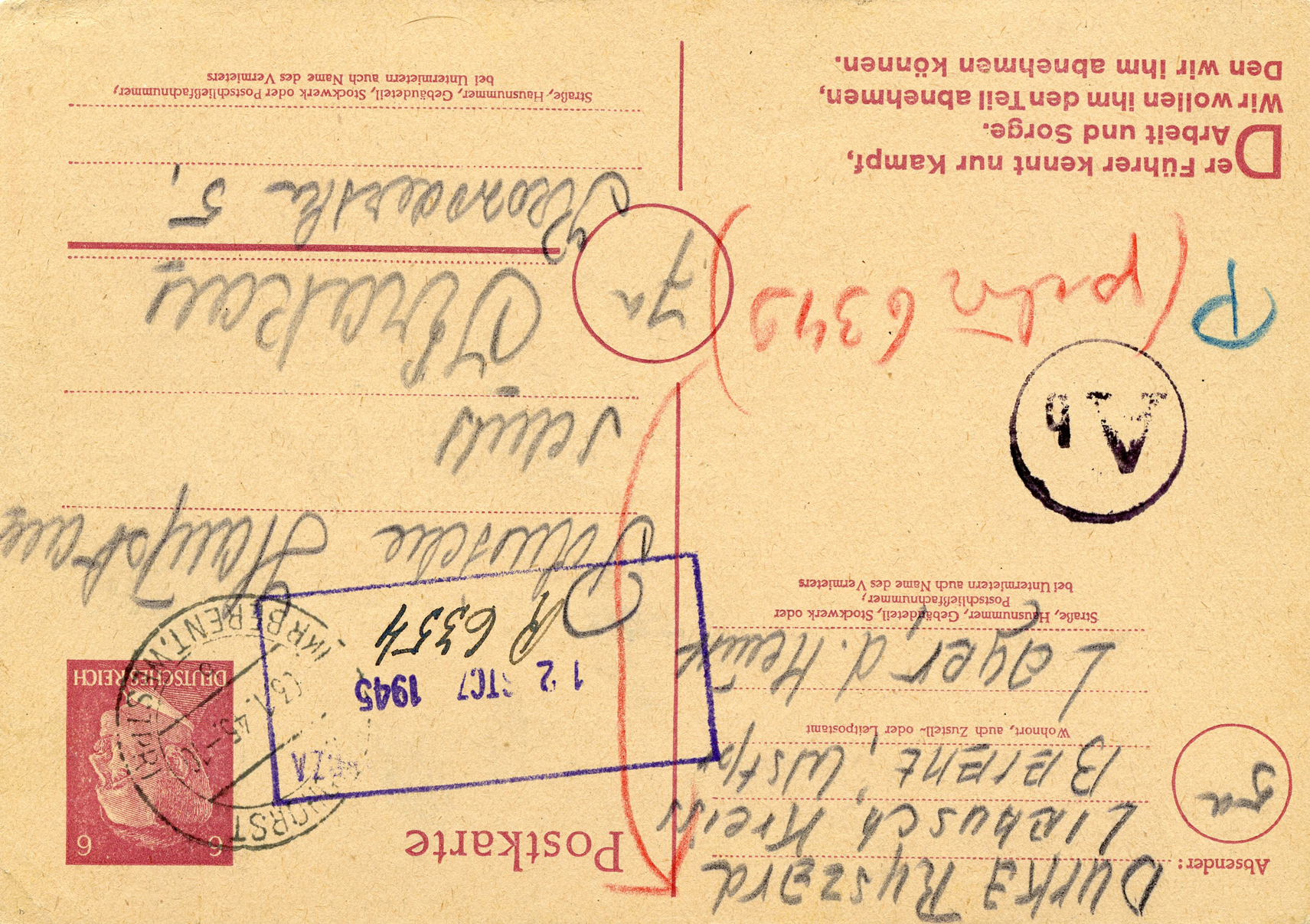
[Below: This was postmarked on May 3, 1945 in Berent (a part of West Prussia), Germany and was sent to Poland. The 'Ab' stamp is a censor's mark.]
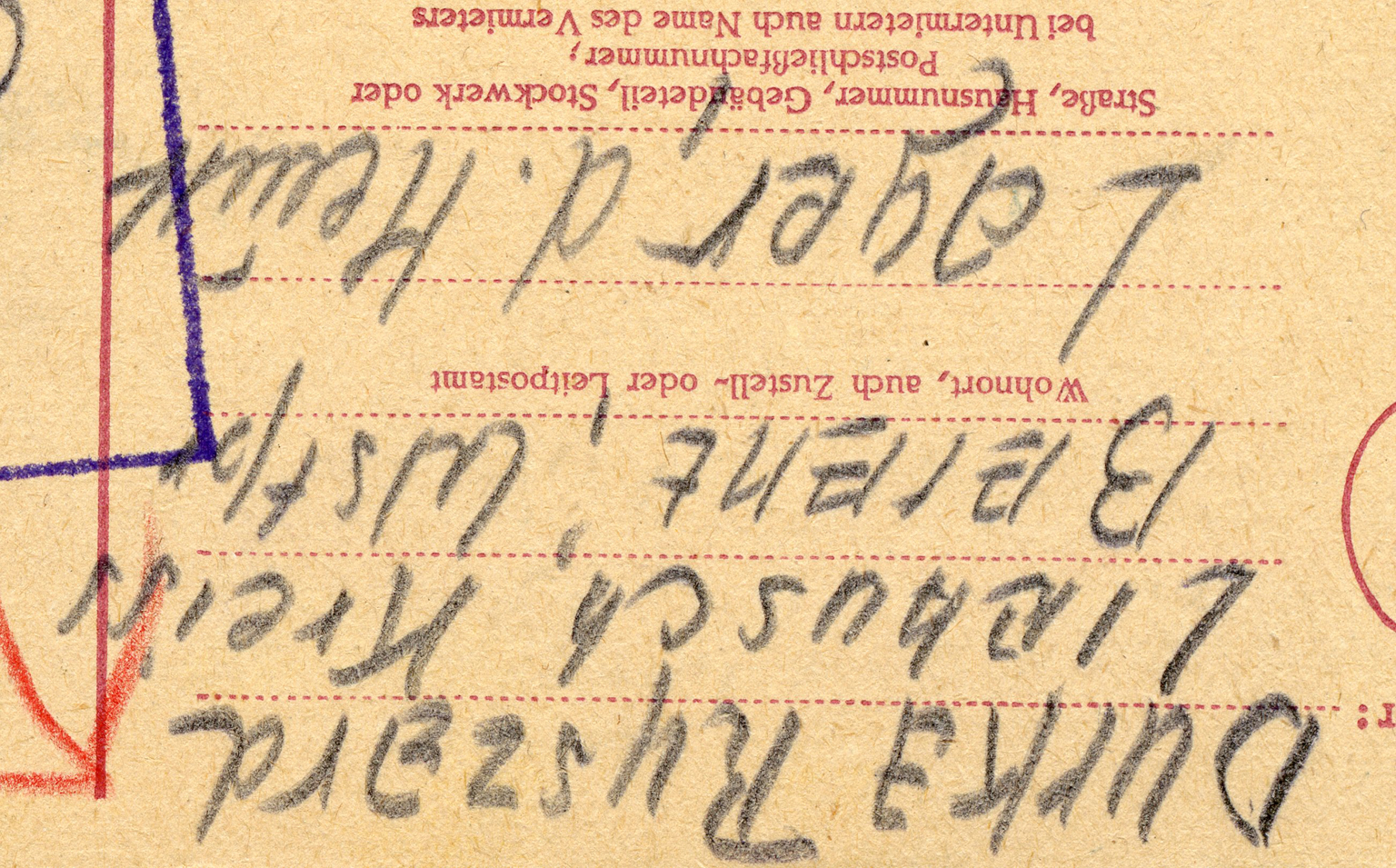
[Below: Close-up.]
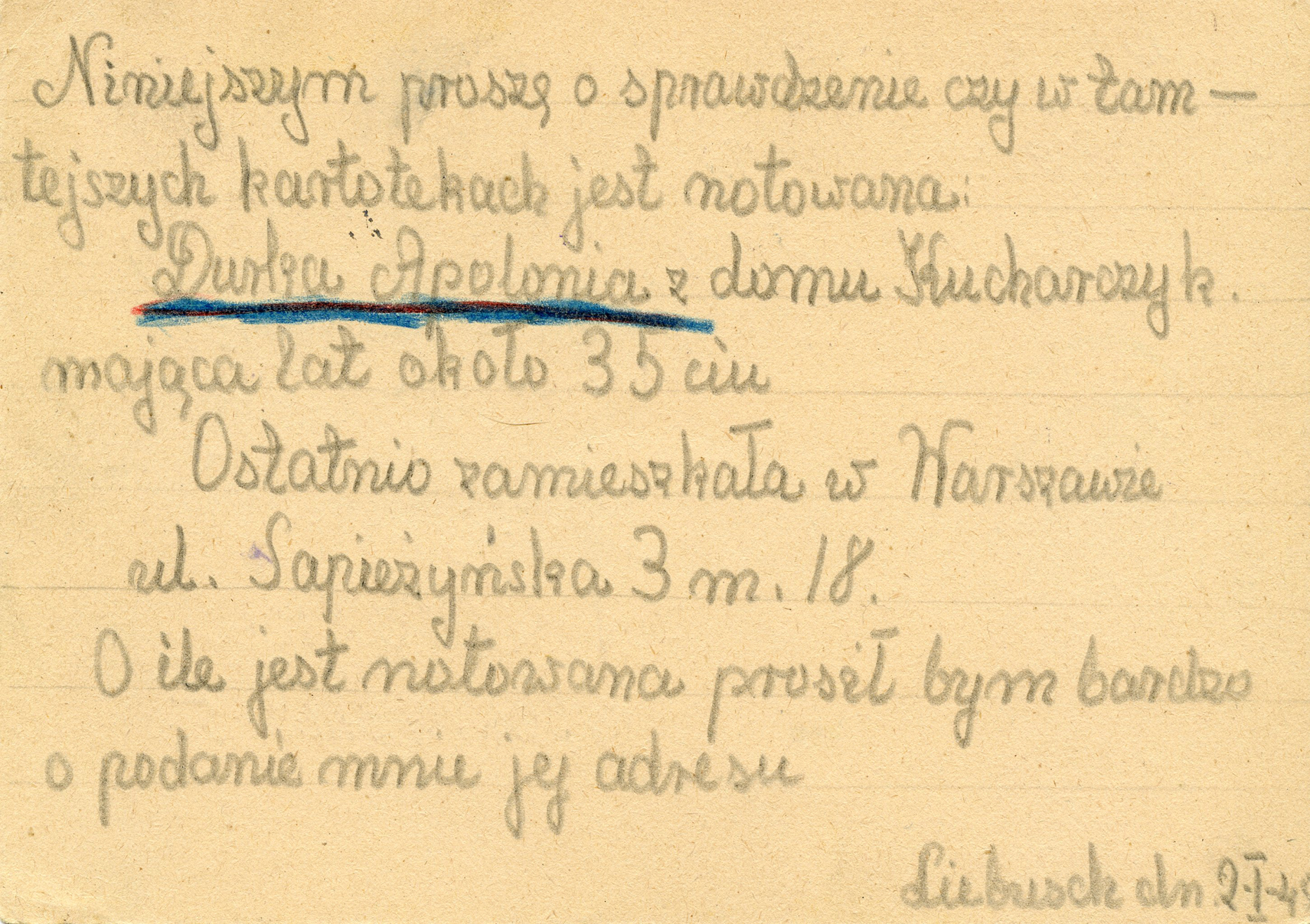
[Below: Reverse.]
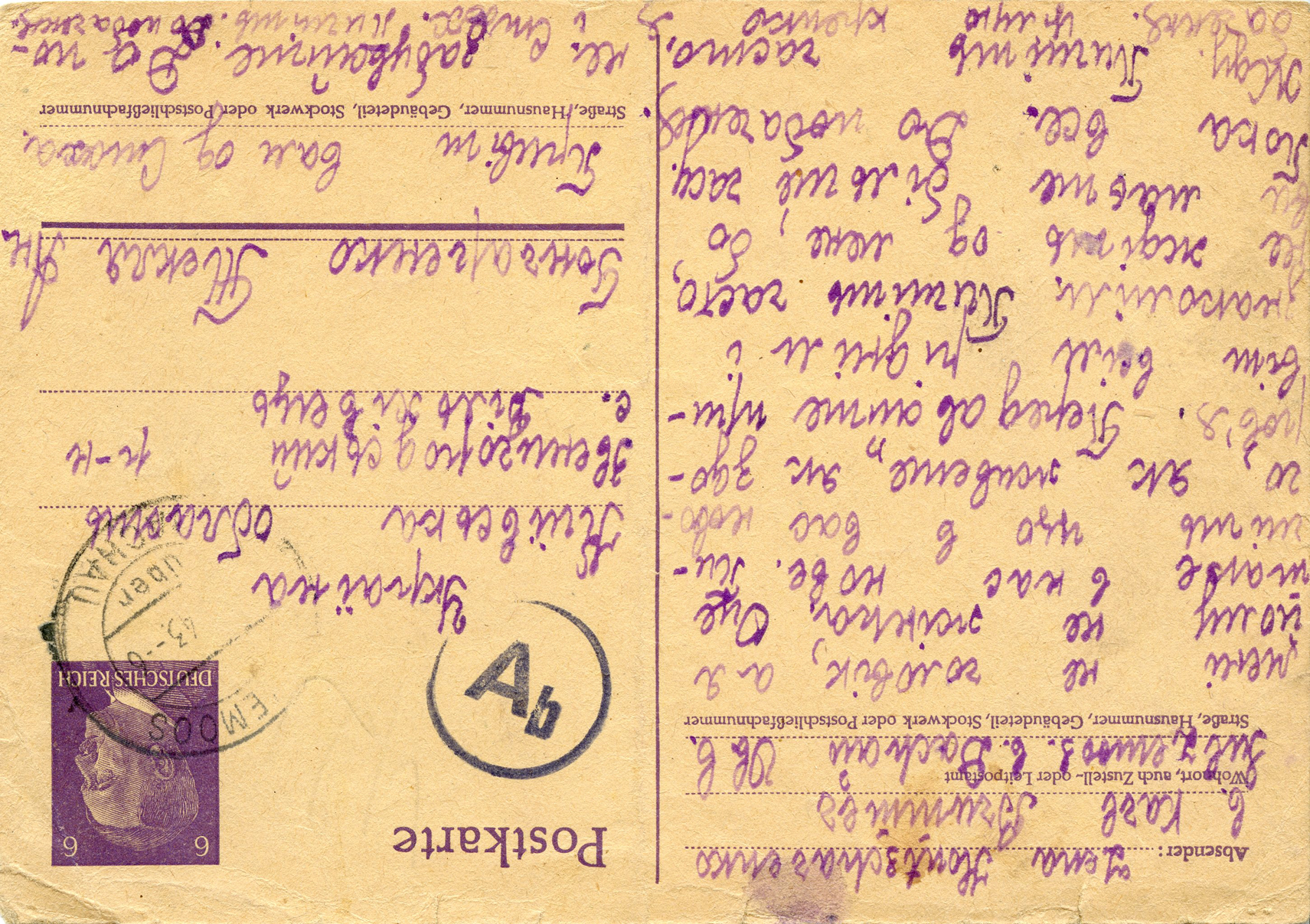
[Below: This was postmarked on 1943 in Sulzemoos (a municipality in the district of Dachau in Bavaria), Germany. The 'Ab' stamp is a censor's mark.]
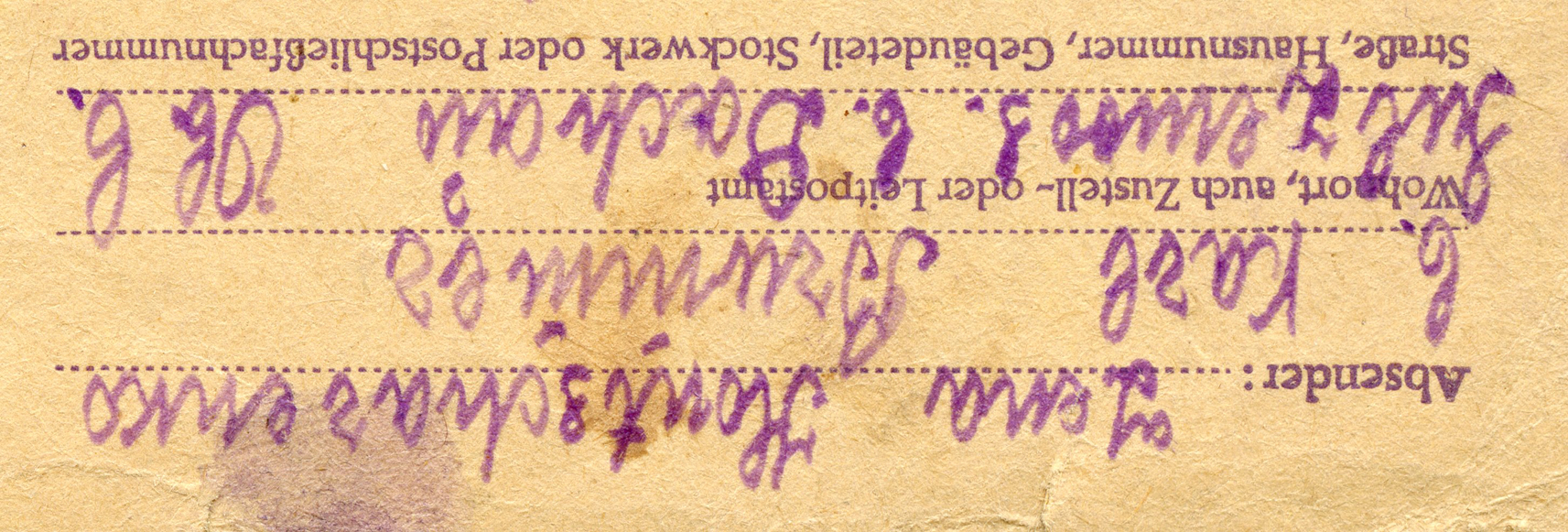
[Below: Close-up.]
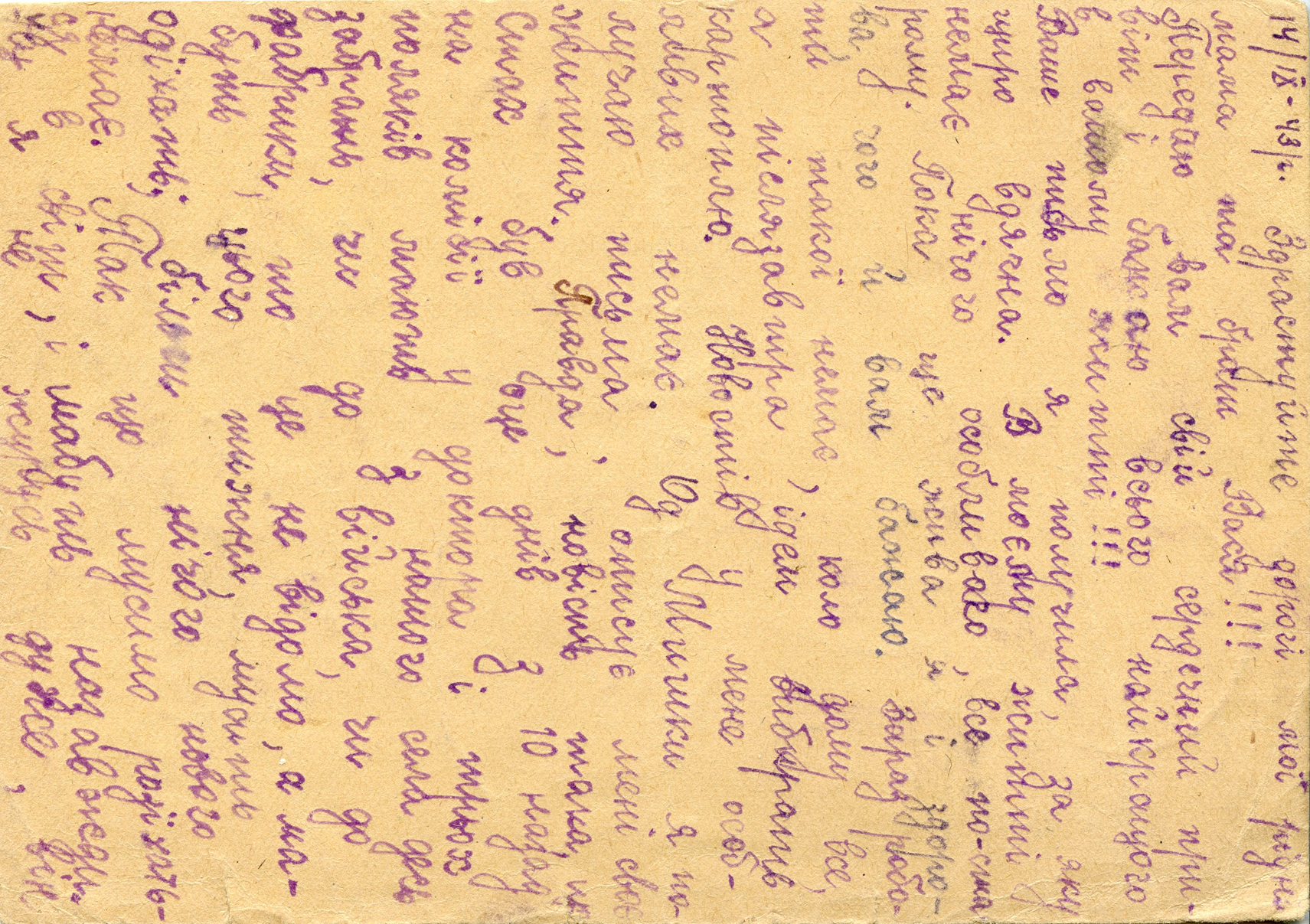
[Below: Reverse.]
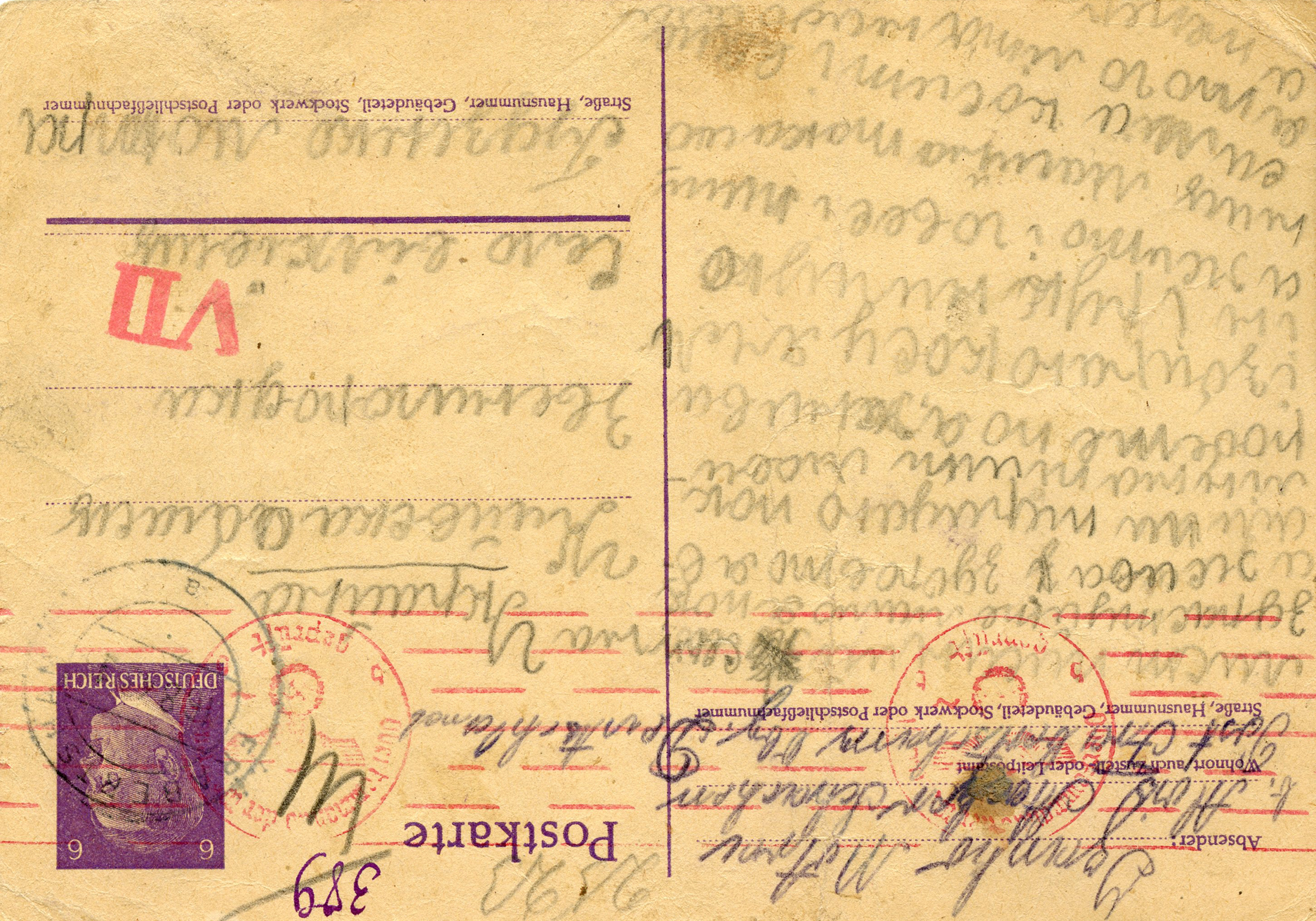
[Below: This was postmarked on August 16, 1943 in Frabertsham (a small populated place located in Bavaria), Germany. The red ink stripe is a mechanical censor's mark.]
[Below: Close-up.]
[Below: Reverse.]
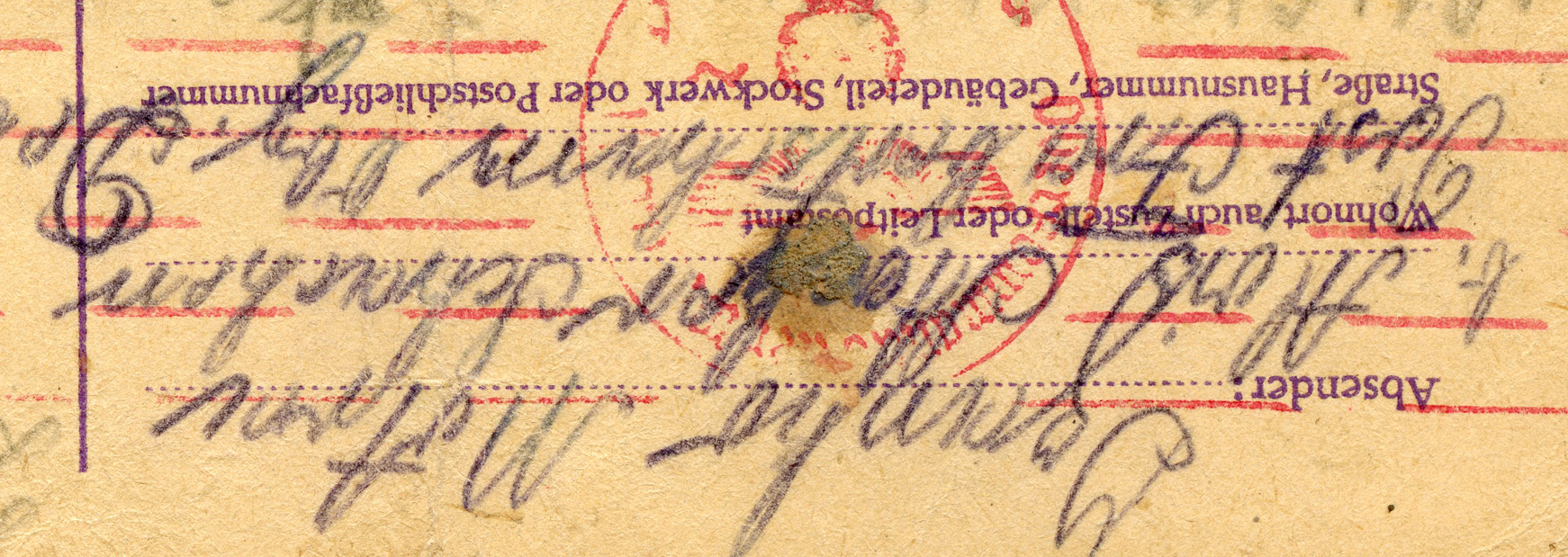
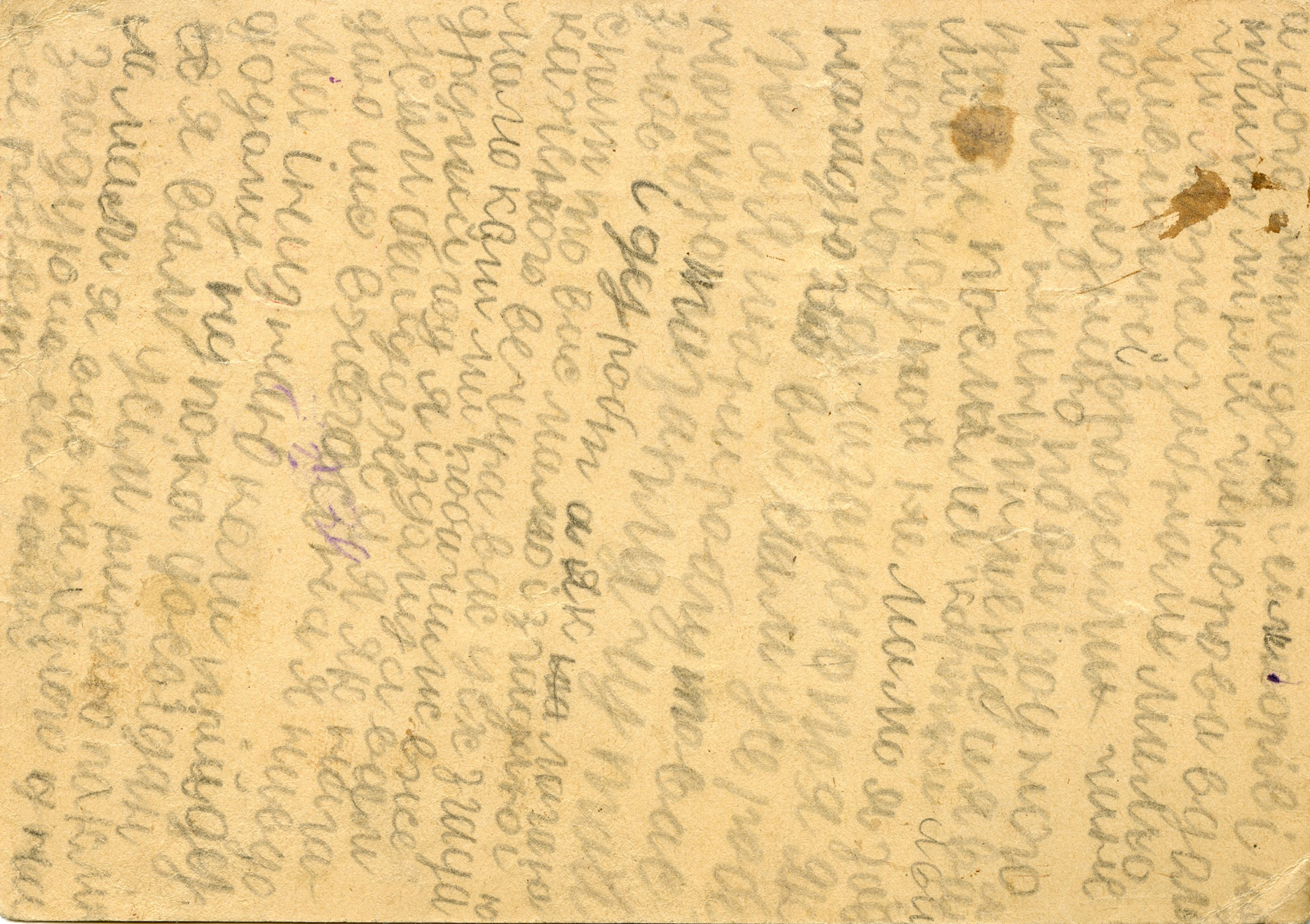
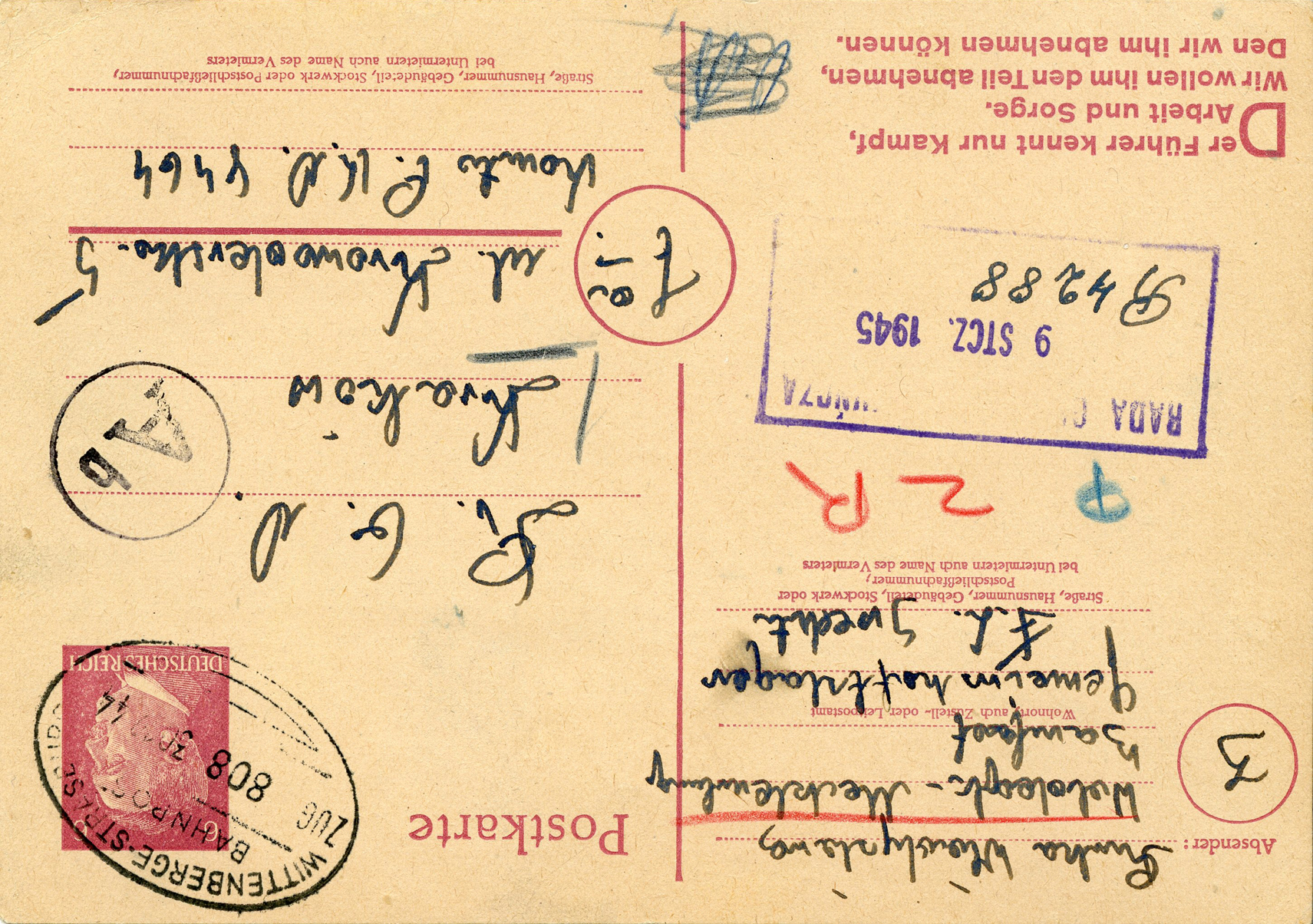
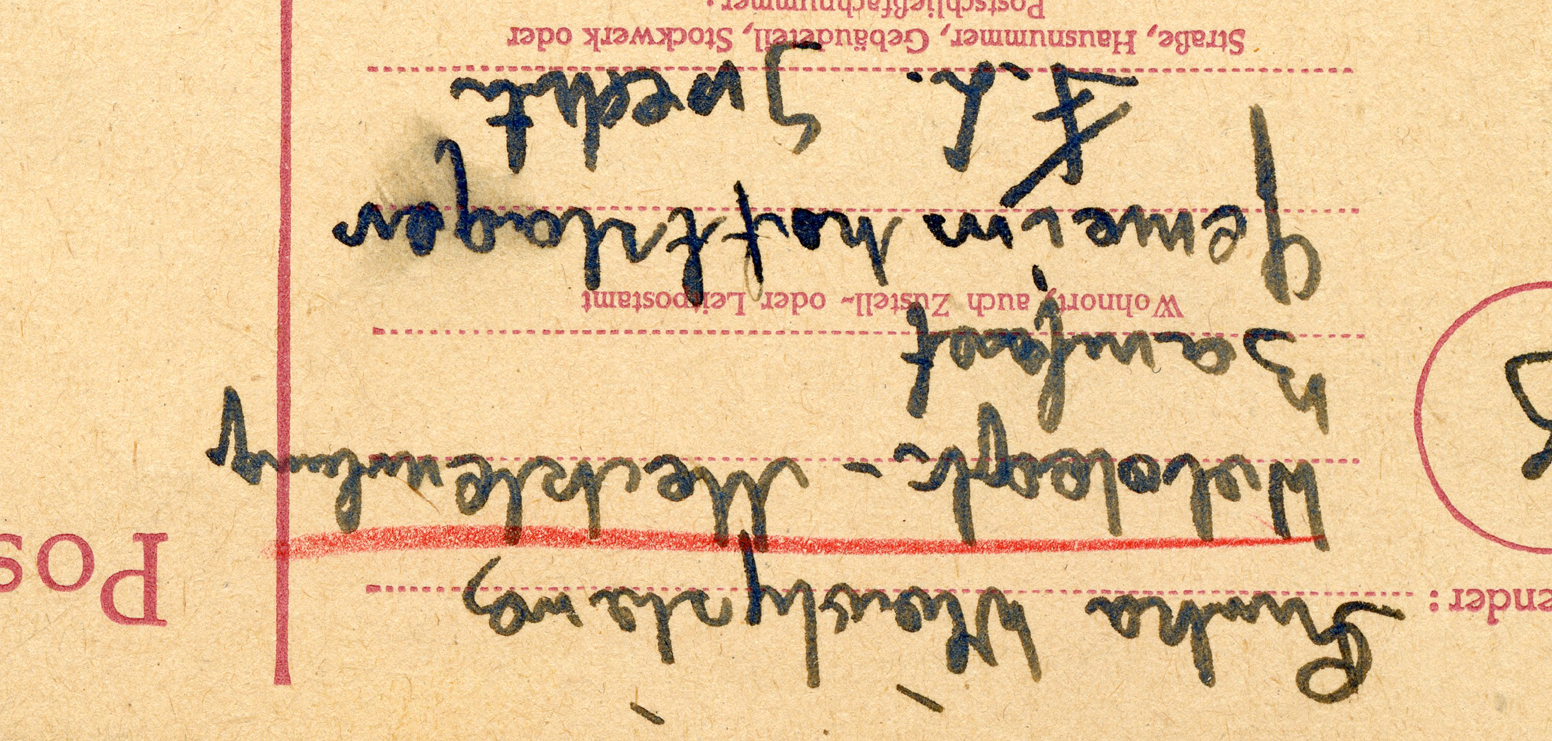
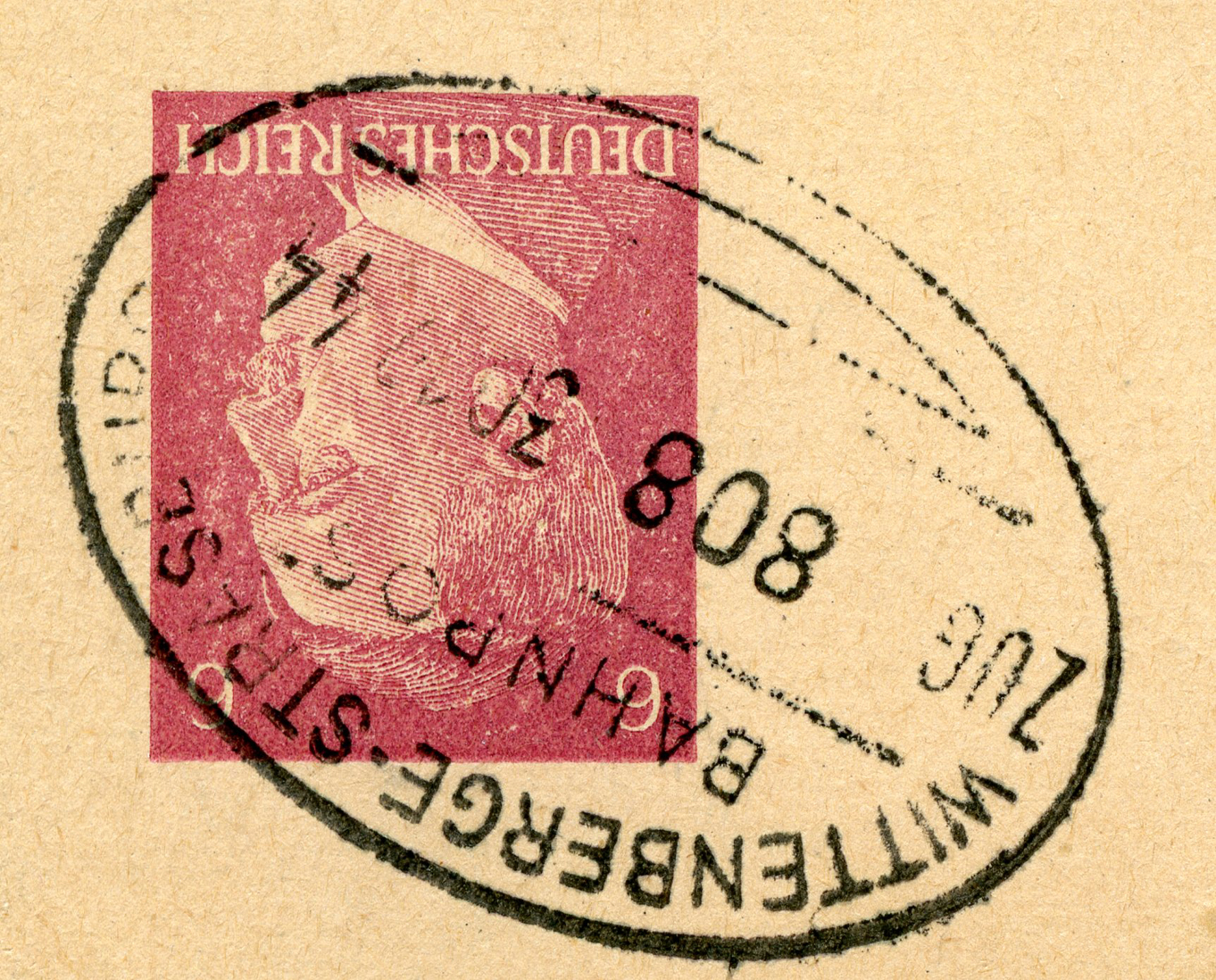
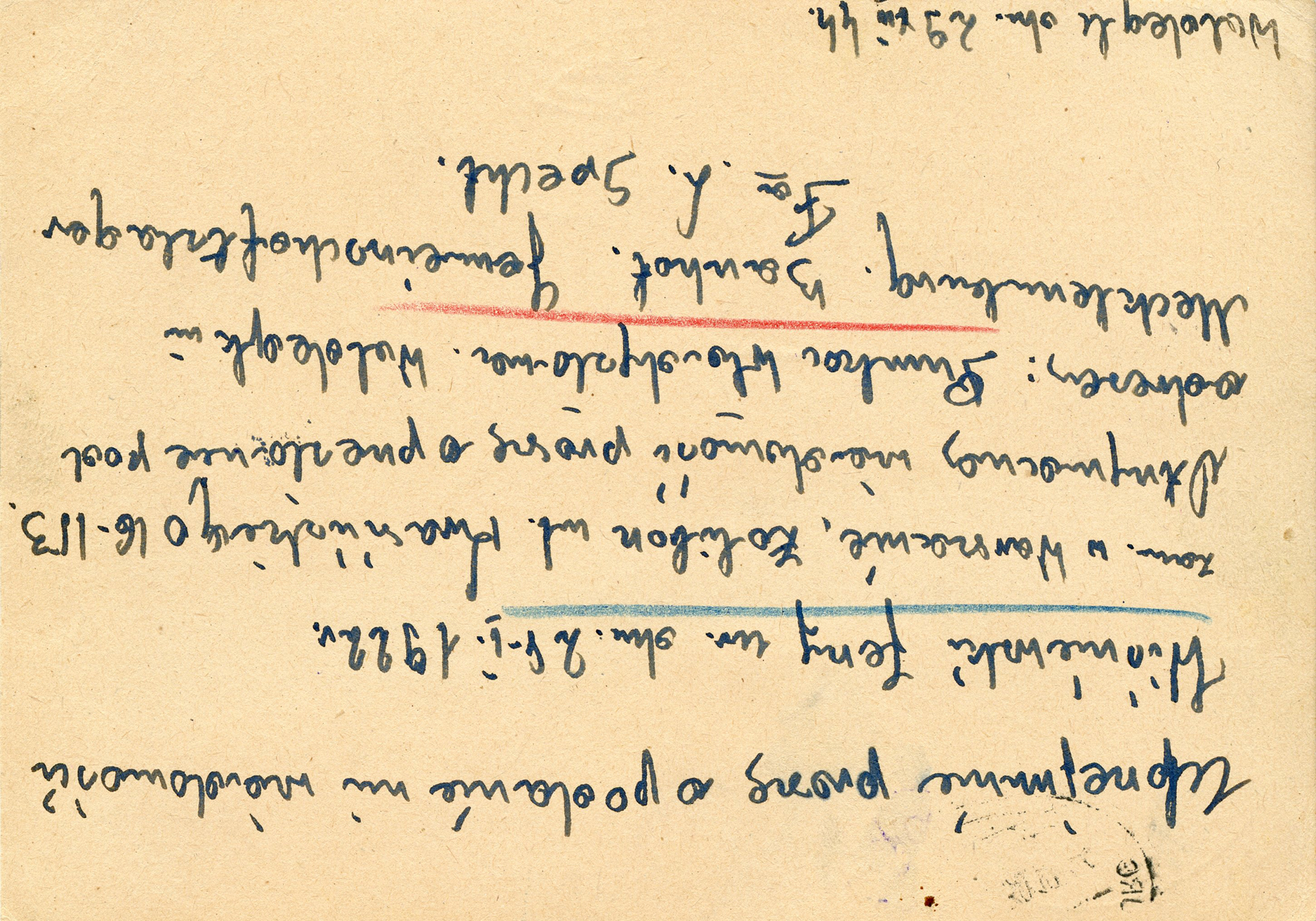
[Below: This was postmarked with an oval train post (the sender worked on the German railway) on December 30, 1944 in Wittenburg (west of Mecklenburg-Vorpommern, Wittenberge-Strasburg is a railway line), Germany and sent to Poland. The black ink 'Ab' is a censor's mark.]
[Below: Close-up.]
[Below: Close-up.]
[Below: Reverse.]
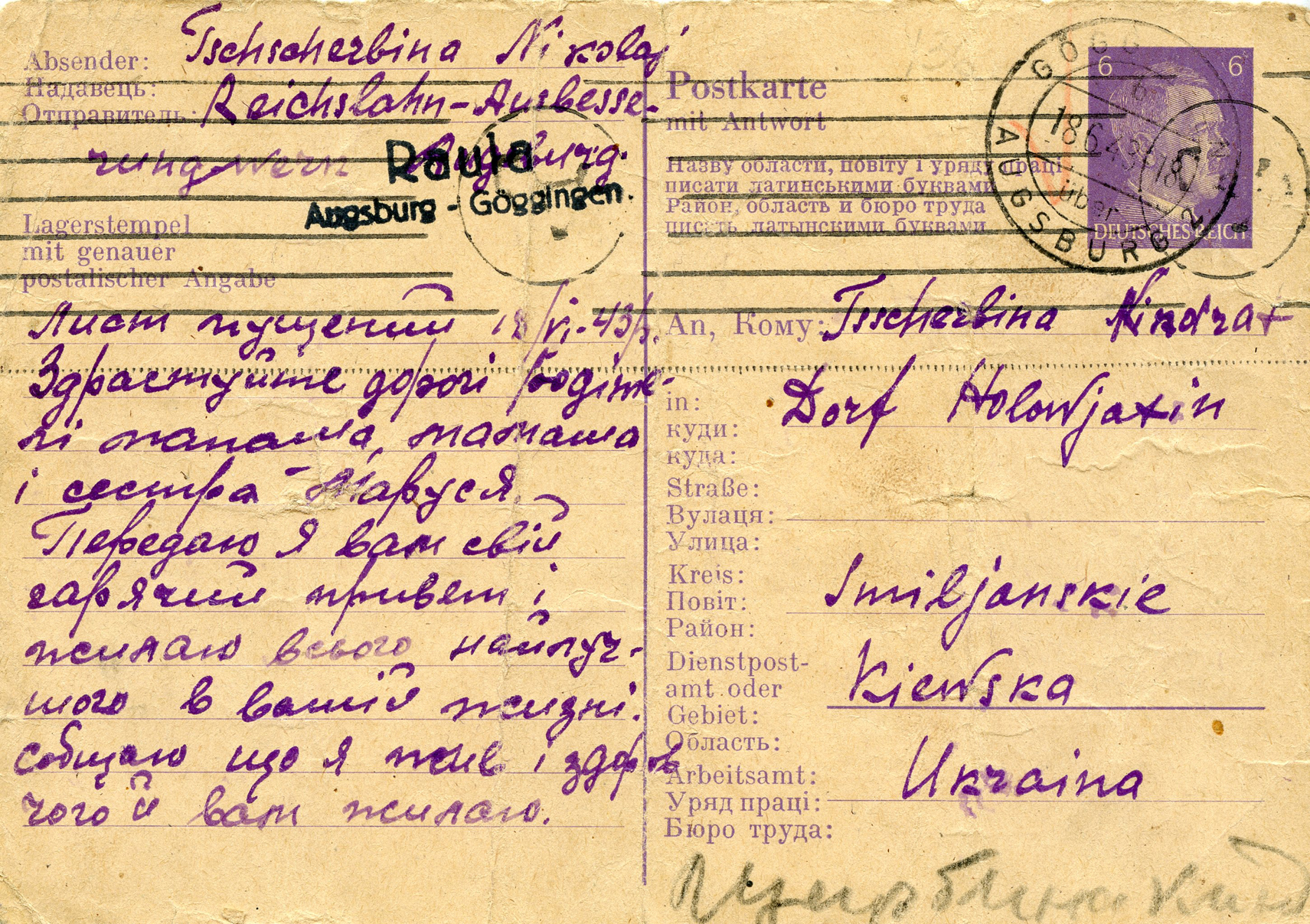
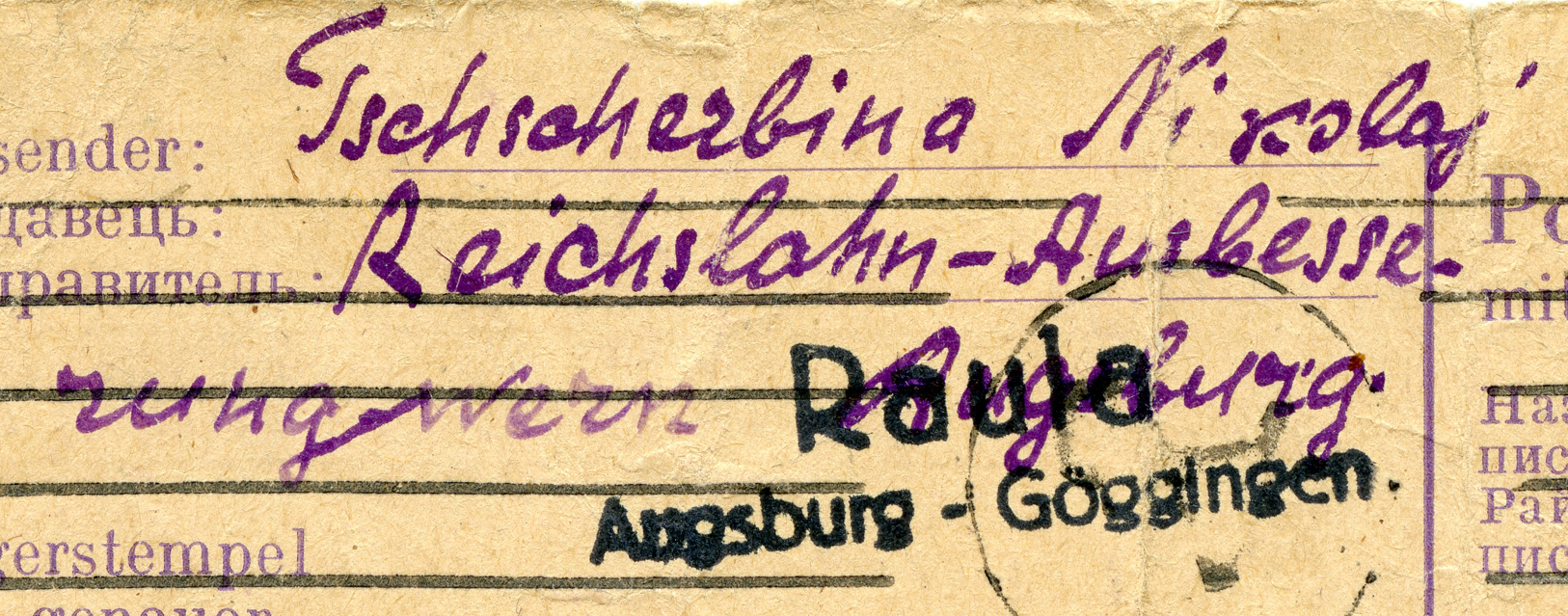
[Below: This was postmarked on June 18, 1943 in Augsburg-Göggingen (located in the western part of Augsburg), Germany and sent to Ukraine. The black ink 'Ab' is a censor's mark.]
[Below: Close-up.]
[Below: Reverse.]
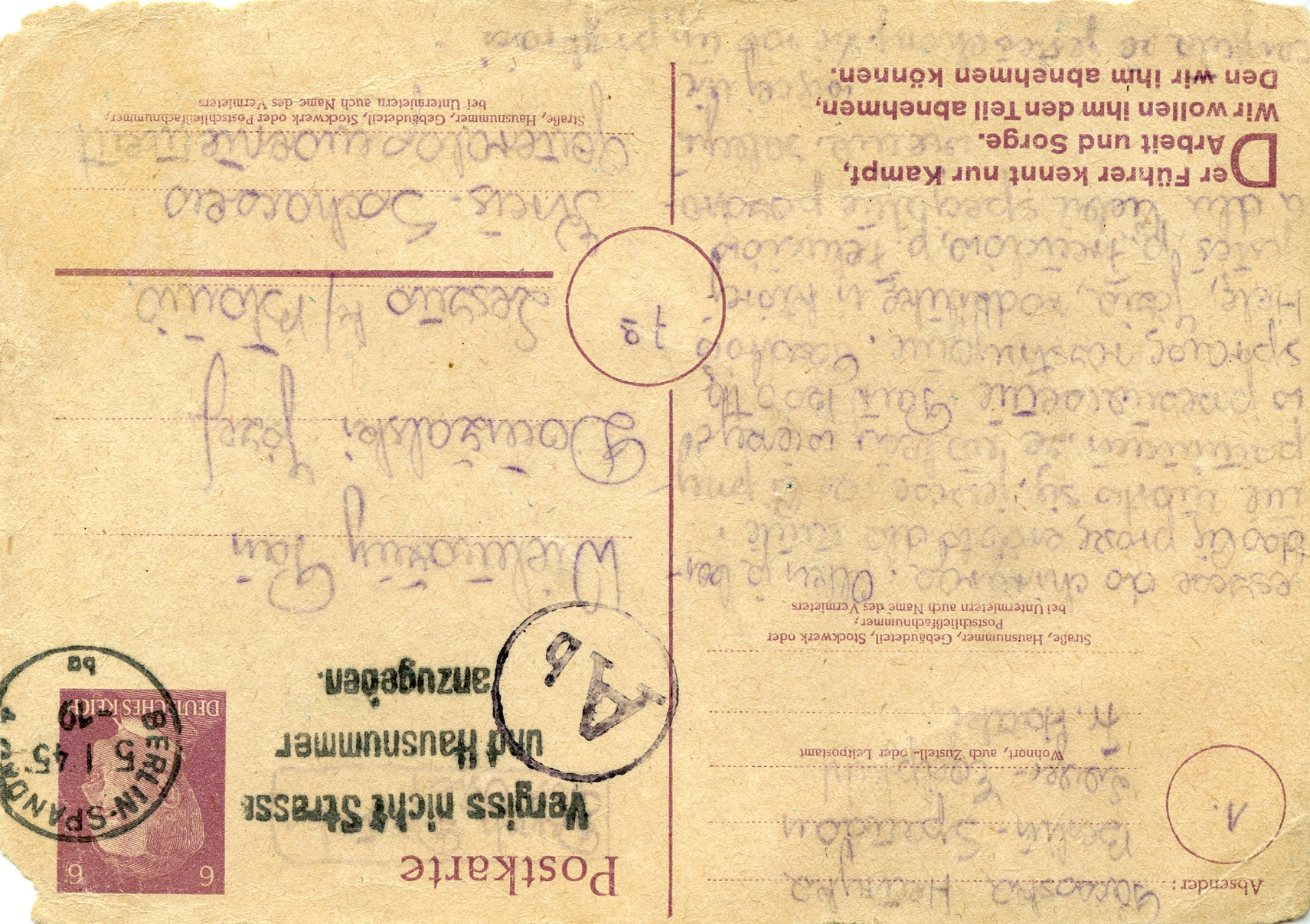
[Below: This was postmarked on January 5, 1945 in Berlin-Spandau, Germany. The black ink 'Ab' is a censor's mark.]
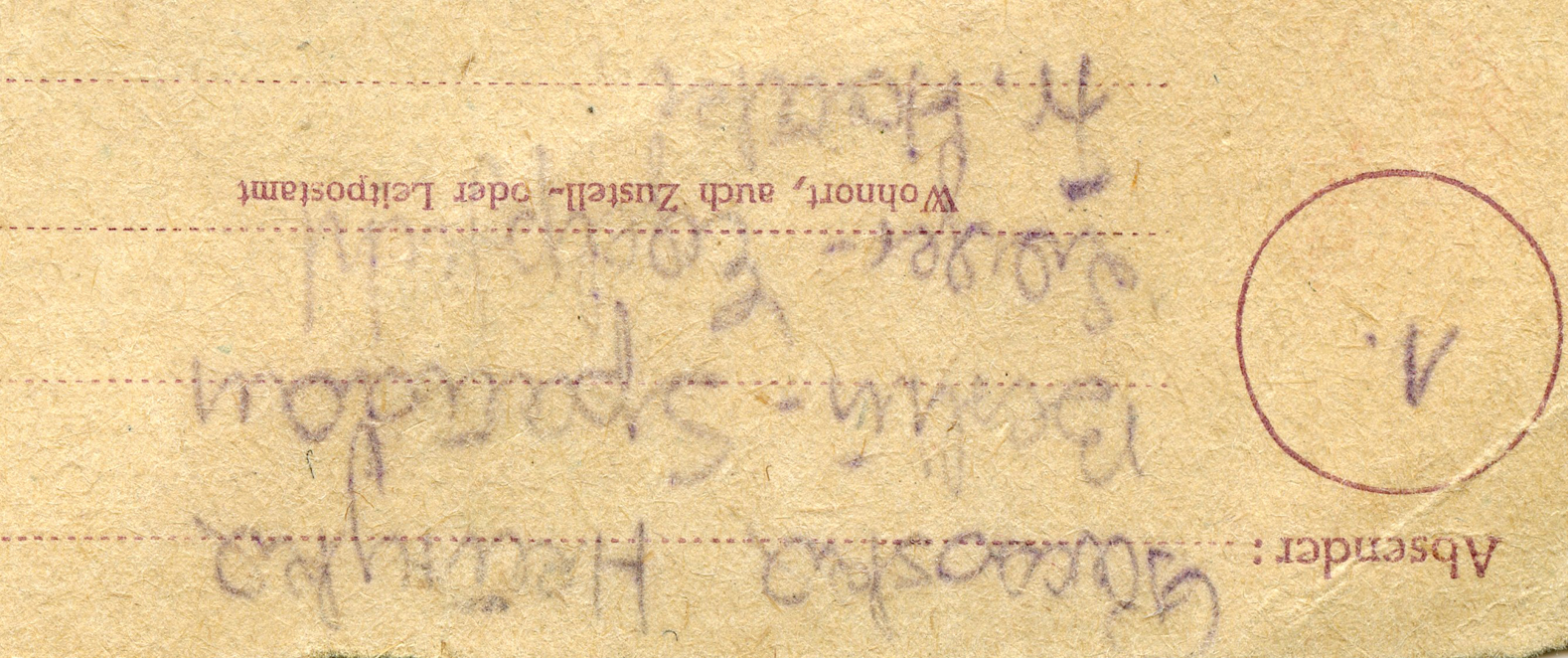
[Below: Close-up.]
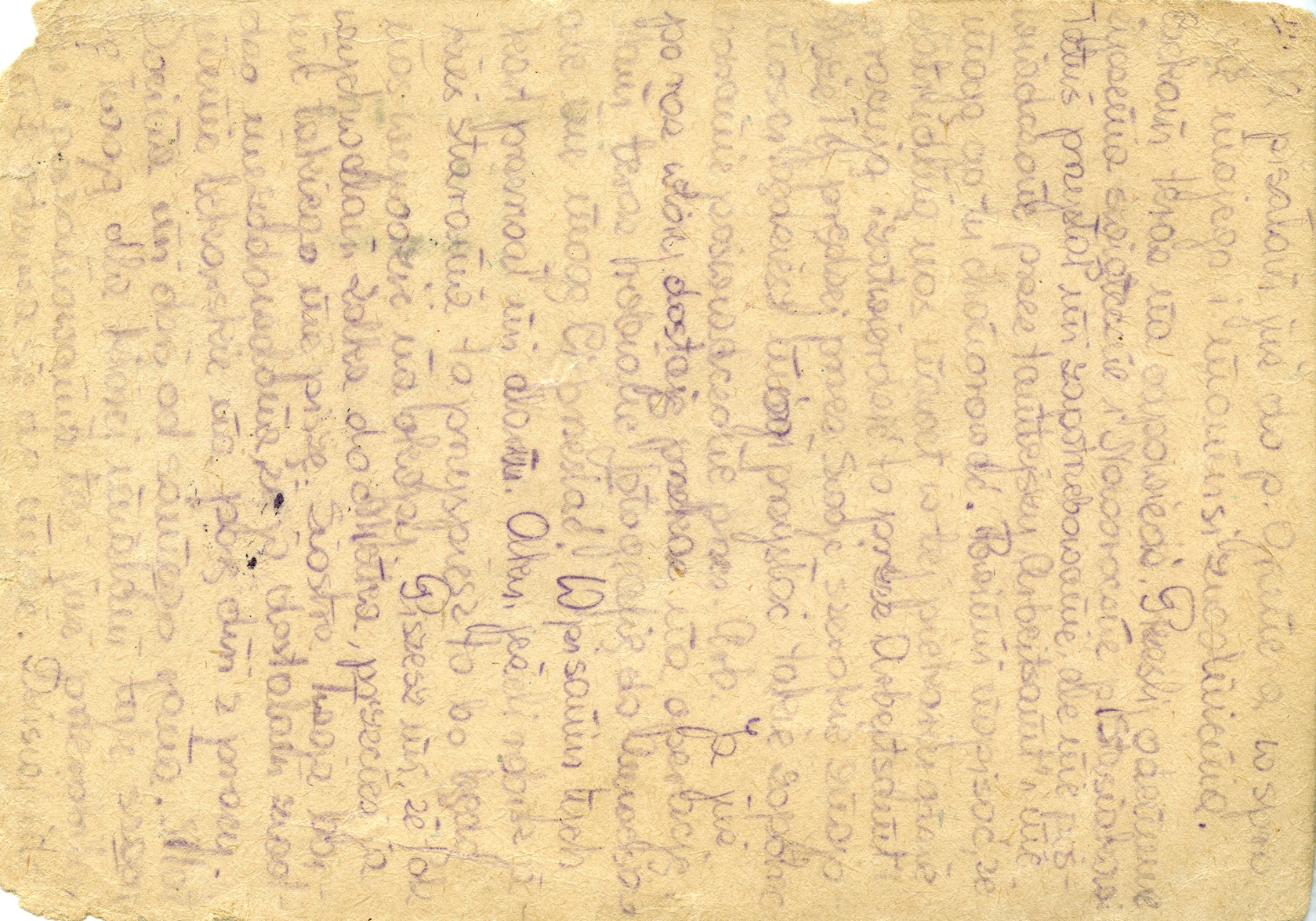
[Below: Reverse.]
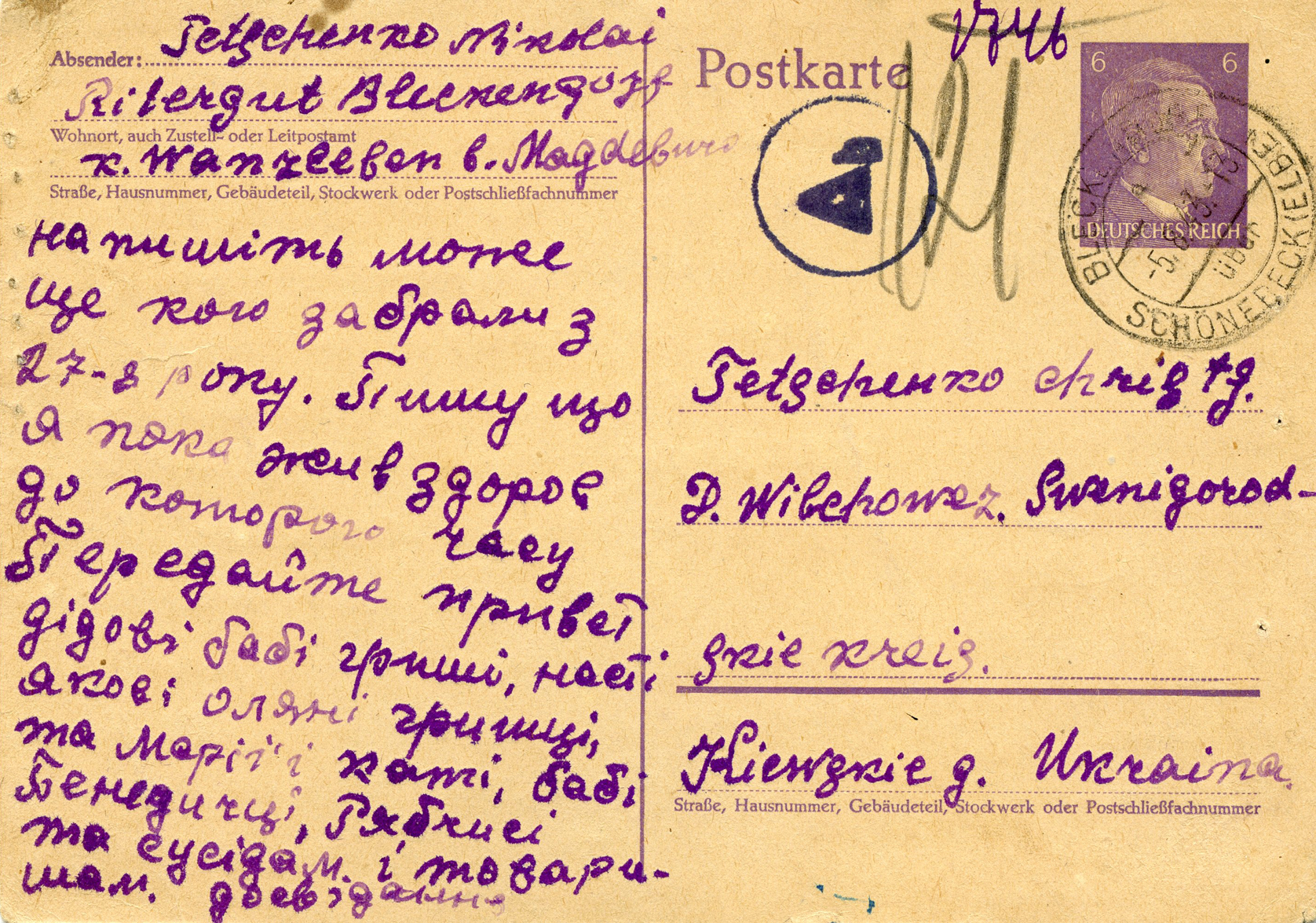
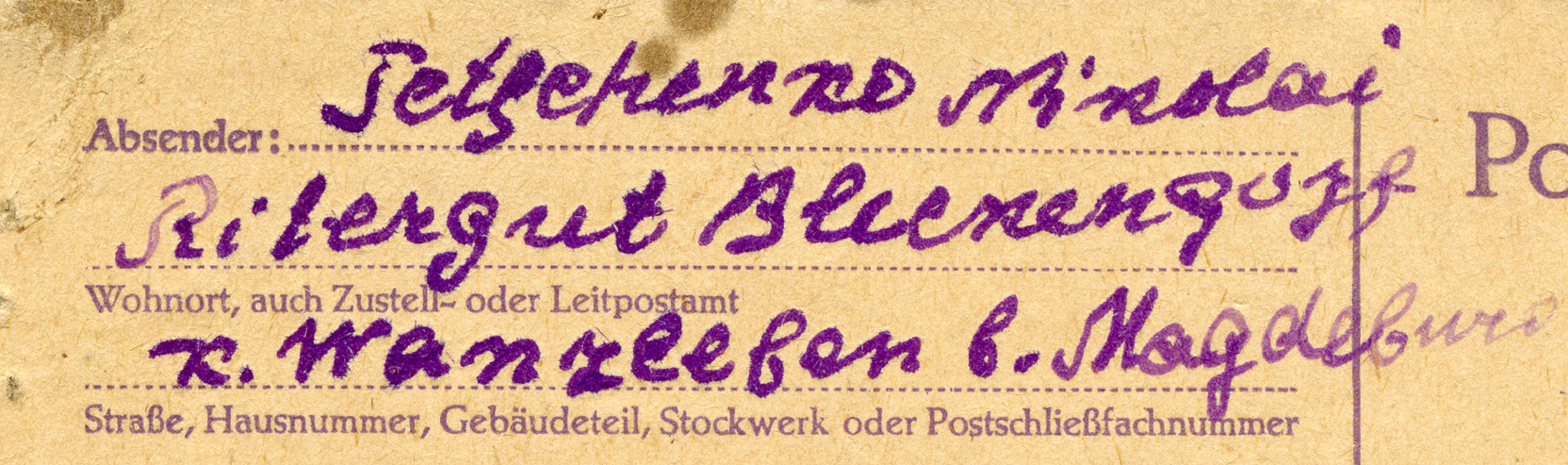
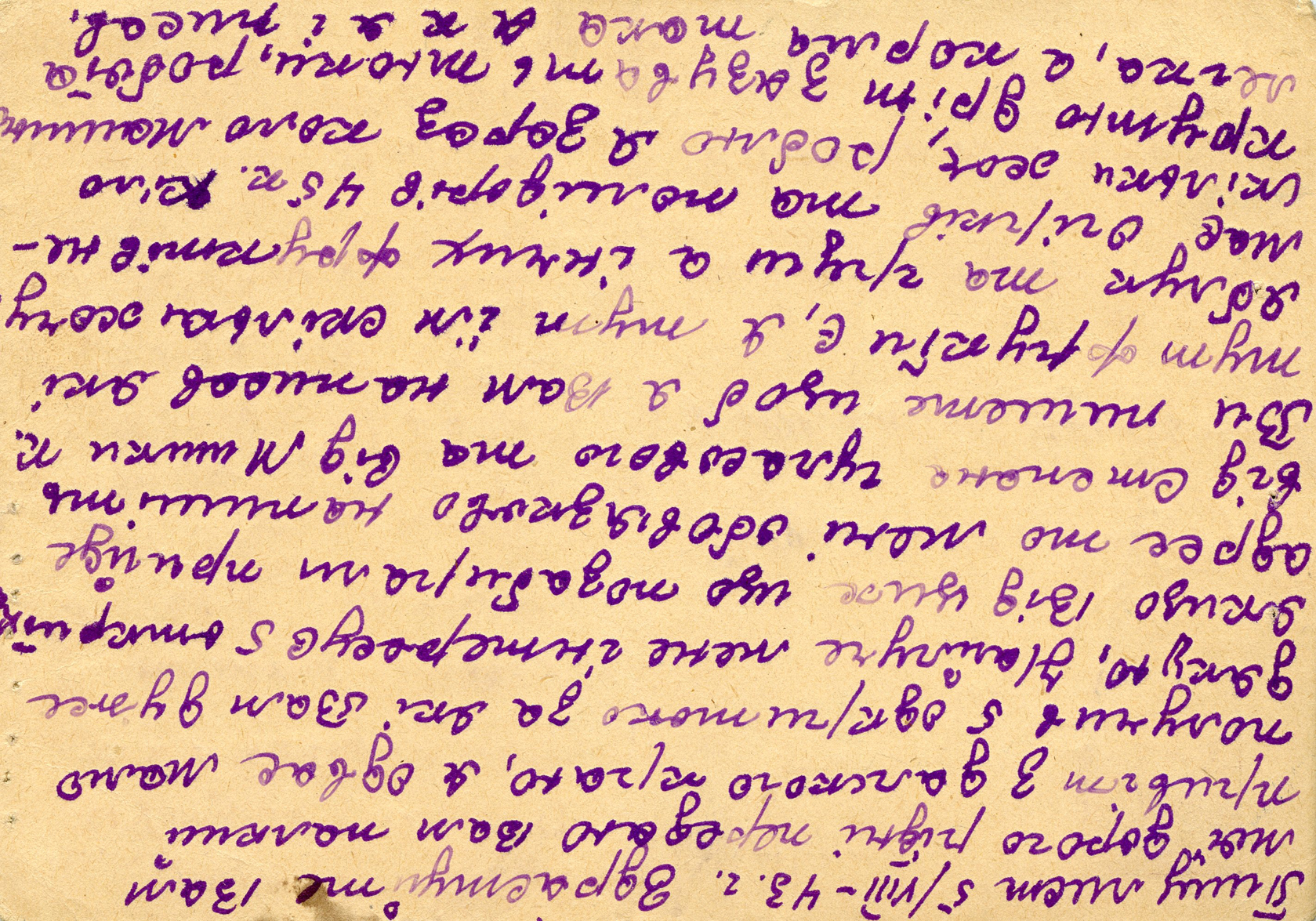
[Below: This was postmarked on August 5, 1943 in Schönebeck (Elbe), a town in the district of Salzlandkreis, in Saxony-Anhalt, Germany. The black ink 'Ab' is a censor's mark.]
[Below: Close-up.]
[Below: Reverse.]
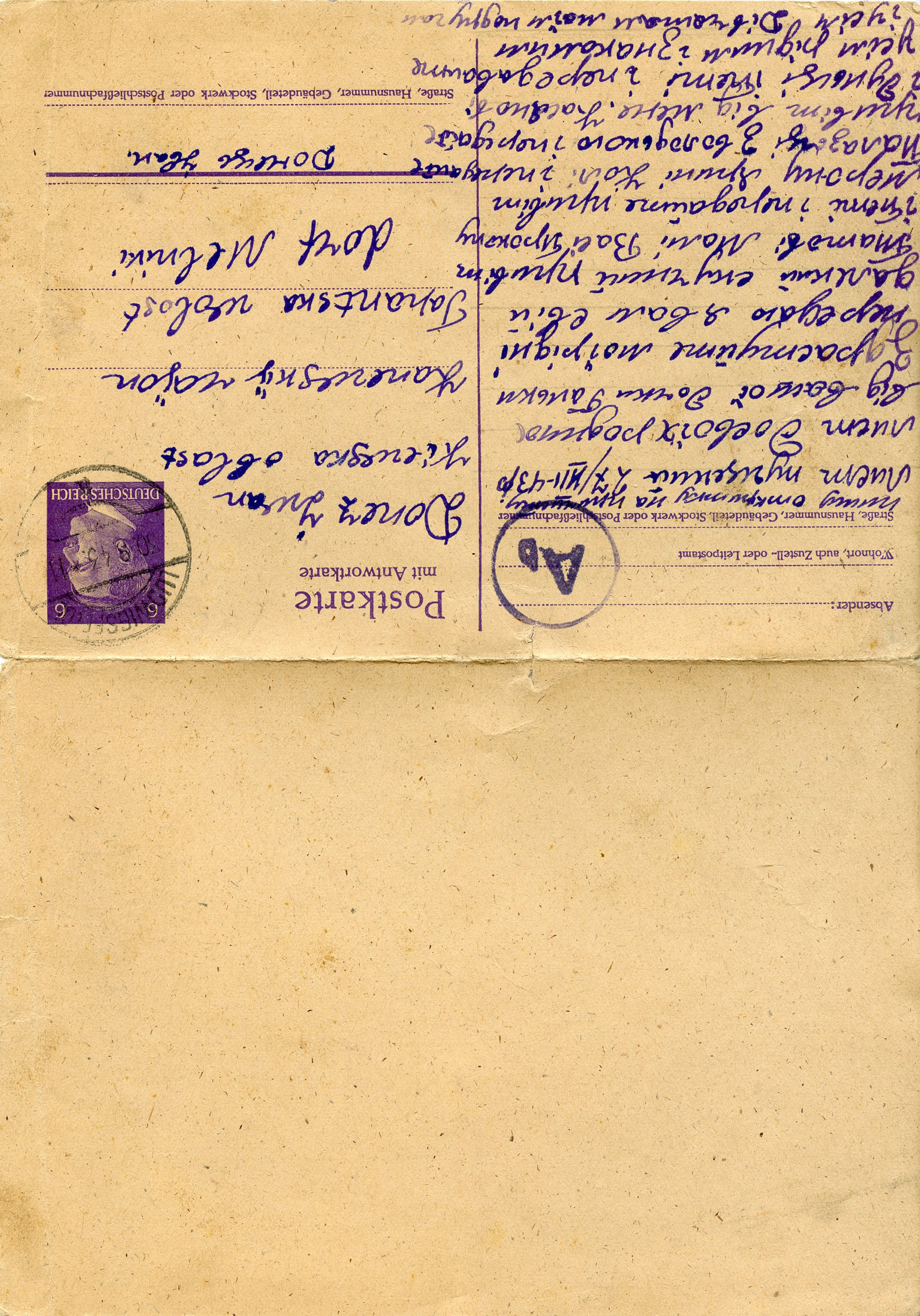
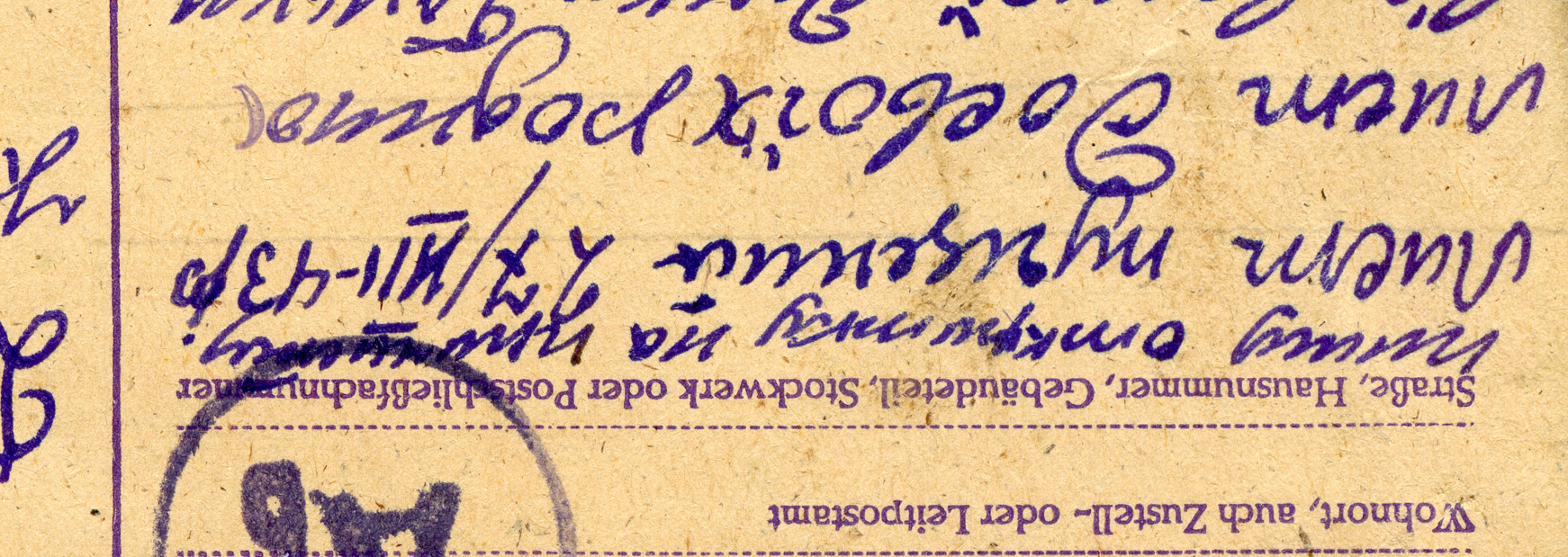
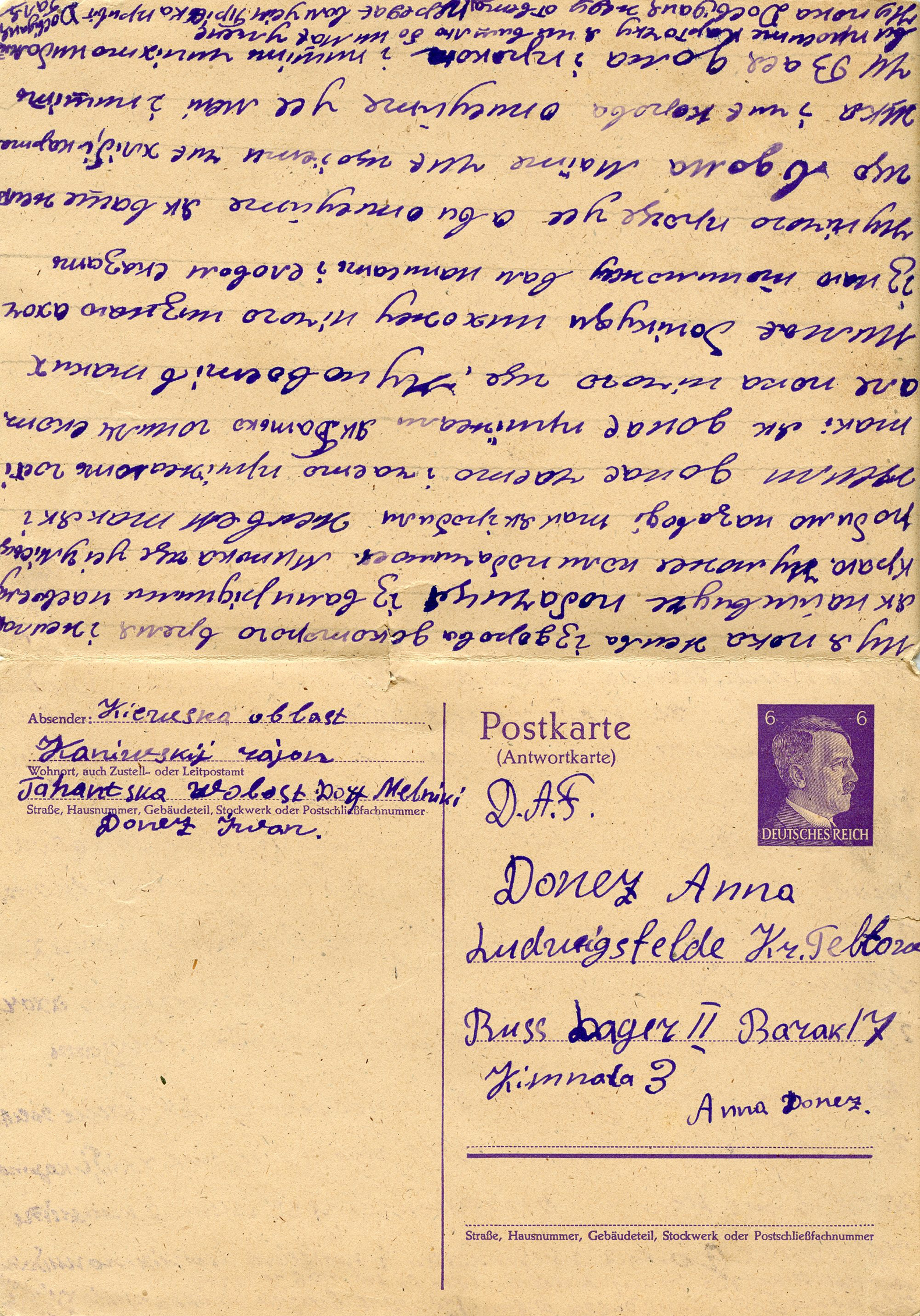
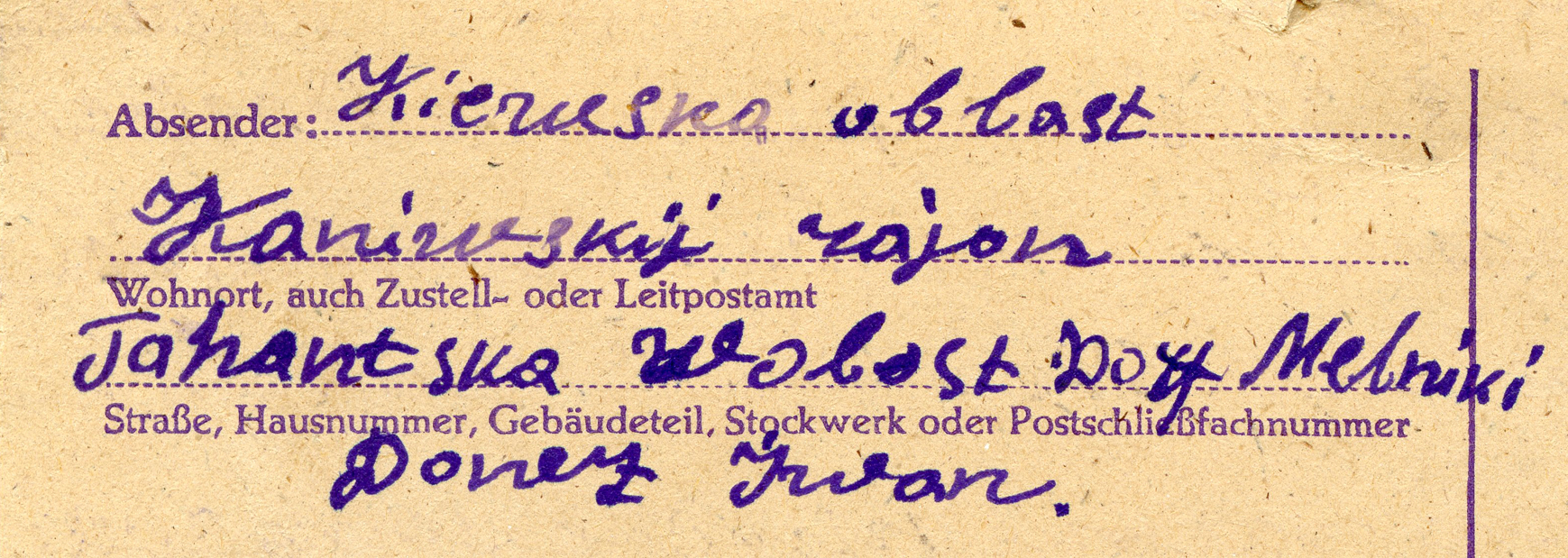
[Below: This was postmarked on August 30, 1943 in Ludwigsfelde (a town located in the state of Brandenburg, just south of Berlin) Germany. You'll note there are two postcards attached, this is a reply card (they never used it, however). The black ink 'Ab' is a censor's mark.]
[Below: Close-up.]
[Below: Reverse.]
[Below: Close-up.]
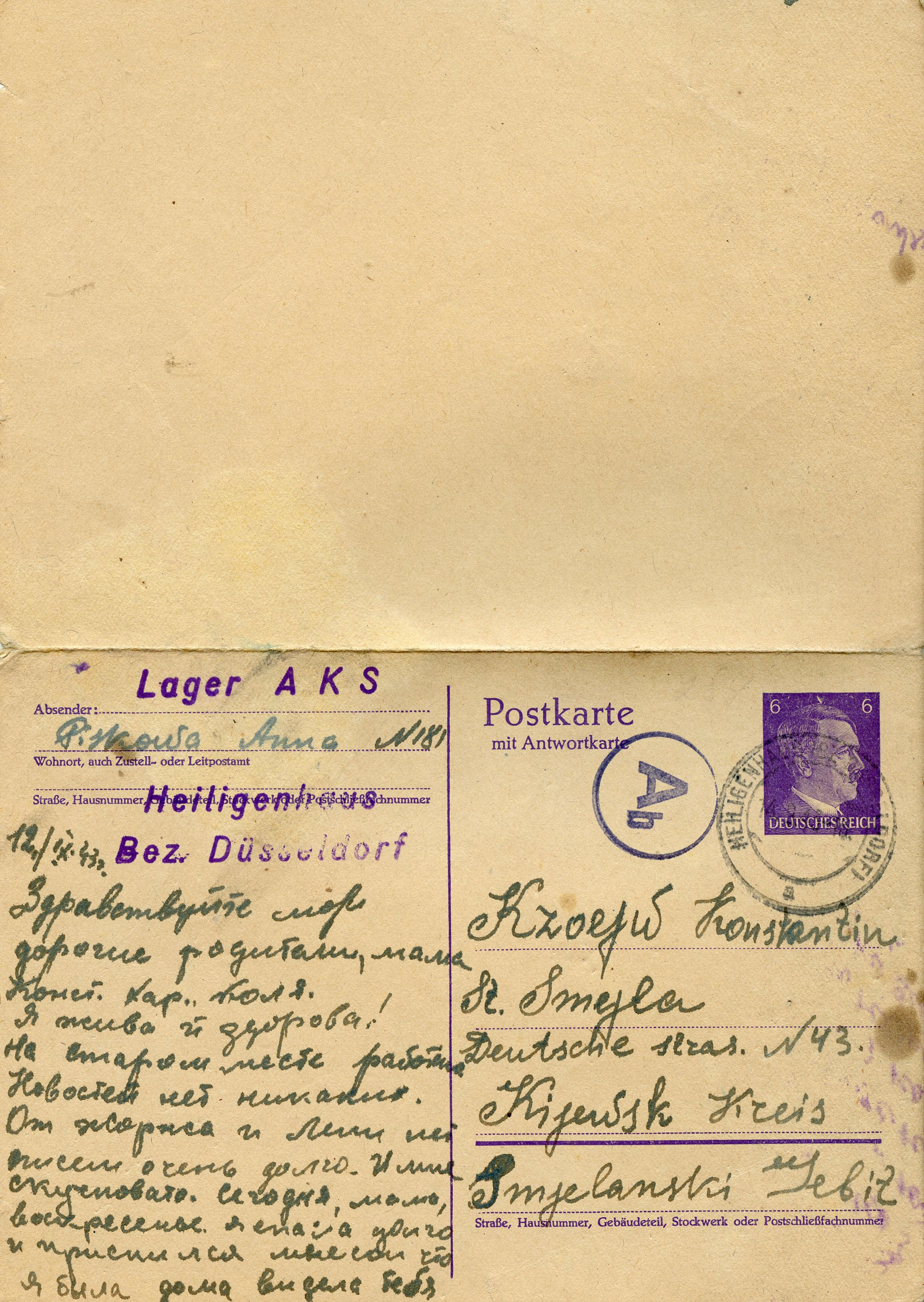
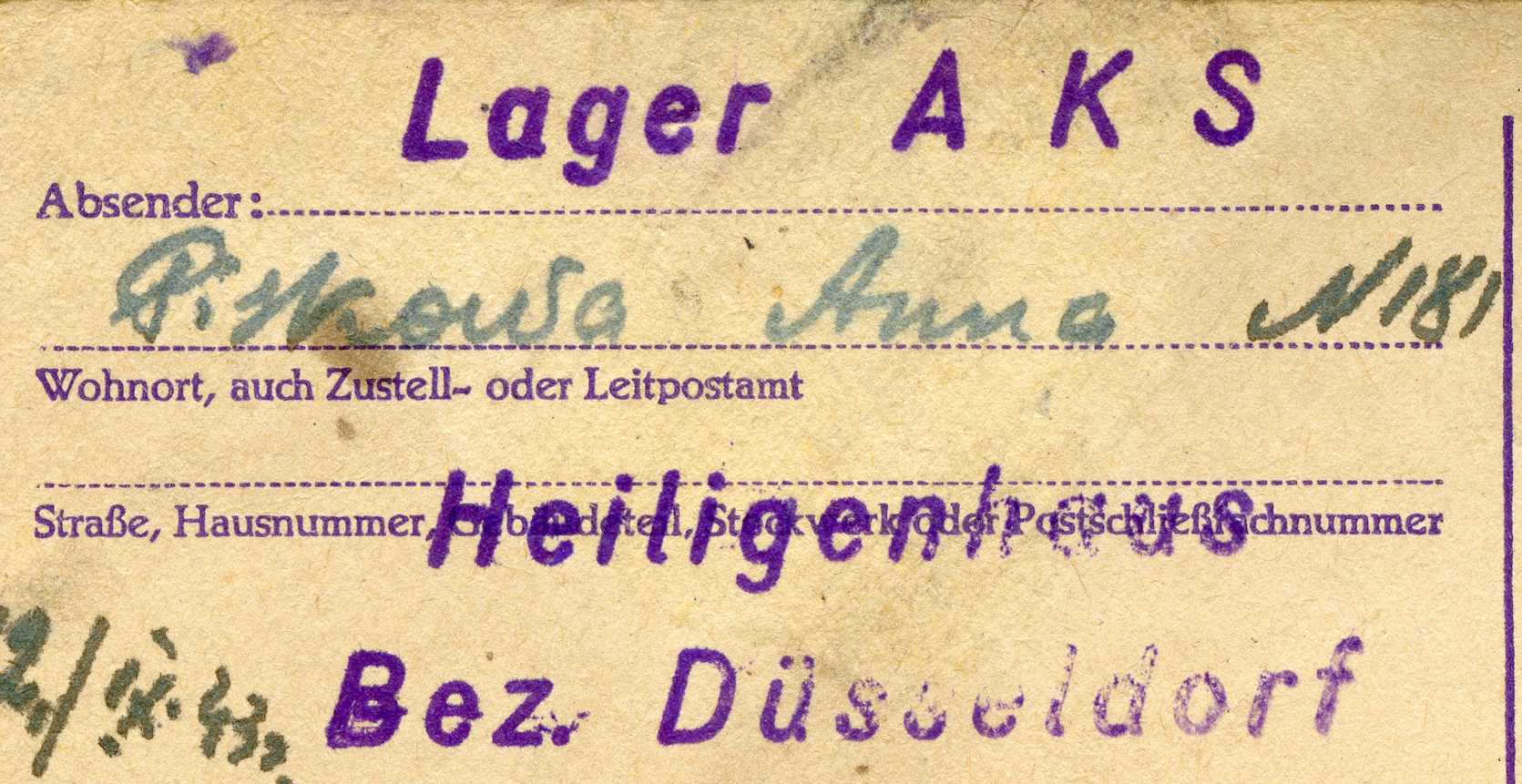
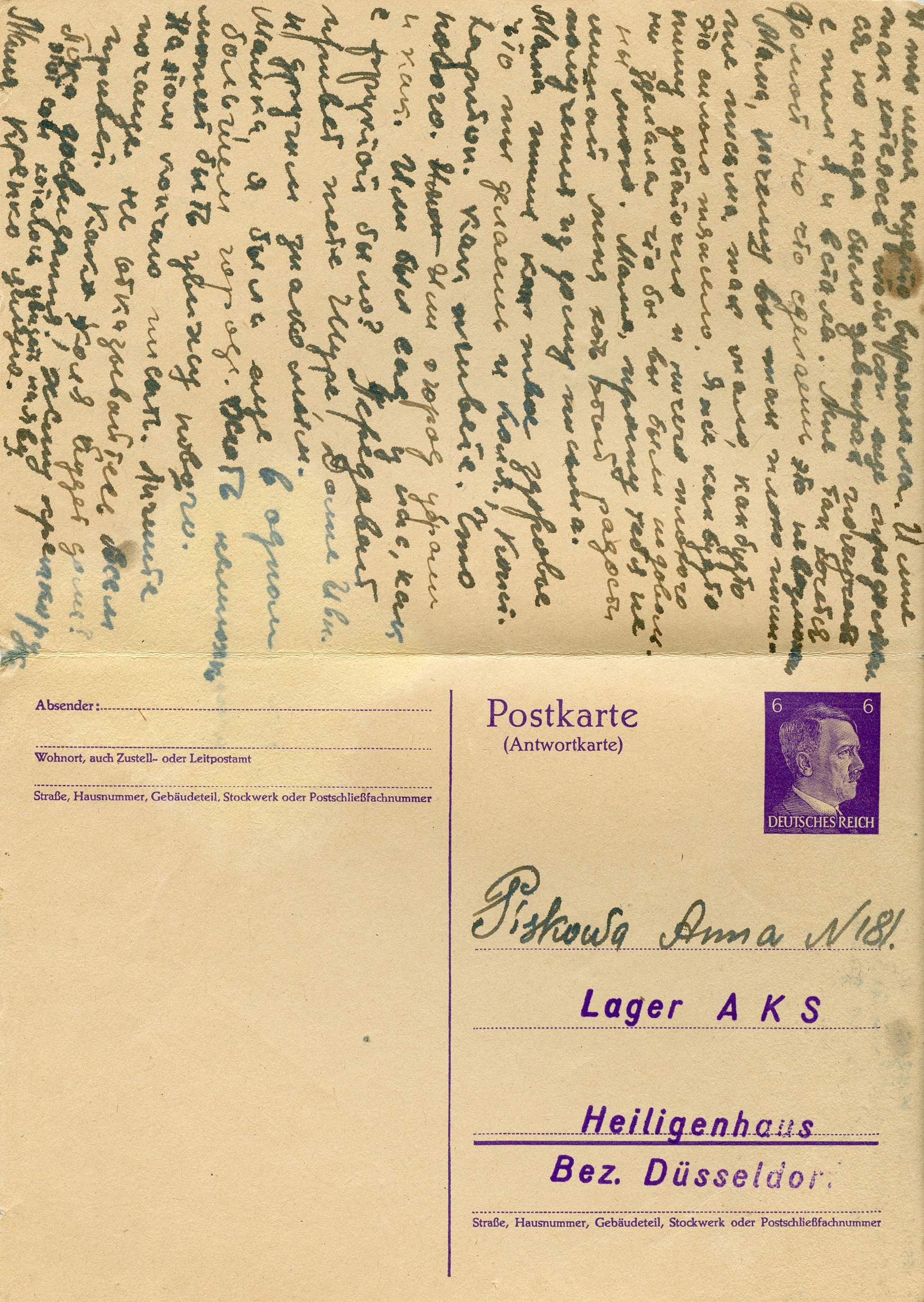
[Below: This was postmarked on September 14, 1943 in Heiligenhaus (a town in the district of Mettmann, in North Rhine-Westphalia) Germany. You'll note there are two postcards attached, this is a reply card (they never used it, however). The black ink 'Ab' is a censor's mark.]
[Below: Close-up.]
[Below: Reverse.]
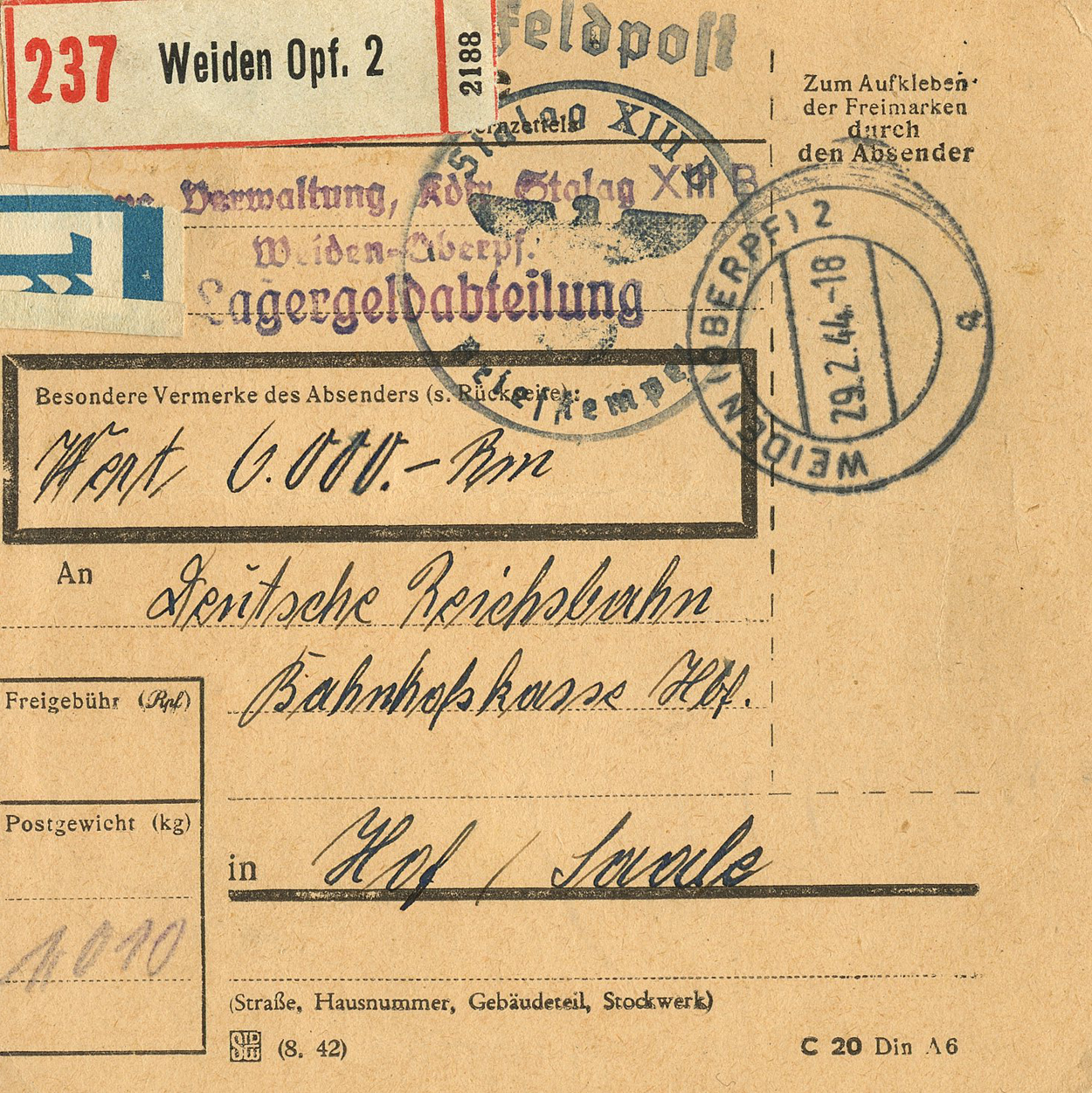
[Below: Here is an interesting parcel receipt, from Feldpost and Stalag XIII B, on February 29, 1944 (a leap year!). This had a value of 6,000 RM and was sent to the Reichsbahn.]
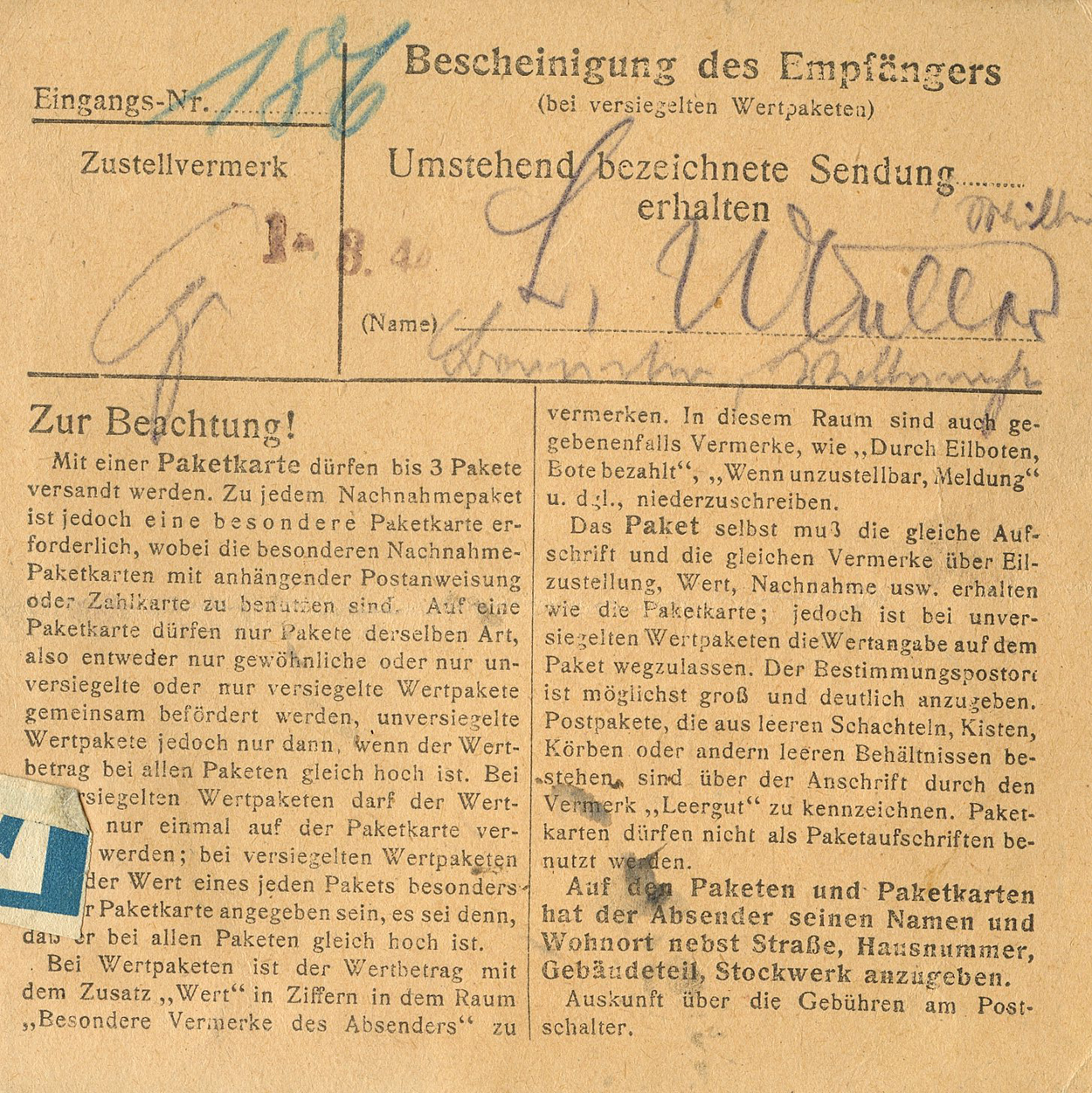
[Below: Reverse.]
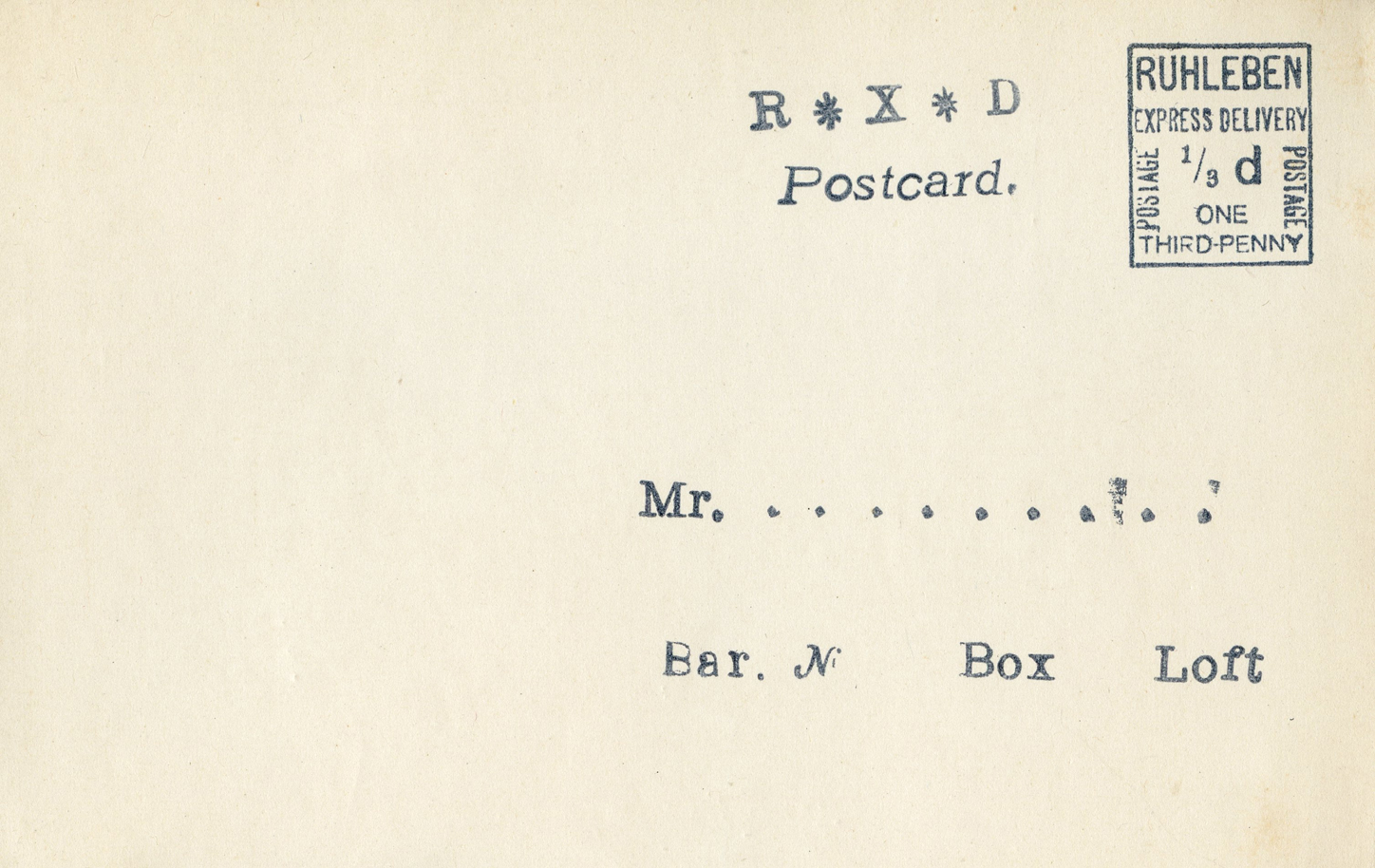
[Below: Postcard from Ruhleben POW camp. The Ruhleben internment camp, situated on the outskirts of Berlin, held British civilian internees during WWI.]
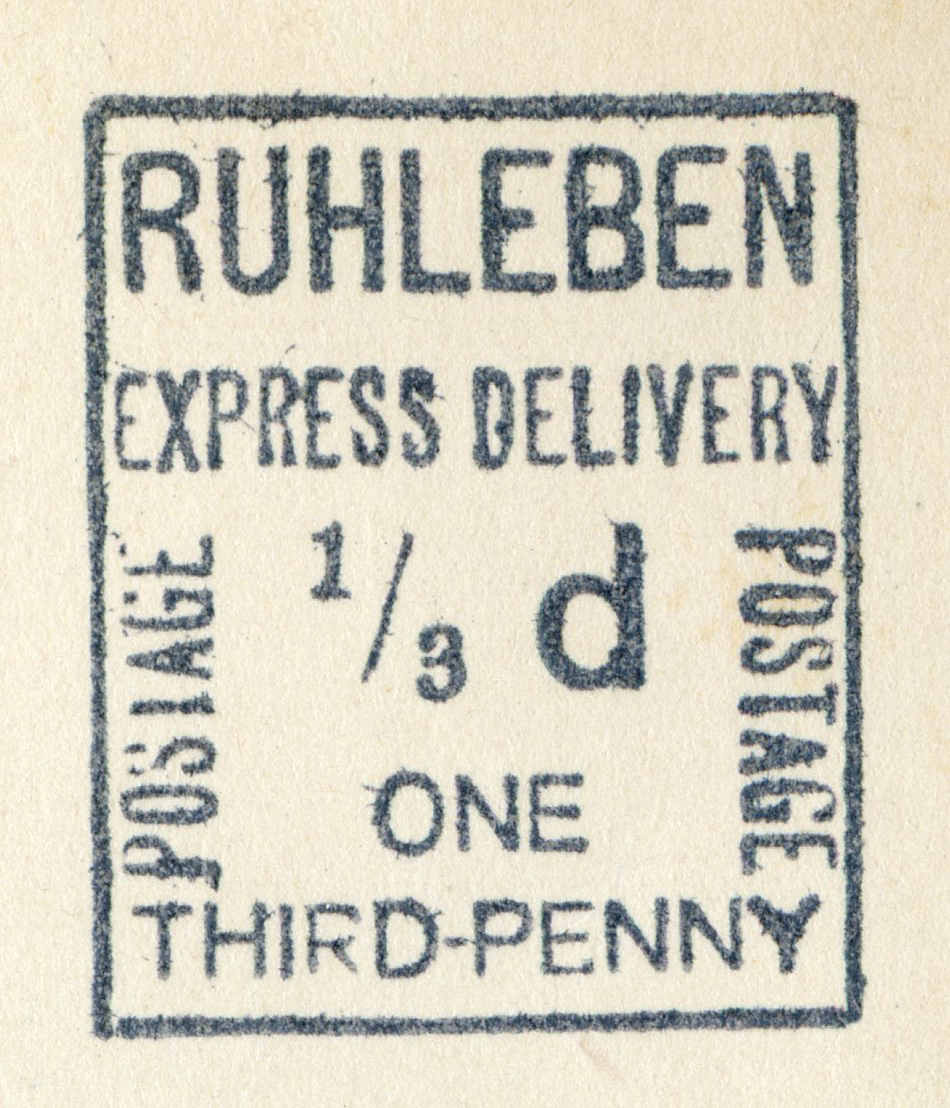
[Below: Close-up.]
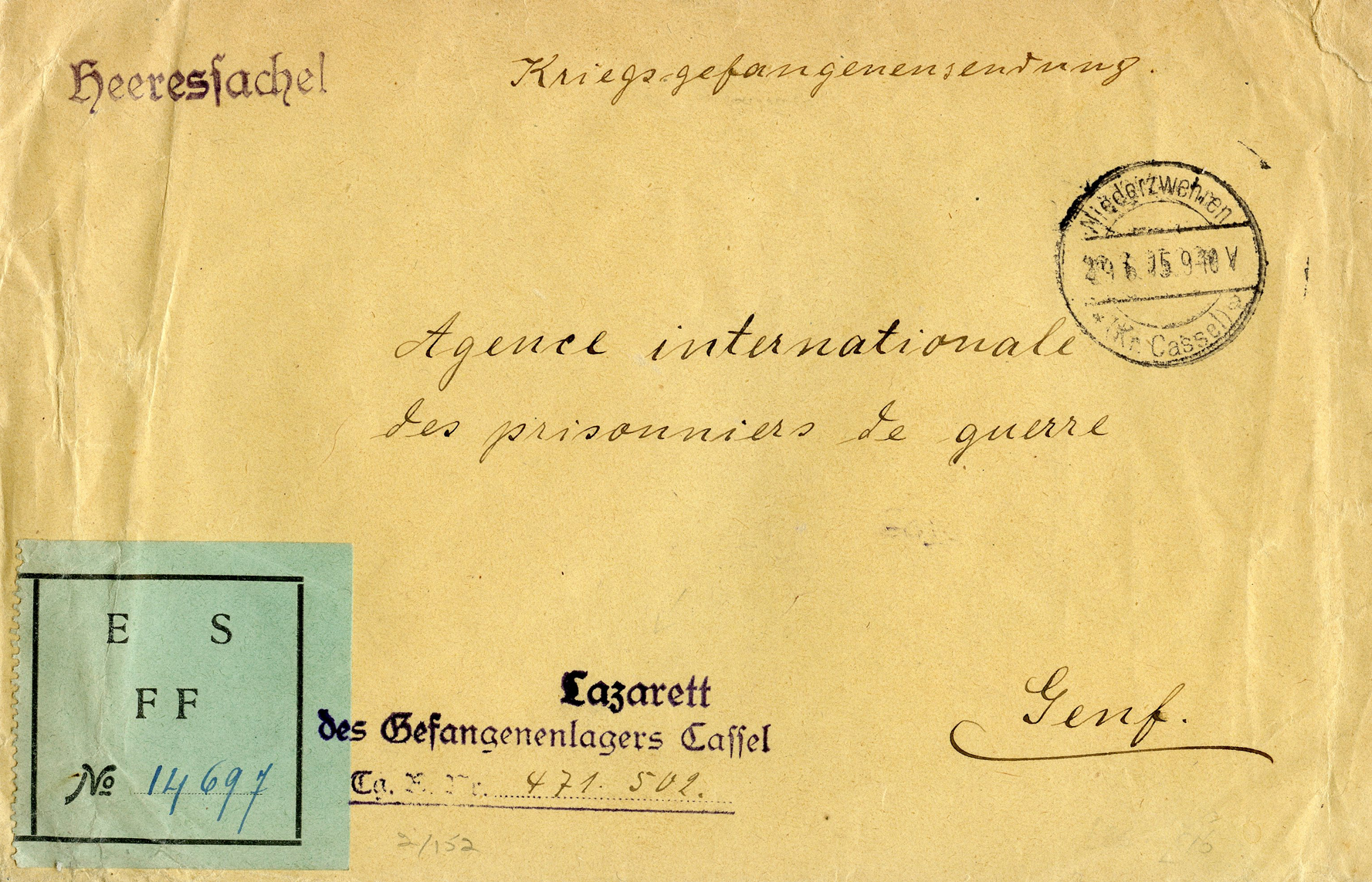
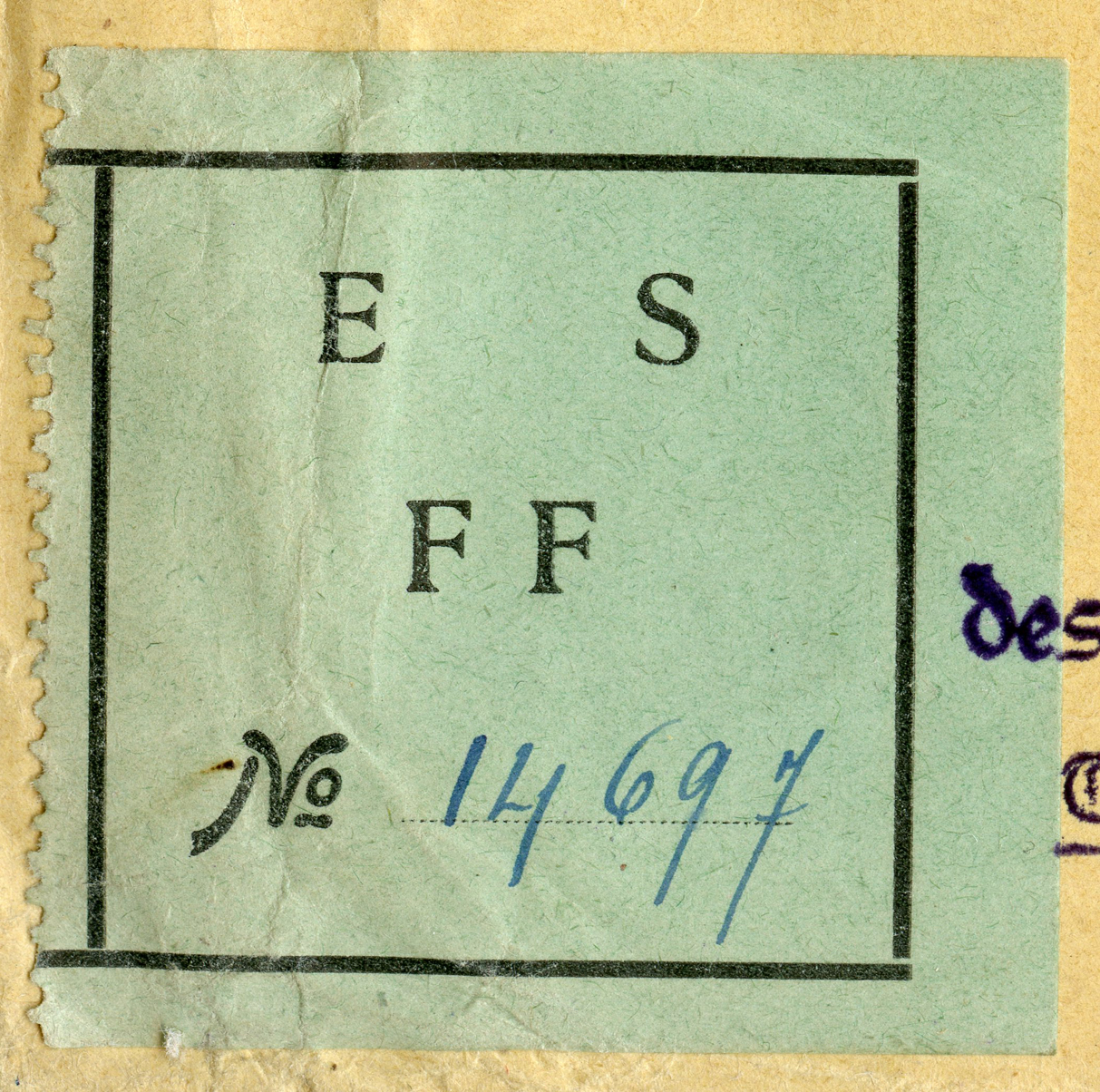
[Below: This is an interesting one, I'm not sure what exactly that strange green stamp is, some sort of registration perhaps.
'Lazarett' means hospital.]
[Below: Close-up.]
[Below: Reverse.]
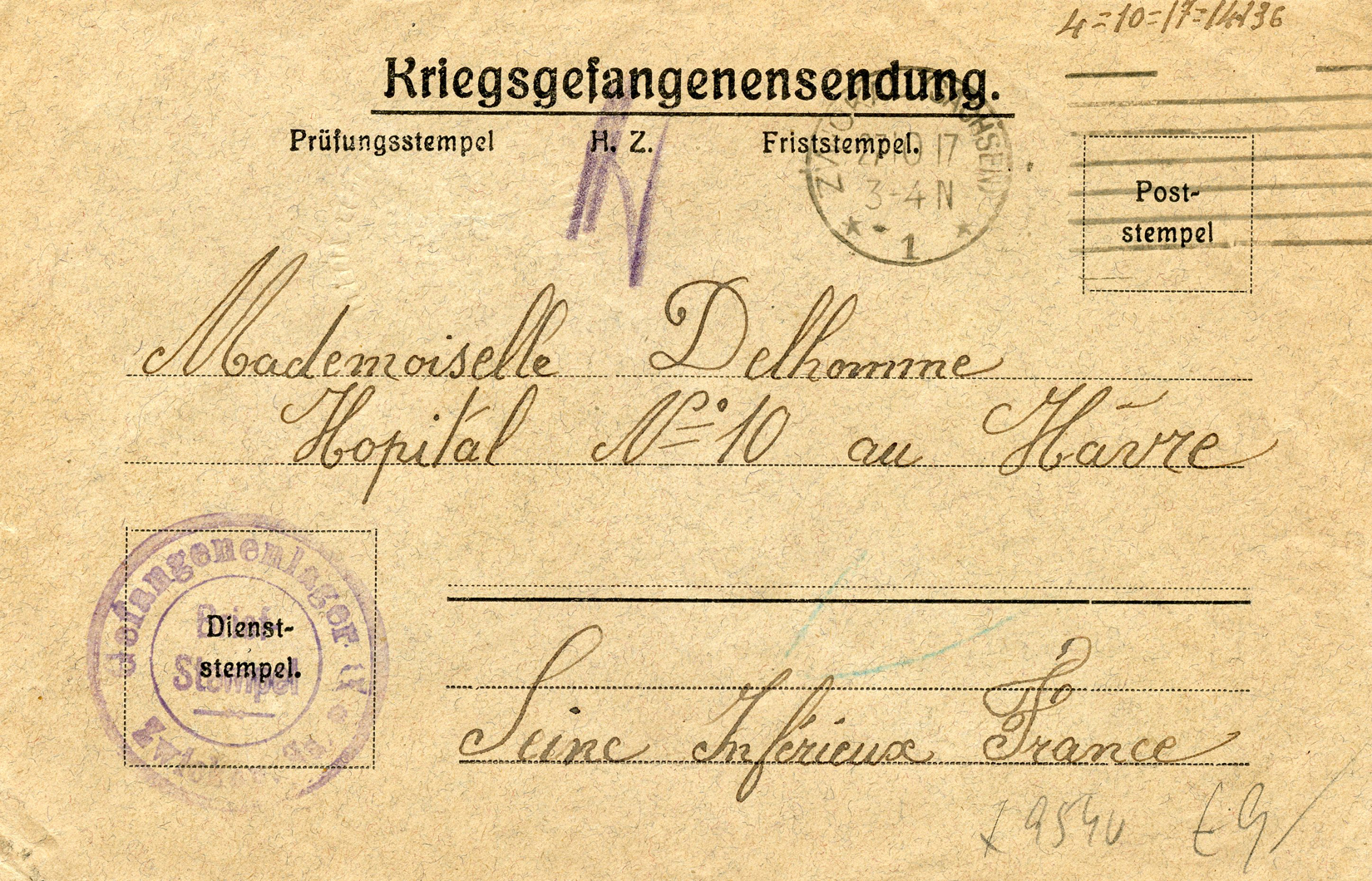
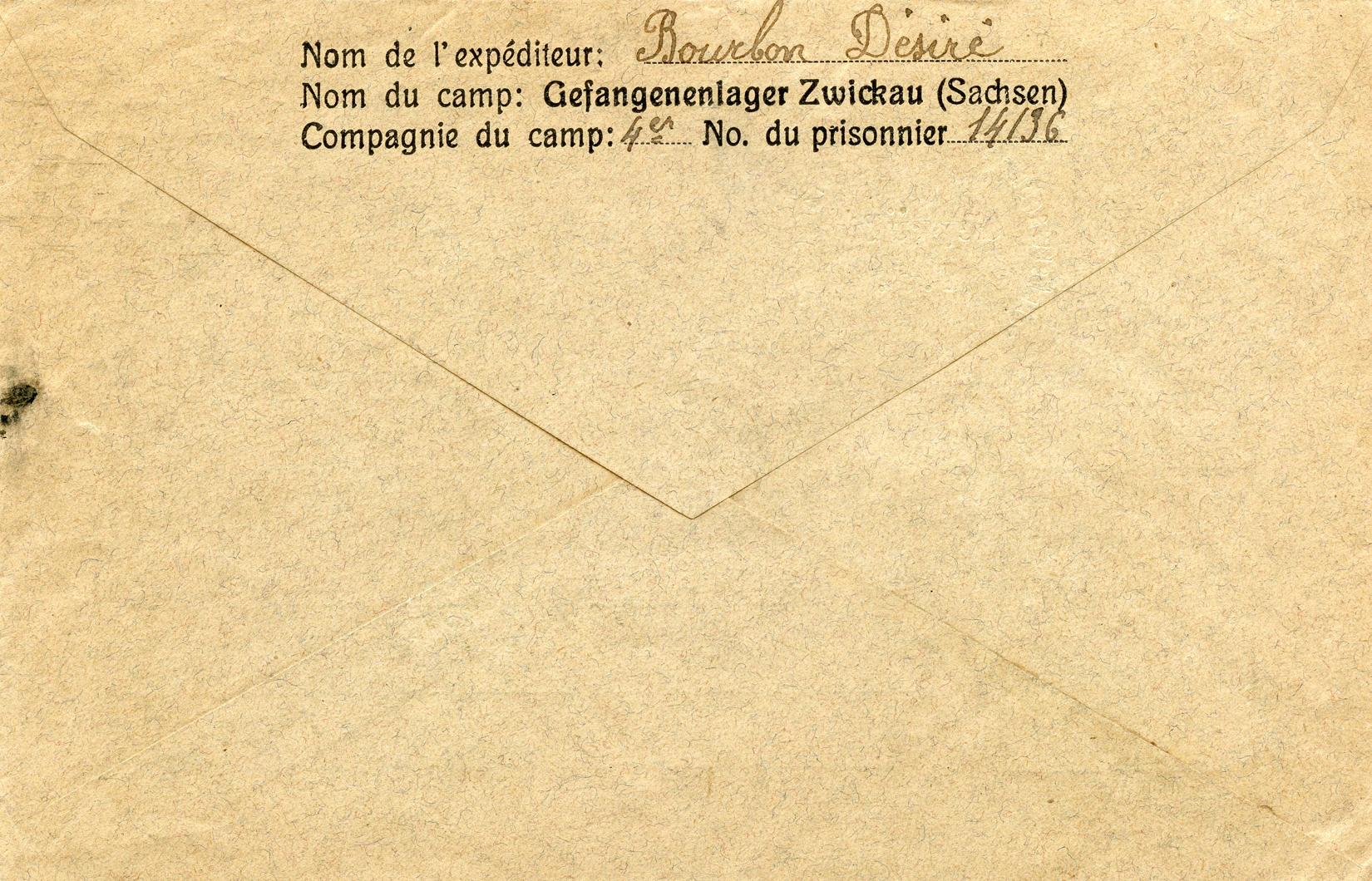
[Below: This is written to a woman in a hospital from a French POW camp in Zwickau (Sachsen), postmarked October 27, 1917.]
[Below: Reverse.]