[Page One Hundred and Sixty-Six]
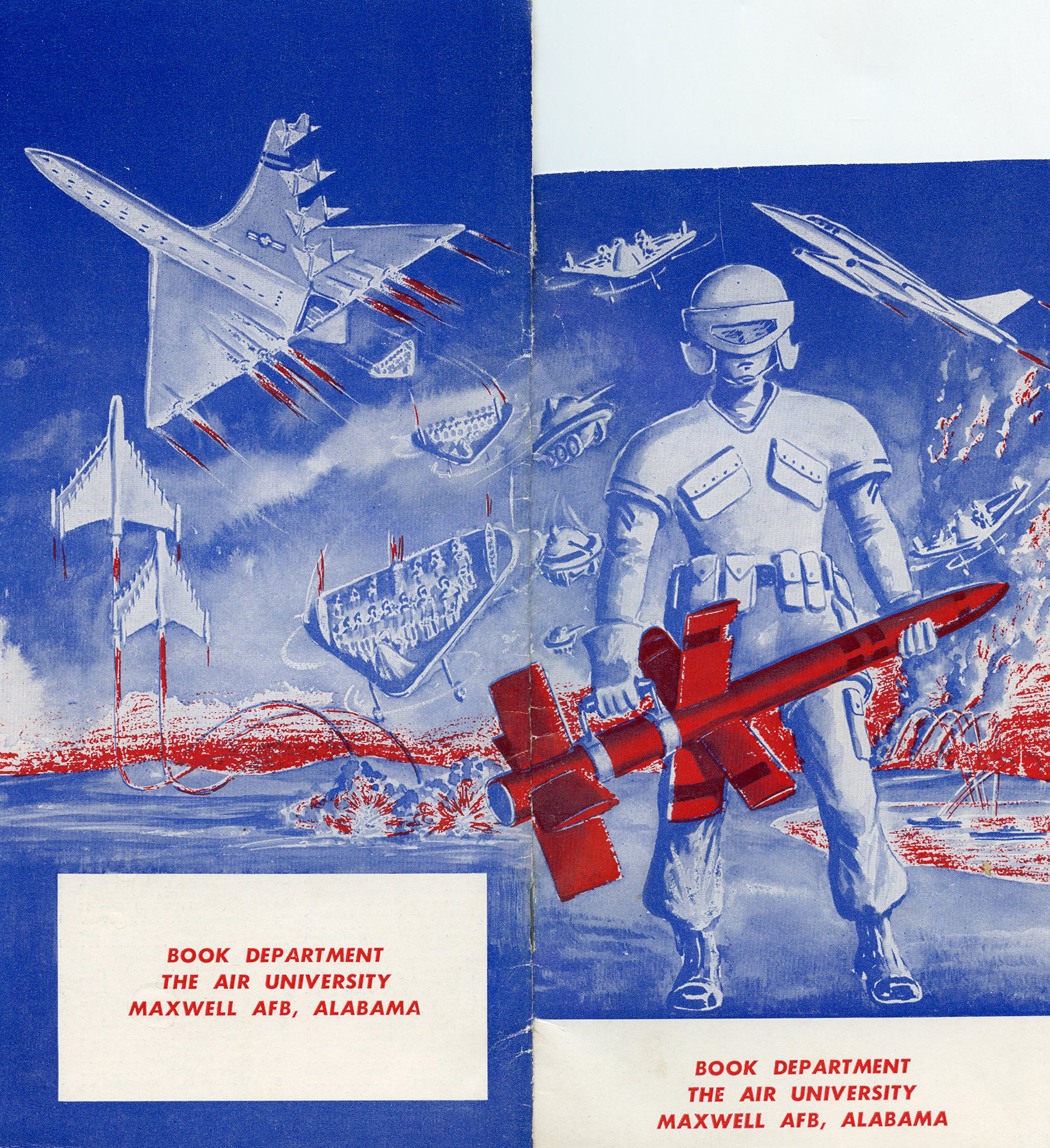
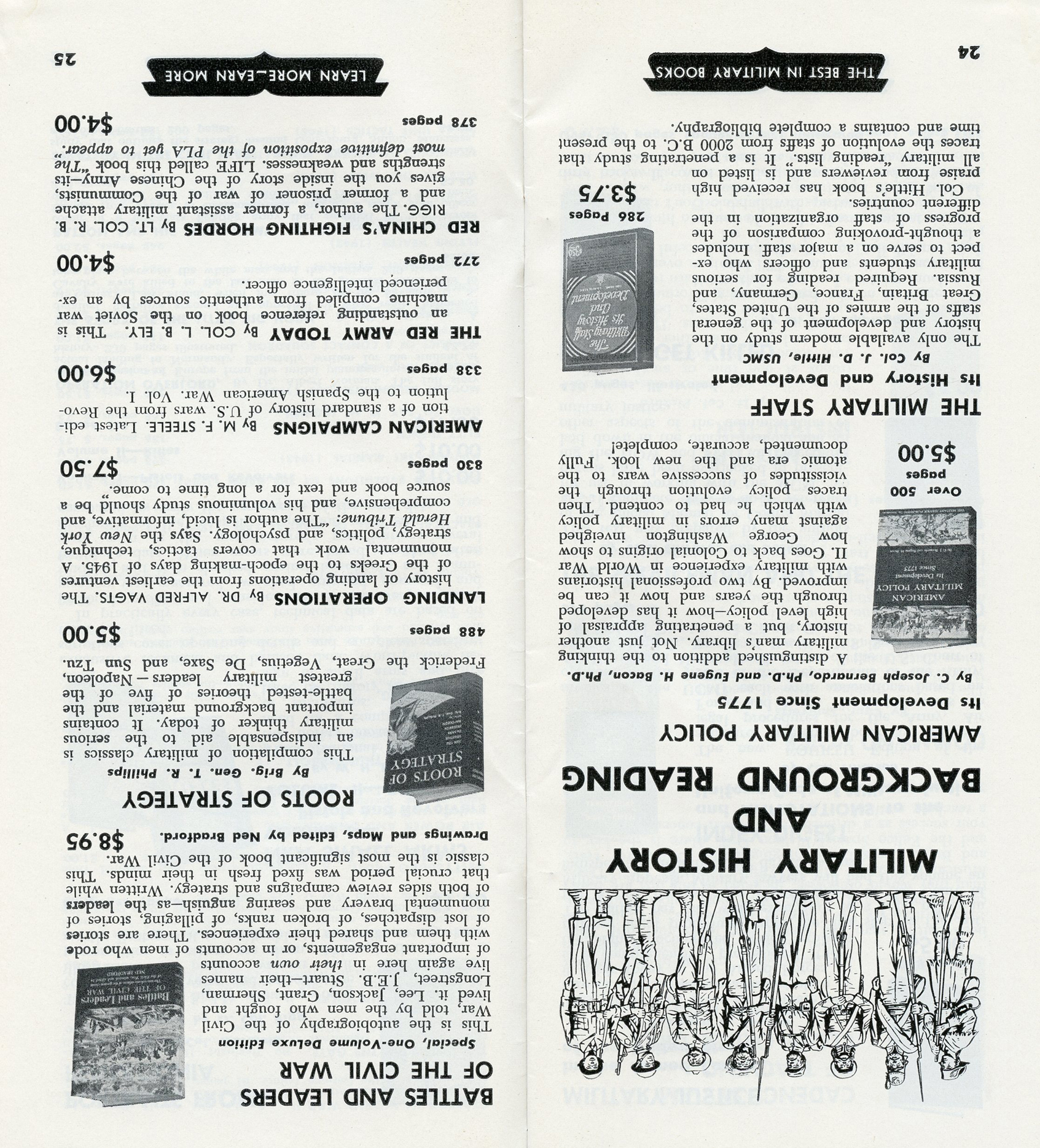
[Above: Okay, the first item has nothing to do with postage and the like, but it is futuristic and strange (and pretty comical!). I'm guessing this is from somewhere in the 1950s. It's interesting to see the artist's vision of the future, but they forgot millions of non-white people and a decaying world sinking into a swamp of despair and death. Oh well, close enough!]
Strange Mail
[#1106]
Note: Collecting one thing or the other through the years, many items beyond my interest and scope of collecting have fallen into my hands. I've set aside a pile of some of the most odd or interesting for you. Hope you see at least something that peaks your interest and curiosity. I didn't scan all the pages, just the ones with art headers for each category.
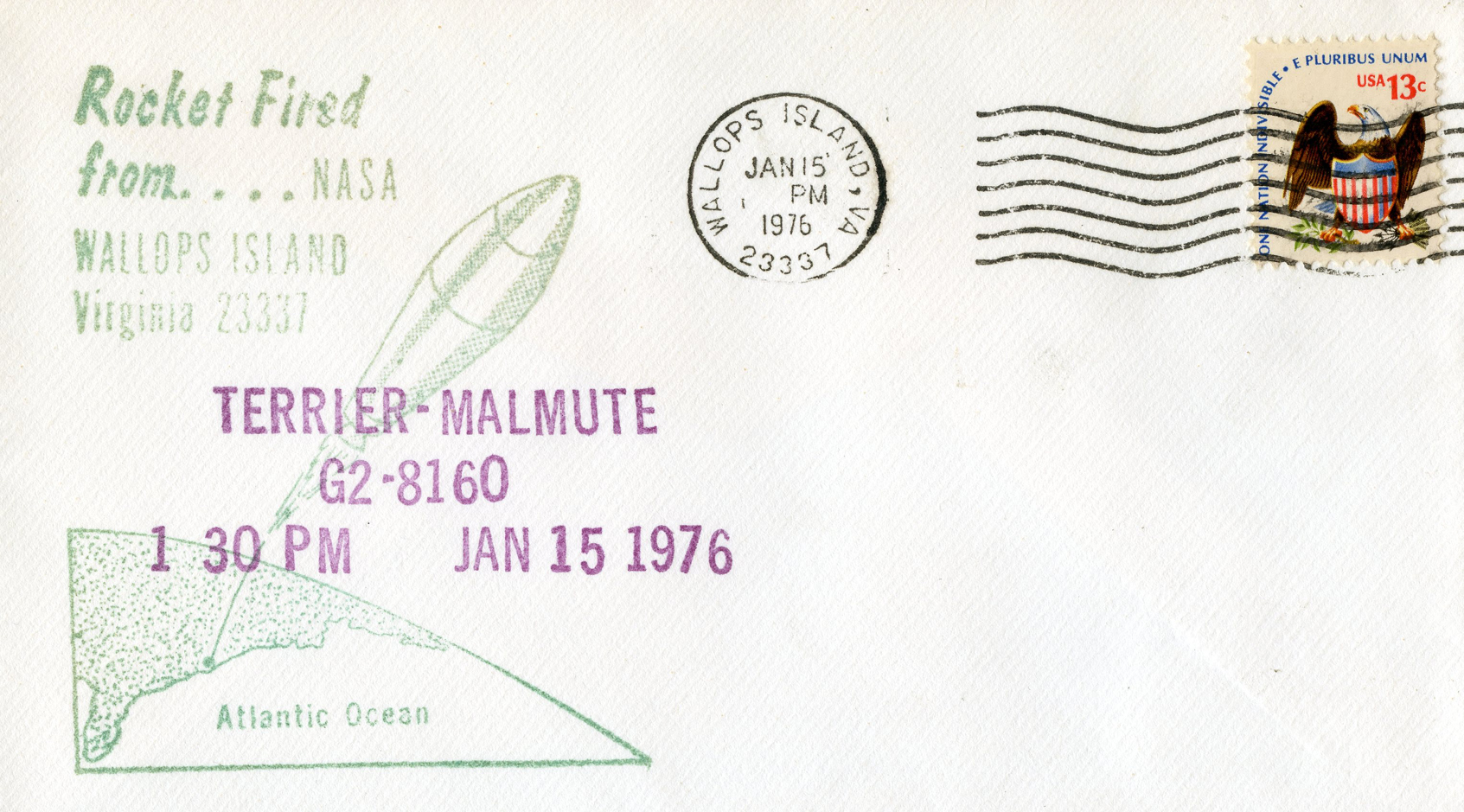
[Above: This was sent on January 15, 1976. 'Wallops Island is a six-square-mile barrier island in Accomack County, Virginia, famous for housing the NASA Wallops Flight Facility, the Mid-Atlantic Regional Spaceport...' Why does the picture show the rocket launching from the mainland? You would think they would have at least gotten that right. But we are dealing with the idiotic American government and its money laundering organization NASA, I guess.]
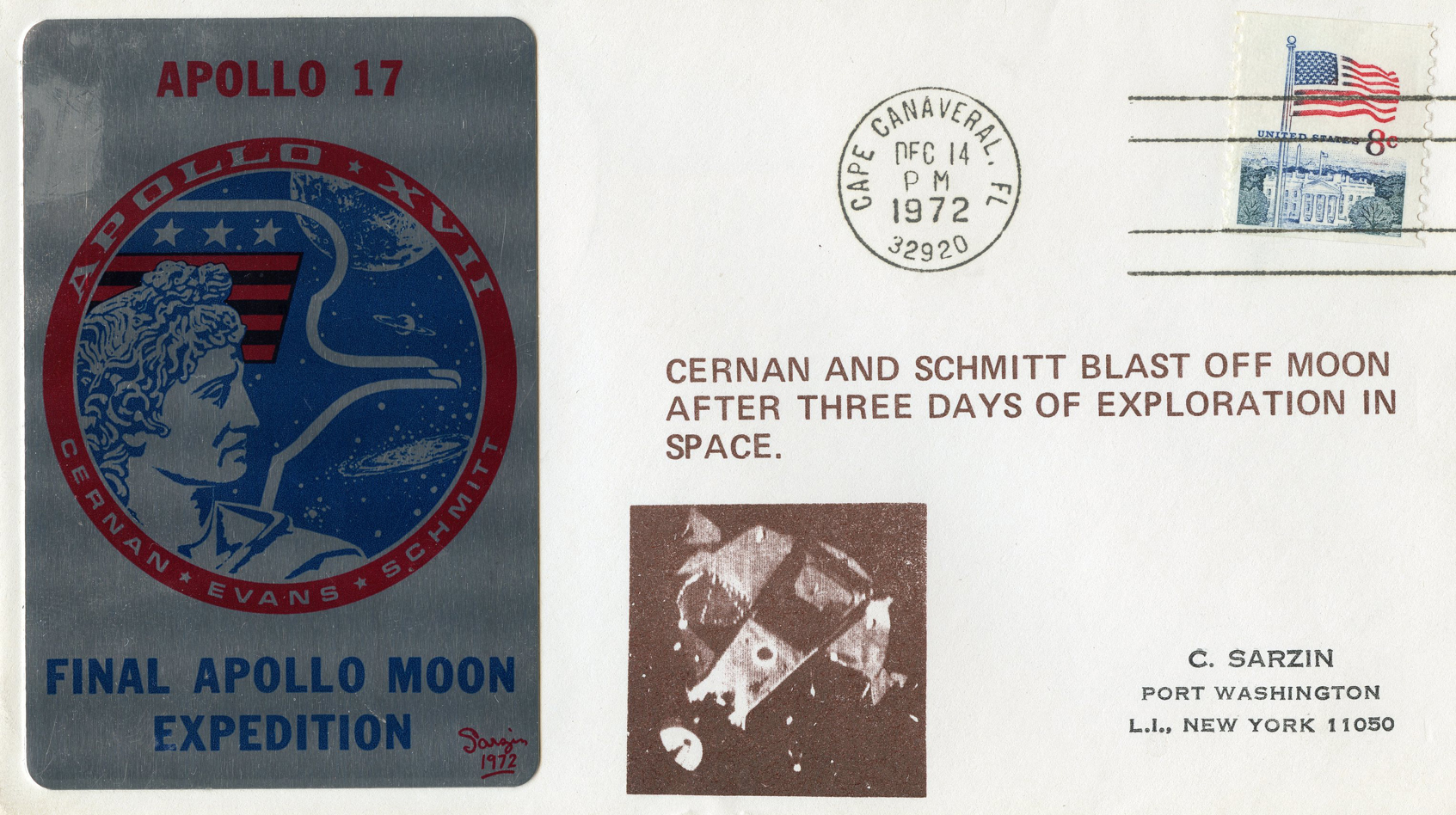
[Above: This was postmarked in Cape Canaveral, Florida, on December 14, 1972. This is a very heavy envelope due to the thick metal plate on the left side. It's interesting that NASA says we can't land astronauts on the moon anymore because they lost the nearly 70 year old information needed to build a spacecraft! Literally 'sorry guys, we recorded over the tapes with the information...' Or is it that the 'Nazi' German scientists kidnapped and threatened during Operation Paperclip to come work for the USA are long in their graves? Most likely.]
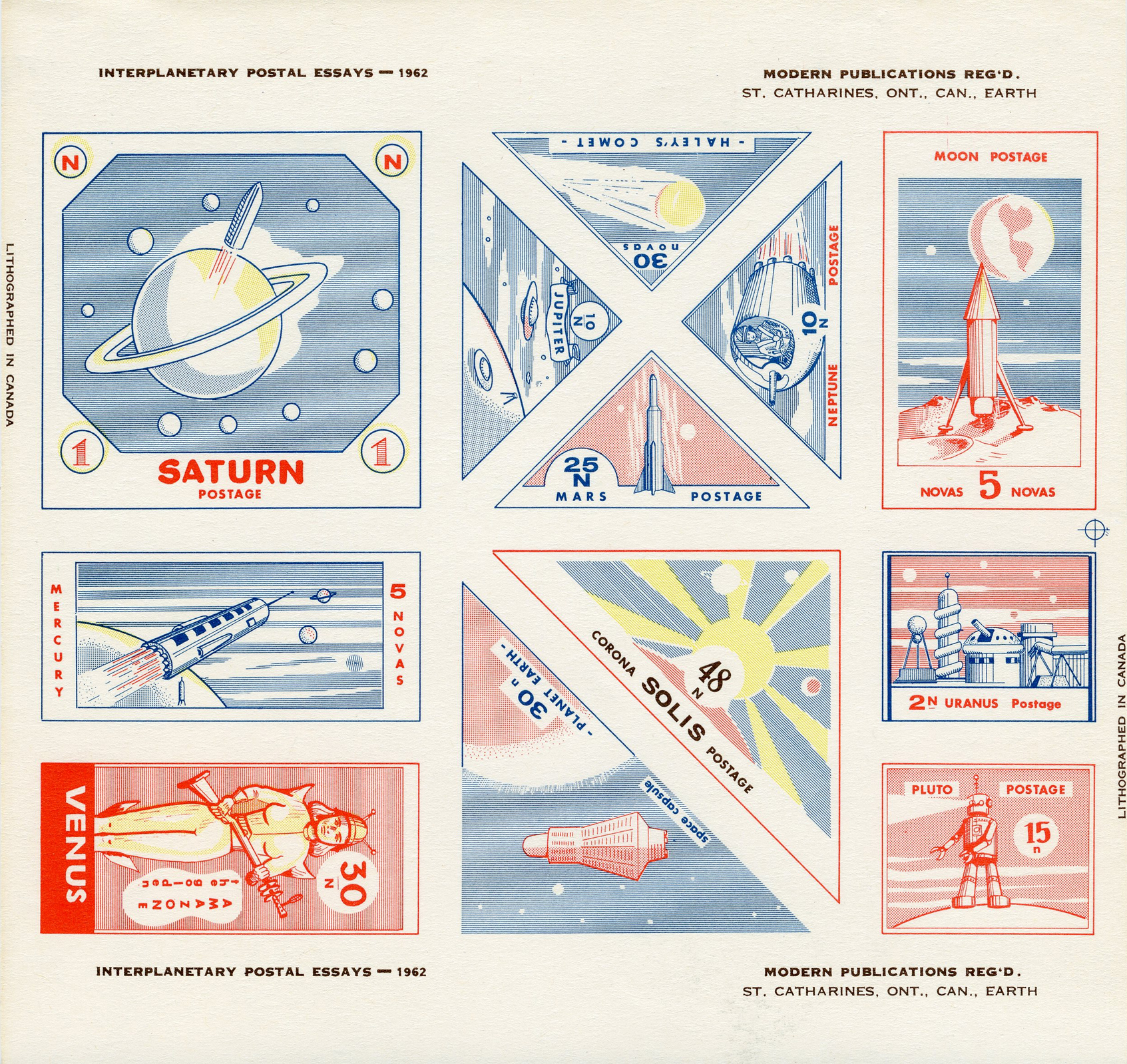
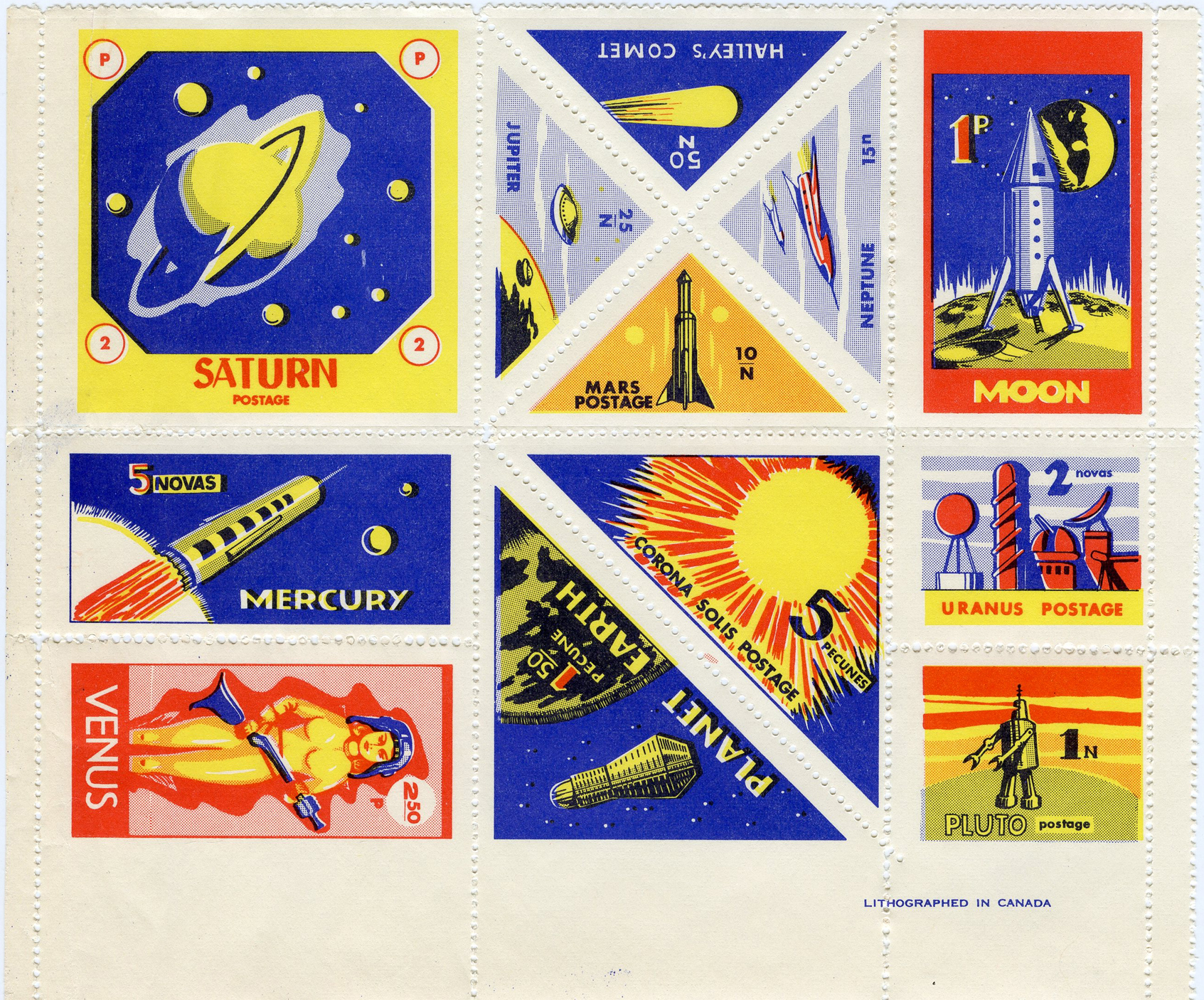
[Above: This is an essay (sort of a test printing) from 1962 showing various privately printed stamps. I'm sure when this was printed they thought that by 2026 we would be sending astronauts to the various planets shown here, but instead we are giving housing, food and medicine to an endless legion of non-white foreigners. The truth aside, you gotta love the Tin Man-looking robot on Pluto, which since this printing isn't even classified as a planet anymore. Sorry, I believe the men of the past more than the black women working for NASA that say it isn't a planet anymore!]
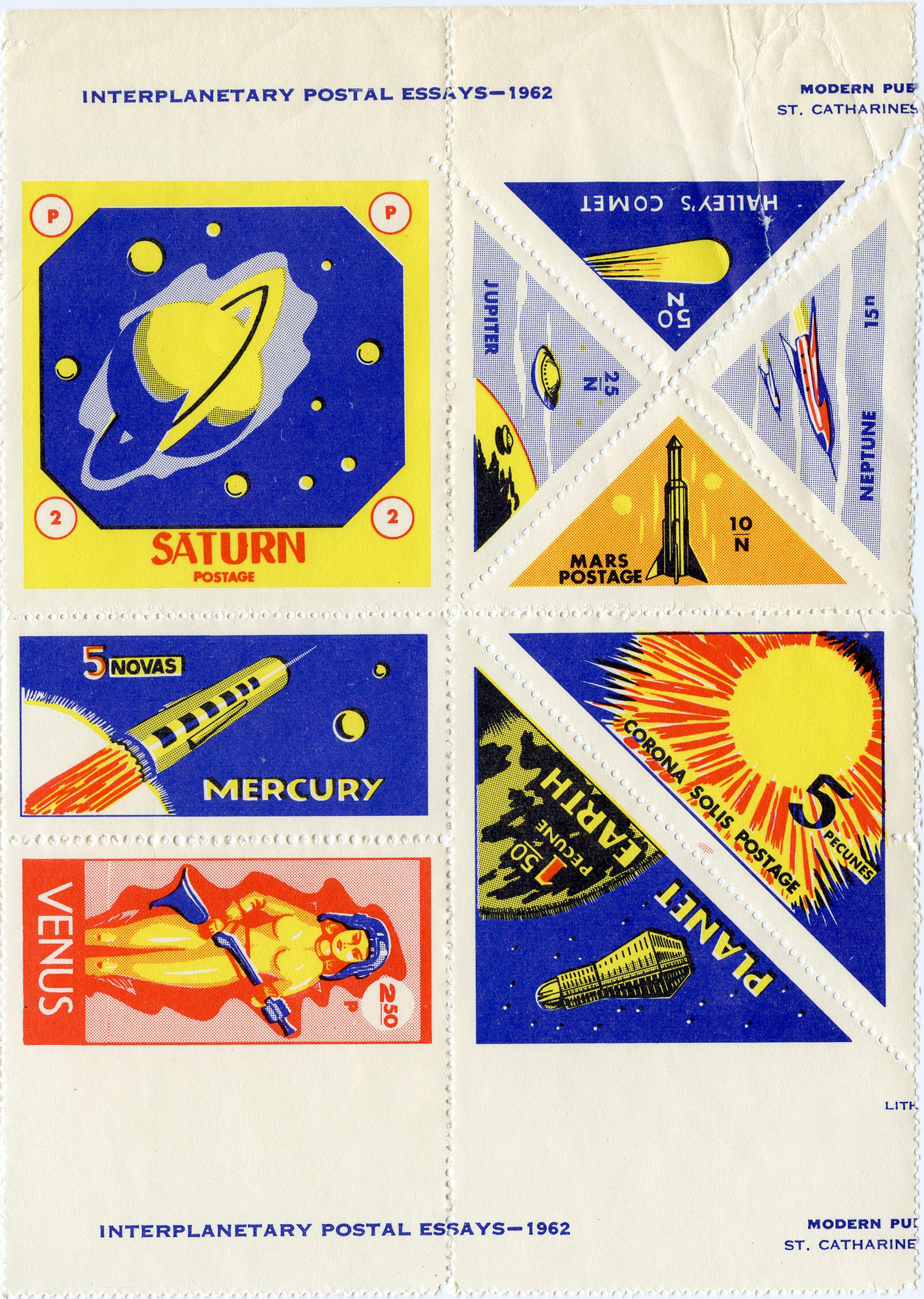
[Above: I guess these were supposed to be the final version of the above sheet, but these say that these are 'essays' (trials) see below) too, so I don't know. I guess they decided we wouldn't be sending a rocket from Saturn afterall, at least we got a pretty cool game system from Sega with the name.]
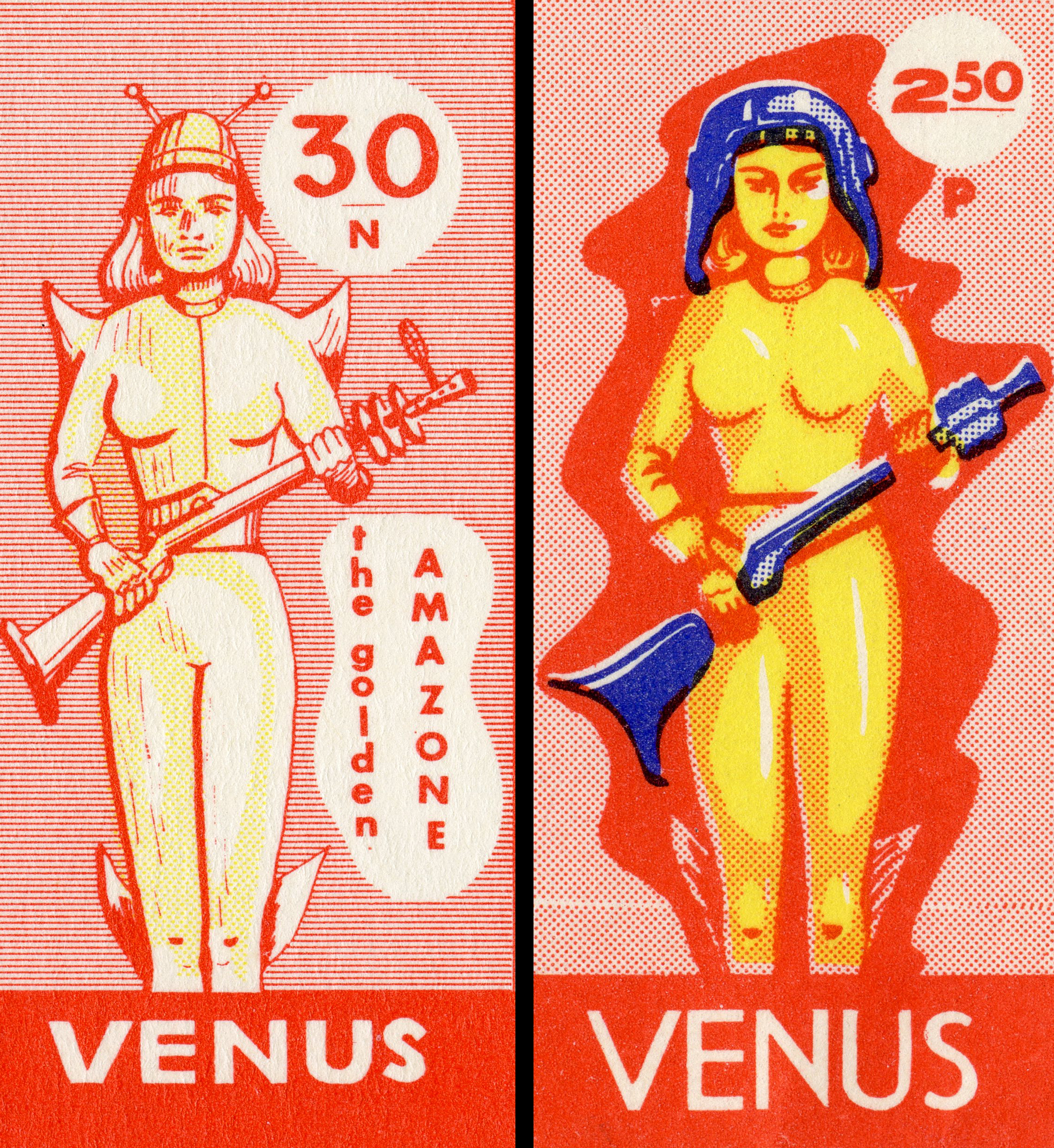
[Above: Space women. What the hell is 'the golden Amazone'?]
[Above: The Golden Amazon was a series of books from the 1950s. Maybe it was referring to this?]
[Above: A different partial sheet, this one is different as it is not fully perforated, for whatever reason. It was quite common for private companies and even countries to release 'errors' or variations of stamps so that collectors would have to by different versions and increase the profit margins.]
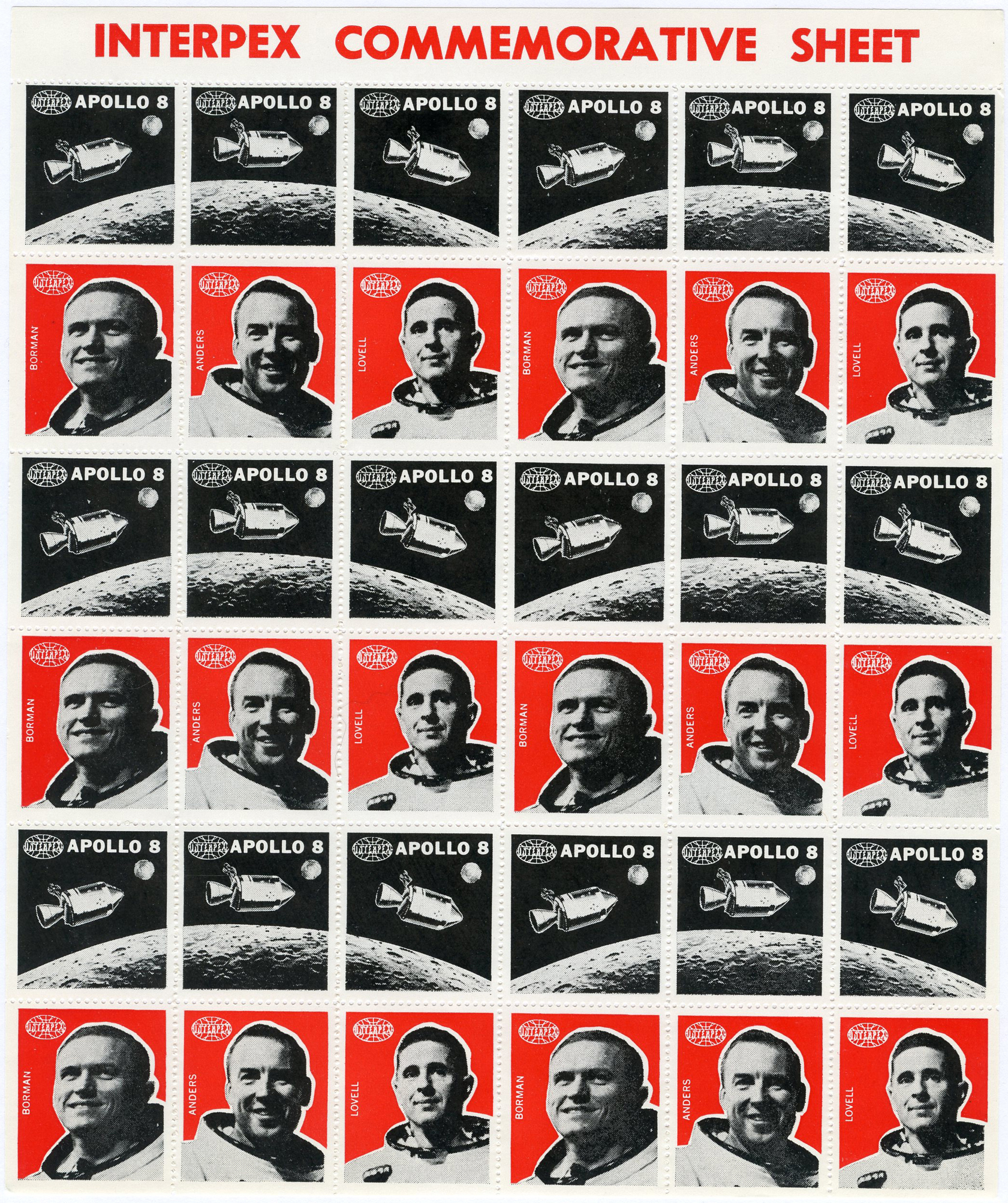
[Above: Commemorative Apollo 8 sheet. Interpex is the International Philatelic Exhibit, a major annual stamp show held in New York City. This sheet was sold there in 1969.]
[Above: 'The two major space shuttle disasters in NASA's history occurred with the Challenger on January 28, 1986, and the Columbia on February 1, 2003, both resulting in the tragic loss of all seven crew members on board.' Benefiting Mankind, eh? Yet we still know virtually nothing about space or the sun, and what we think we know chances are will be discredited tomorrow. Well, I guess they did discover that the sun was hot and they got to market Tang for General Mills.]
[Above: Some strange coincidences of doppelgangers of the dead Challenger crew surviving. Those alive at the time of the explosion remember the jokes:
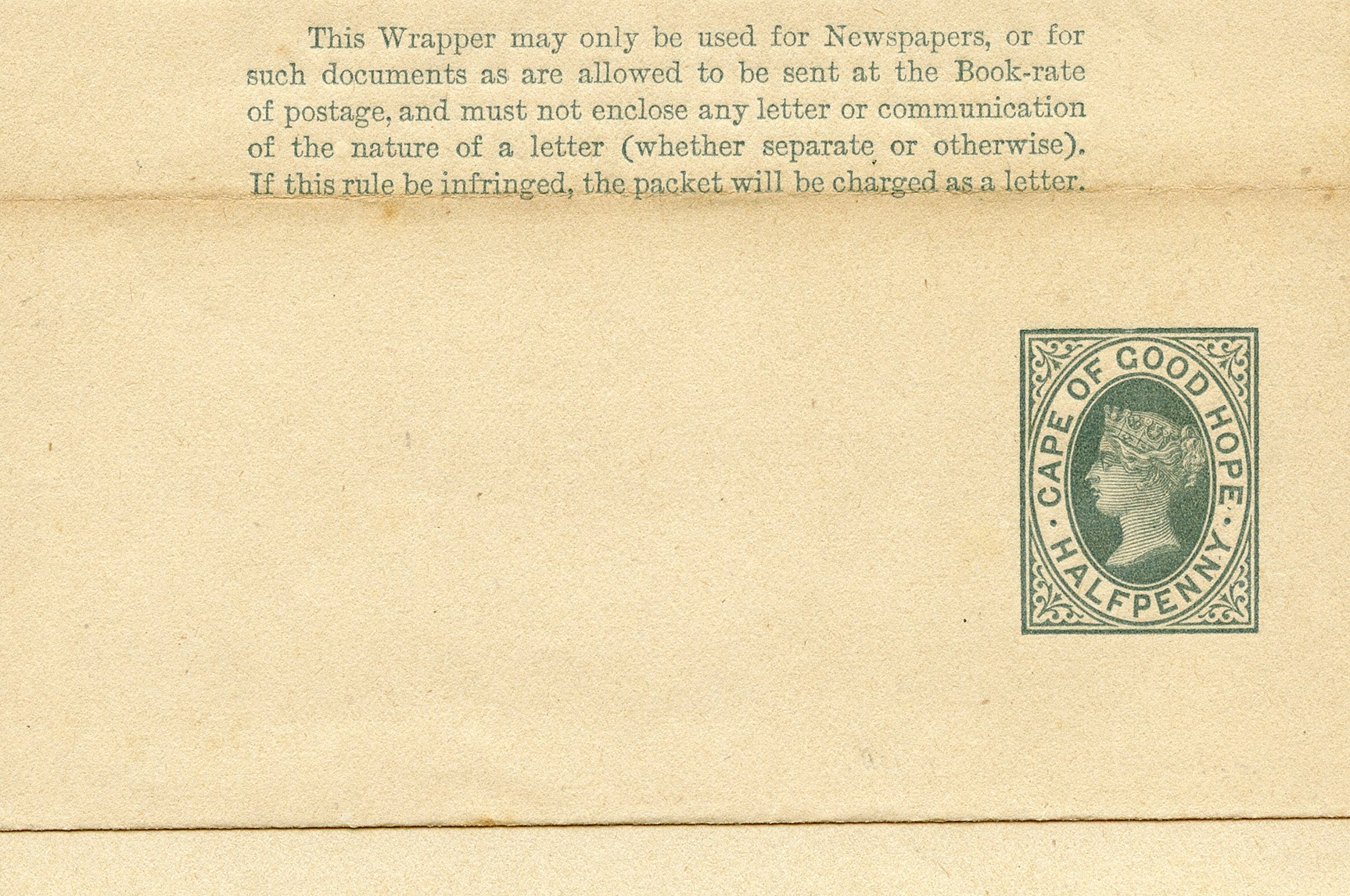
[Above: I have some very old late 1800s and the turn of the 1900s European material from Africa (Cape of Good Hope, Natal and Transvaal), so let's start with the Cape of Good Hope. 'The Cape of Good Hope is a rocky headland in South Africa, famous for its rich history in sea trade, stormy weather, and scenic beauty.' It was 'first seen by Portuguese explorer Bartolomeu Dias in 1488. First called the "Cape of Storms" (Cabo das Tormentas) before being renamed the Cape of Good Hope.' The 'Cape of Storms' is a much cooler name. Or better yet 'Cabo das Tormentas'. Anyway, this piece, as it says on the paper, was used to wrap around newspapers and send them through the mail. This is from the late 19th century.]
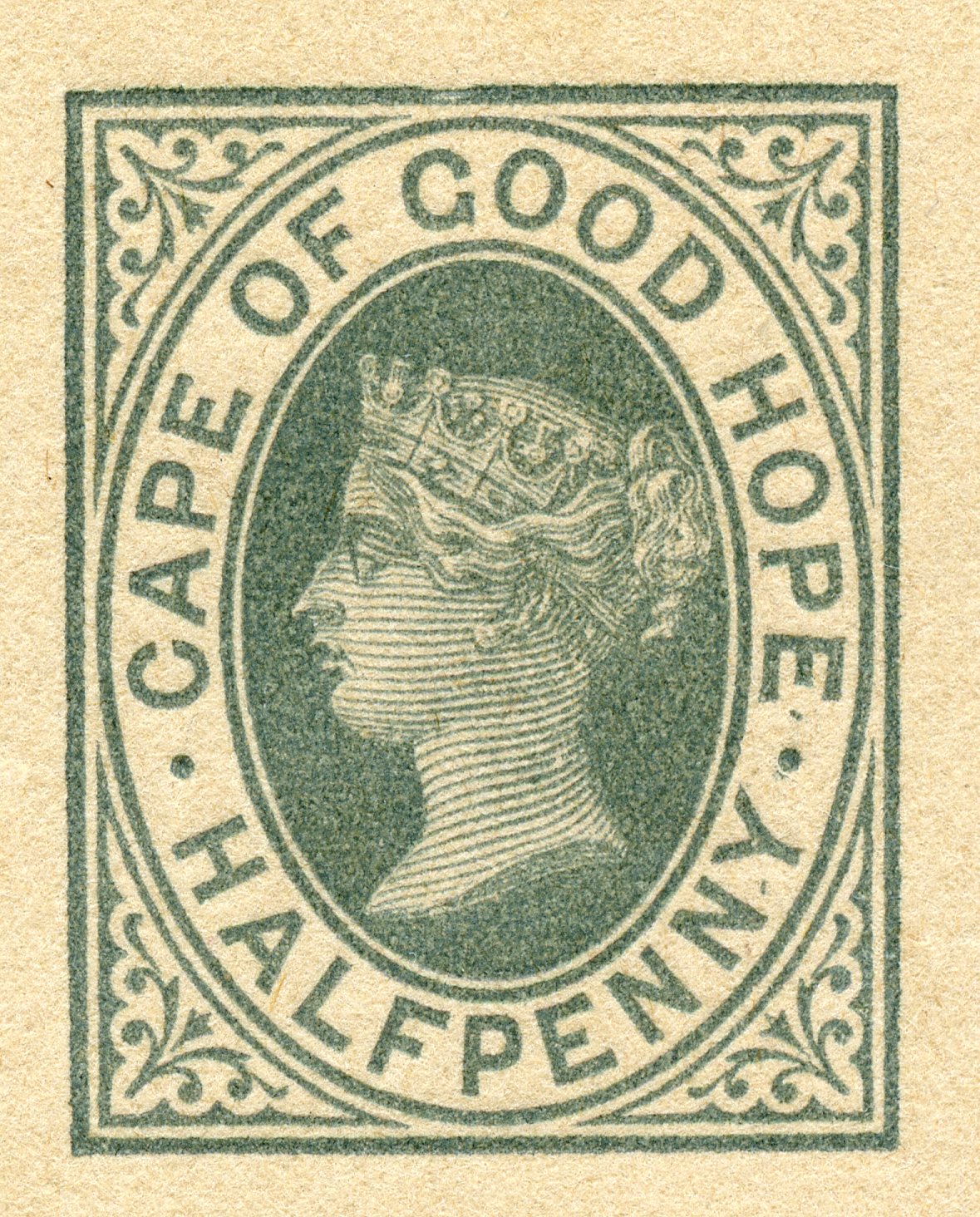
[Above: Close-up of 1/2 penny prepaid stamp.]
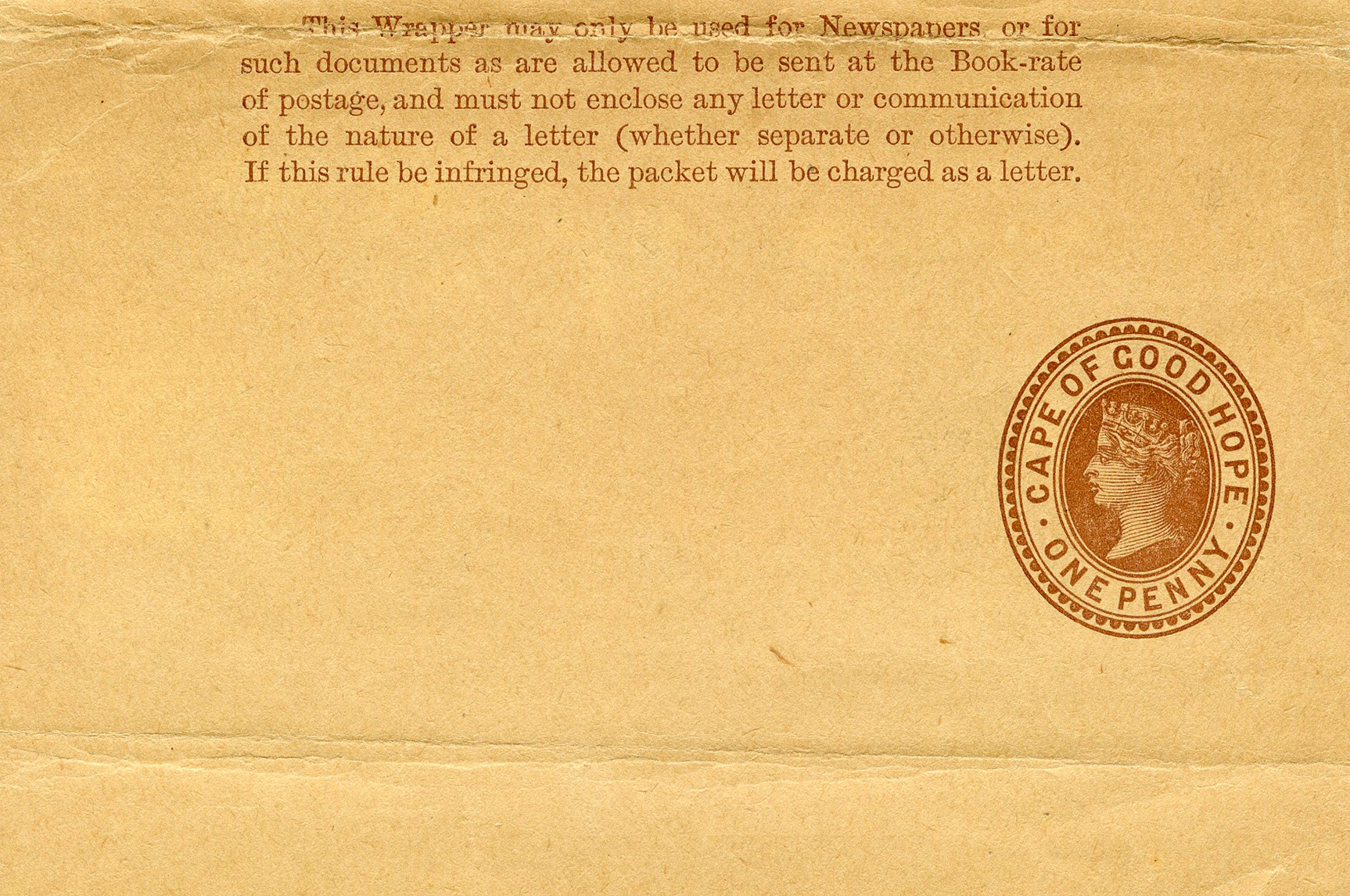
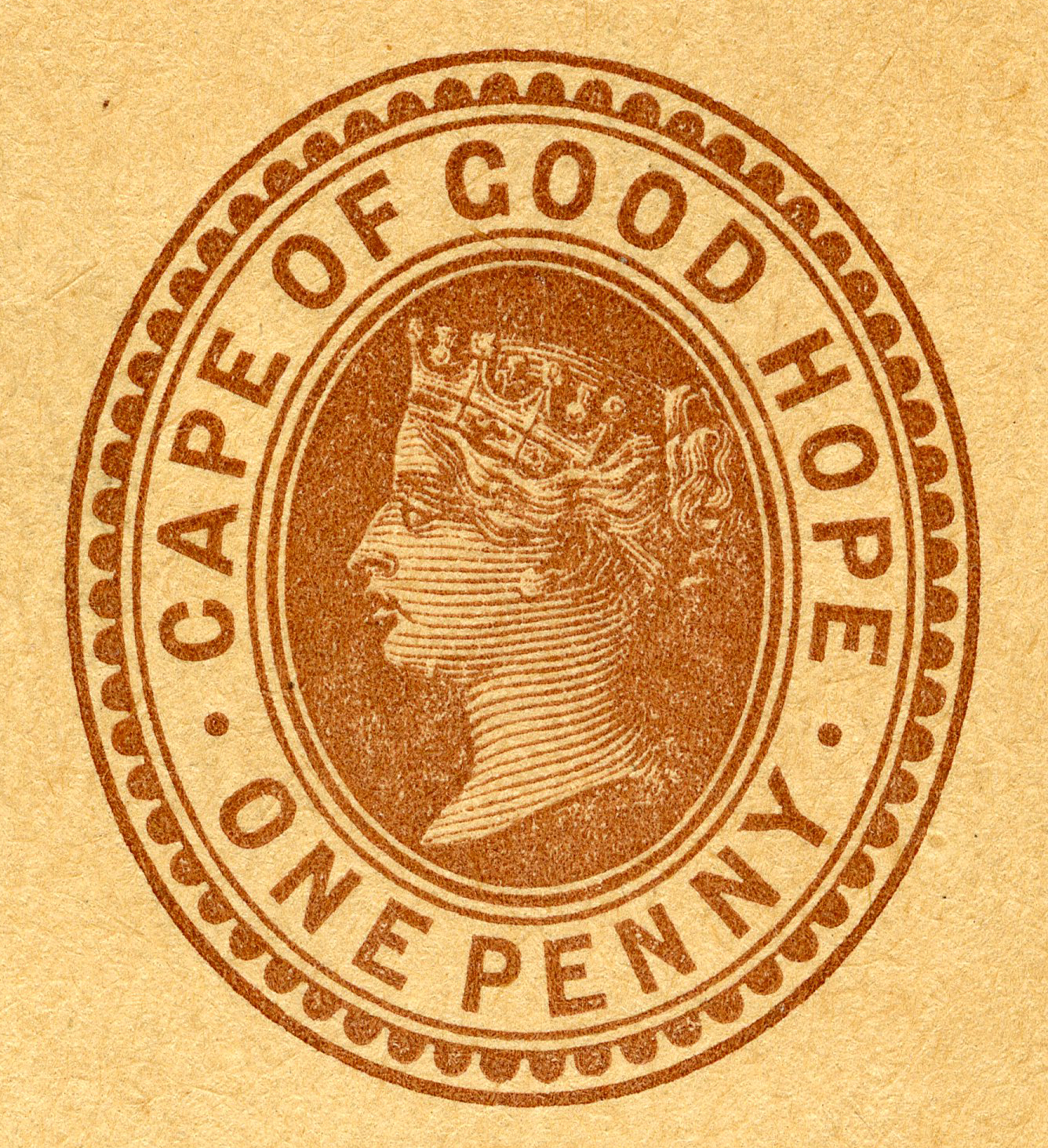
[Above: Same deal as above, but with 1 penny prepaid stamp for heavier newspapers.]
[Above: Close-up of 1 penny prepaid stamp.]
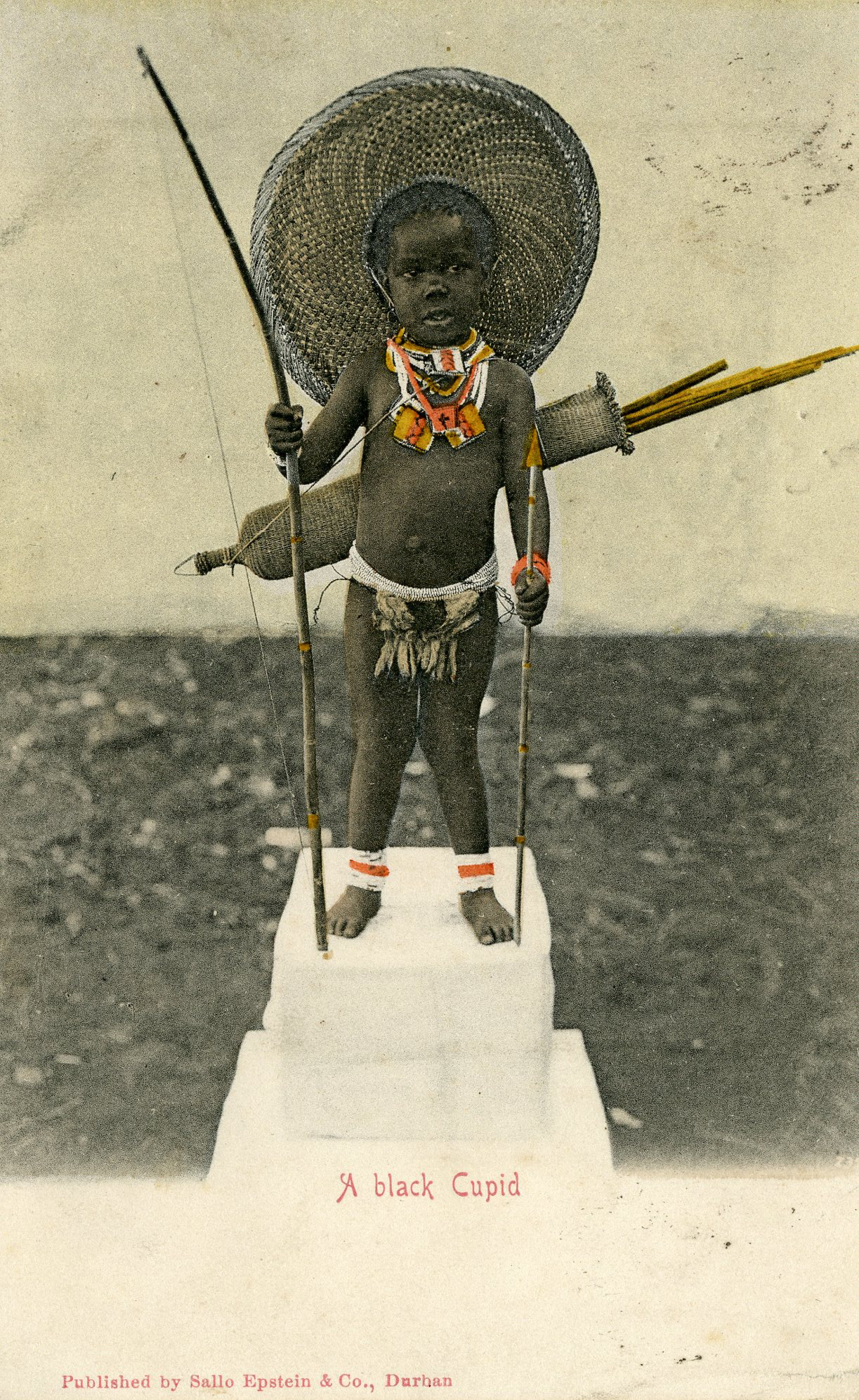
[Above: 'A Black Cupid'.]
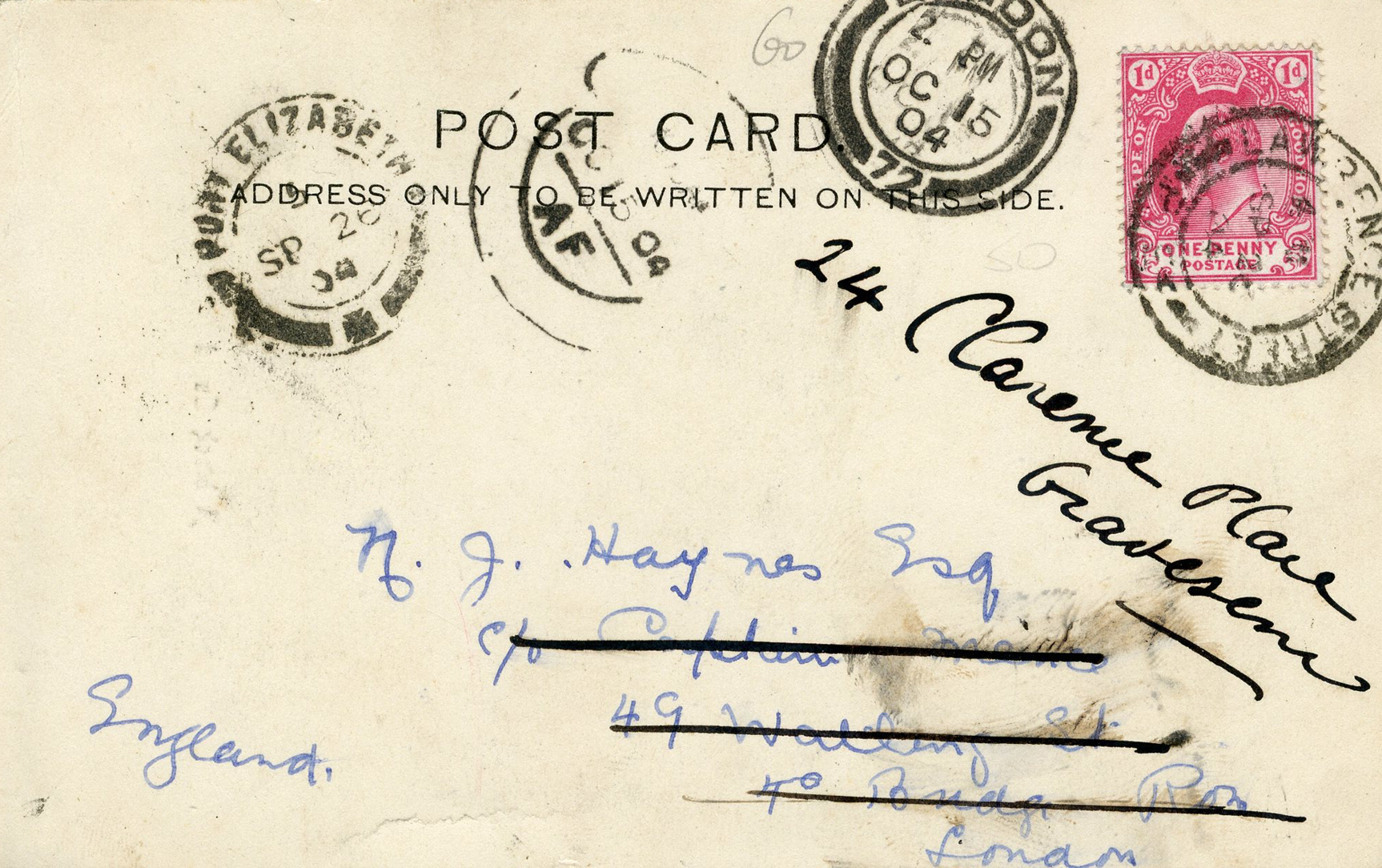
[Above: Reverse. Postmarked in September in Port Elizabeth and with arrival stamps in London on October 15, 1904 (130 years ago at the time of this writing!) Not bad, these days it would take probably three times the time to arrive and likely would be stolen before it got to you. I've tried to send things to South Africa and as anyone will tell you that lives there: it didn't arrive. If you send a pair of shoes to Mexico here is a tip: send them each in two packages, because no one would steal just one shoe.]
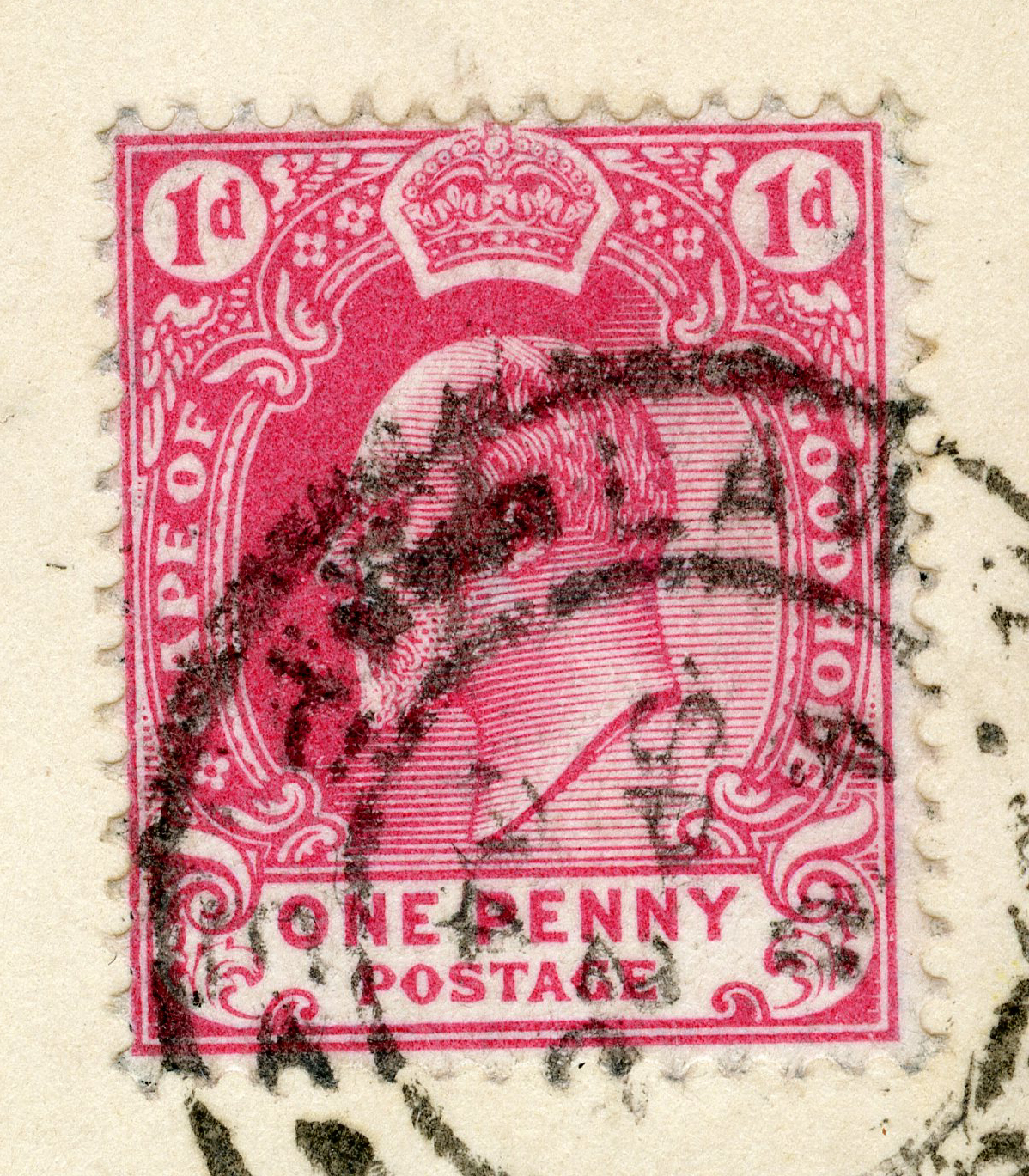
[Above: Close-up of 1d postage stamp. The "d" in British pre-decimal postage stands for denarius, the Latin word for a Roman coin that represented a penny.]
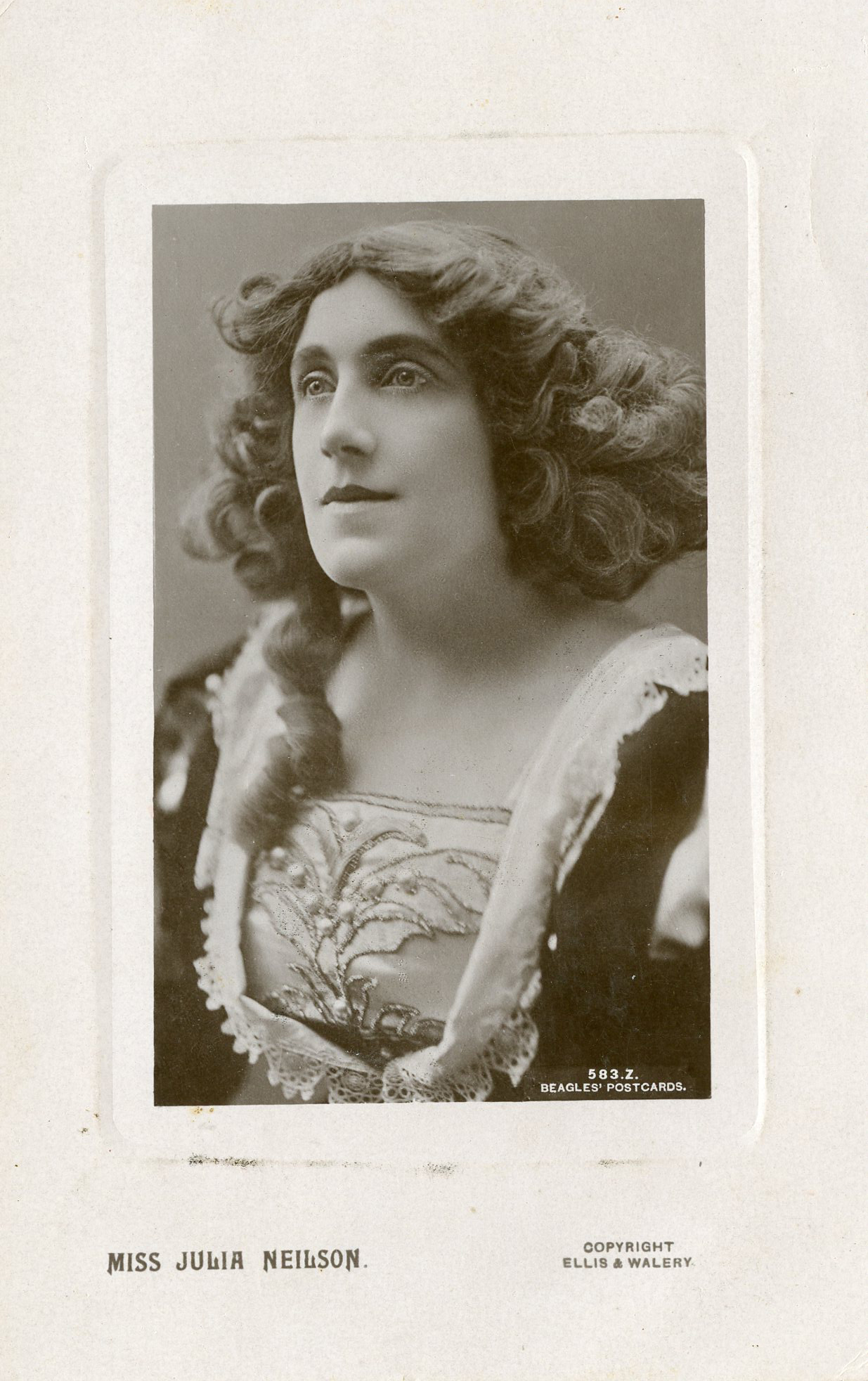
[Above: Holy shit this can't be a real woman.]
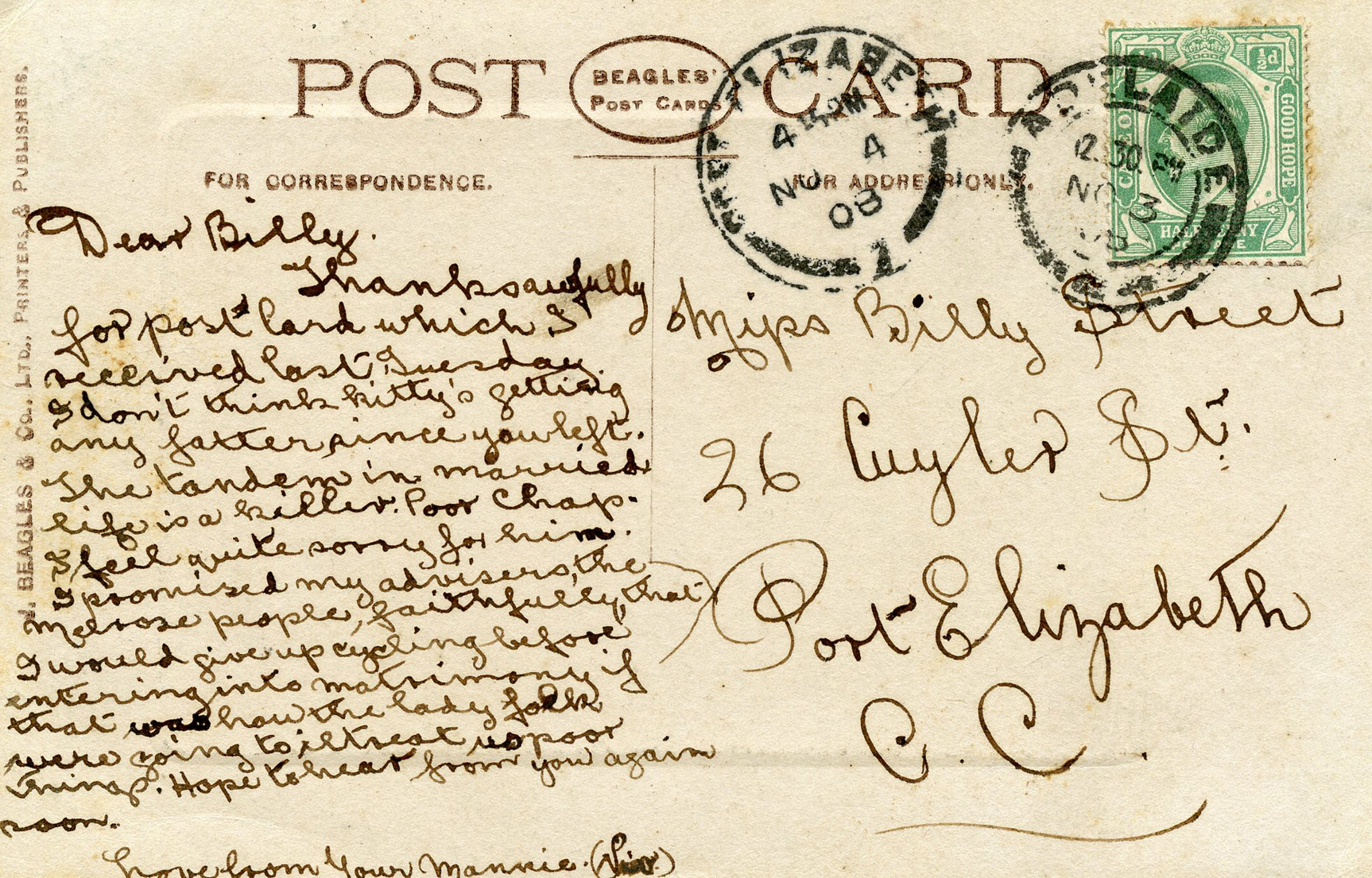
[Above: Reverse. This was sent within the Port of Good Hope, from Adelaide to Port Elizabeth, on November 3, 1908, arriving the next day on the 4th.]
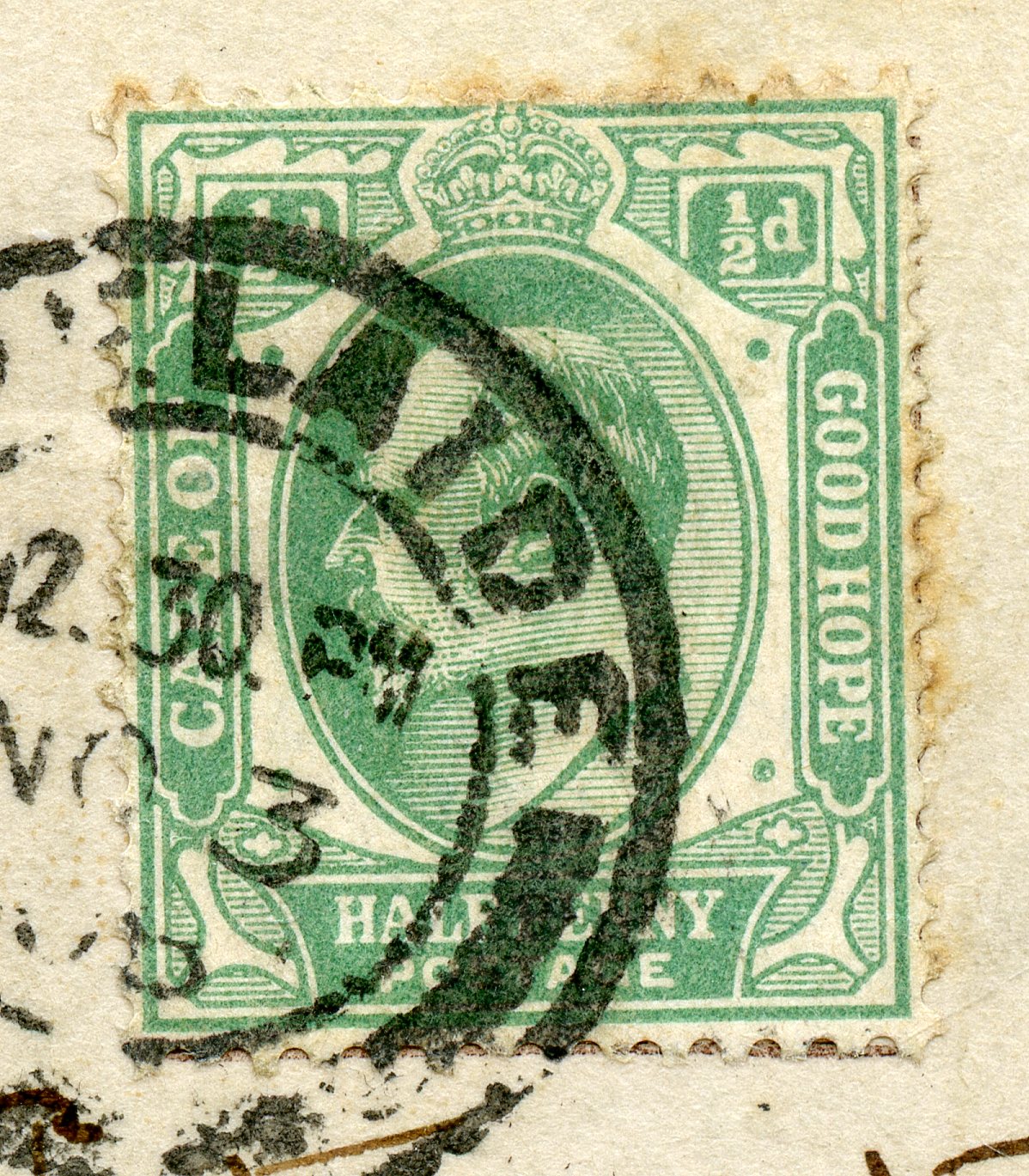
[Above: Close-up. This shows a 1/2d postage stamp.]
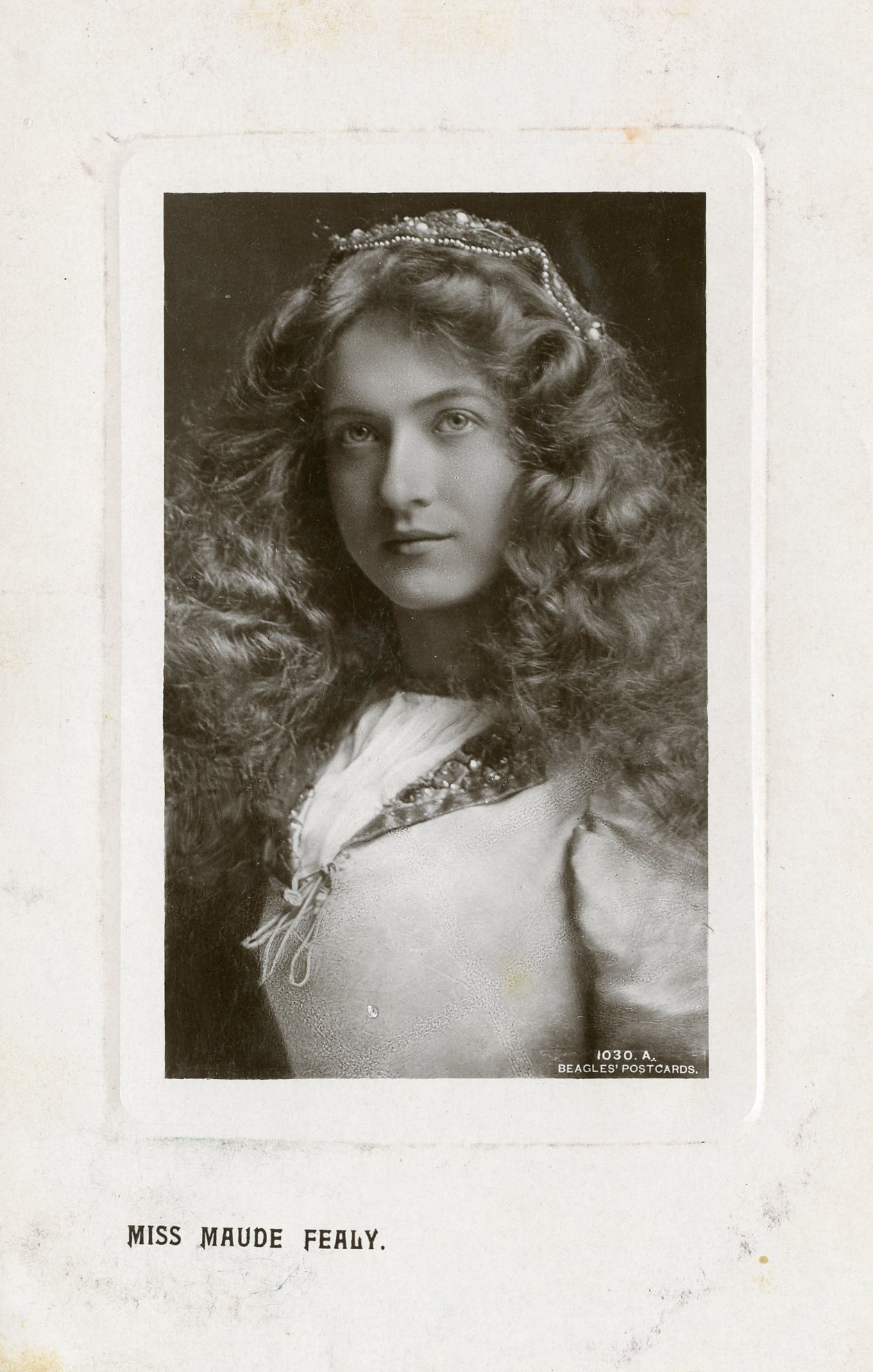
[Above: Hmmm... is this a man too?]
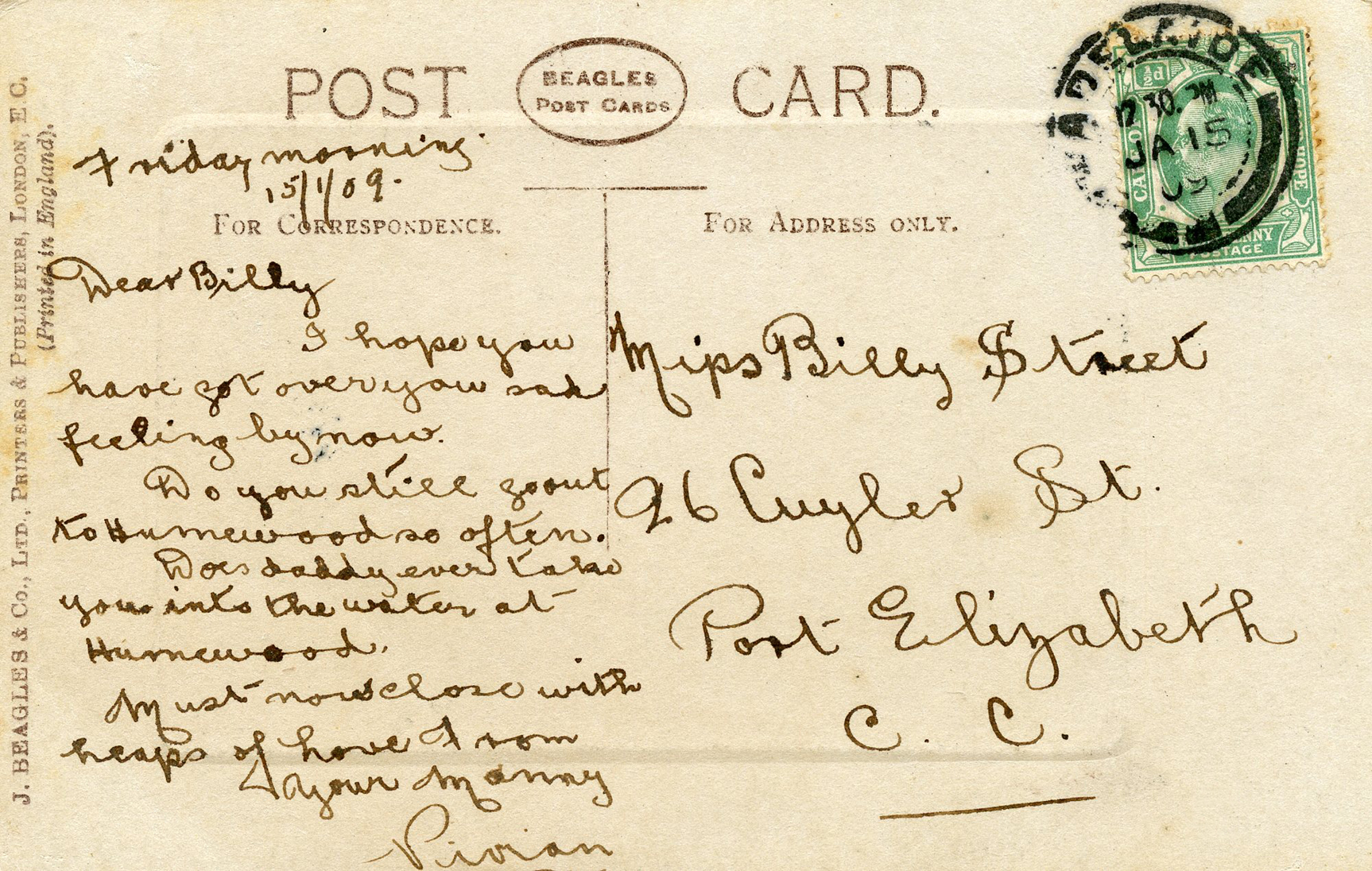
[Above: Reverse. Same sender as above, again sent from Adelaide to Port Elizabeth. Postmarked on January 15, 1909 with no receival stamp.]
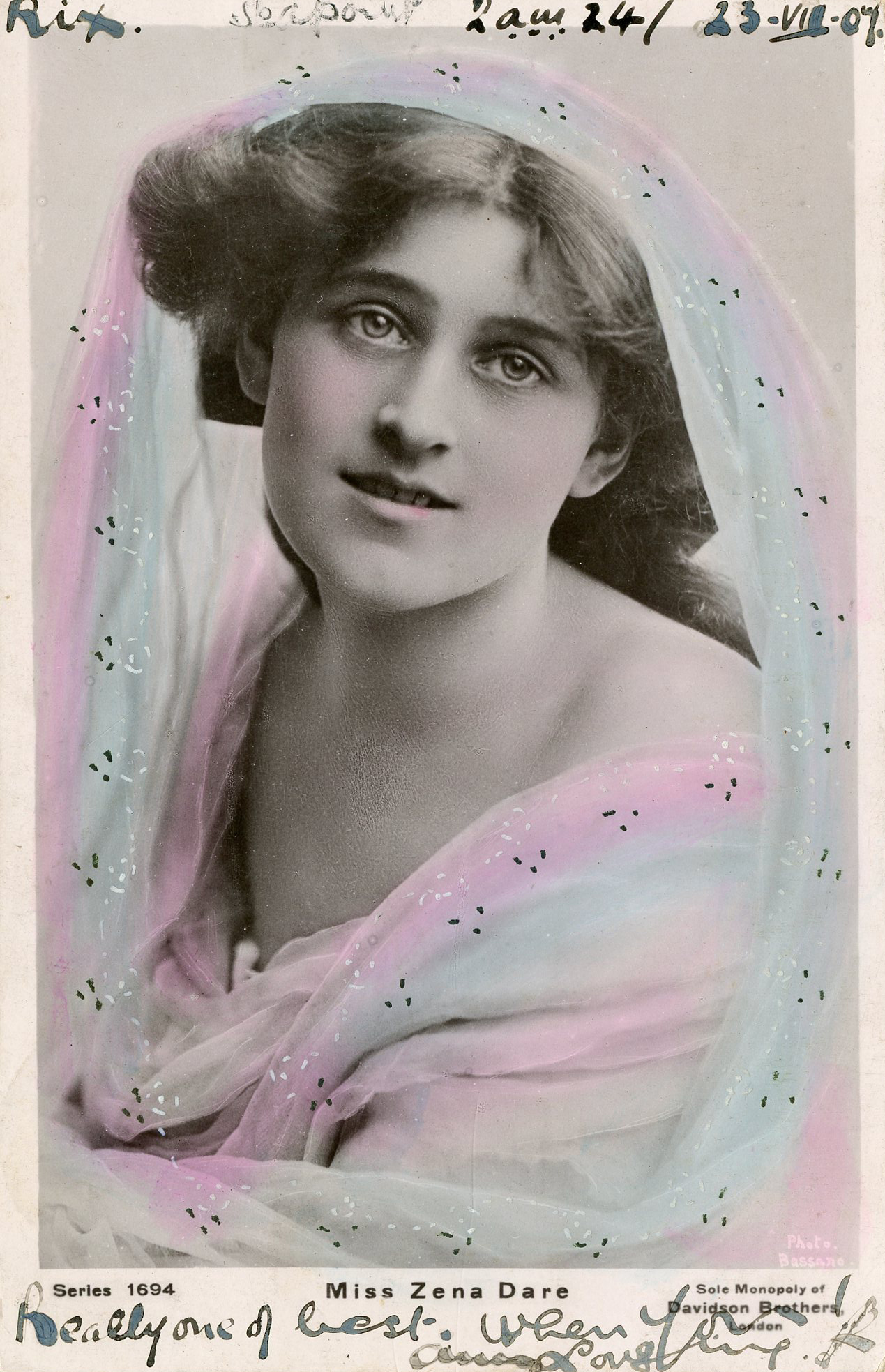
[Above: What is going on here? Is this ALSO a man?!]
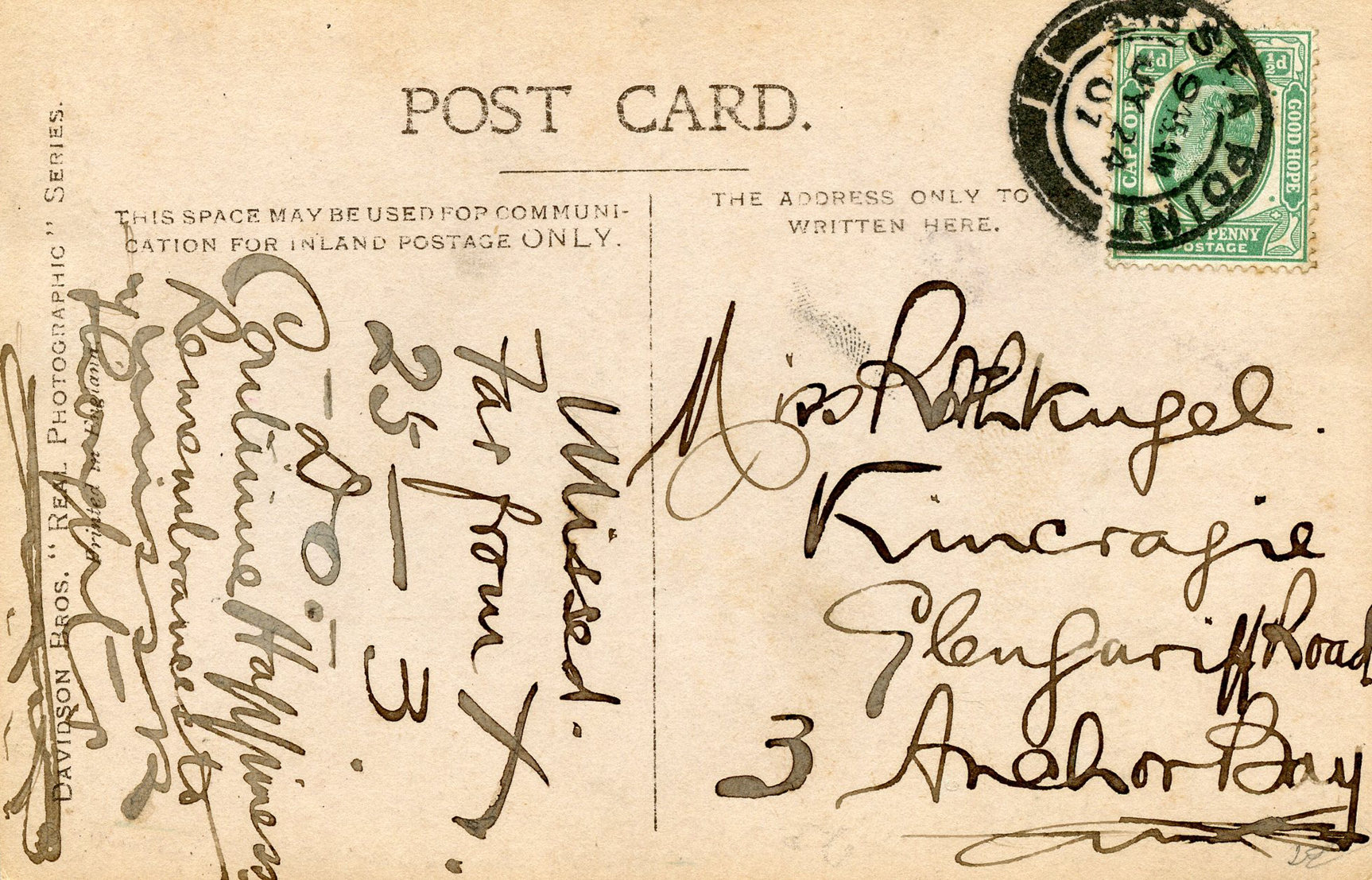
[Above: Reverse. This was postmarked in Sea Point in March 1907. Sea Point is a coastal suburb of Cape Town, located just a short distance north of the actual Cape of Good Hope peninsula.]
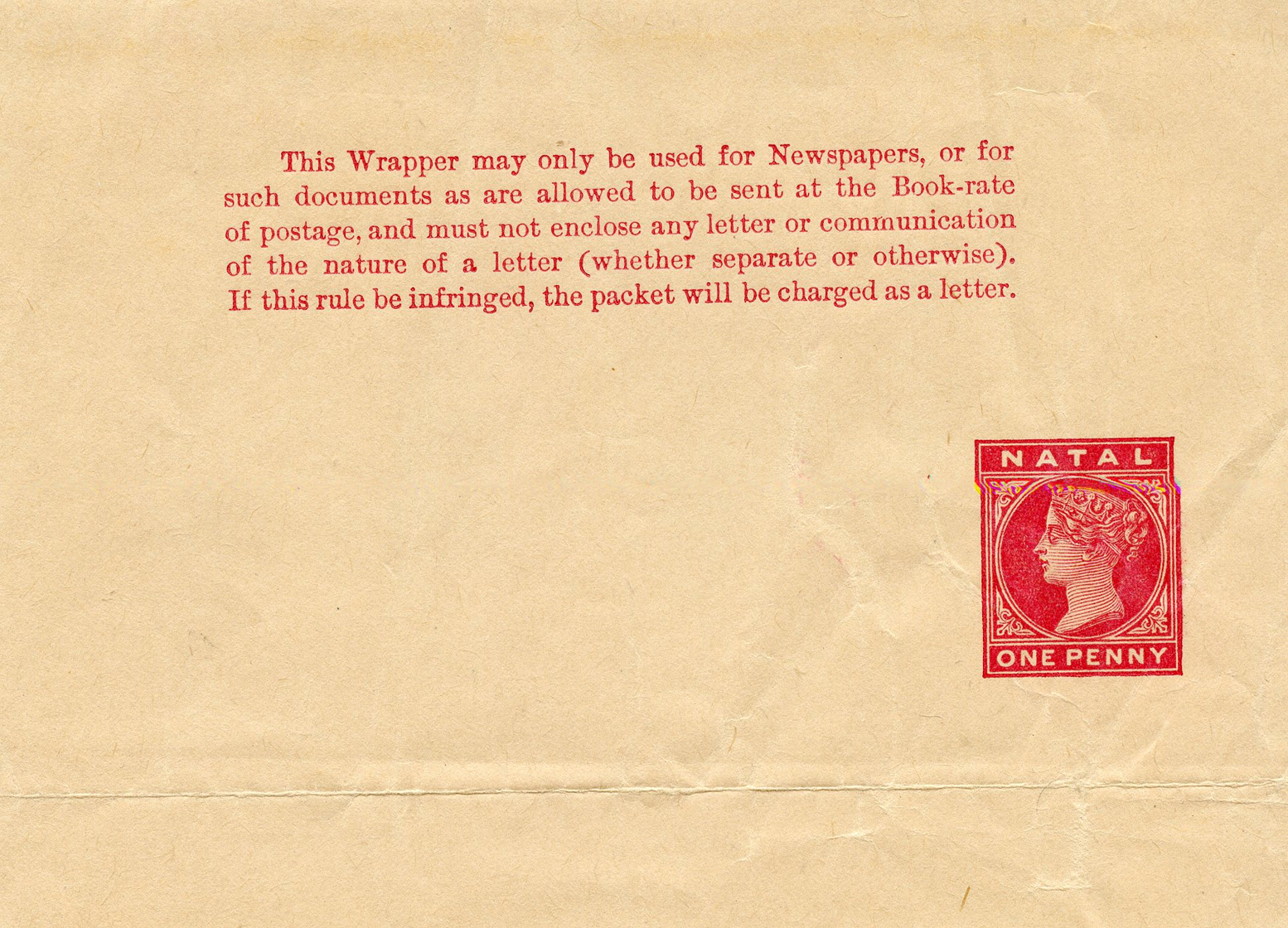
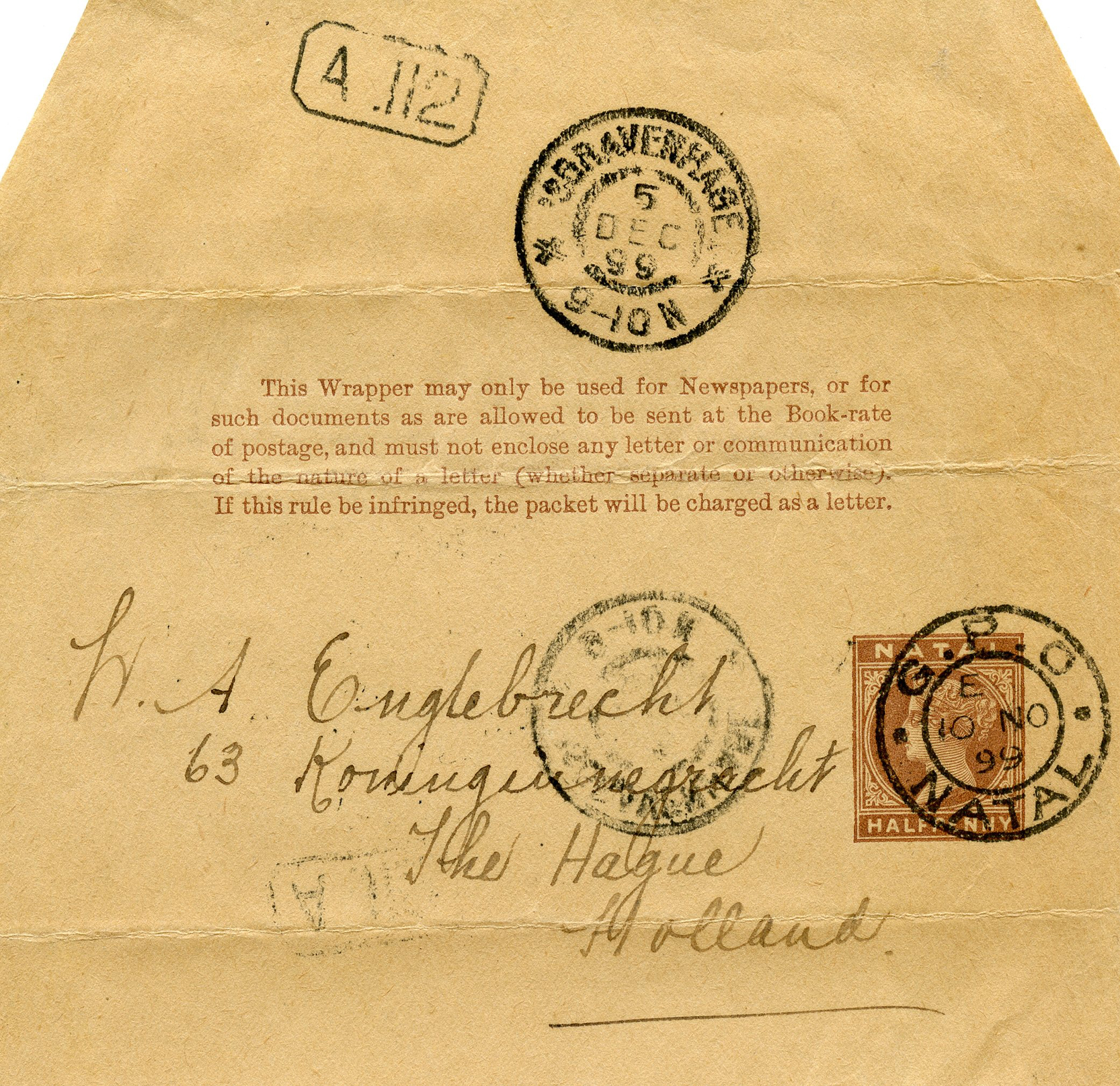
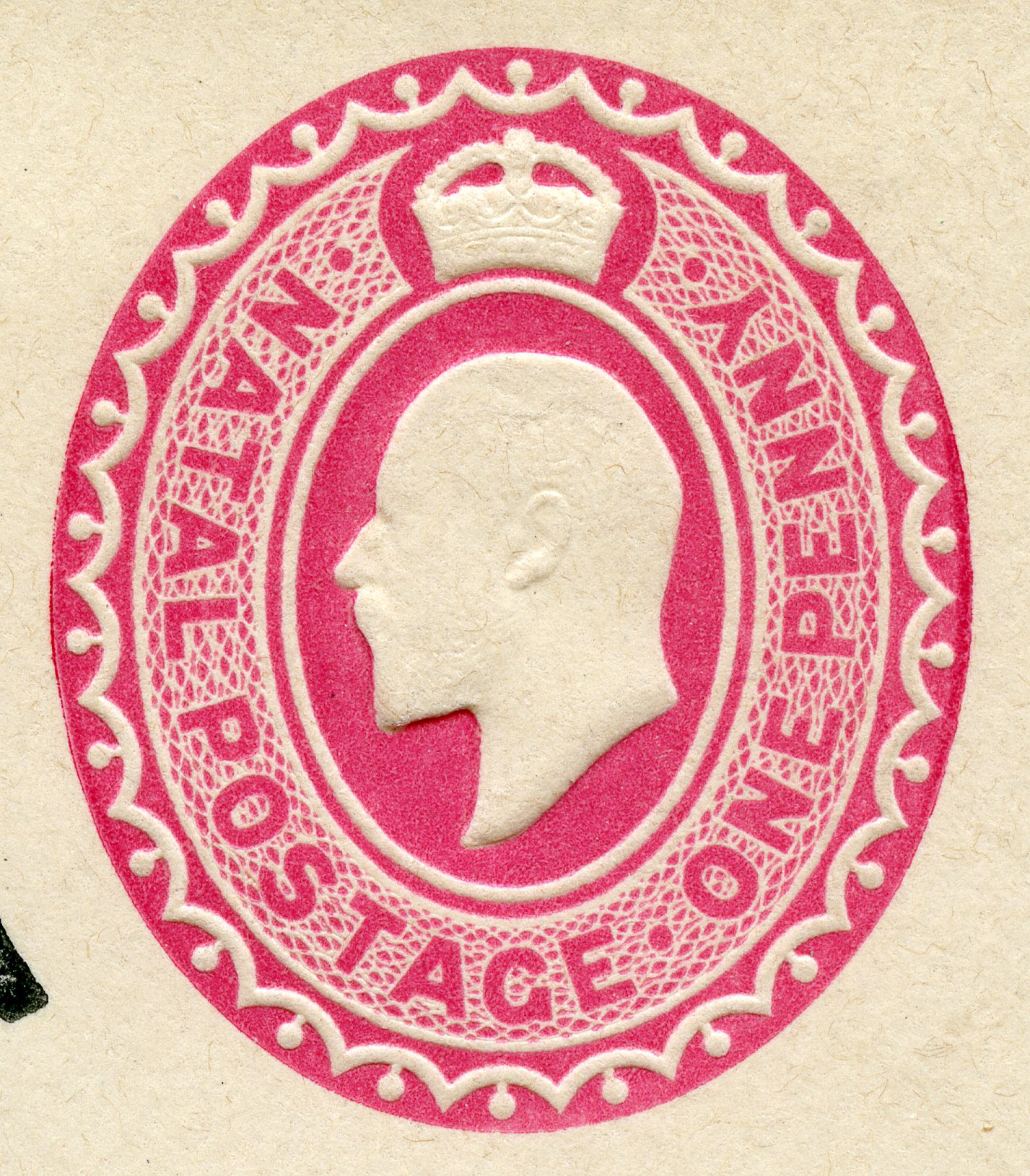
[Above: Let's move on to Natal. Most people on earth have probably never heard of this place. Natal means 'native' or 'home'. 'Portuguese explorer Vasco da Gama named the coast "Natal" (Christmas) in 1497 because he sighted it on Christmas Day' Man, the Portuguese were such bad asses, such world leaders, what the hell happened? This was 'a former British colony and a traditional province of South Africa before being renamed in 1994.' Anyway, as this says, and like above, this is a newspaper wrapper from the late 1880s.]
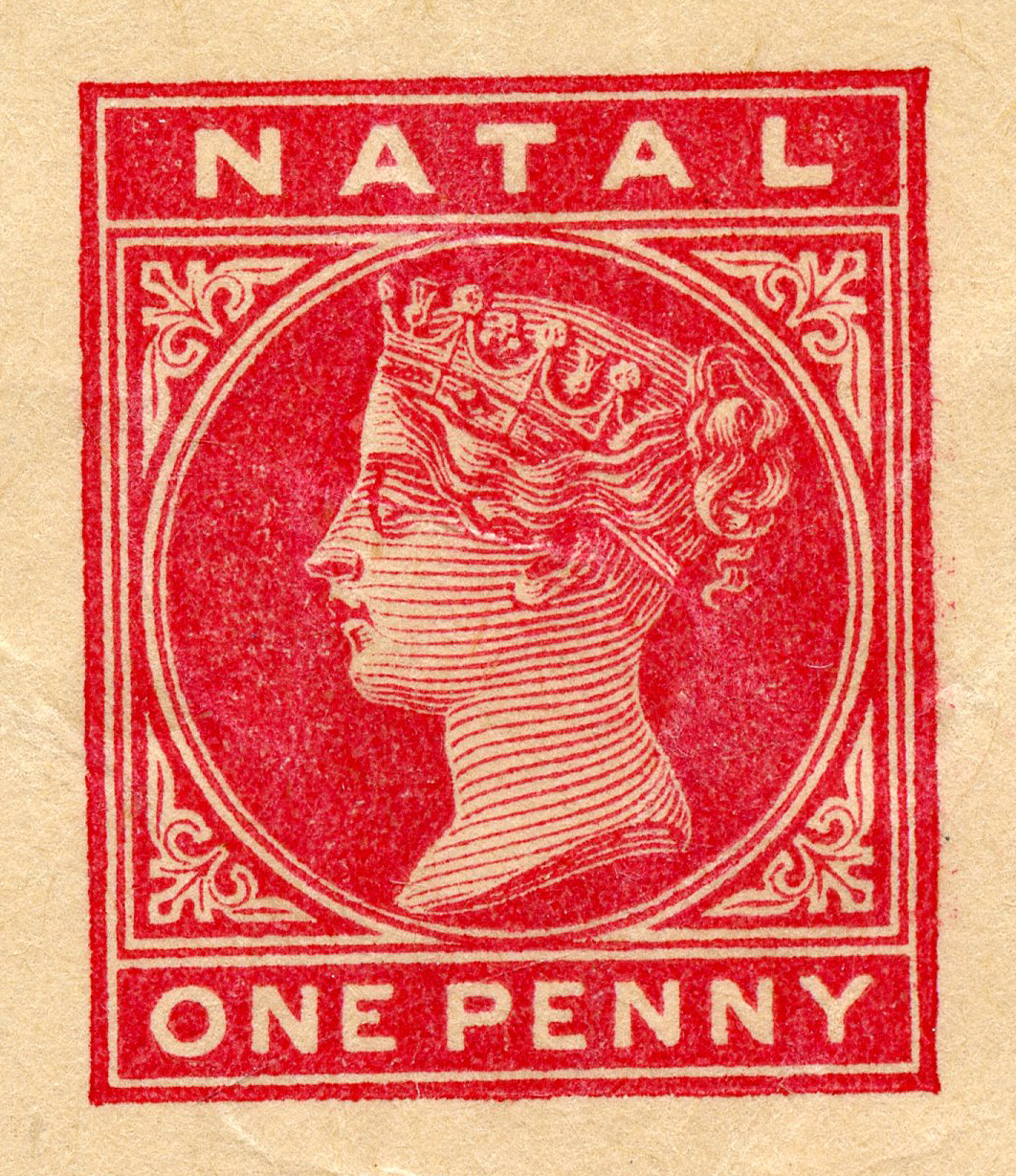
[Above: Close-up.]
[Above: This newspaper wrapper from Natal was sent on November 10, 1899 to The Hague, Holland. This has an arrival stamp of December 5, 1899 in Gravenhage, which 'is the formal, historic, and official name, while The Hague is the English translation of its common Dutch short form, Den Haag.' So this took almost a month to get to its destination.]
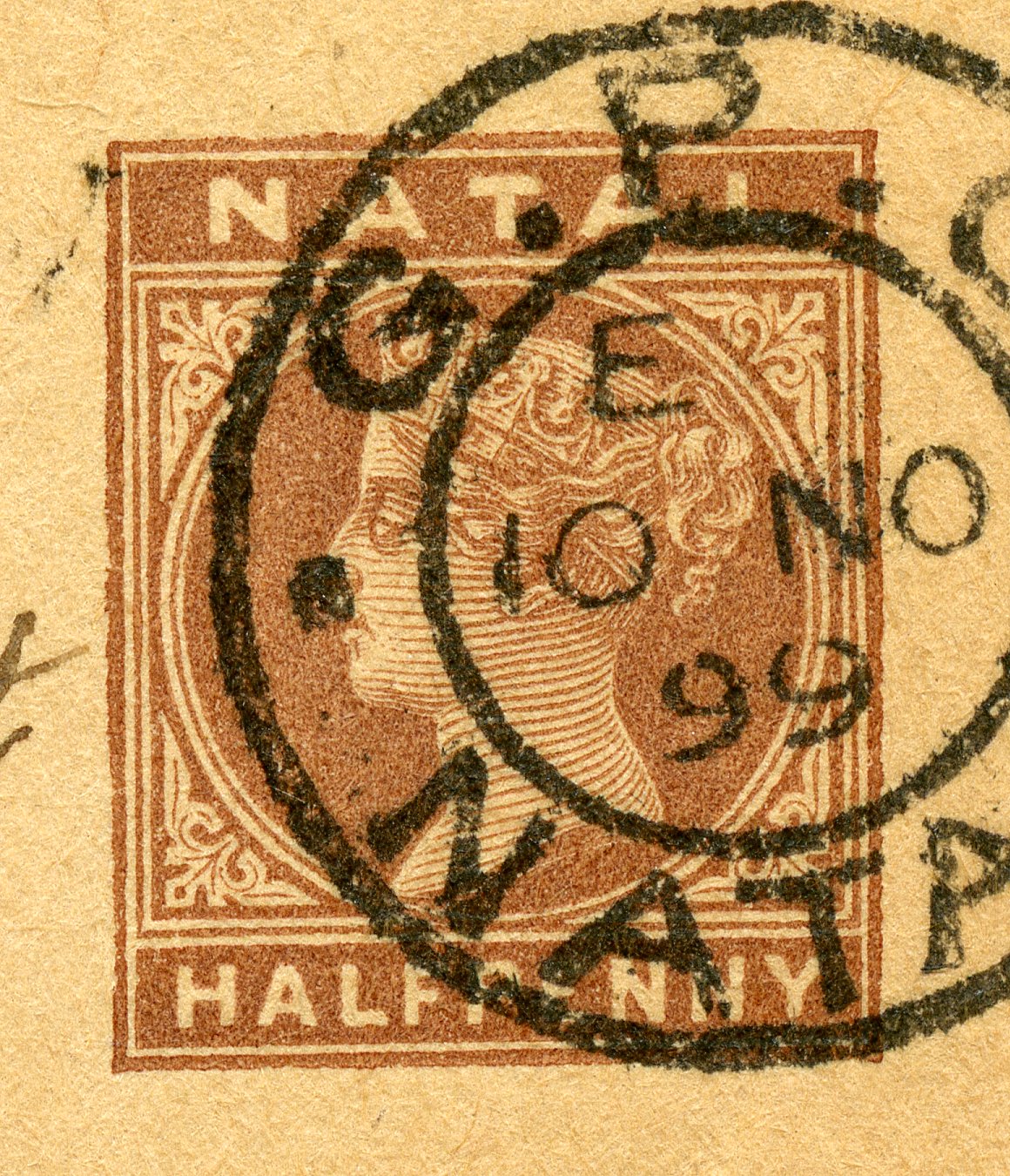
[Above: Close-up.]
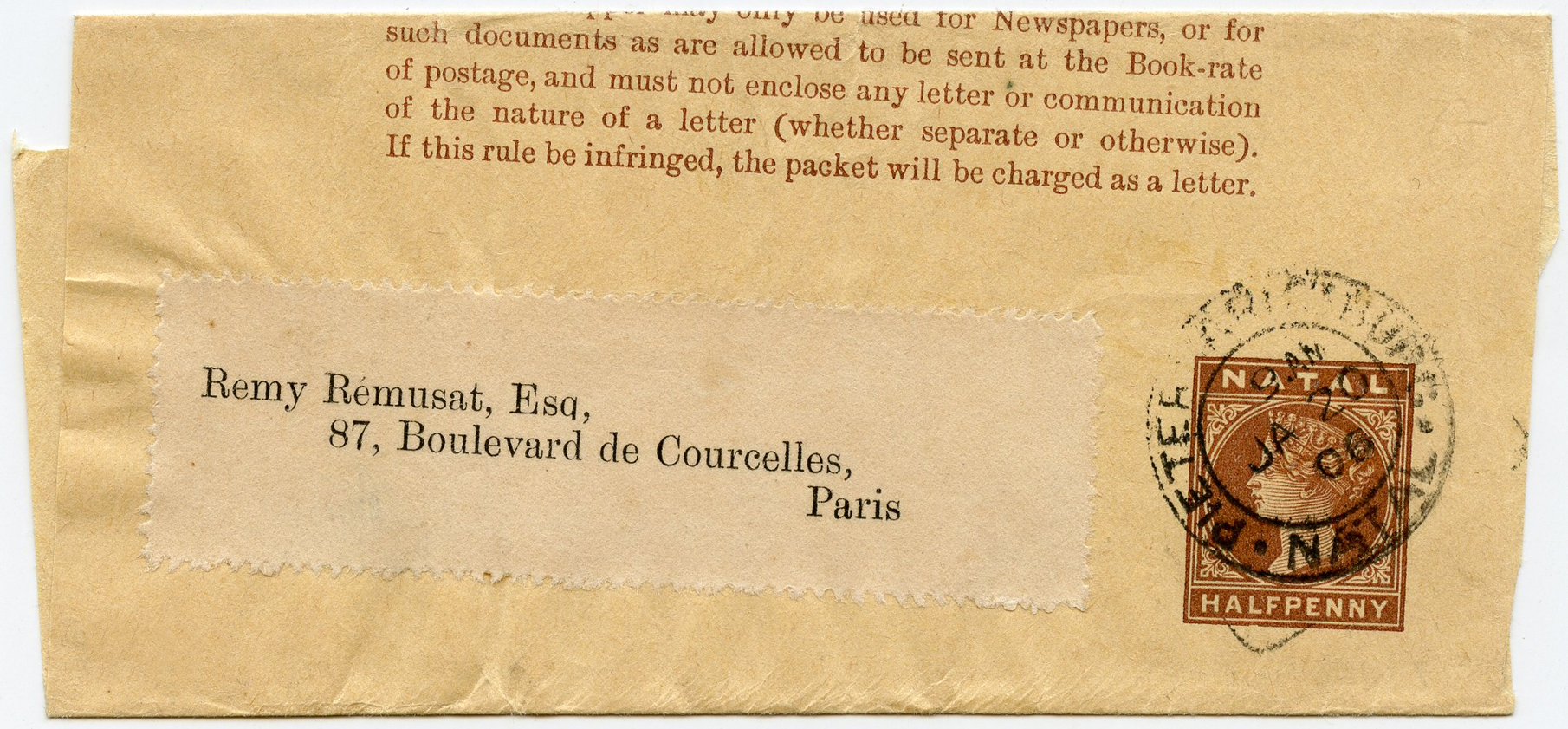
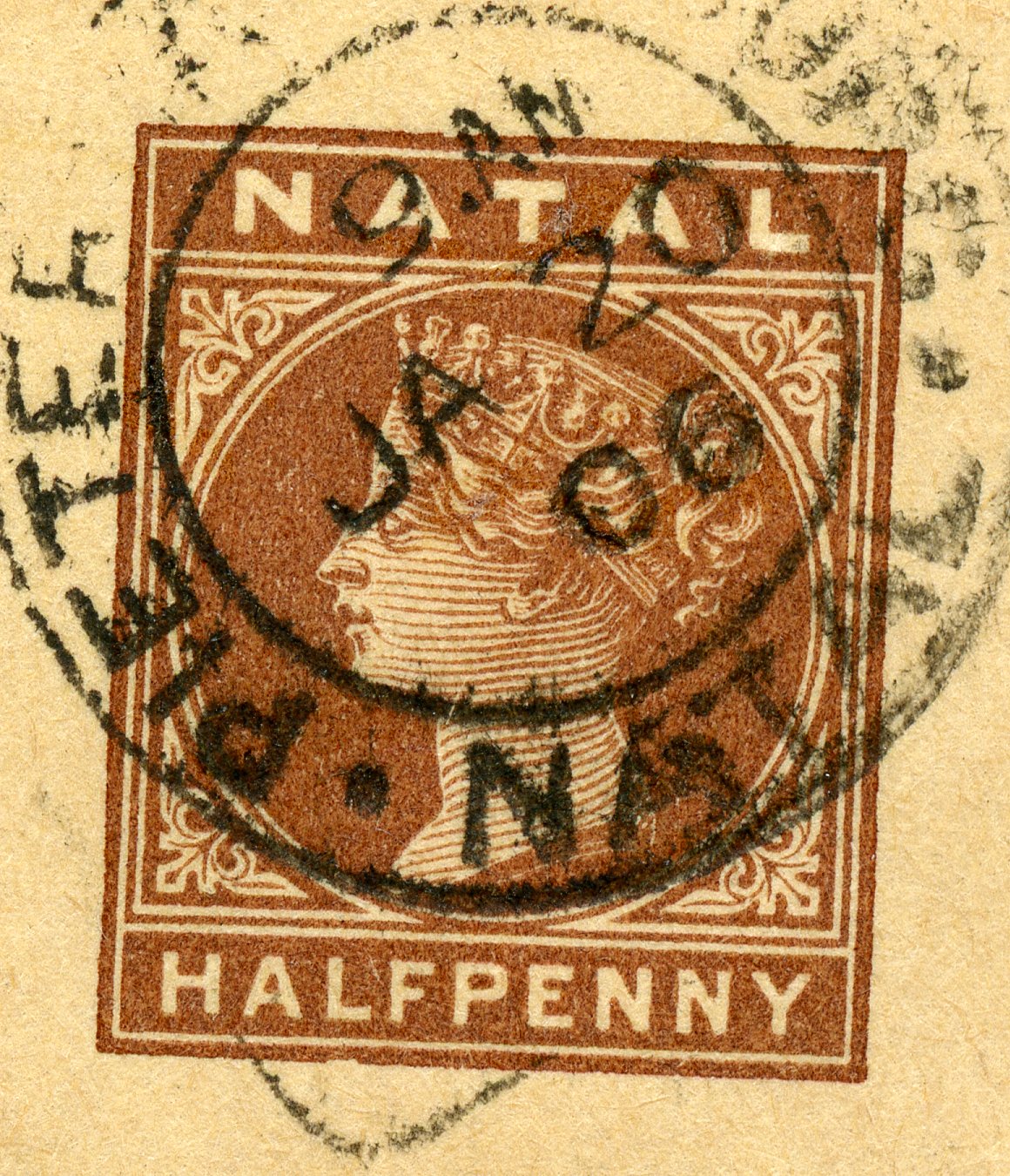
[Above: Another newspaper wrapper from Natal, this one postmarked on January 20, 1906 and sent to Paris, with no receival stamp.]
[Above: Close-up.]
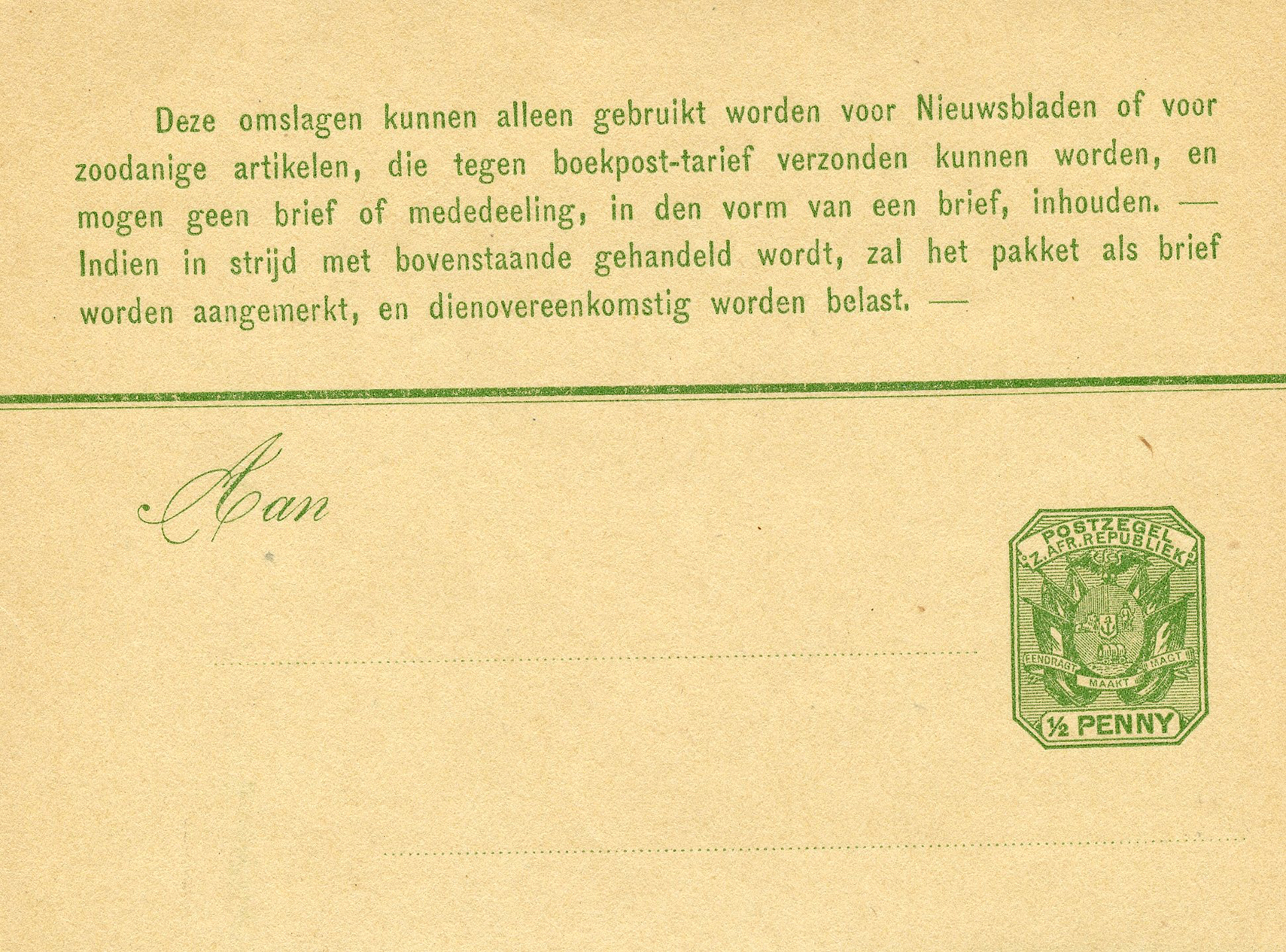
[Above: Now let's move on to Transvaal. 'Transvaal is a former historical region and province in northeastern South Africa, meaning "beyond the Vaal River". It existed under various names including an independent Boer republic, a British colony, and a South African province before it was dissolved in 1994.' As above, this is a newspaper wrapper. This is in the Dutch language.]
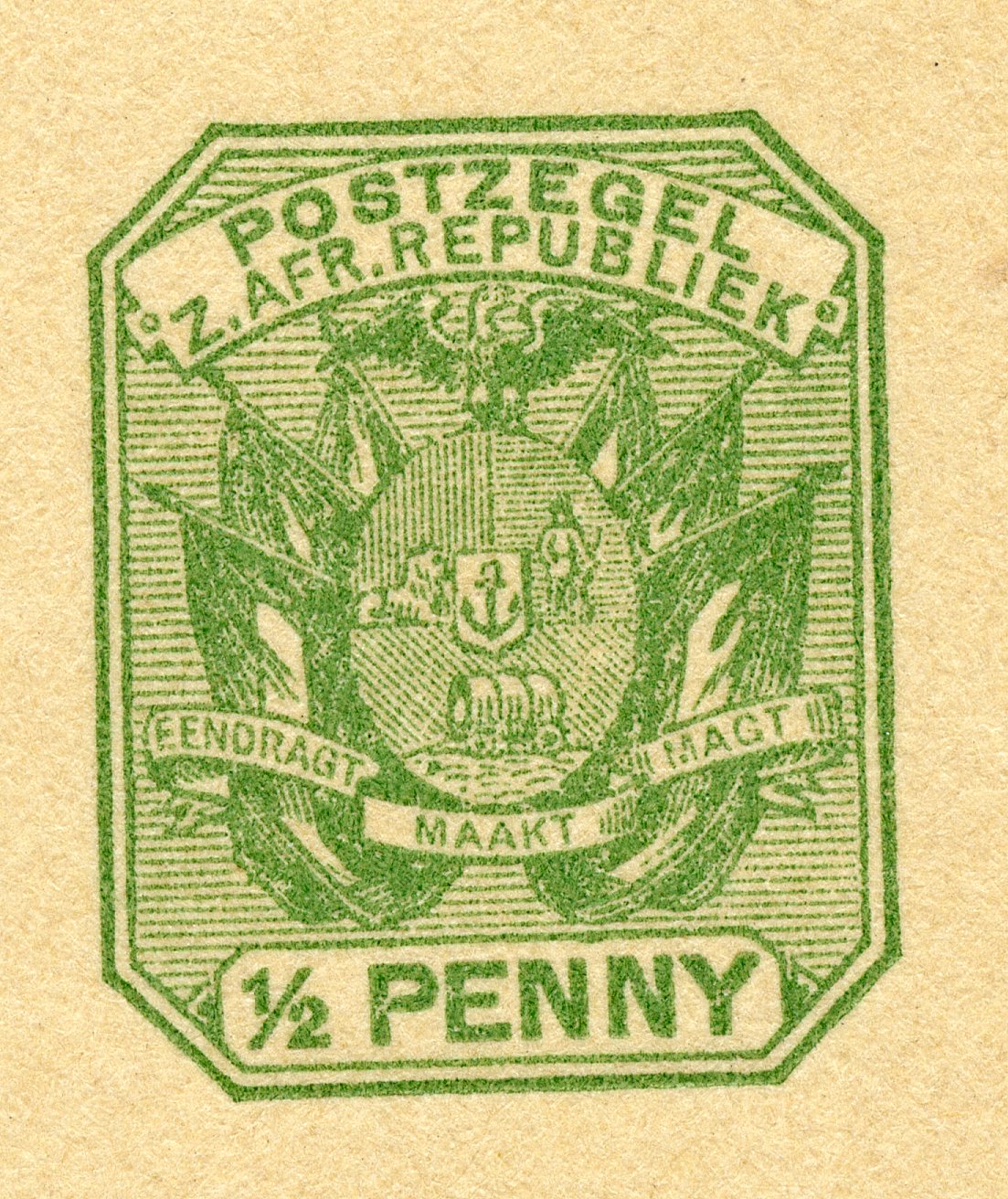
[Above: Close-up.]
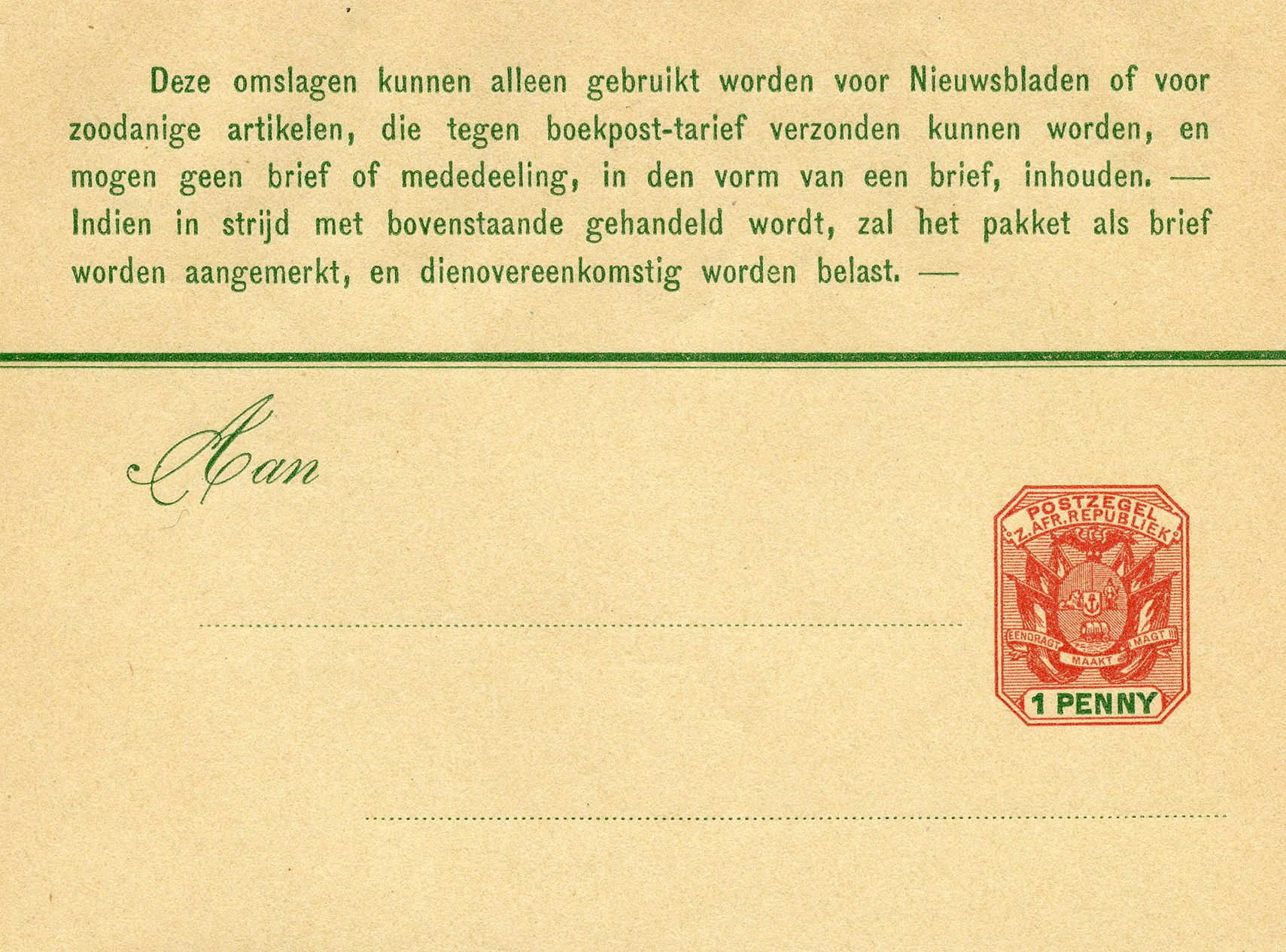
[Above: Another Transvaal newspaper wrapper, this one 1 penny.]
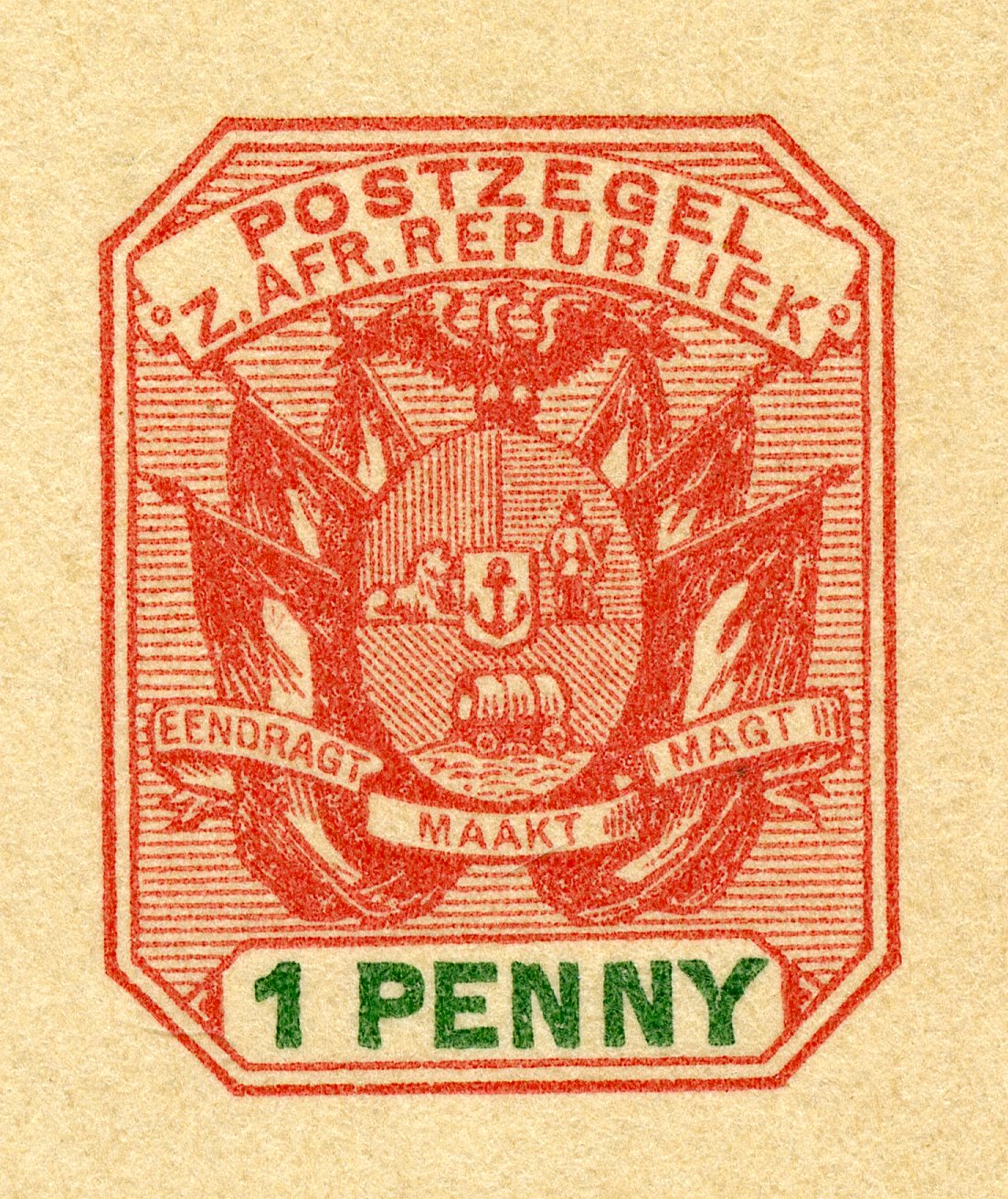
[Above: Another Transvaal newspaper wrapper, this one 1 penny.]
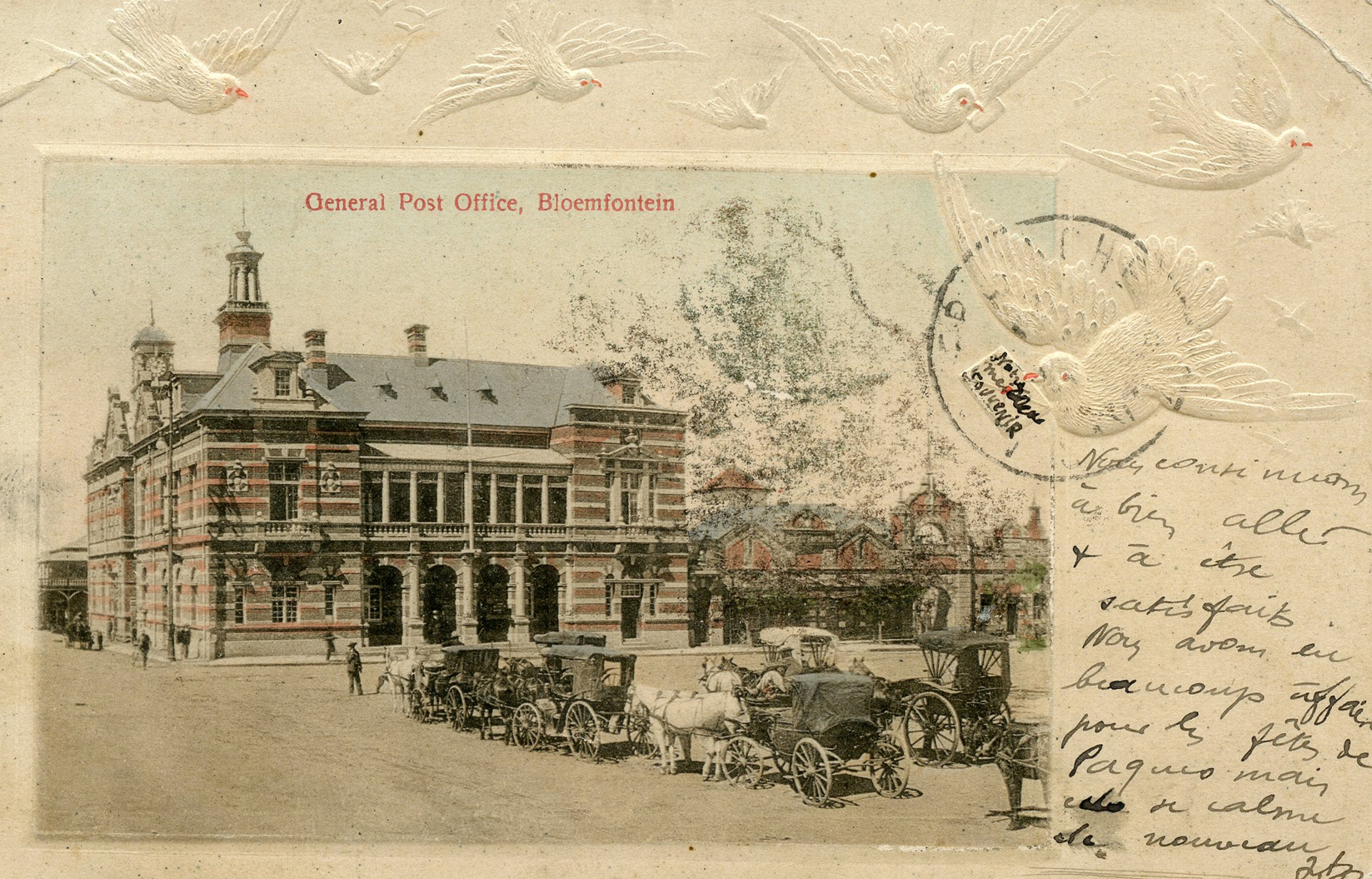
[Above: Transvaal postcard. This is embossed.]
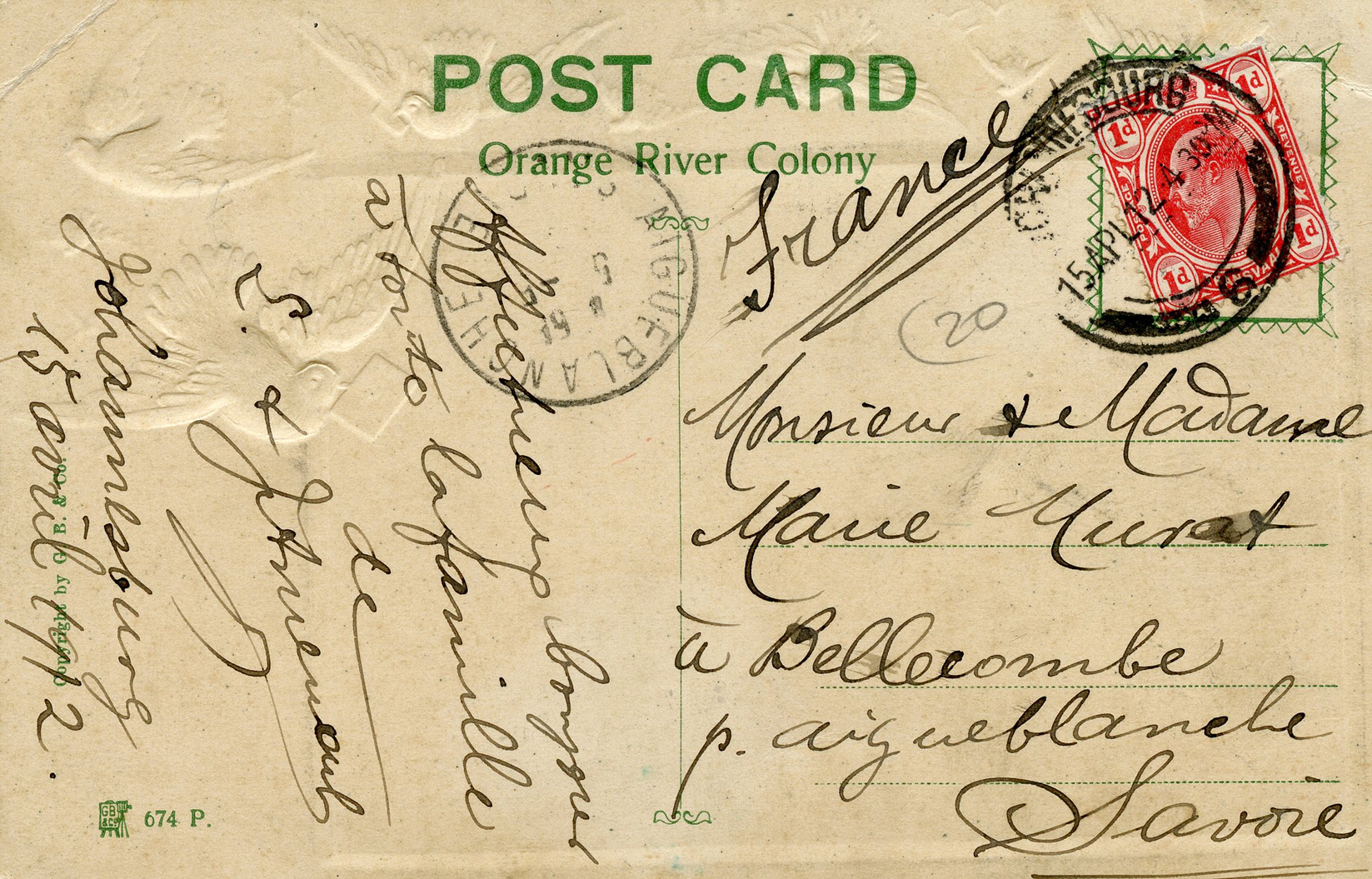
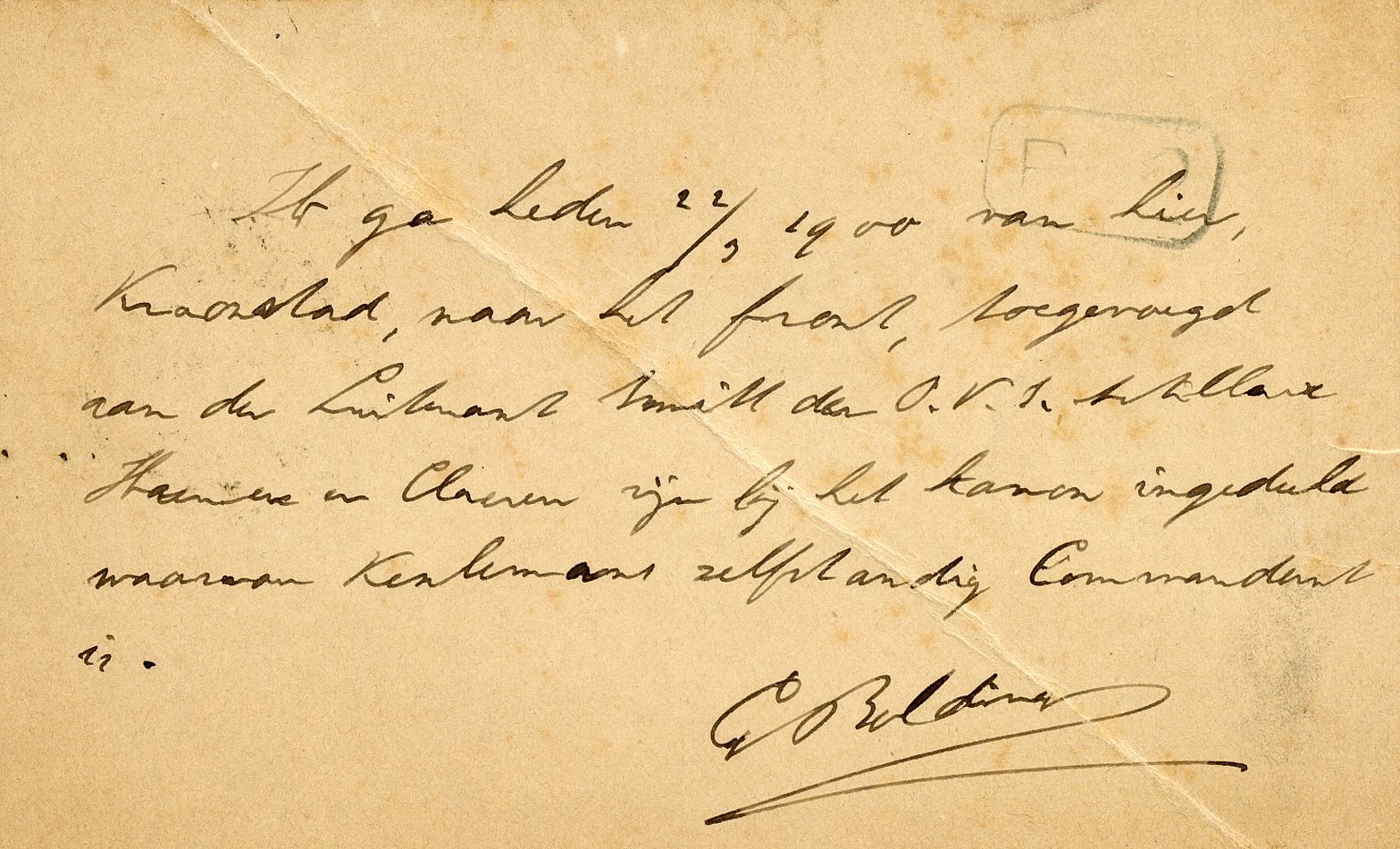
[Above: This was used in Transvaal, but uses an Orange River Colony postcard. So what is this place? 'The Orange River Colony was a British colony in southern Africa that existed from 1902 to 1910. Formed after Britain annexed the independent Orange Free State during the Second Boer War, it was eventually absorbed into the newly created Union of South Africa as the Orange Free State Province.' This was postmarked in Johannesburg, South Africa, but uses a Transvaal postage stamp, postmarked on April 15, 1912. This was sent to Aigueblanche, 'a picturesque former commune located in the Savoie department within the Auvergne-Rhône-Alpes region of southeastern France.']
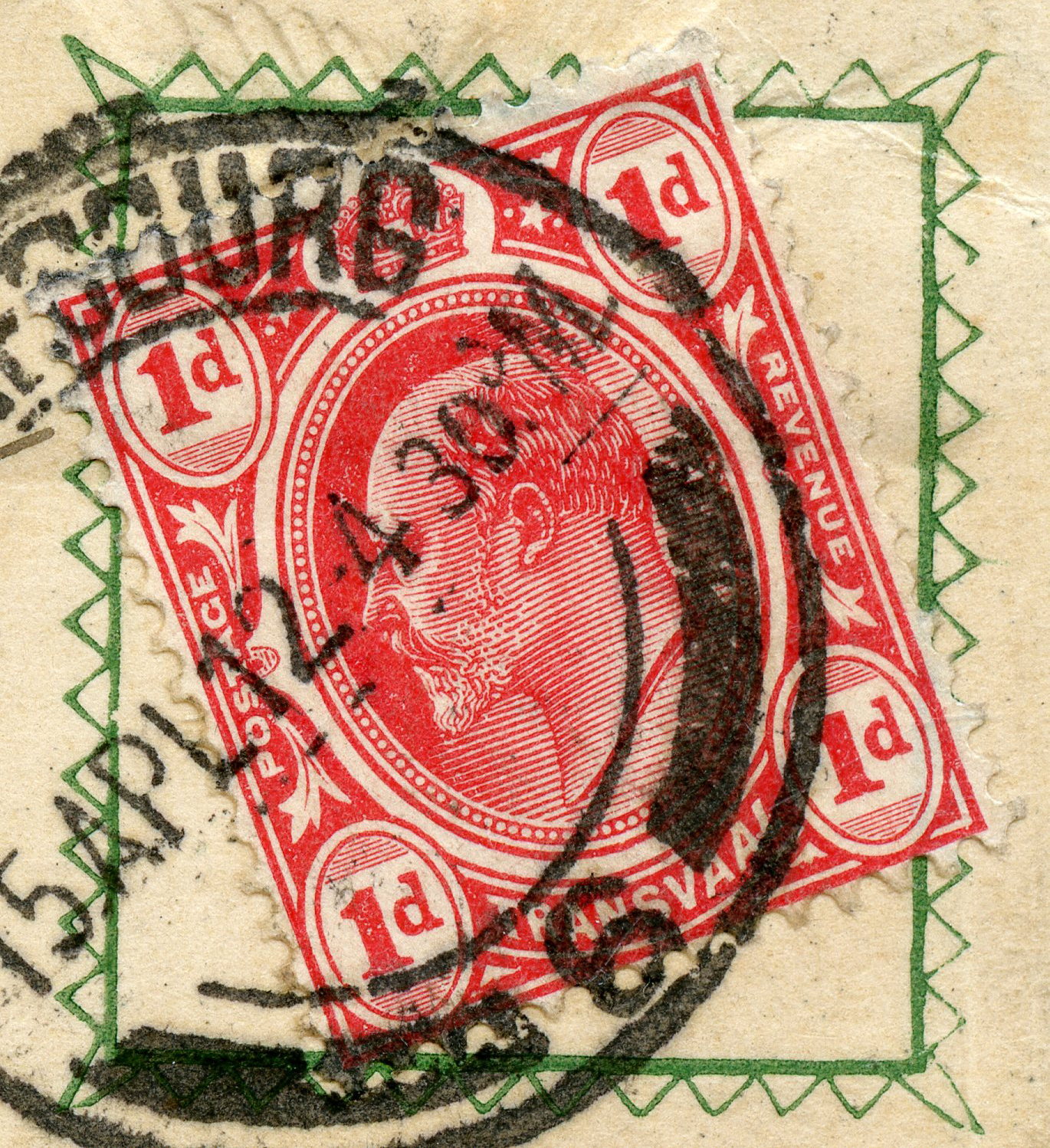
[Above: Close-up]
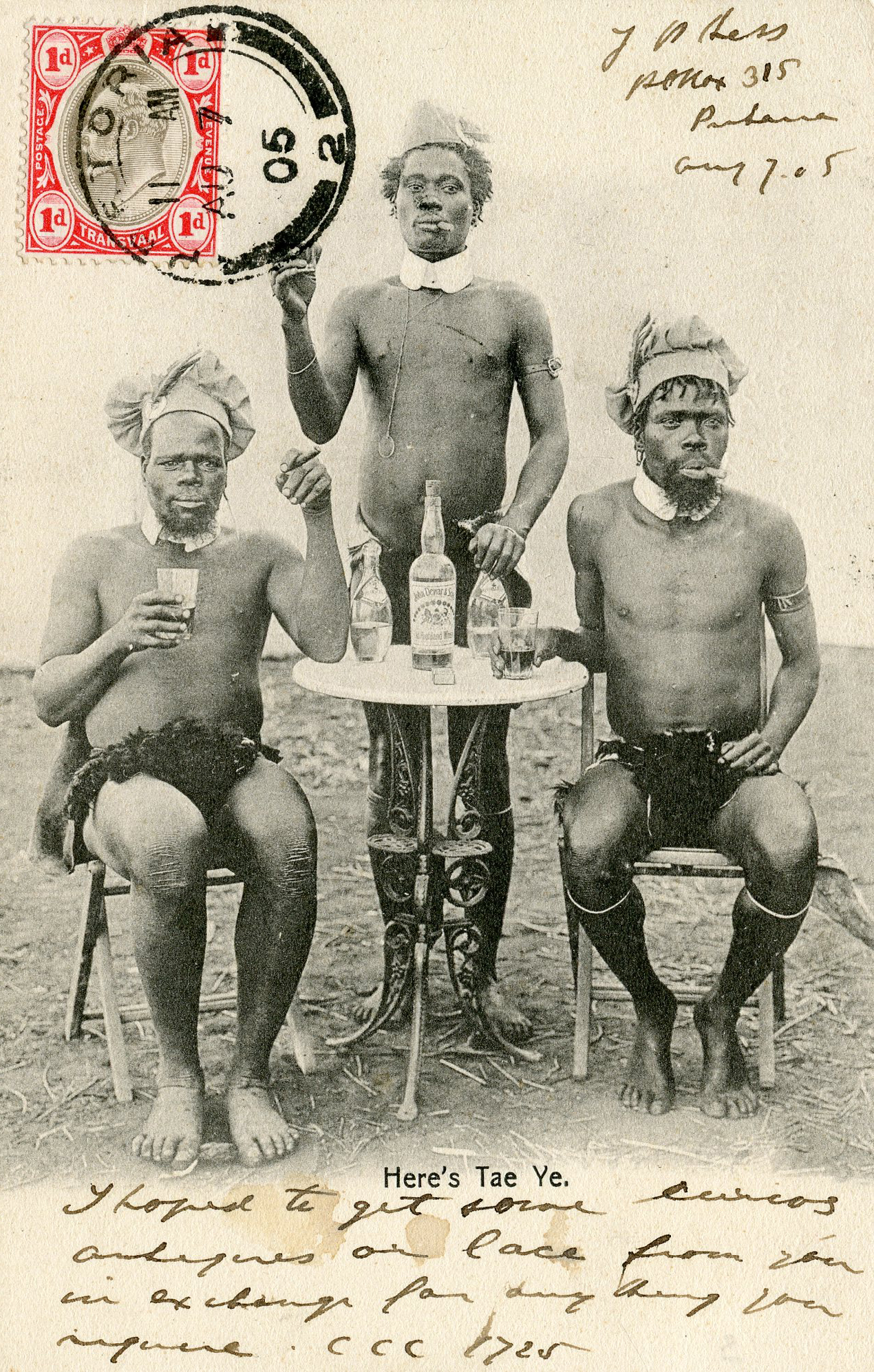
[Above: Here's an interesting one. These gentleman are drinking a bottle of John Dewar & Sons "White Label" Scotch Whisky. This was postmarked in Pretoria on August 7, 1905.]
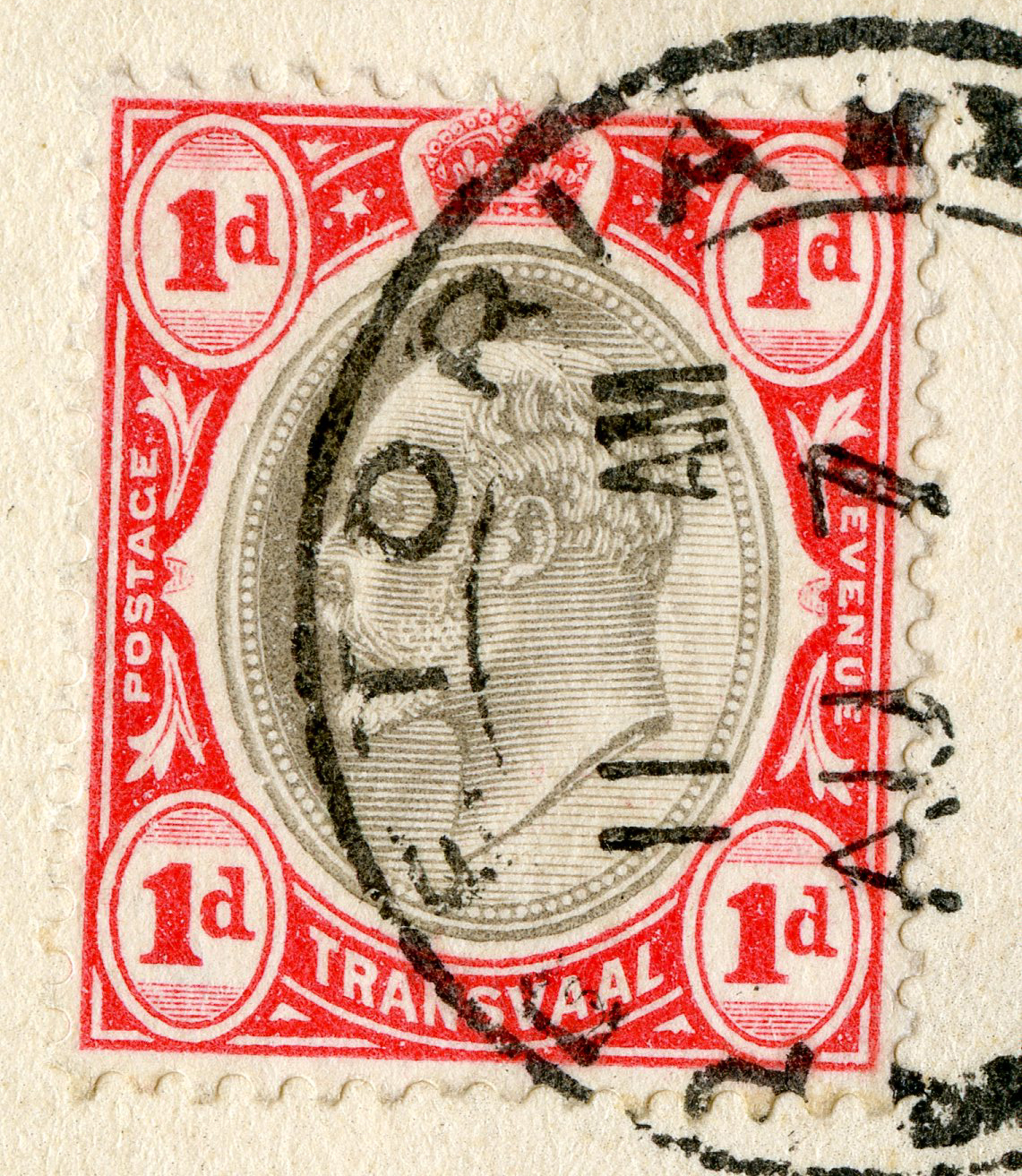
[Above: Close-up.]
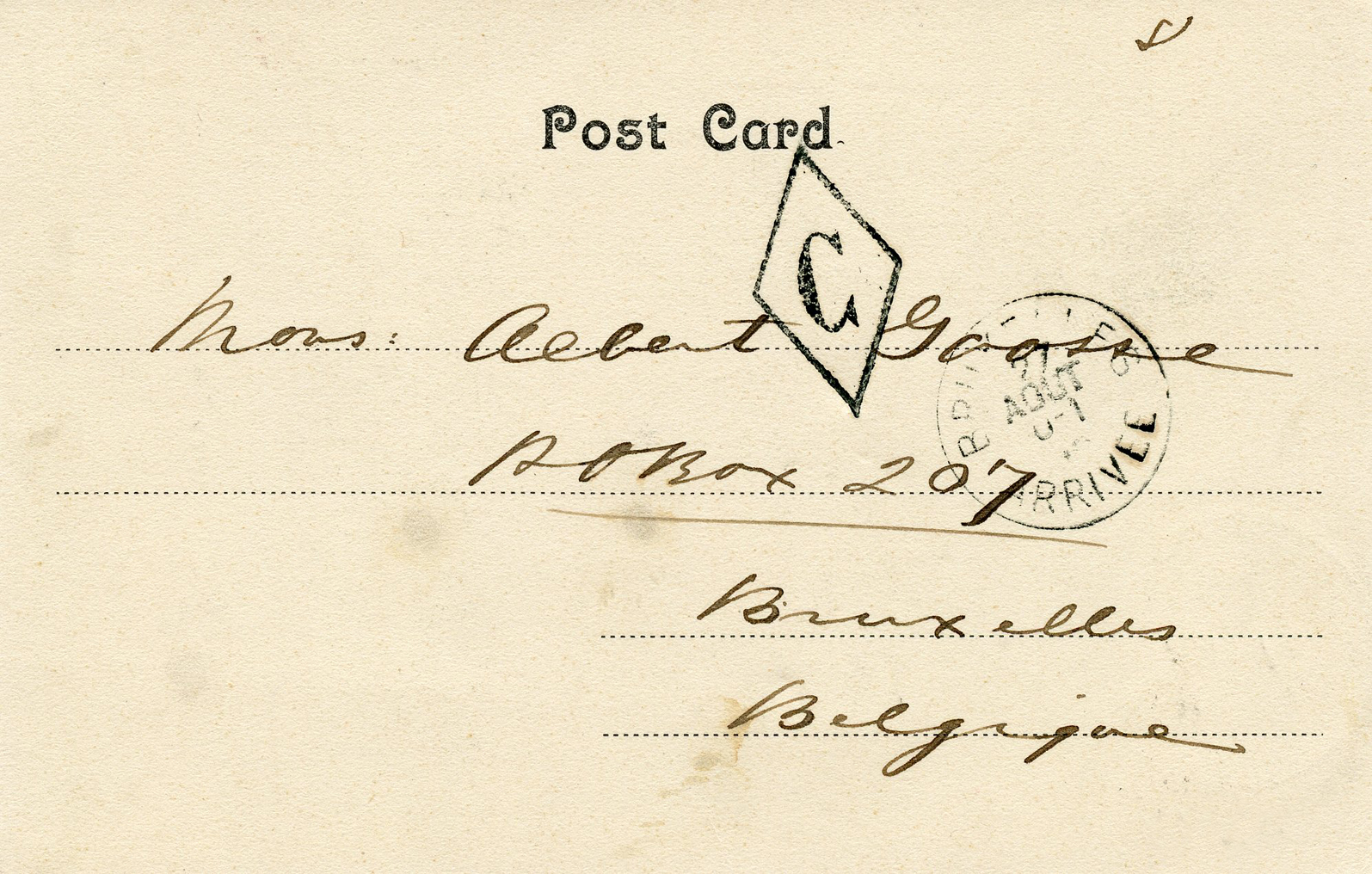
[Above: This was sent to Brussels, Belgium.]
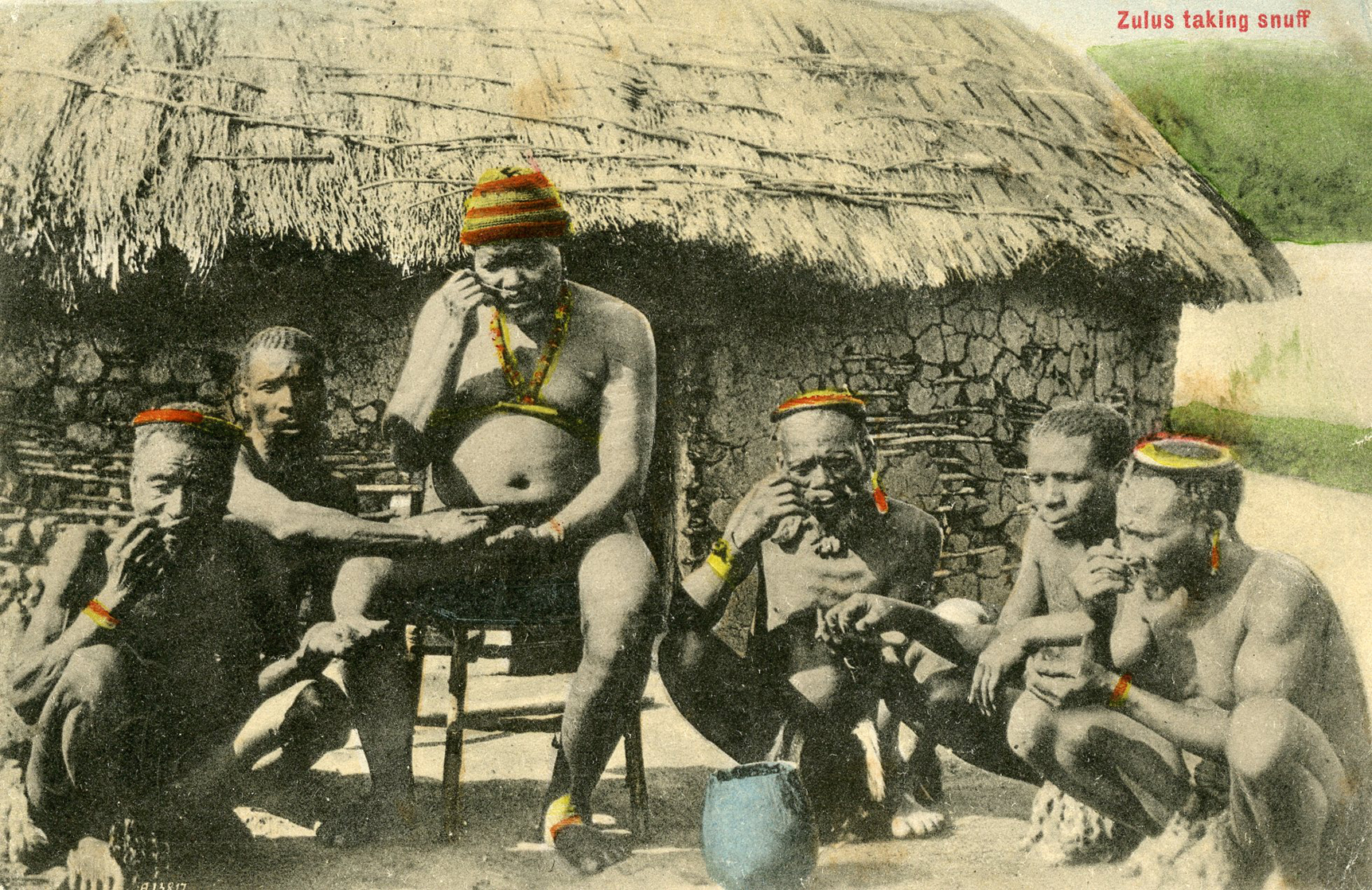
[Above: Snuff, ew. 'Snuff is a form of smokeless tobacco made from finely ground or pulverized tobacco leaves.' You sniff it and it burns your nose, then later you blow your nose and it is in your snot. Yeah, gross.]
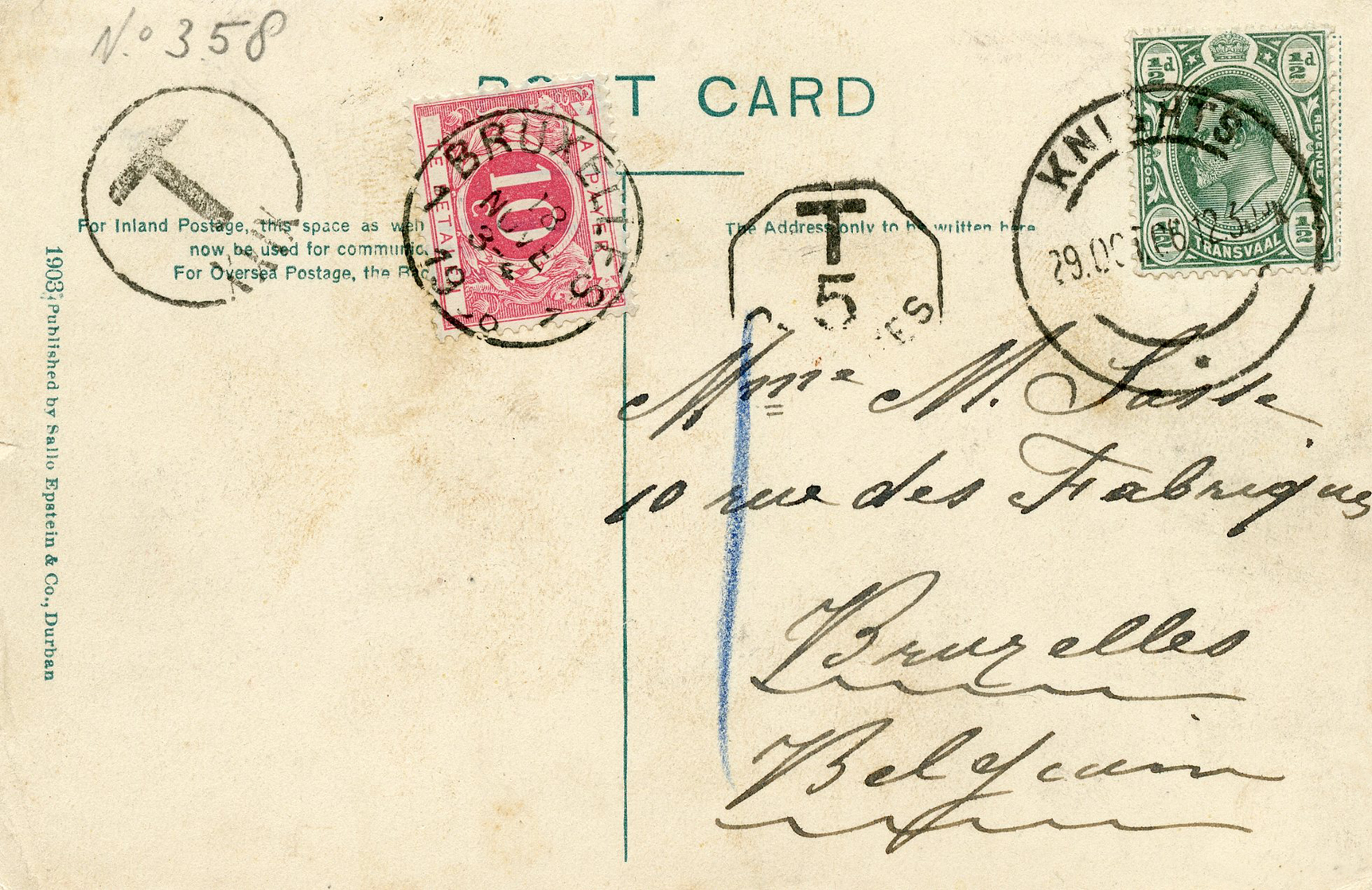
[Above: This was sent from Transvaal on October 29, 1906 to Brussels, Belgium, with 5 cents (5 centimes) postage due. The red stamp is a Belgium postage due paid stamp, but it is ten 5 centimes so they paid extra for some reason.]
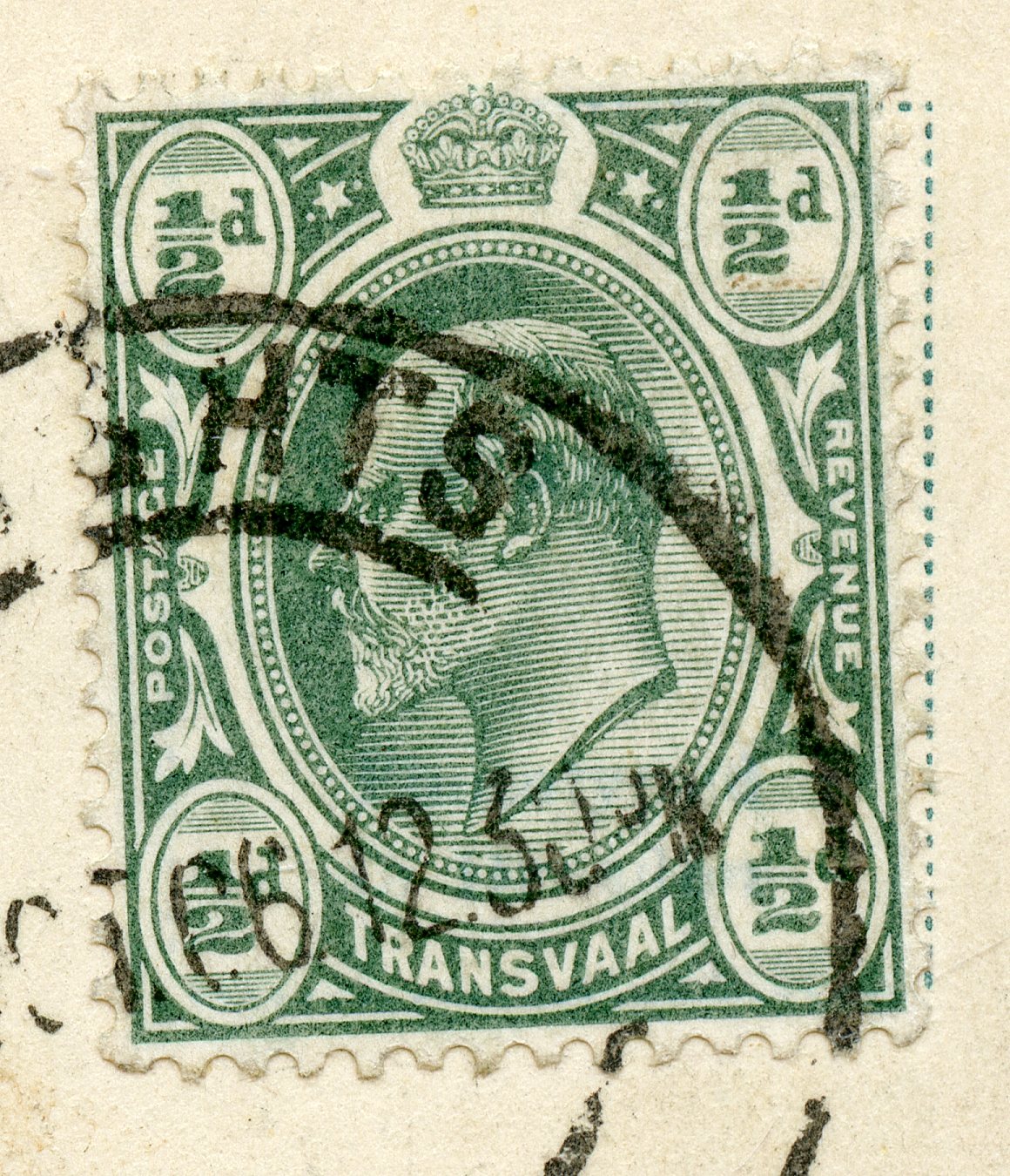
[Above: Close-up.]
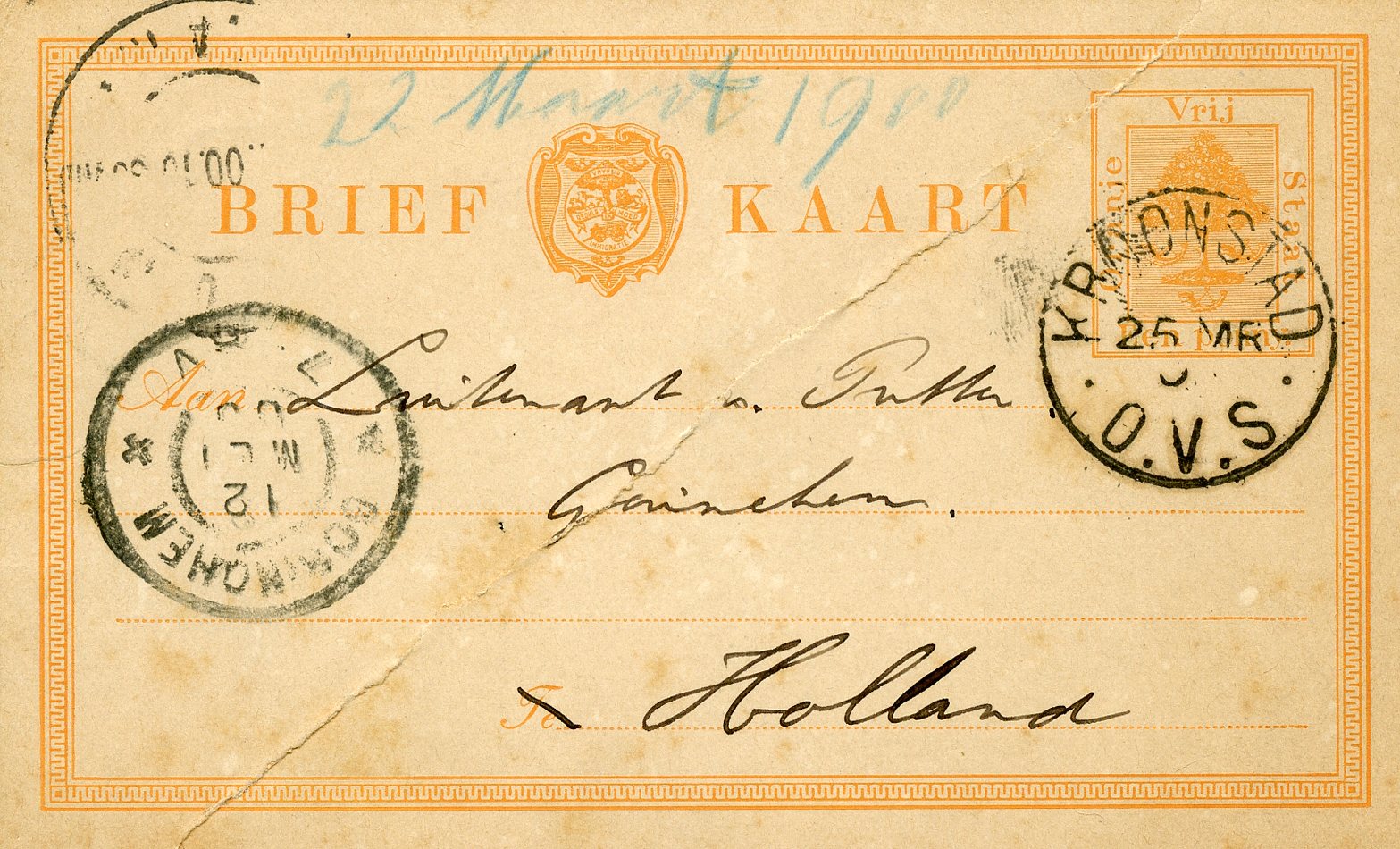
[Above: This is from Orange River Colony to Holland in 1900. Let me remind you of what this place is: 'The Orange River Colony was a British colony in southern Africa that existed from 1902 to 1910. Formed after Britain annexed the independent Orange Free State during the Second Boer War, it was eventually absorbed into the newly created Union of South Africa as the Orange Free State Province'.]
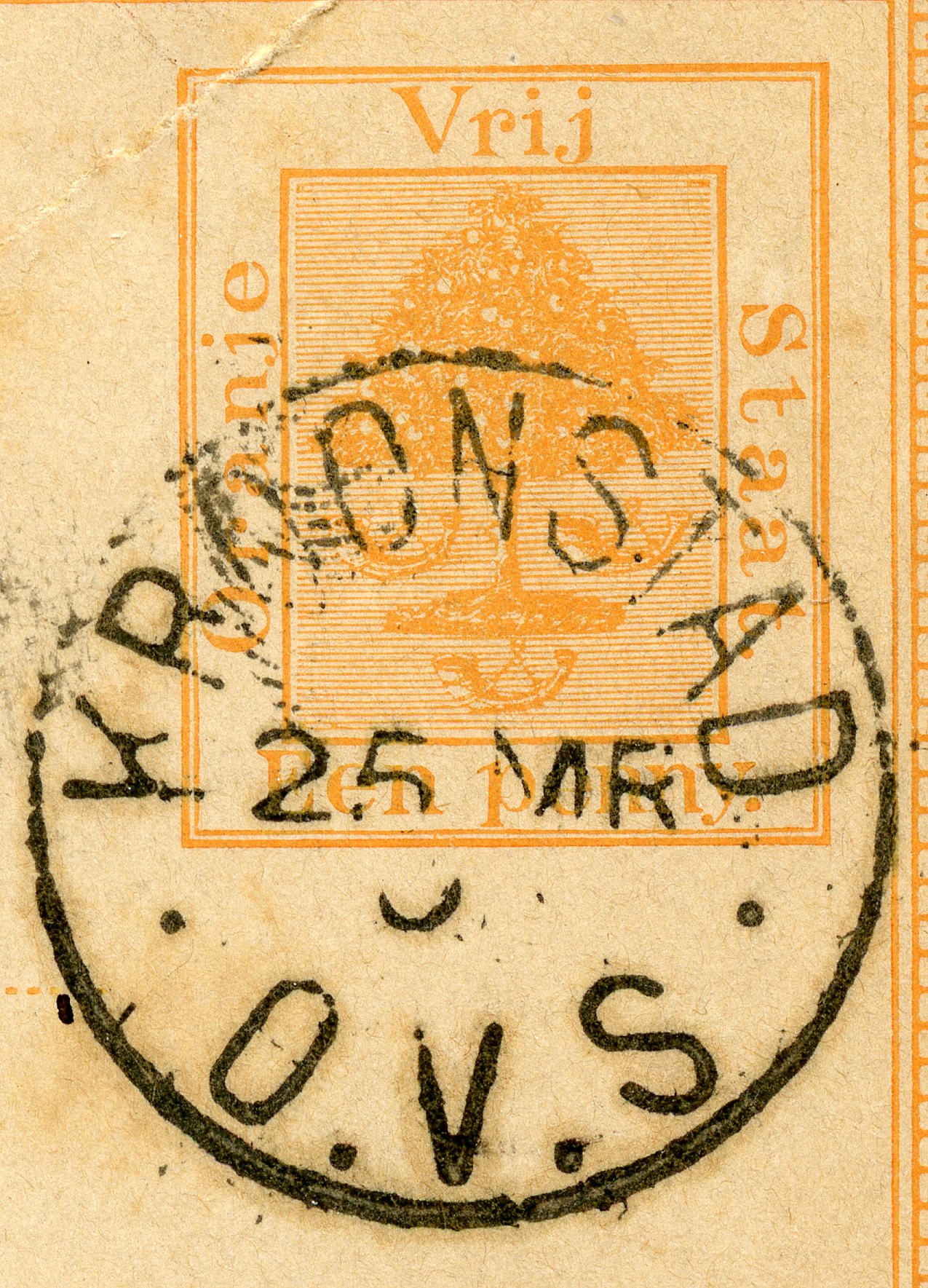
[Above: Close-up.]
[Above: Reverse.]
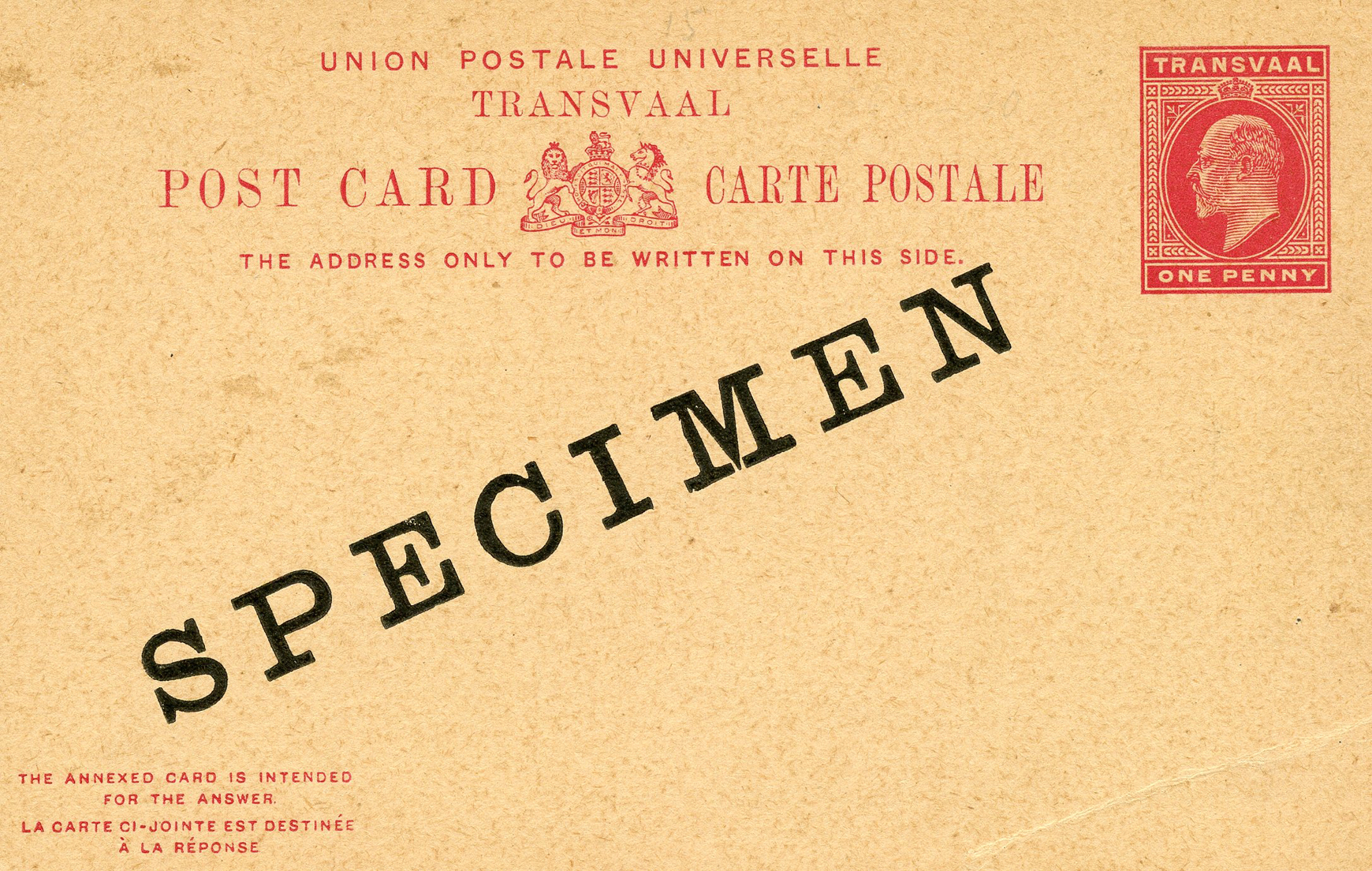
[Above: Here is an interesting 'SPECIMEN' postcard from Transvaal. Specimen items, whether they be postcards, prepaid envelopes or postage stamps, were sent to post offices and the like to familiarize authorities of new upcoming postcards or postage stamps. They are generally pretty rare, since they were probably meant to be thrown away. Currency also uses the specimen concept, sometimes perforating the currency with the words 'Specimen'.]
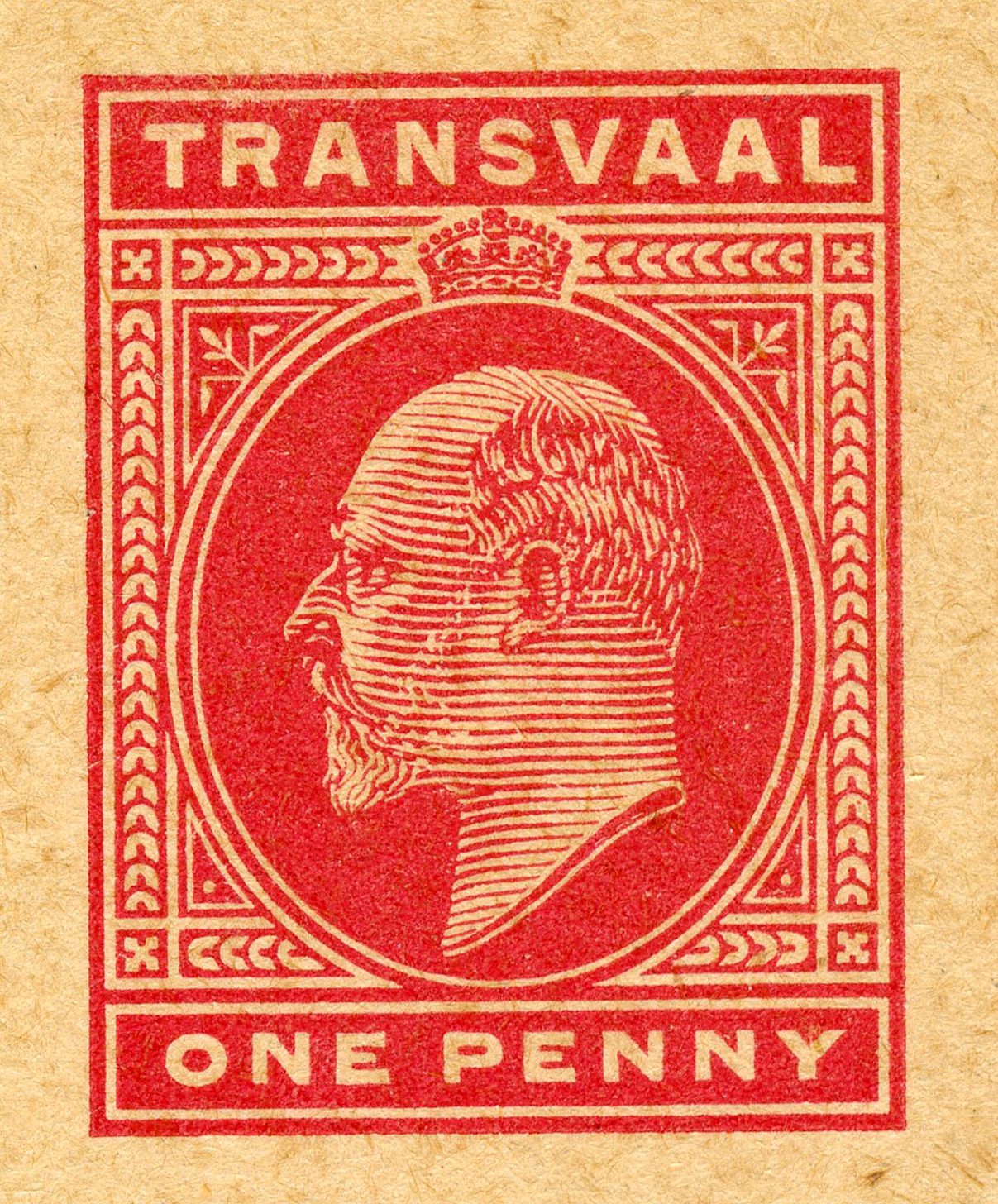
[Above: Close-up.]
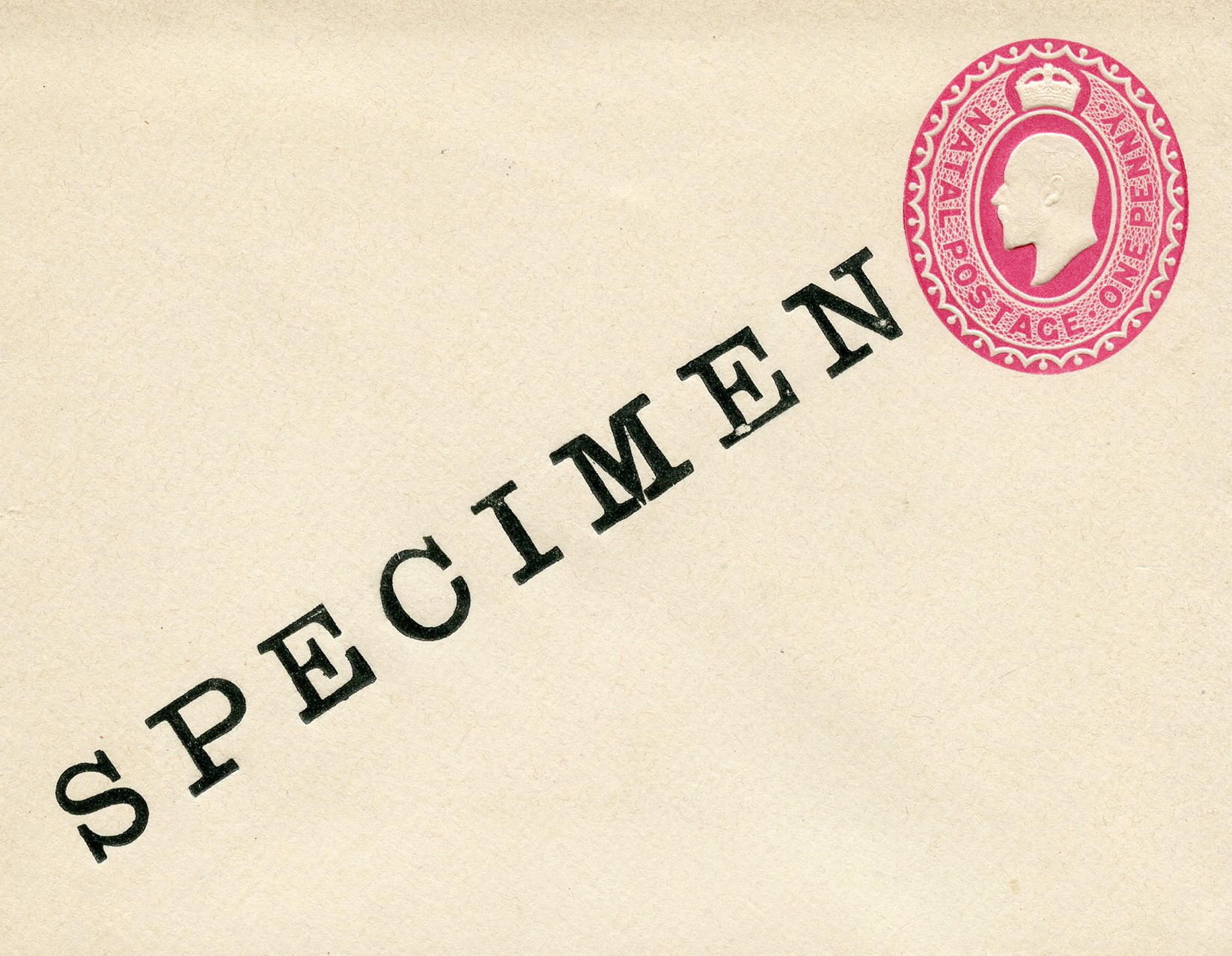
[Above: 'Specimen' envelope from Transvaal.]
[Above: Close-up.]
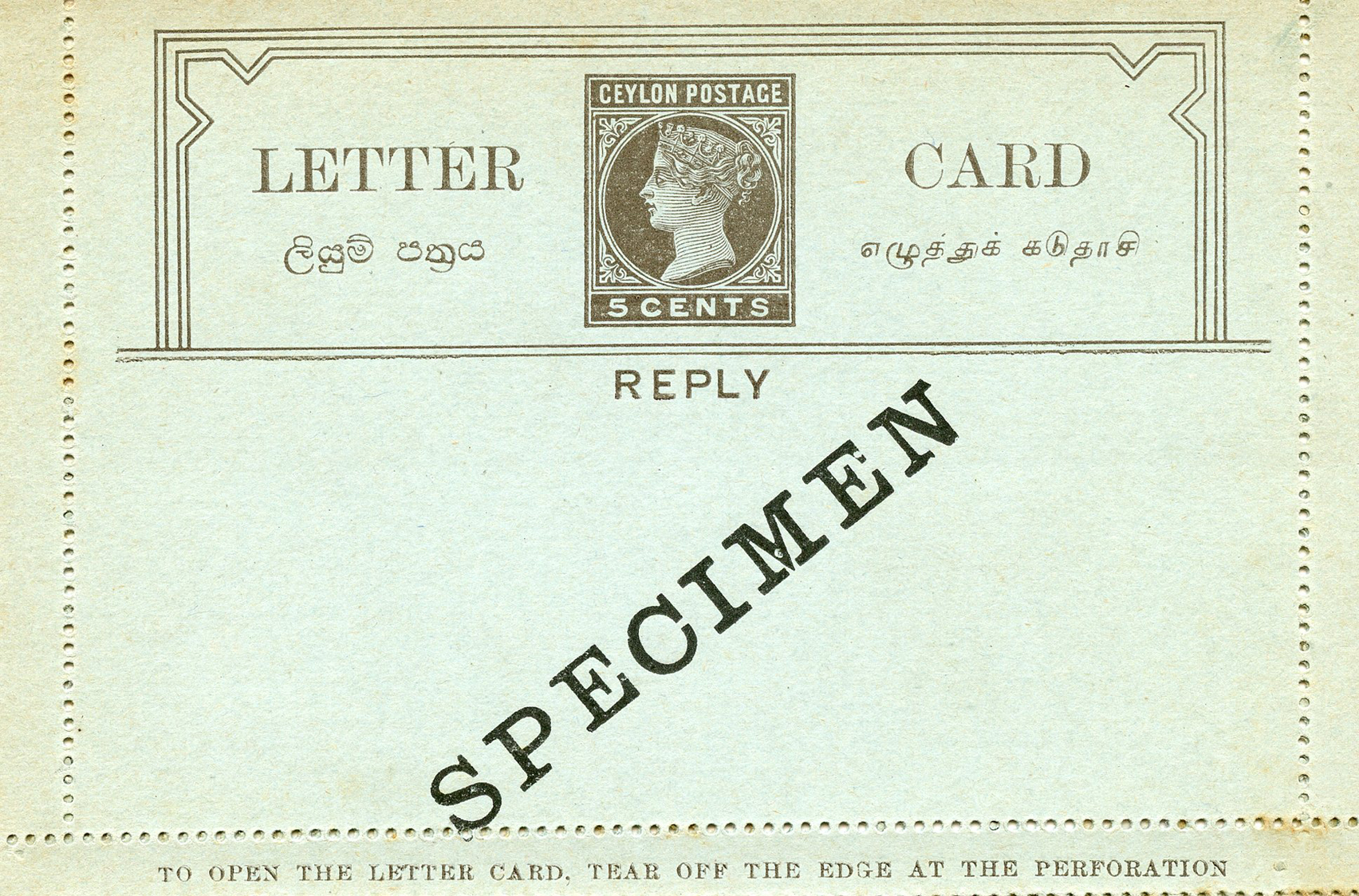
[Above: 'Specimen' envelope from Ceylon. 'Ceylon is the historical name for the island nation of Sri Lanka. The Portuguese named the island Ceilão in 1505, which the British later transliterated into Ceylon.' Sri Lanka became independent in 1948.]
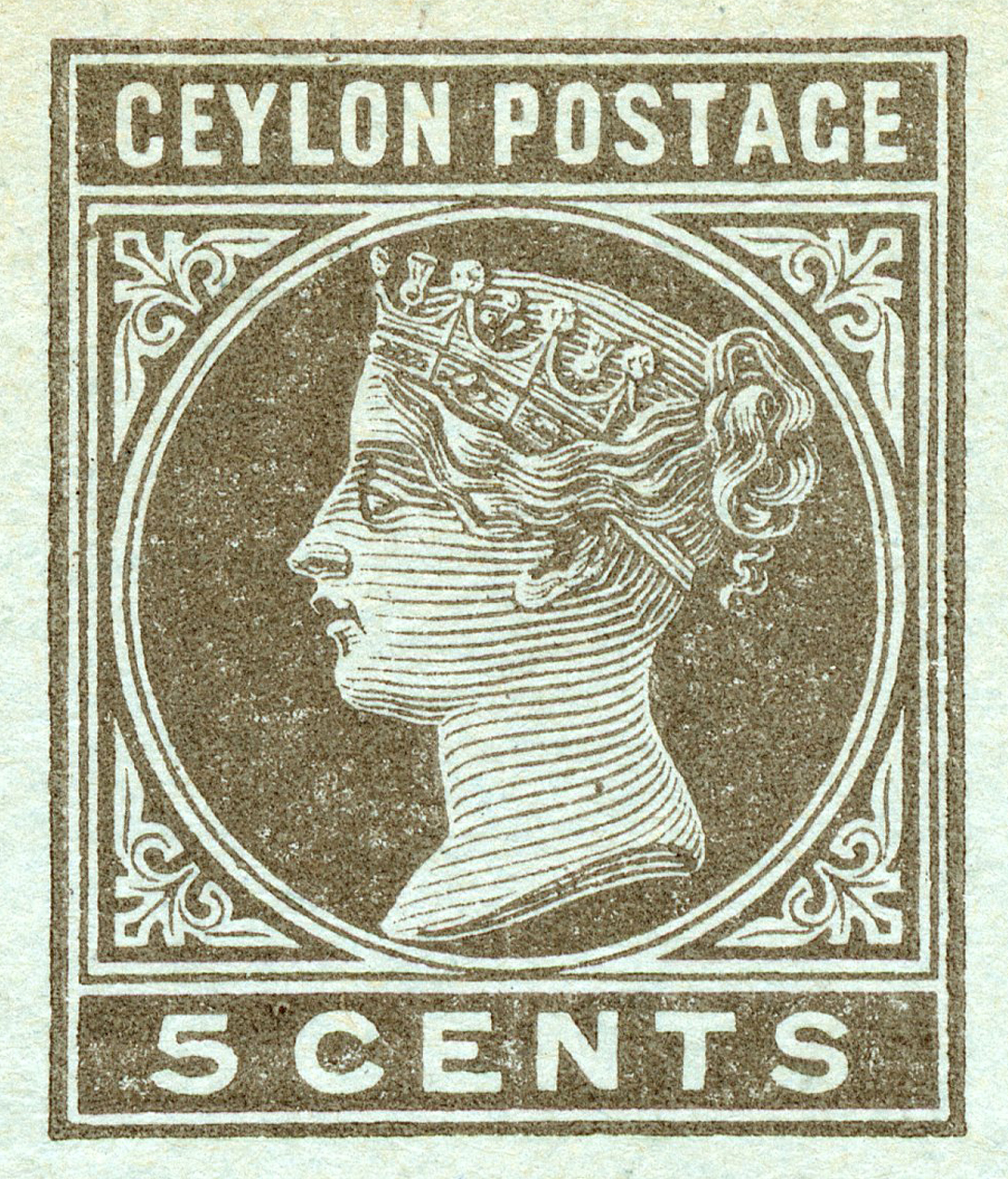
[Above: Close-up.]
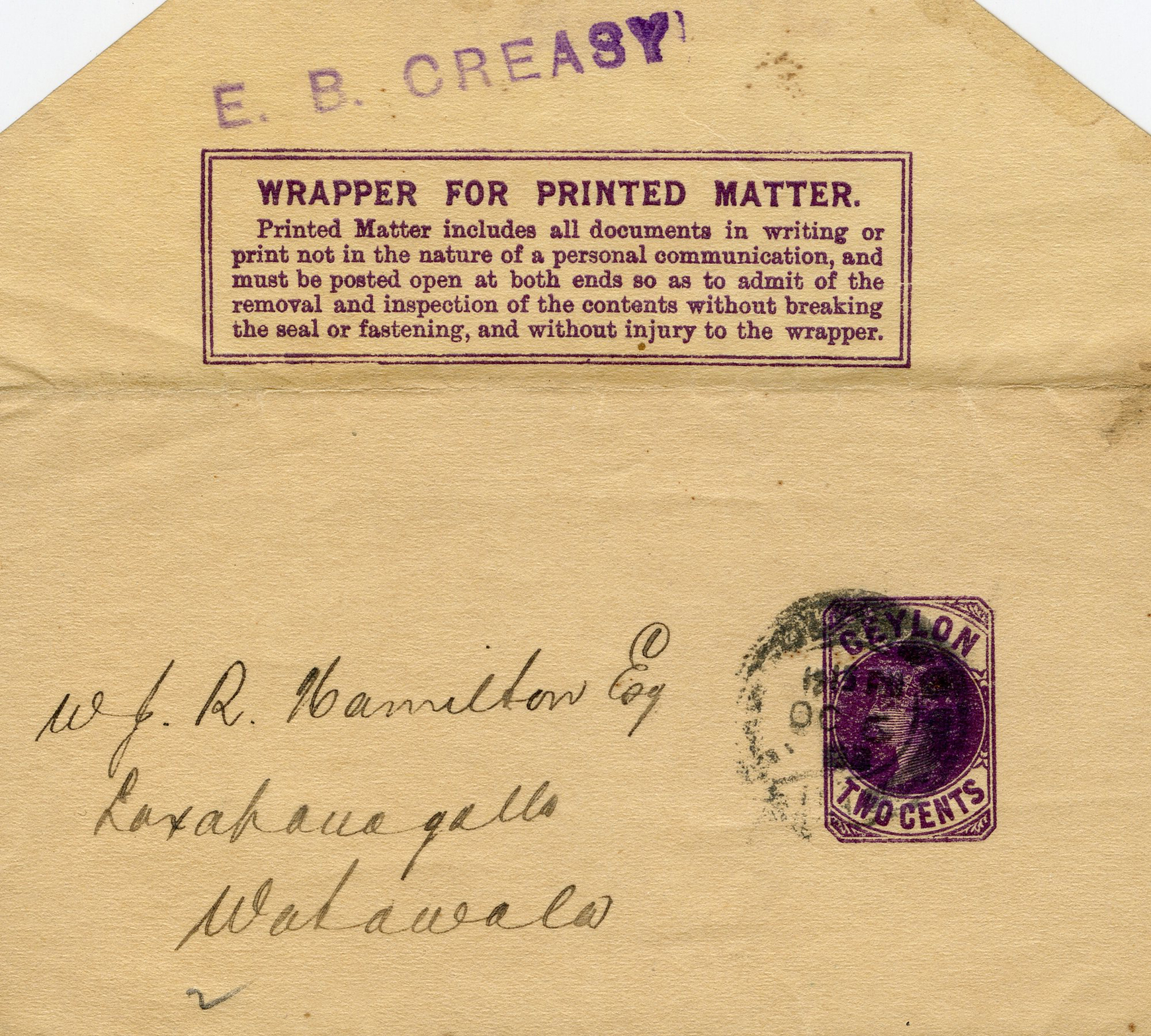
[Above: This is like the other newspaper wrappers above, but this was used in the 1920s. 'E. B. Creasy' was a prominent merchant and commercial trading company established in Ceylon in the 19th century that still exists today. This was sent to W. J. R. Hamilton, the operator or manager of this specific estate between 1920 and 1923. It was sent to 'Laxapanagalla', a well-known colonial tea estate and plantation region near Maskeliya. 'Watawala' served as the regional railway hub and post town where mail was sorted before being dispatched up into the steep mountain tea estates.]
[Above: Close-up.]
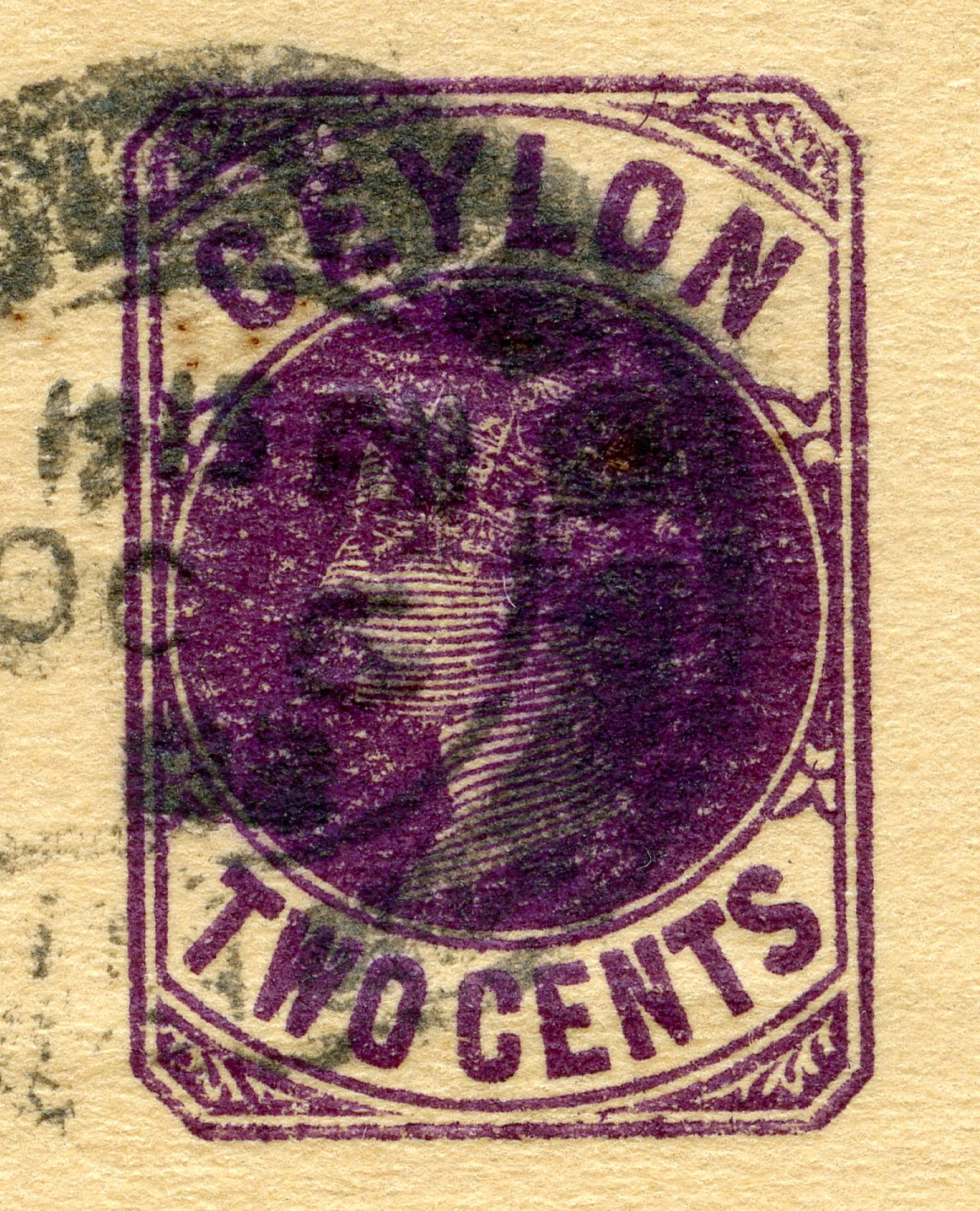
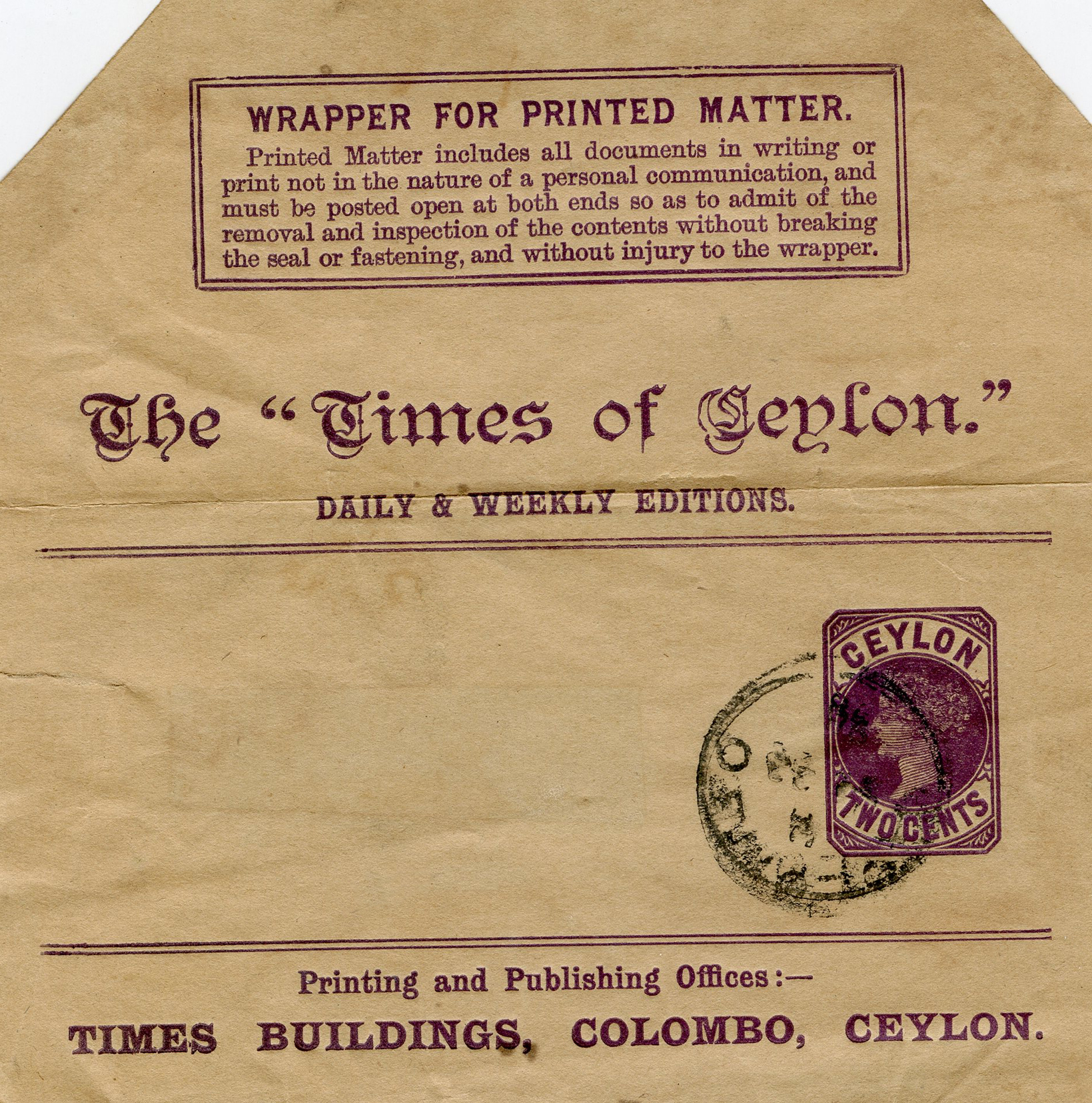
[Above: This newspaper wrapper was sent by the newspaper 'The Times of Ceylon'.]
[Above: Close-up.]
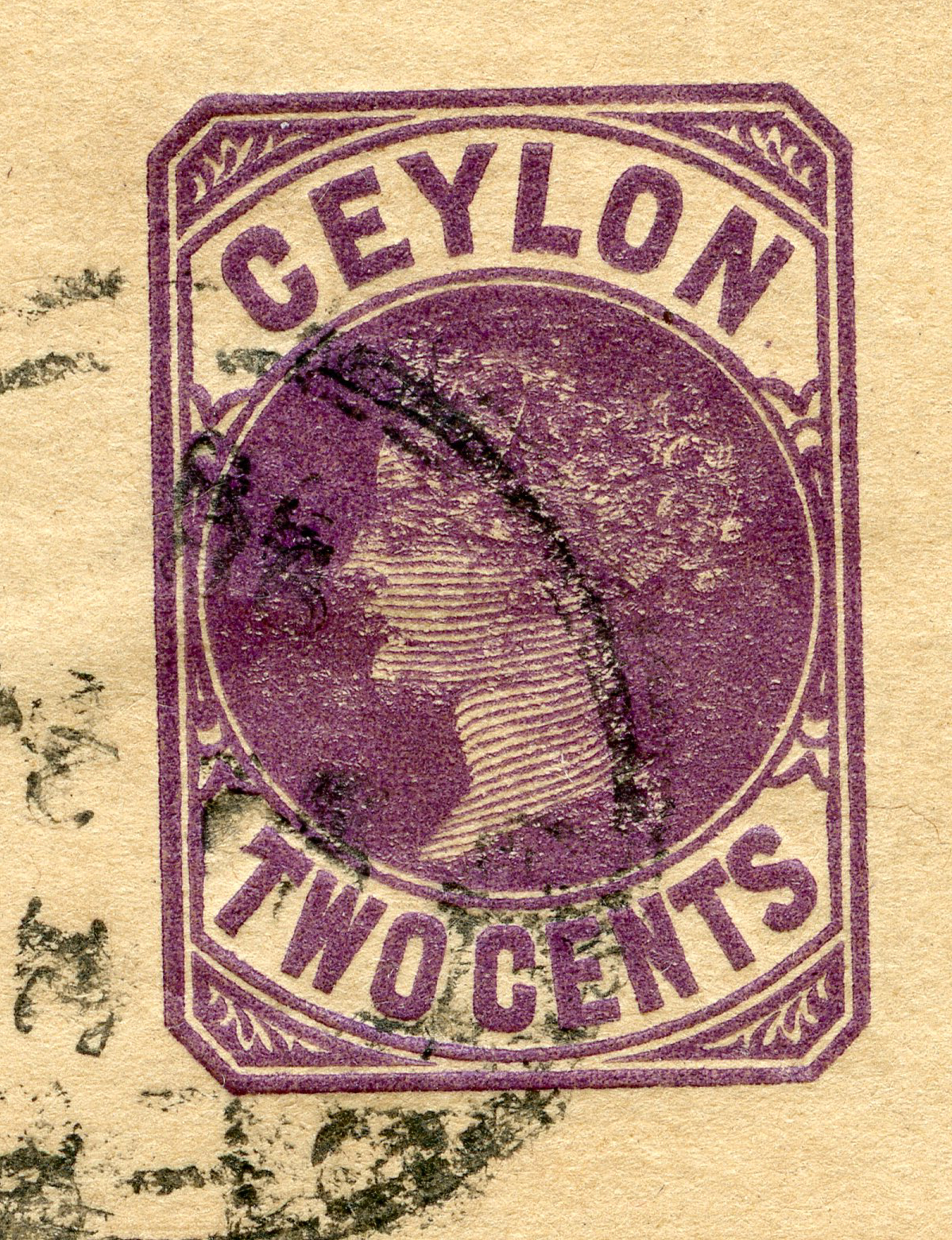
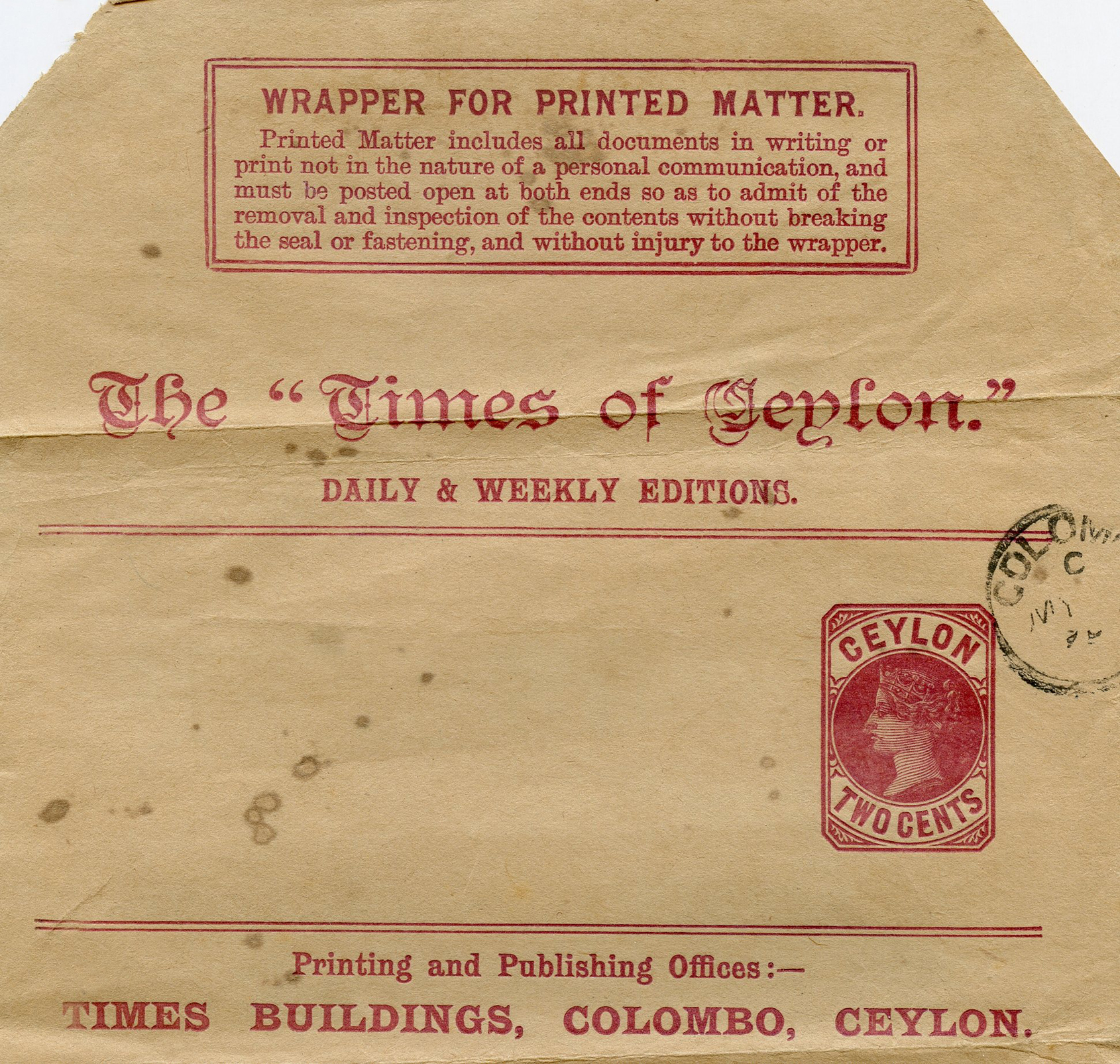
[Above: This newspaper wrapper was sent by the newspaper 'The Times of Ceylon' as well, but the stamp is much lighter.]
[Above: Close-up.]
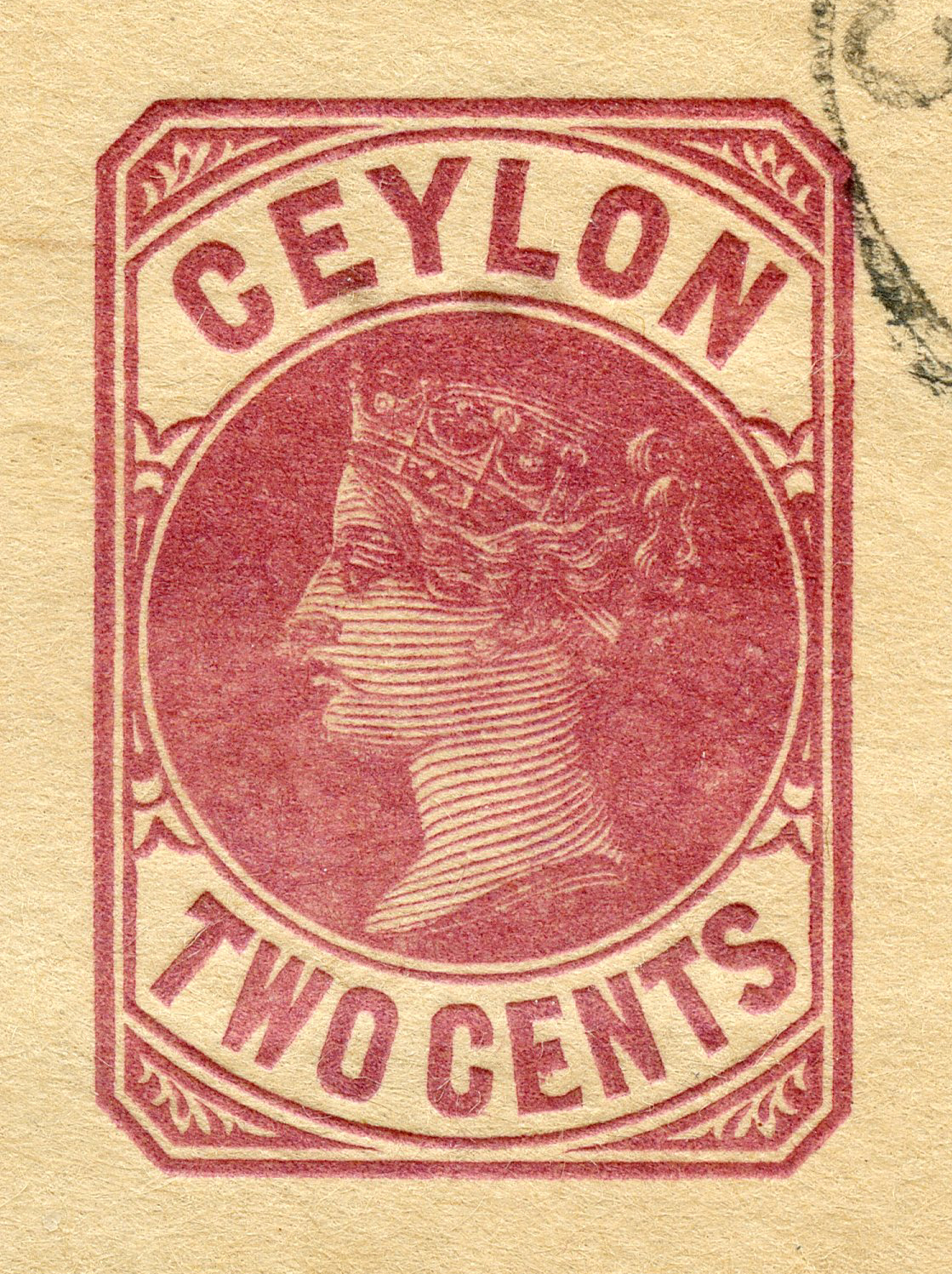
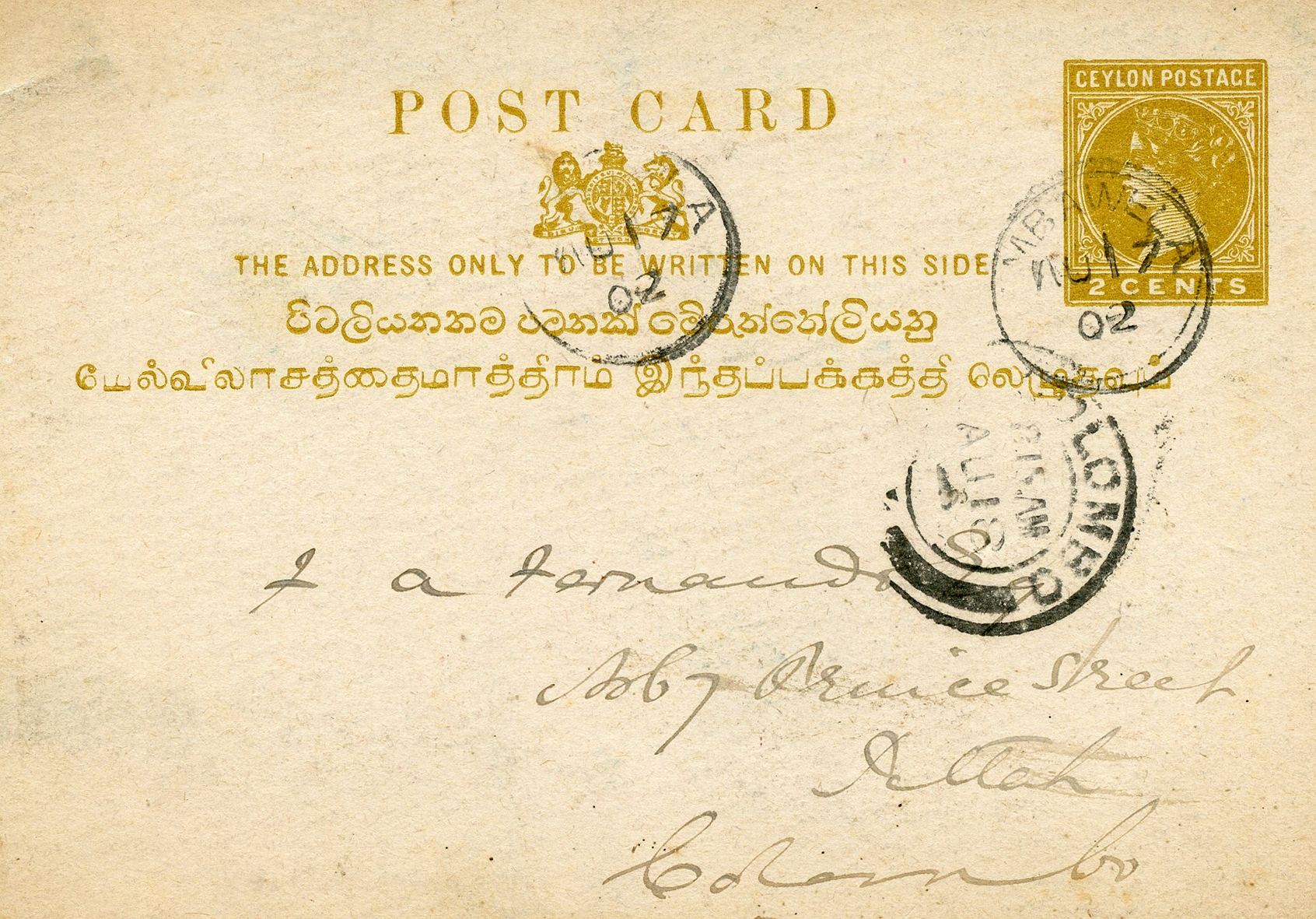
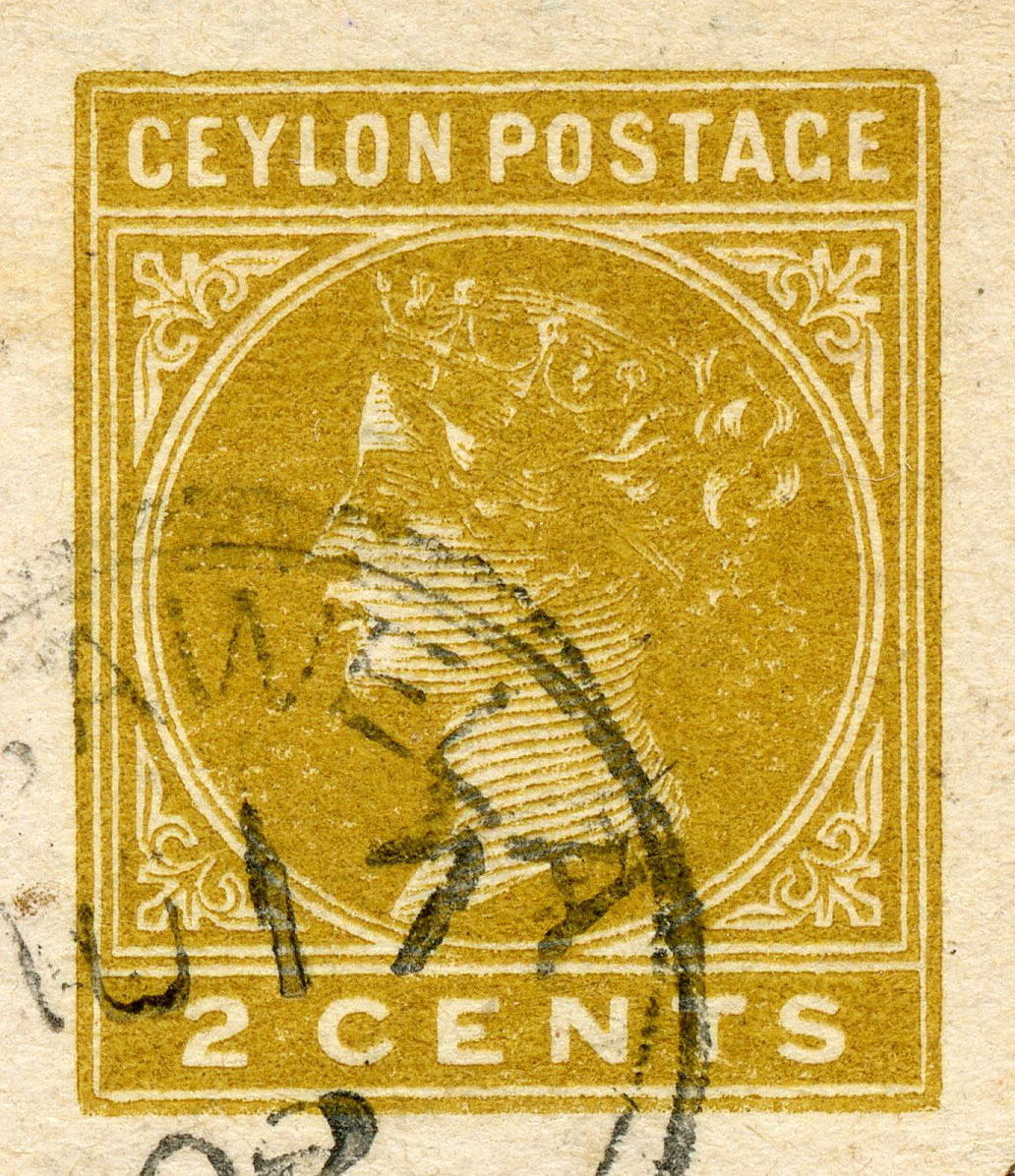
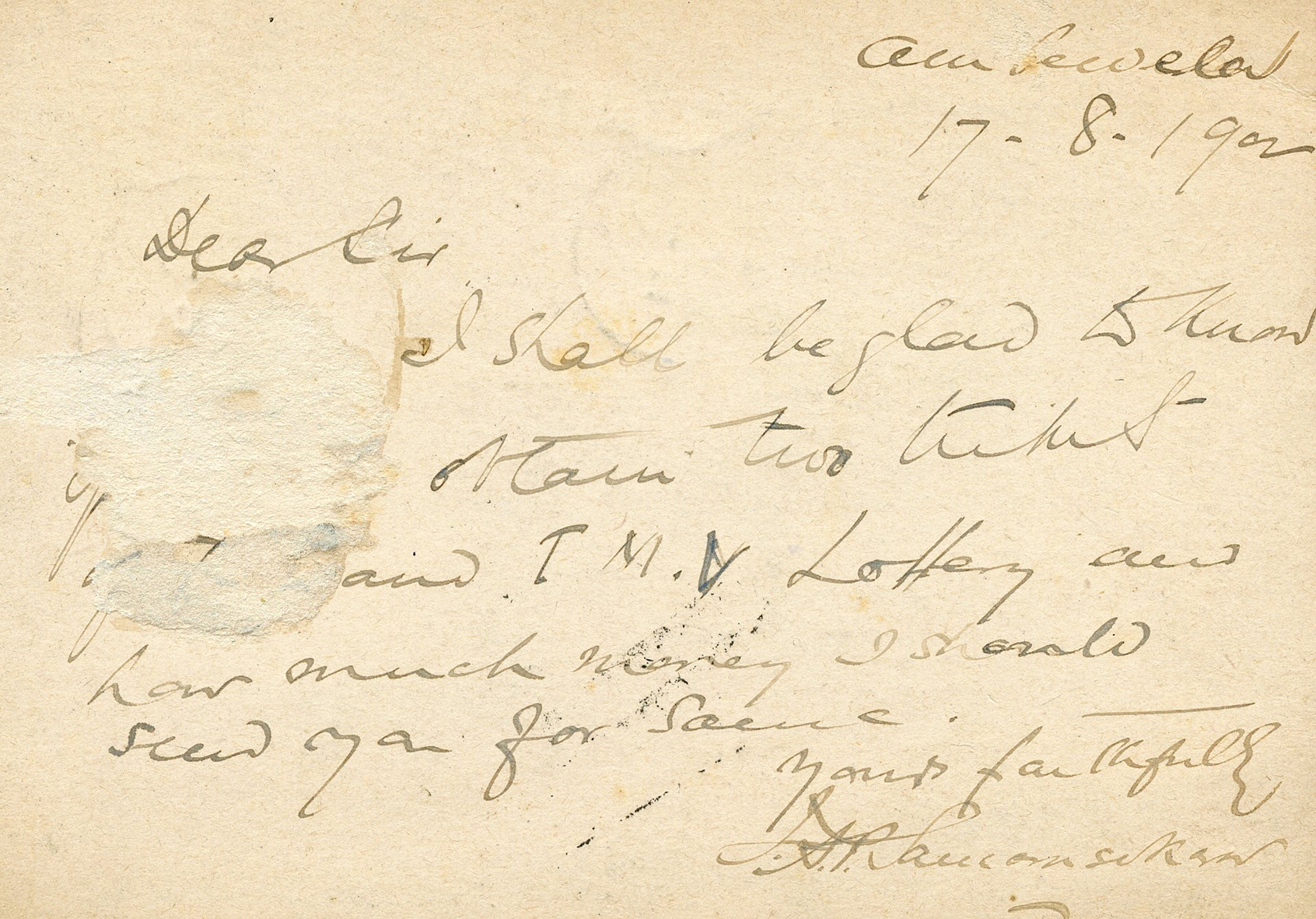
[Above: This was sent in 1902.]
[Above: Close-up.]
[Above: Reverse.]
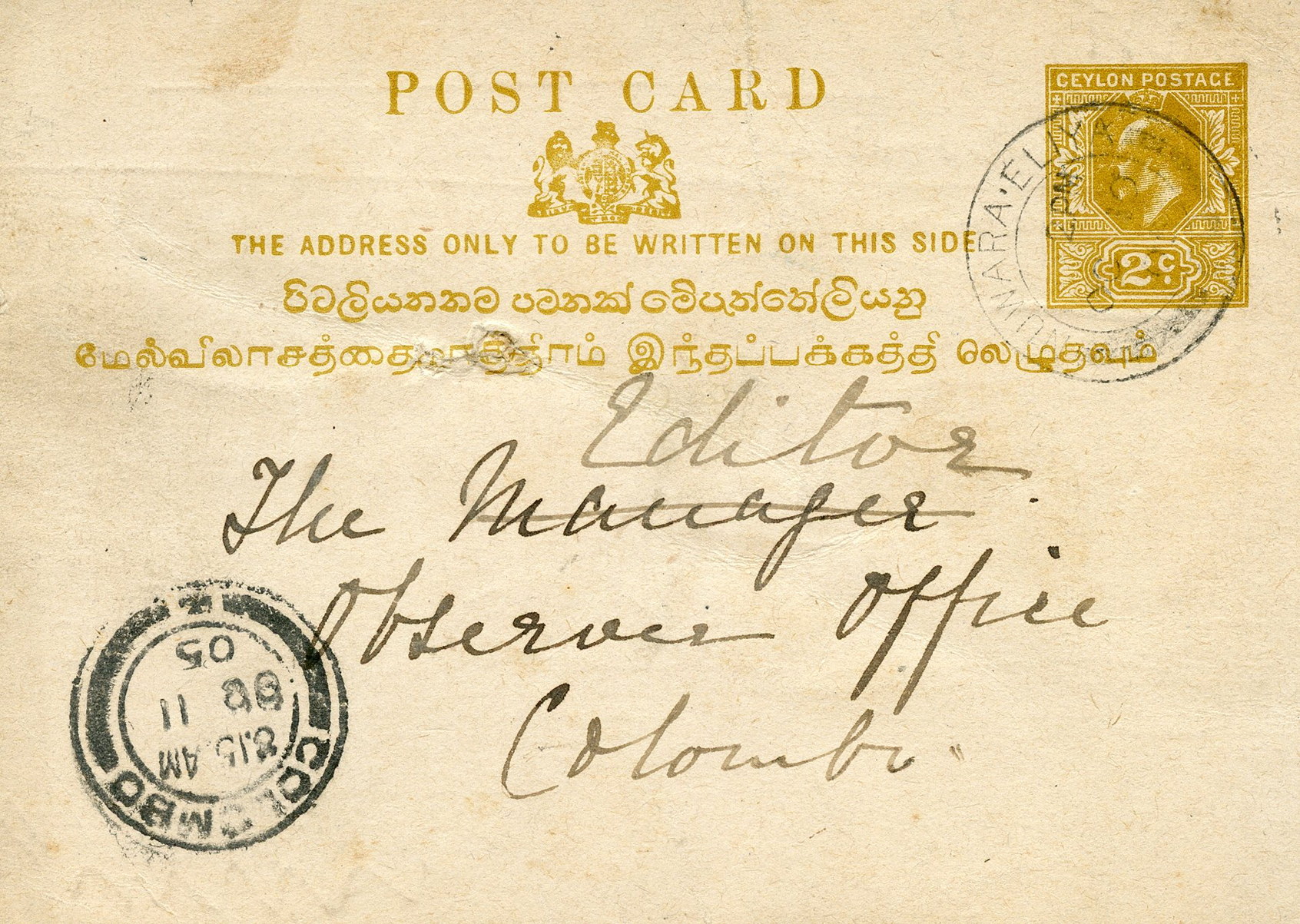
[Above: This was sent in 1905 to the Editor of the Observor.]
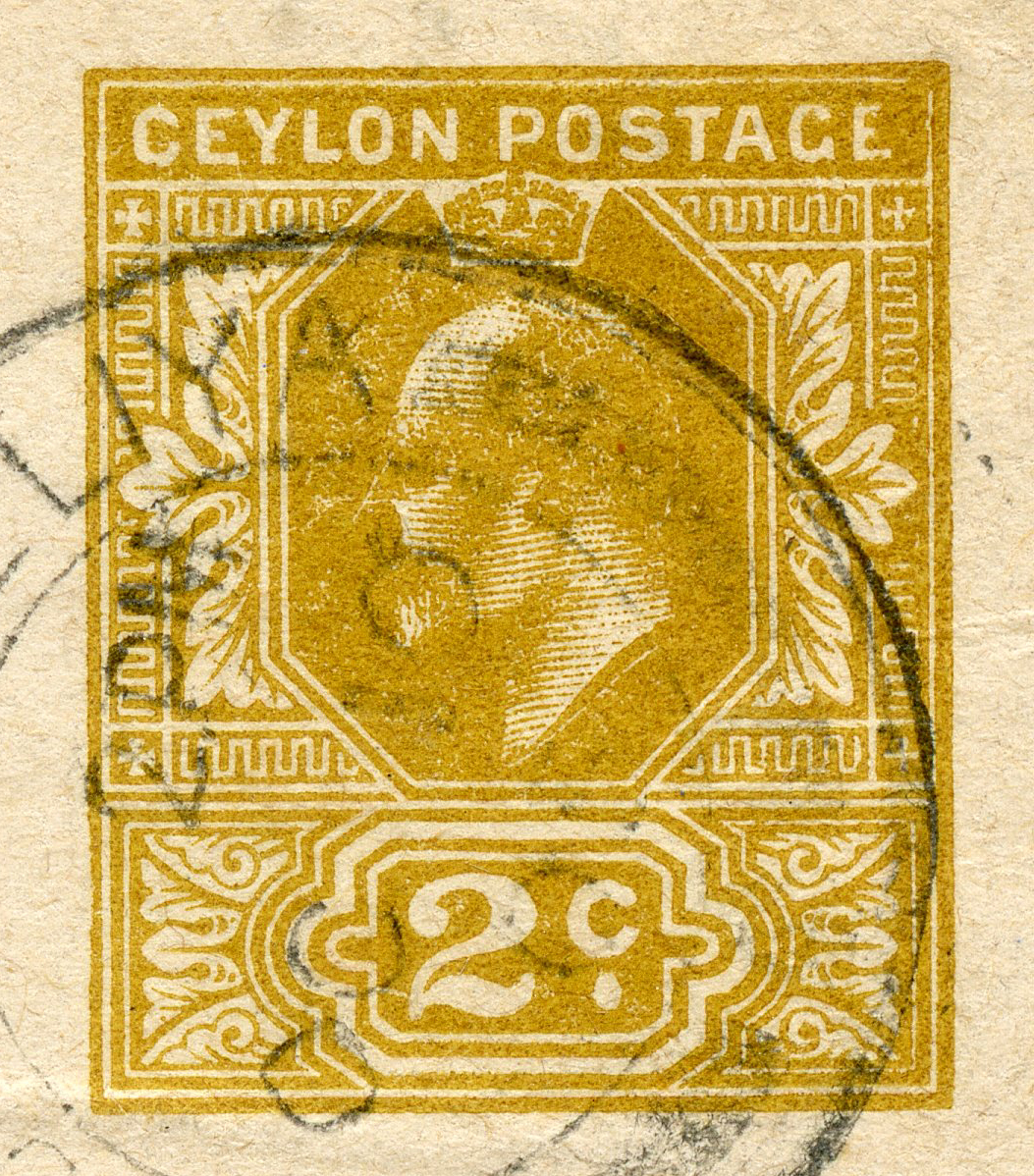
[Above: Close-up.]
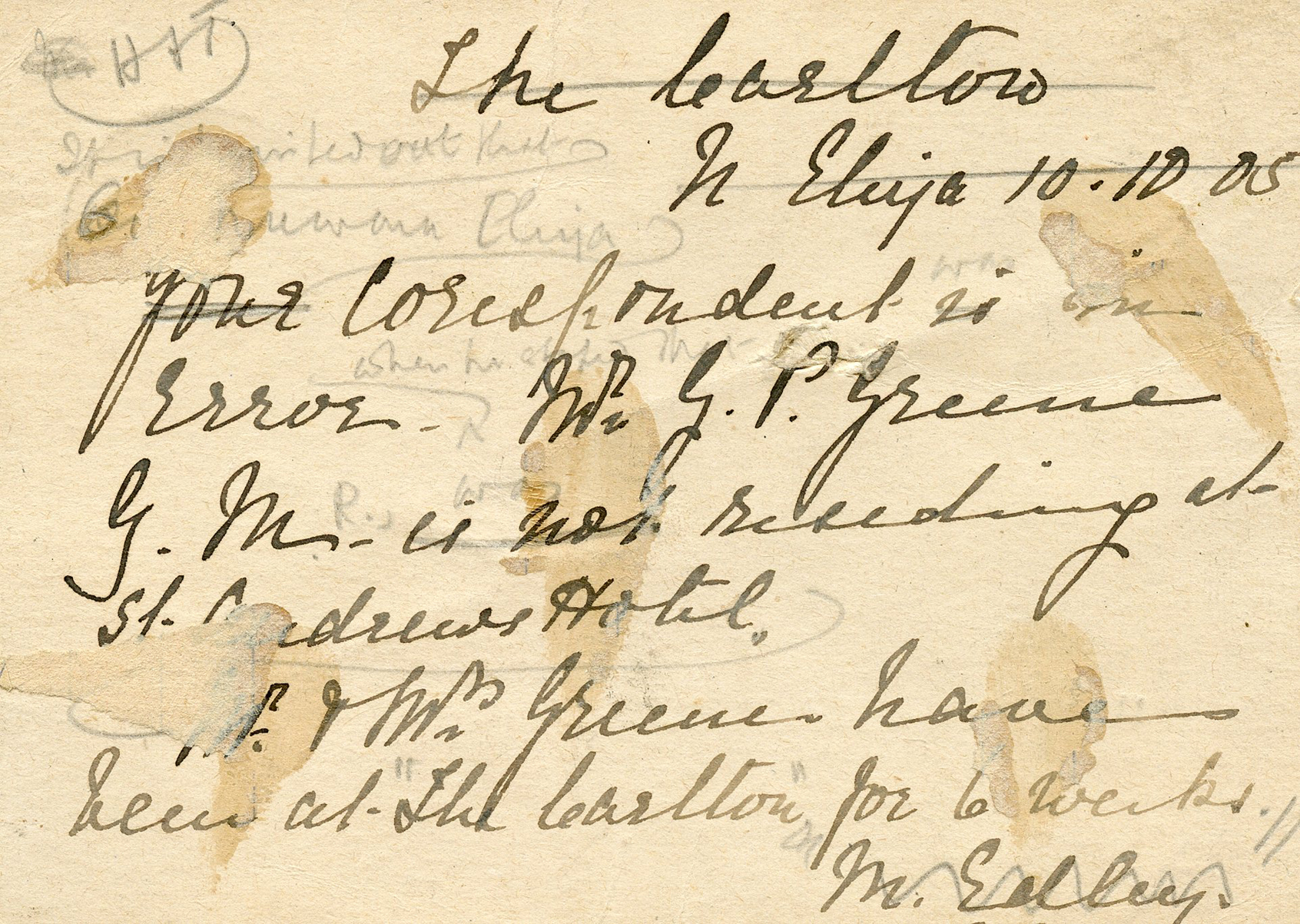
[Above: Reverse.]
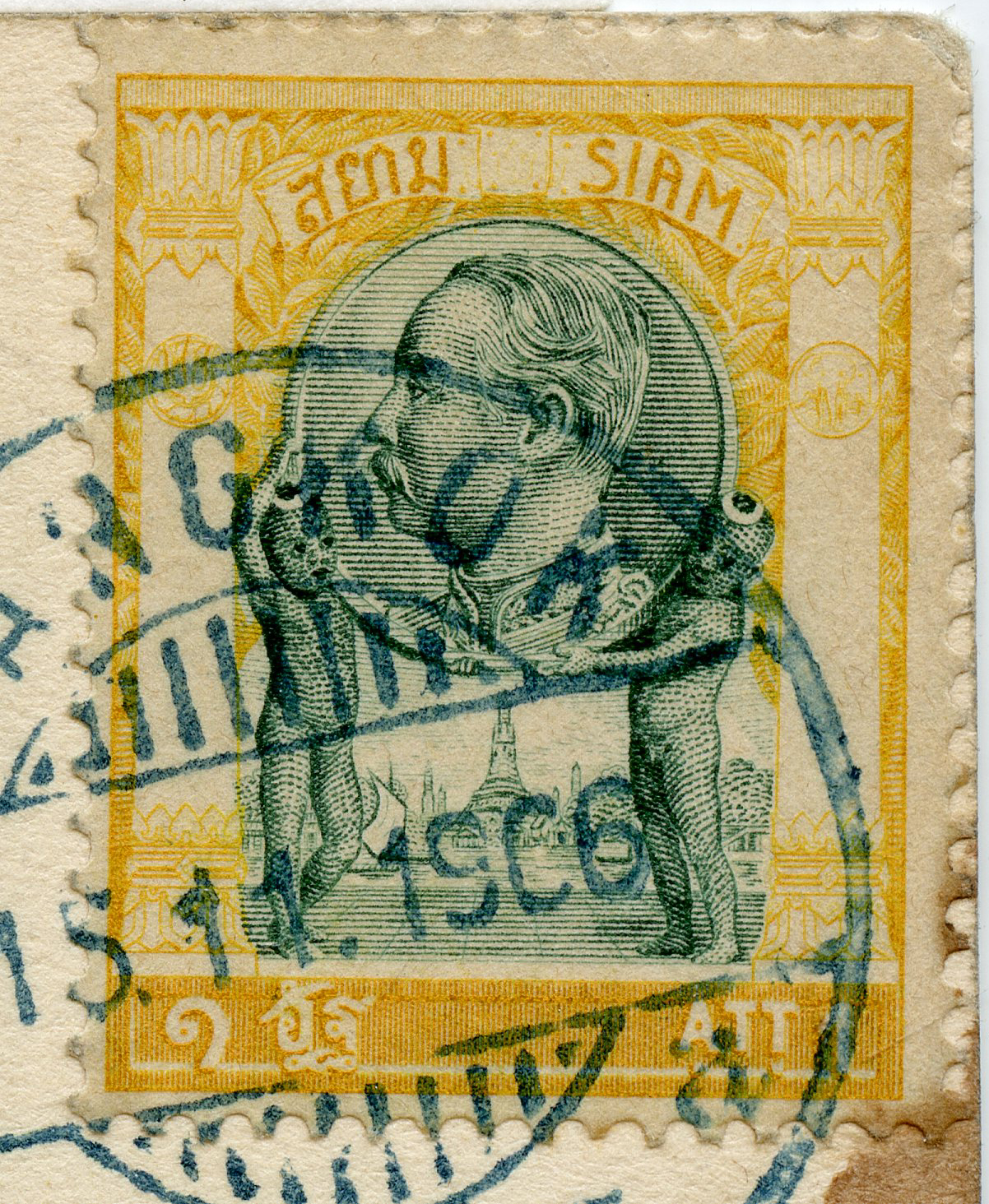
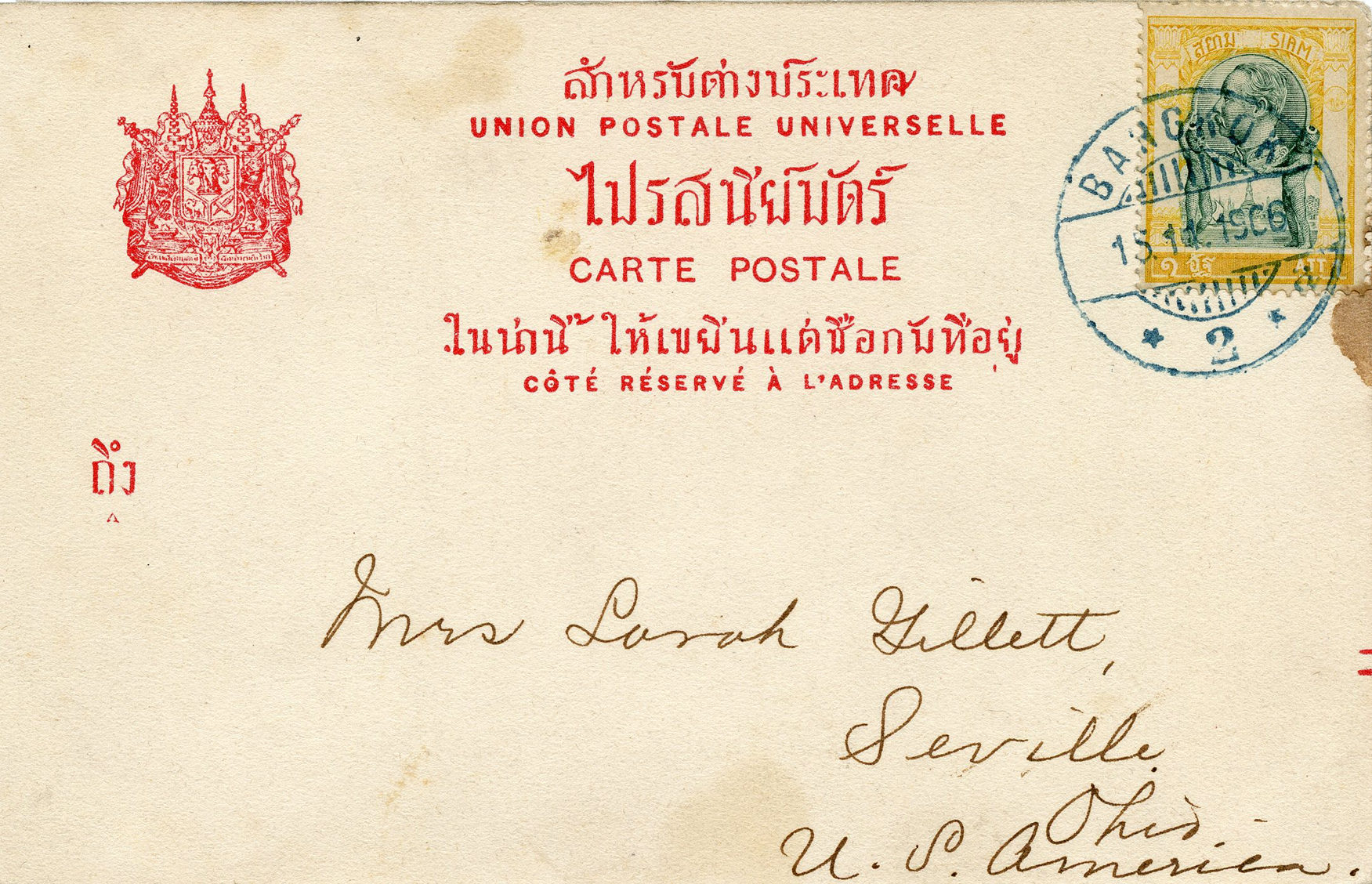
[Above: This is from Siam, modern Thailand, who, by the way, was the only country never colonialized. This was postmarked in Bangkok on November 15, 1906.]
[Above: Close-up.]
[Above: Reverse.]
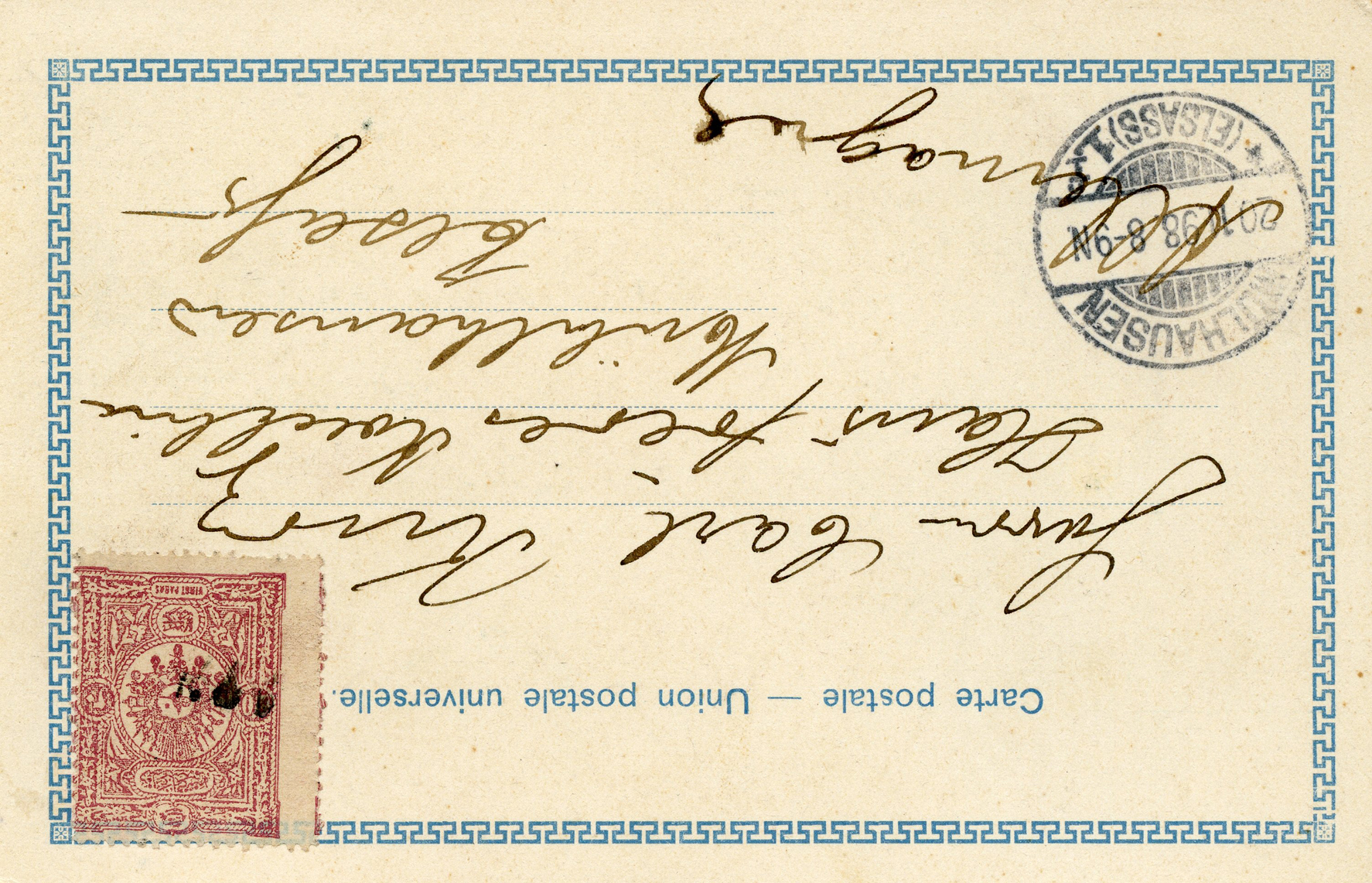
[Above: This was sent from the Ottoman Empire on November 20, 1898 to Mulhausen, Elsass (Alsace). 'The Ottoman Empire was a transcontinental superpower that existed from 1299 to 1922. Founded by the Turkoman tribal leader Osman I, it began as a small principality in Anatolia (modern-day Turkey) and expanded into a vast domain encompassing southeastern Europe, the Middle East, and North Africa.']
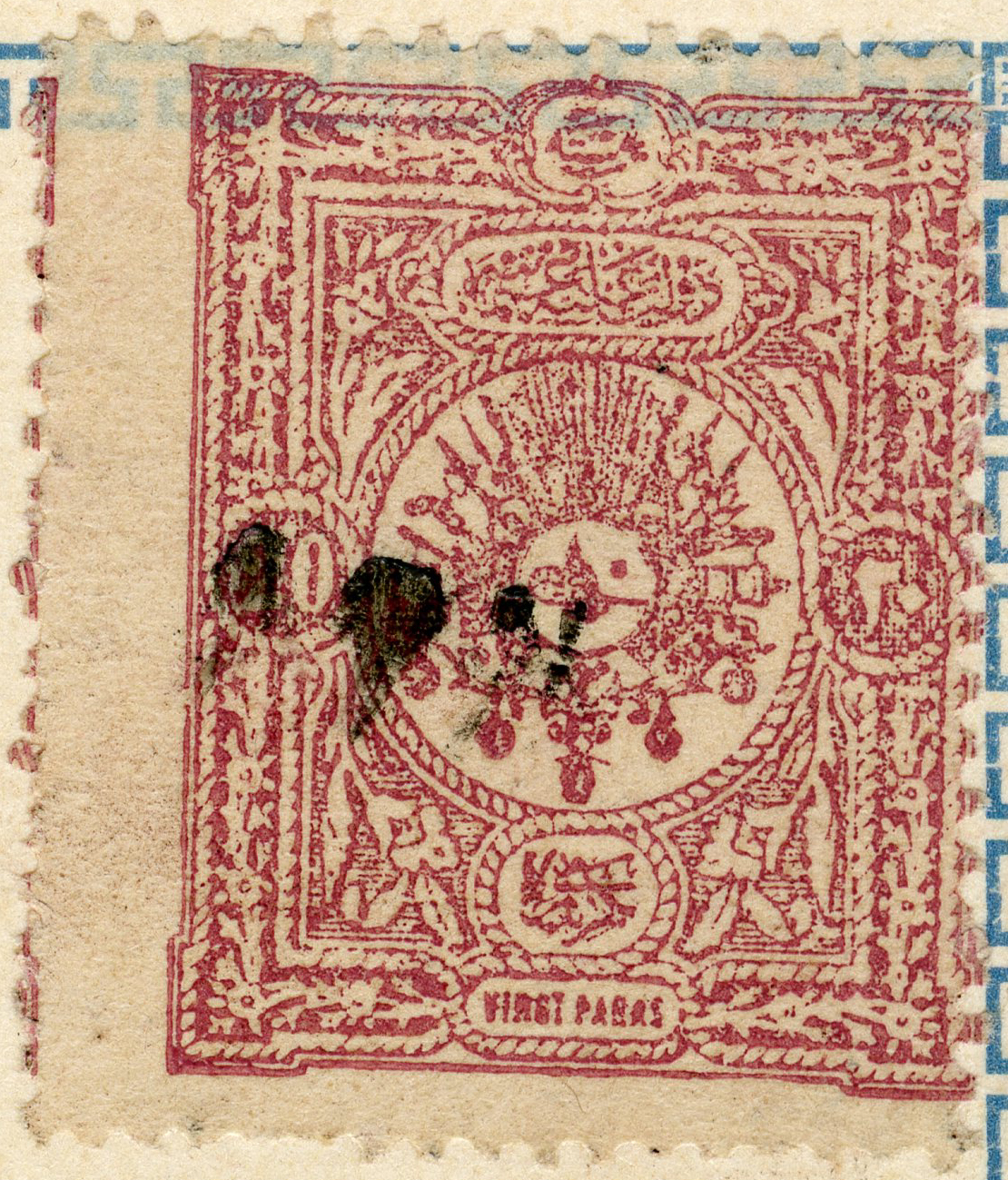
[Above: Close-up. What a strange cancel. Or is it an overprint? This says 'Vingt paras is French for twenty paras', the currency of the Ottoman Empire (and later Turkey).]
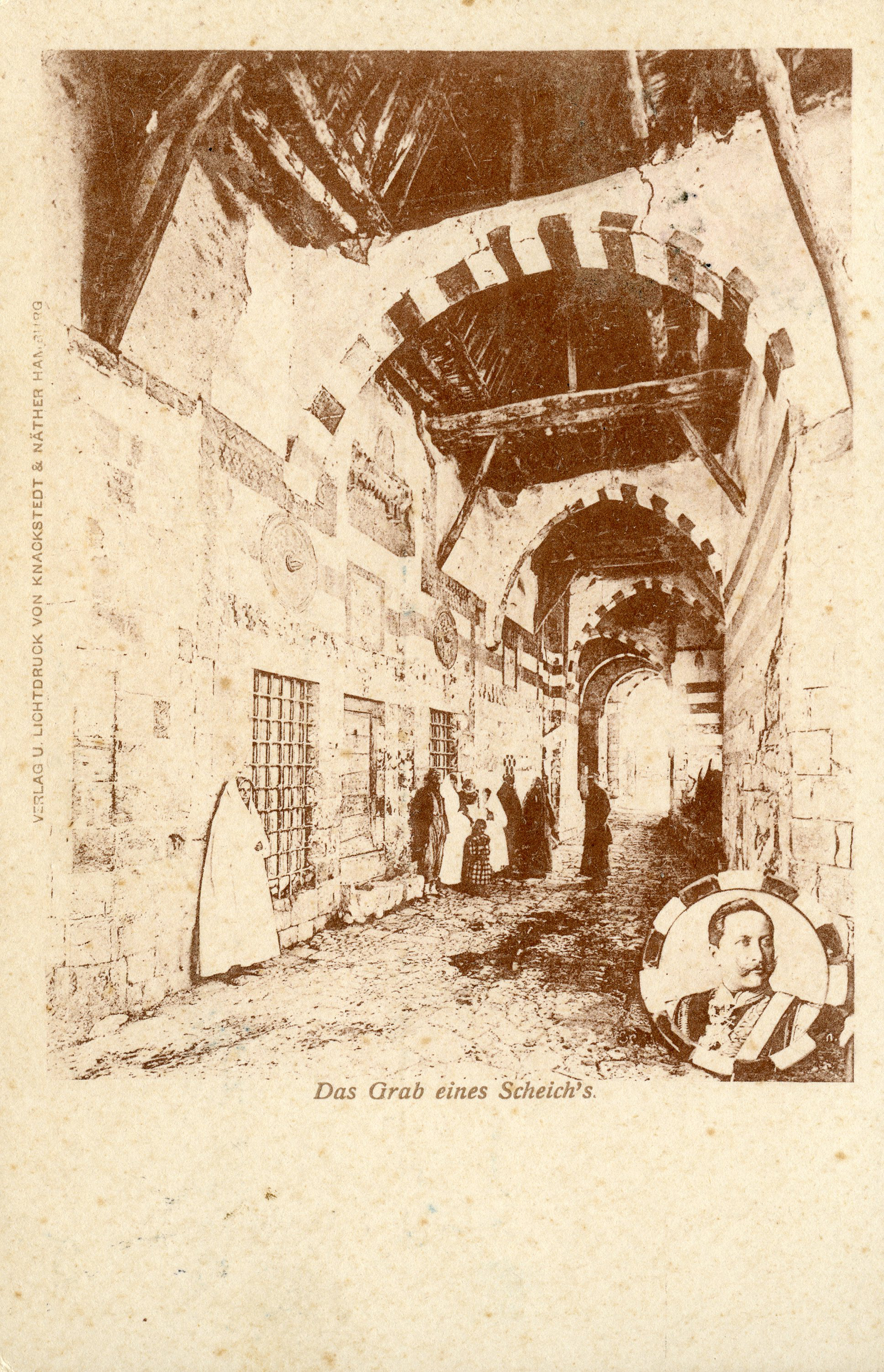
[Above: Reverse. In German, this says 'The Grave of a Sheikh' and features a picture of Kaiser Wilhelm II, the last German Emperor and King of Prussia, reigning from 1888 to 1918. Why I do not know?]
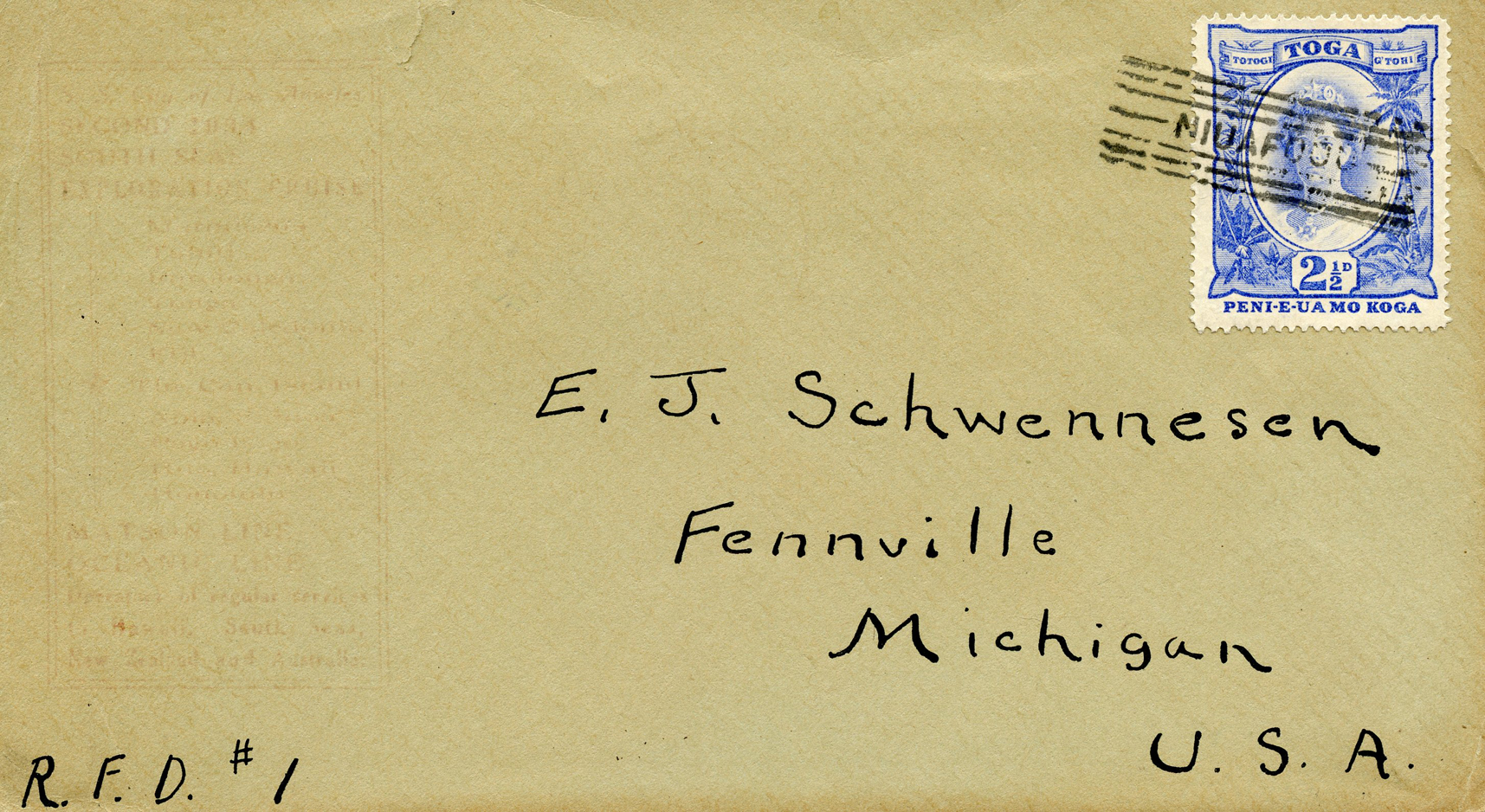
[Above: Ever heard of this country? 'Toga' is the native Polynesian spelling for Tonga. This is a 'Tin Can Mail' envelope sent from the remote volcanic island of Niuafo?ou (Tonga) to an address in Fennville, Michigan. Here is some information on this crazy item:
'The Famous "Tin Can" Mail Delivery: Niuafo'ou is the northernmost island in the Kingdom of Tonga. Because it is a sheer volcanic cone rising out of the deep Pacific Ocean, it has no natural harbor or beaches where ships could safely dock.
The Swimmer Solution: Starting in 1882, the island found a unique way to trade mail with passing steamships. Outgoing mail was sealed inside water-tight biscuit tins or kerosene cans.
The Process: Strong native Tongan swimmers would swim over a mile out into the open ocean, pushing the floating tin cans ahead of them to the waiting ships. In return, the crew on the ships would toss inbound mail wrapped in oilcloth or tins into the sea for the swimmers to retrieve.
The End of an Era: This hazardous, famous swimming mail service operated for decades before completely ending in 1983 when an airfield was finally constructed on the island
The Postmark and Cachets
The Postmark: If you look closely at the black ink stamped directly over the blue stamp, it reads "NIUAFO'OU". This is the official postmark proving it originated from this exact isolated island.
The Faded Cachet: On the left-hand side of the envelope, you can see a large, faded purple rectangular stamp. This is an official "Tin Can Mail" cachet. In the 1930s and 1940s, a local trader named Charles Ramsay realized tourists and collectors loved this unique system, so he began heavily marking the envelopes with descriptive souvenir handstamps to verify they were carried by the ocean swimmers.
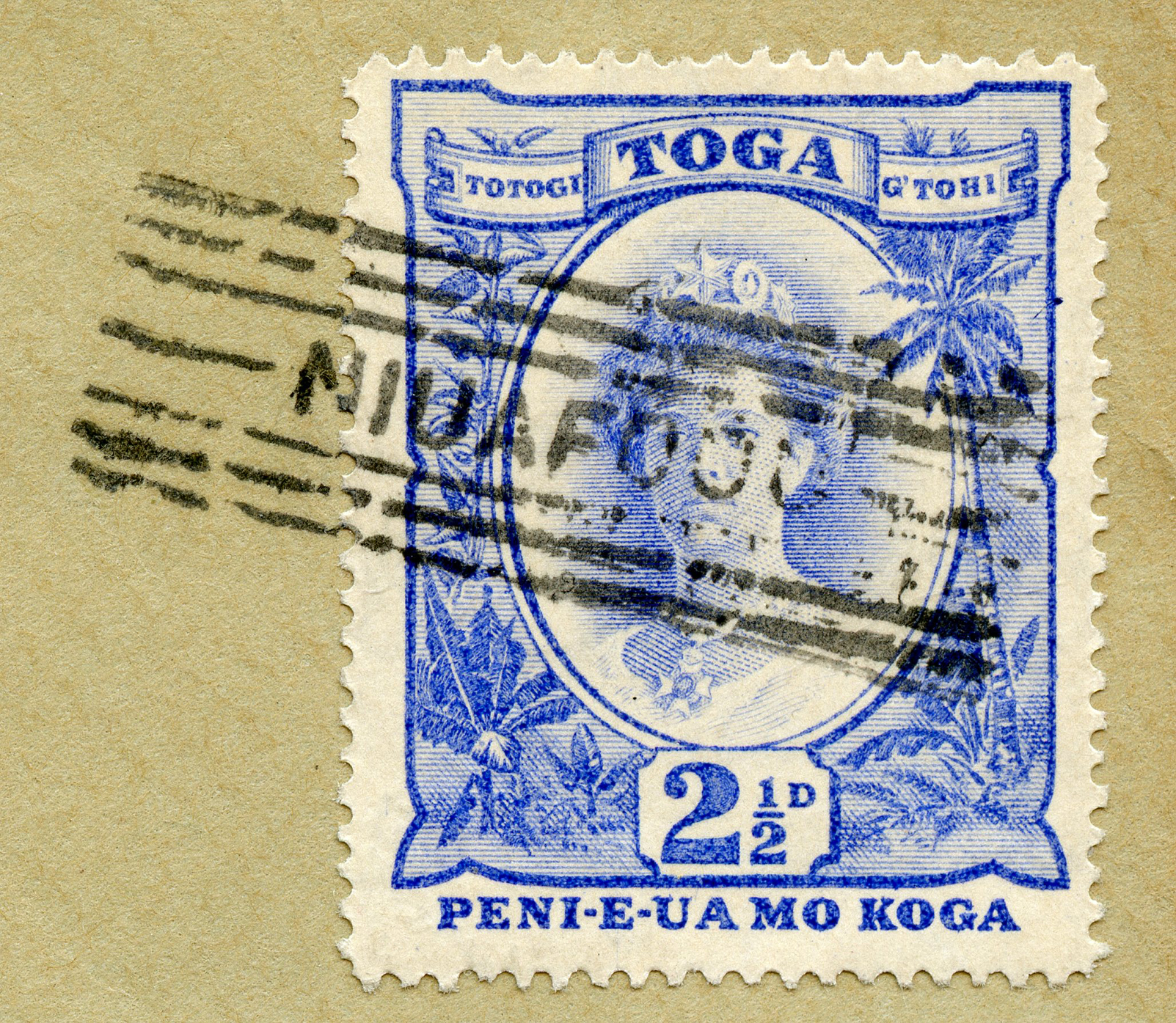
The "TOGA" Postage StampThe stamp in the upper right corner is a 1897–1940s definitive series 2½-penny stamp from the Kingdom of Tonga.
The Spelling: The stamp explicitly says TOGA across the top banner because "G" represents the "ng" sound in native Tongan orthography.The Inscription: The text at the bottom reads “Peni-e-ua mo koga”, which translates from Tongan to "Two pence and a half".' The reverse is blank.]
[Above: Close-up.]
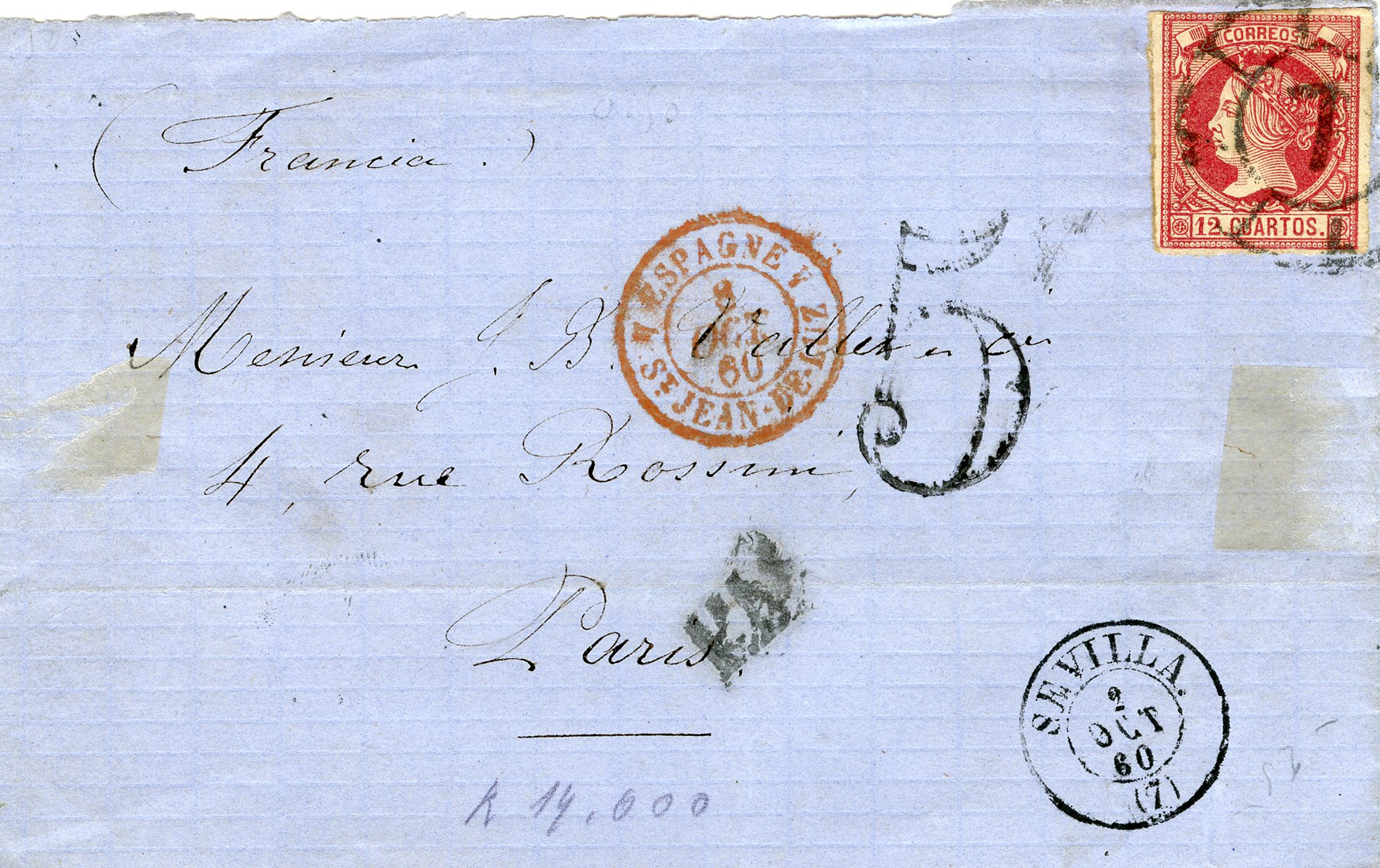
[Above: Let's see what the AI has to say about this one:
'This is a magnificent 1860 transatlantic-era folded letter sheet sent from Seville, Spain, to Paris, France, carrying rich postal history markings and addressed to one of the most famous figures in stamp collecting history.
1. The Famous RecipientThe letter is addressed to Monsieur J. B. Moens at 4, rue Rossini, Paris.
Jean-Baptiste Moens is universally celebrated by collectors as the "Father of Philately."
He was a Belgian pioneer who became the world's first prominent, full-time stamp dealer.
He published the earliest comprehensive stamp catalogs and philatelic journals in the 1860s.]
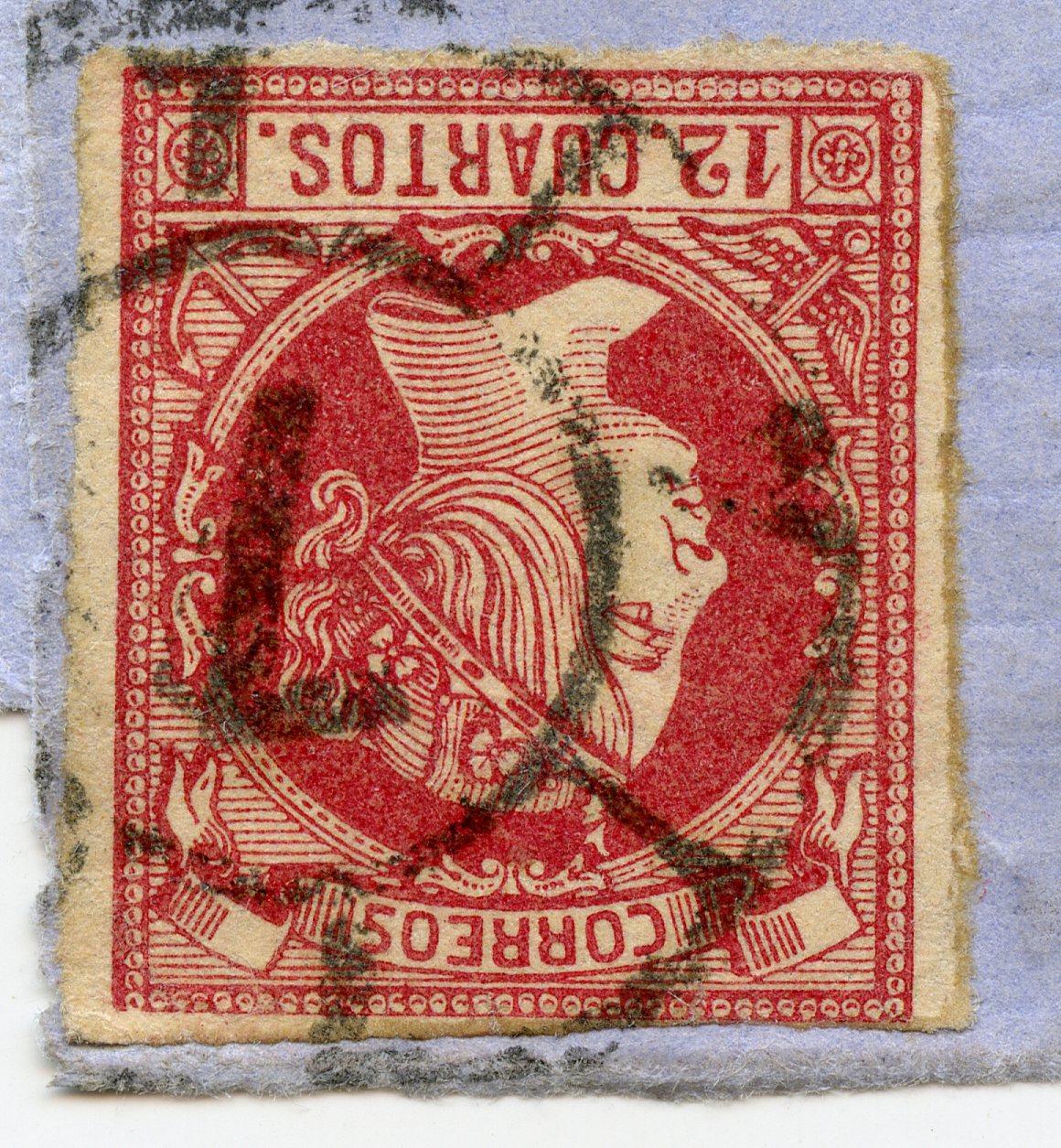
The 1860 Spanish Postage StampIn the top right corner is a classical Spanish stamp featuring Queen Isabella II.
Denomination: 12 Cuartos.Issue Year: February 1860 Isabel II Stamp Issue.
Design: Imperforate edges with the Queen facing left, inscribed with "CORREOS" at the top.
Postal Routing and Handstamps
The ink markings map out exactly how this letter traveled across the European border:
Origin Postmark: The black circle at the bottom right reads SEVILLA / 2 OCT / 60, showing it departed Seville, Spain, on October 2, 1860.
French Border Entry: The vibrant orange-red circular stamp in the center reads ESPAGNE / ST. JEAN-DE-LUZ / 4 OCT 60. French postal clerks stamped this at the border town of Saint-Jean-de-Luz two days later to record its entry from Spain.
Rate Marking: The large black handstamped "5" indicates the inland delivery rate or postage due tier (5 décimes) assigned under the Franco-Spanish postal treaty.'
[Above: Close-up.]
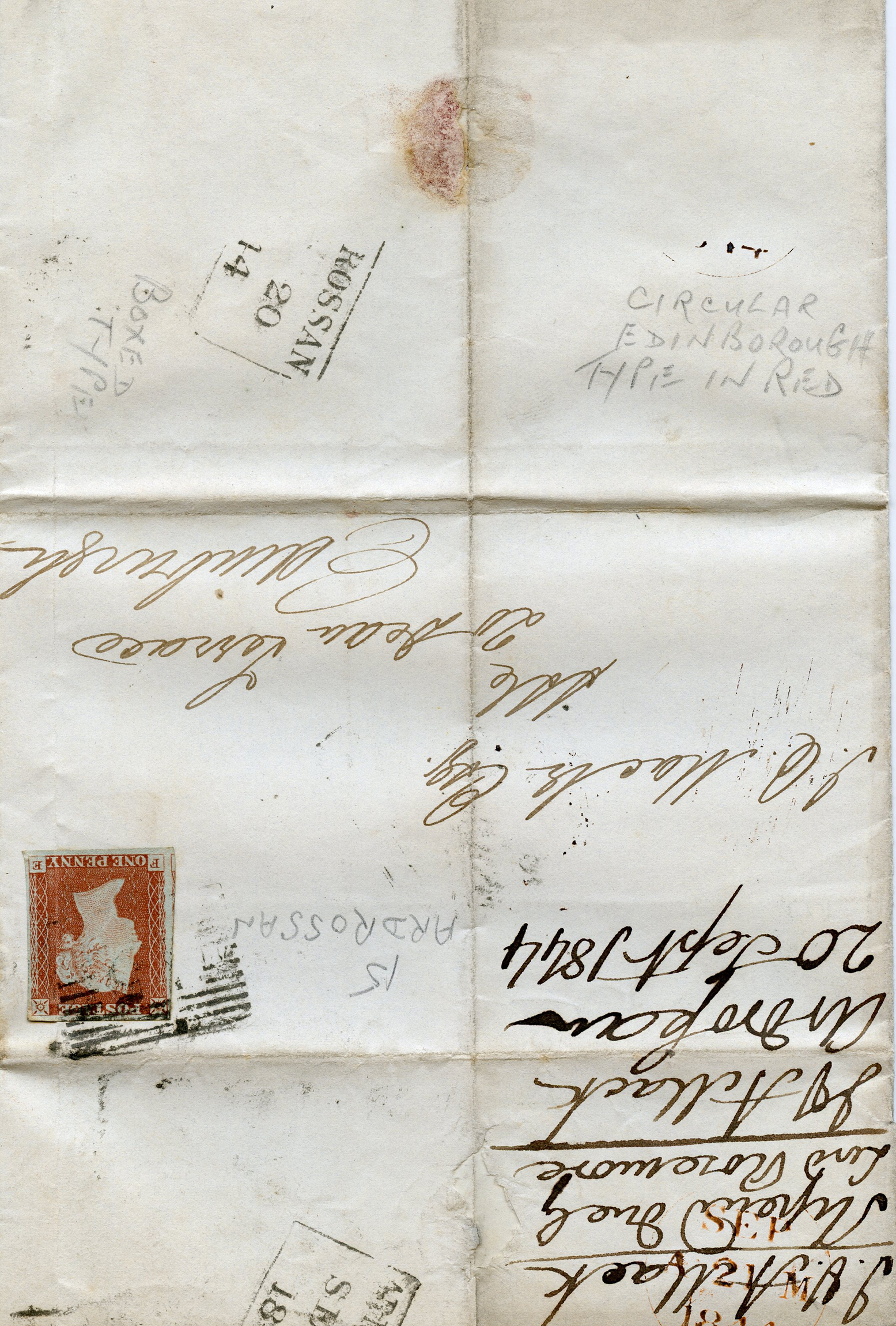
[Above: Let's see what AI has to say about this one:
'This is an exceptional piece of postal history: an 1844 folded letter sheet sent within Scotland, bearing the world's very first postage stamp design and carrying fascinating links to British nobility and early political history.
1. The World’s First Stamp Design:
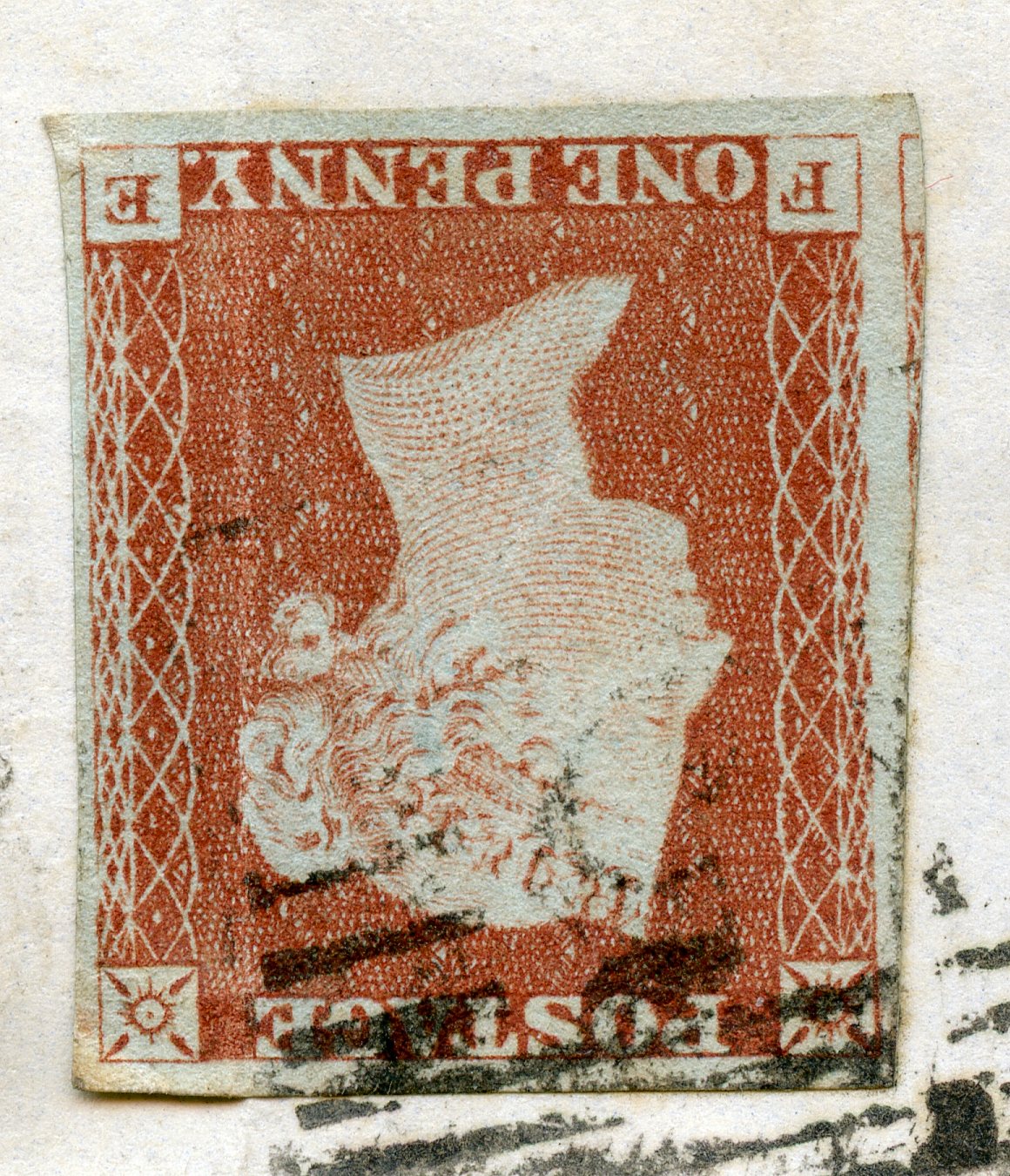
The Penny Red: In the upper right corner sits a British Penny Red stamp.
The Design: It features the youthful profile of Queen Victoria. It replaced the famous "Penny Black" (the world's first adhesive stamp) in 1841 because the black cancellation ink was too easy to clean off and reuse.
The Letters: Look at the bottom corners of the stamp. You can see the letters "F" and "E". Early British stamps used a unique grid system where the corner letters indicated exactly where the stamp sat on the printed sheet of 240 stamps.
2. The Aristocratic "Franking" Connection
The extensive, sweeping handwriting at the top left reveals a layer of social history:
The Name: It reads "J. O. Mactaggart" and notes "Muted [Sent] due by Lord Rossmore".
The Link: Lord Rossmore (Henry Westenra, the 3rd Baron Rossmore) was an Irish peer and Member of Parliament. Before 1840, members of the nobility and MP's had "franking privileges"—meaning they could sign an envelope to send it for free. Even though uniform penny postage began in 1840 (requiring a stamp), old habits remained, and people often noted their noble associations or business accounting on the face of the letters.
The Date: The writer clearly filed or received the document on 20 Sept 1844.
3. The Postal Journey via Handstamps
The ink stamps on the front map out a clear timeline of how it moved through the Scottish mail system:
The Destination: It is addressed to J. O. Mack, Esq., 20 Dean Terrace, Edinburgh. Dean Terrace is an elegant, historic Georgian street in Edinburgh that still exists today.
The Transit Handstamp: At the bottom right, you can see a boxed stamp reading ROSSAN / 20 / 14 (referring to Ardrossan, a port town in Ayrshire, southwest Scotland).
The Arrival Markings: In the upper right corner, you can see parts of a faint Edinburgh arrival datestamp, as well as a barred numeral cancellation lines cleanly defacing Queen Victoria's face so the stamp could not be reused'.]
[Above: Close-up.]
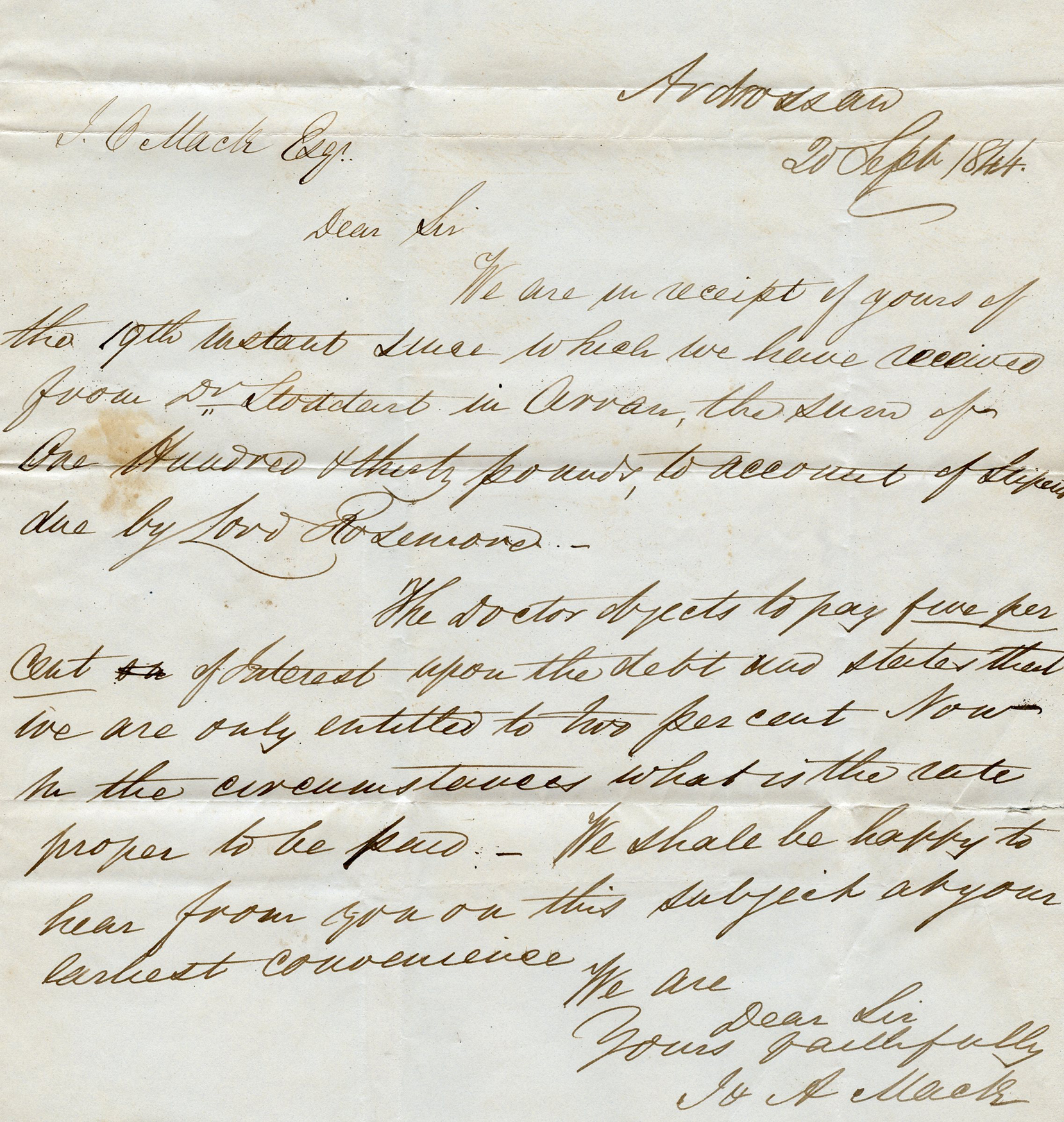
[Above: Reverse - letter.]
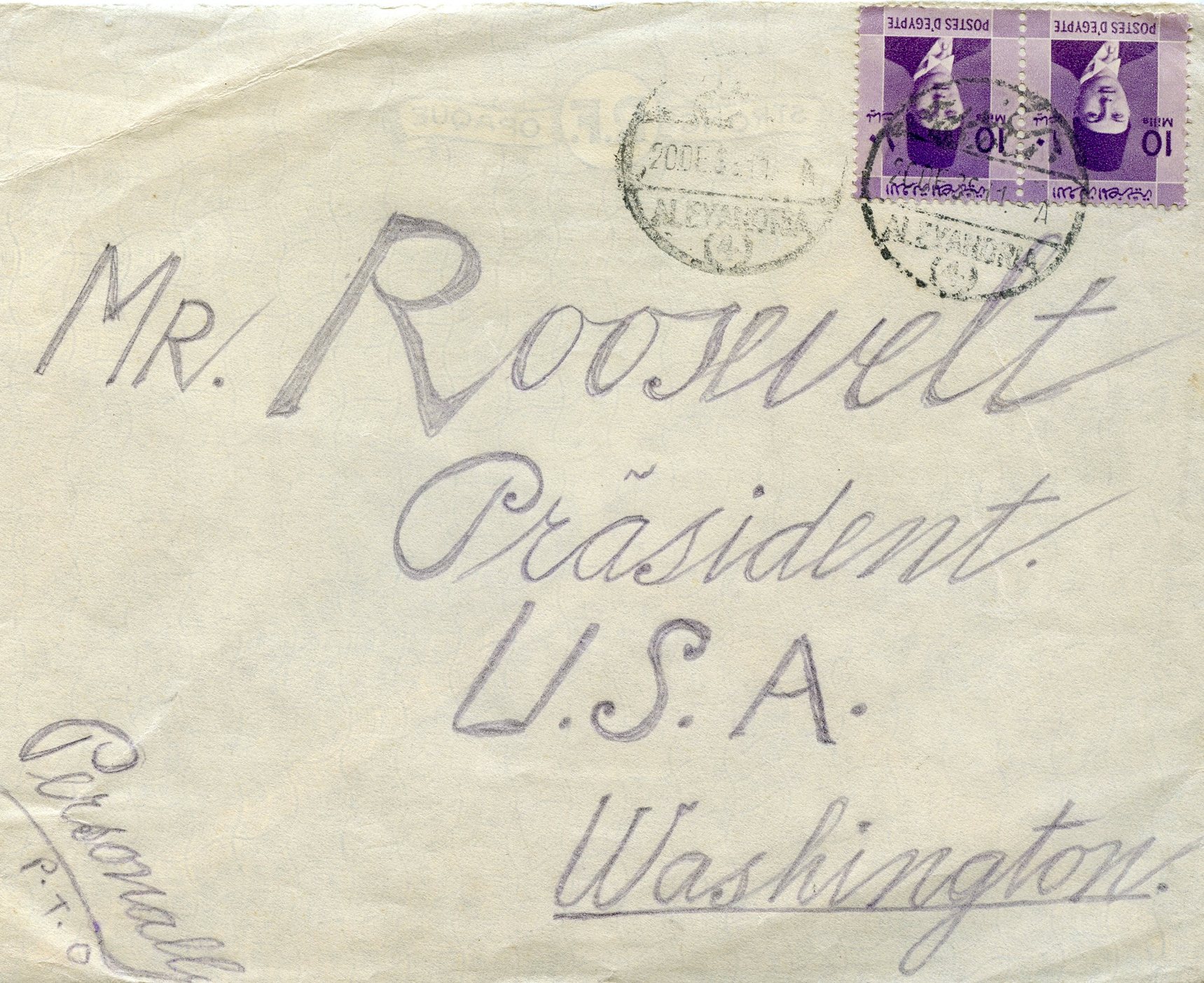
[Above: Here's a special one, sent to the DEVIL himself - President Roosevelt! Let's see what AI has to say about this one:
'This is a remarkable, historic piece of postal history: an airmail envelope sent from Egypt in December 1935 addressed directly to U.S. President Franklin D. Roosevelt.
It is a fascinating example of "Presidential Mail," offering several striking clues about its origin and journey.
1. The Famous Recipient
The envelope is addressed in bold, stylized pencil handwriting to:
"Mr. Roosevelt, Präsident, U.S.A., Washington."
The Spelling: The writer spelled President as "Präsident" (with an umlaut 'ä'). This strongly indicates that the sender was a native German speaker living in or visiting Egypt at the time.
Special Instructions: In the lower left corner, the sender wrote "Personally" and "P.T.O." (Please Turn Over), indicating there is likely more writing, an address, or a wax seal on the back of the envelope.
The Date and Routing Postmarks
2. The ink markings tell us exactly when and where this letter began its long journey across the Atlantic:
The Origin City: The circular postmarks cleanly reading "ALEXANDRIA" show it was mailed from the historic Egyptian port city on the Mediterranean coast.
The Date: If you look closely at the center postmark, it is dated 20 DE 35 (December 20, 1935).
The Censorship/Security Context: This was mailed during Roosevelt's first term in office. White House mail during the Great Depression era was heavily screened by the Secret Service, and letters addressed simply to "Mr. Roosevelt" from everyday citizens around the world typically contained personal pleas, political advice, or congratulations.'
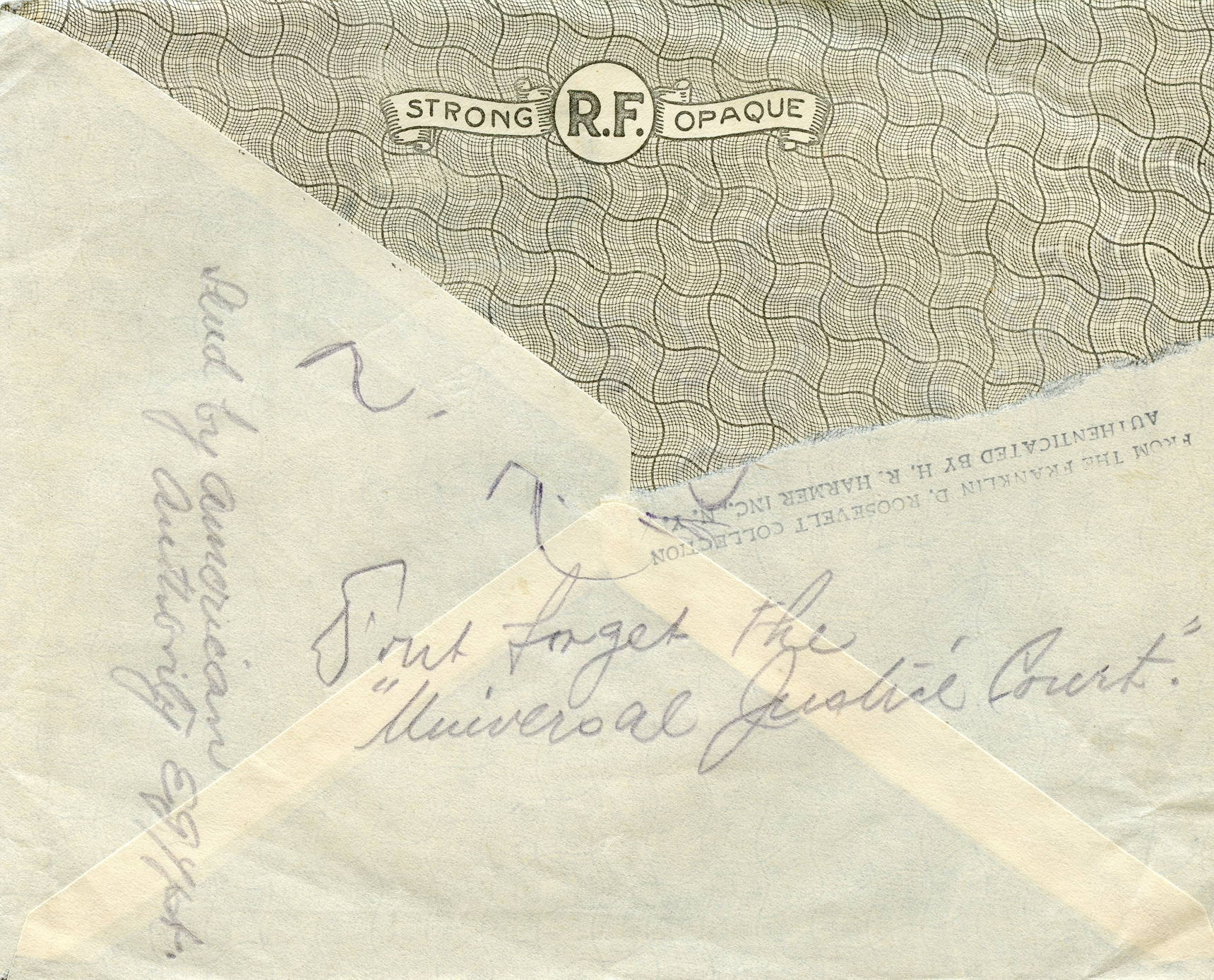
[Above: Continued:
'This is the ultimate payoff for a philatelist! The back of this envelope transforms it from an interesting historical curiosity into a verified museum-grade piece of presidential history.
It features an official auction provenance stamp confirming it sat directly in Franklin D. Roosevelt's personal collection, alongside a fascinating glimpse into the mind of the sender.
1. The Ultimate Provenance: The FDR Collection Stamp
The most significant marking on the back is the upside-down, two-line rubber stamp across the envelope flap:The Text: It reads: "FROM THE FRANKLIN D. ROOSEVELT COLLECTION / AUTHENTICATED BY H. R. HARMER INC., N. Y."
The Significance: FDR was one of the most famous stamp collectors in human history. After his death in 1945, his massive estate—including his personal mail and stamp collections—was auctioned off in 1946 by the prestigious auction house H.R. Harmer in New York.
The Value Impact: This stamp is an airtight certificate of authenticity. It proves that President Roosevelt himself received this letter, handled it, and chose to keep it in his personal archives.
2. The Cryptic Political Message
The sender's bold pencil handwriting continues on the back with a compelling message:
The Text: It reads: "Don't forget the 'Universal Justice Court'."
The Context: In December 1935, the world was on the brink of global conflict, with the League of Nations failing to stop Italy's invasion of Ethiopia (Abyssinia) just a couple of months prior. The sender is writing to the President of the United States to advocate for or remind him of a global legal or peace-keeping concept, likely referring to the Permanent Court of International Justice or a similar utopian idea for world peace.
3. The Security or Postal Notation
Written vertically along the left flap crease in a lighter pencil or different hand:The Text: It appears to read: "Recd by American Authority Egypt." or "Send by American Authority Egypt."
The Context: Because this was an unsolicited letter sent to the leader of a foreign nation during a tense geopolitical era, it may have been routed through or inspected by an American diplomatic office or consulate in Alexandria before being placed into the transatlantic mail stream.'
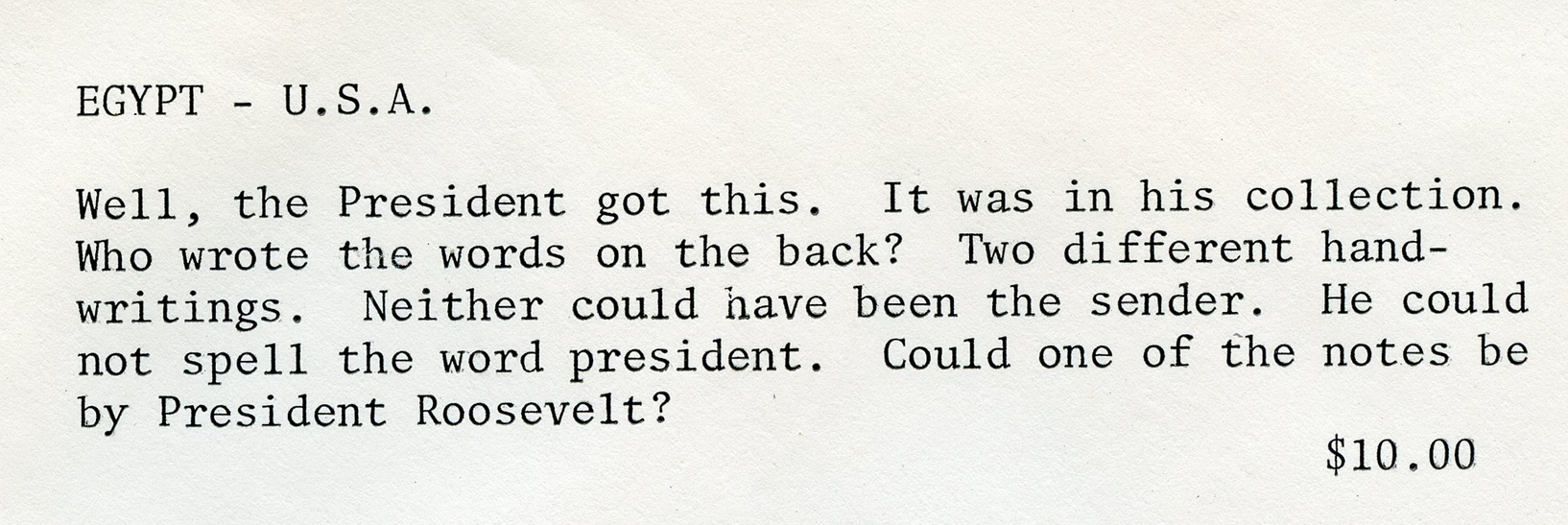
[Above: I showed the AI the little slip of paper inside the envelope:
'This typed card is a classic example of an auction descriptive write-up or a dealer's inventory card, likely created when this item was sold in a specialized collection decades ago.
[...]
The Price Tag
The "$10.00" typed in the bottom right corner is a wonderfully nostalgic glimpse into the past. This card likely dates back to the mid-20th century (the 1950s or 1960s), when presidential covers were traded among philatelists for what seems like pocket change today.
With its verified FDR provenance stamp, that $10 investment has grown into an incredible, irreplaceable piece of history!'
Maybe I'll burn it and sacrifice it to world peace.

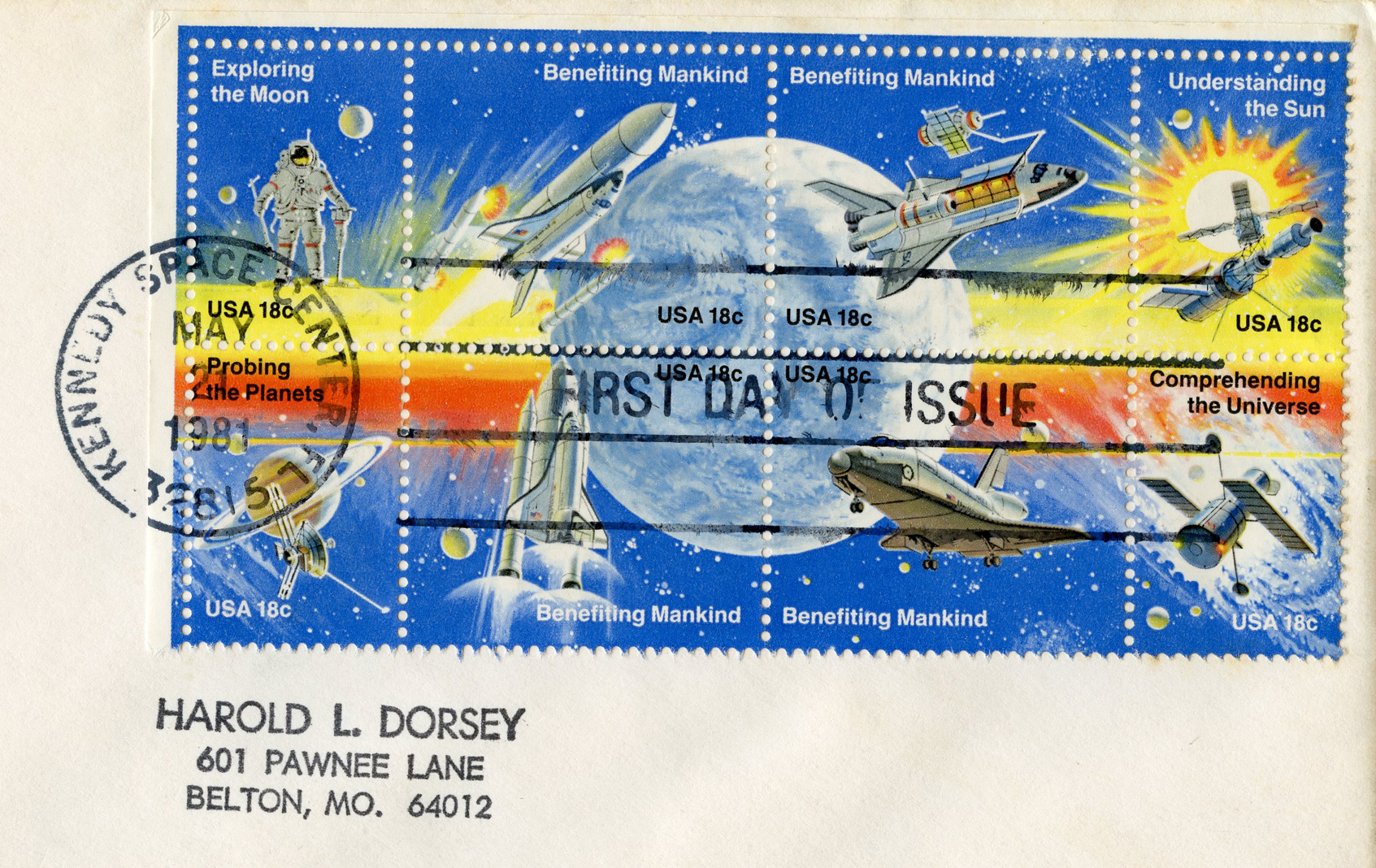

'What does NASA stand for?'
Need Another Seven Astronauts.
Or how about:
'How do they know what shampoo the Challenger astronauts used?'
Because they found Head & Shoulders all over the shore.
It always amazes me how jokes like these spread all throughout the USA, without the internet.]

-|-Back to Trash and Treasure Page (1)
-|- On to Trash and Treasure Page (167)
-|-